Radiation Cystitis: Symptoms, Causes, Diagnosis, and Management

Updated: 2 days ago
Medically reviewed by Dr. Baraa Alnahhal, MD · Last reviewed: September 2026
Radiation cystitis is a condition where the bladder becomes inflamed as a side effect of radiation therapy for pelvic cancers. Symptoms range from frequent or painful urination to more severe issues like blood in the urine or reduced bladder capacity. While mild cases often resolve with rest and medication, severe or delayed cases, which can appear years after treatment, may require specialized interventions like hyperbaric oxygen therapy or bladder irrigation.
Quick answer: Radiation cystitis is inflammation of the bladder lining caused by radiation therapy used to treat cancers in the pelvic region, such as prostate, bladder, colorectal, or ovarian cancer. The radiation can damage the bladder's delicate tissues and blood vessels, leading to symptoms that affect urinary habits. It is estimated to affect between 23% and 80% of patients receiving pelvic radiation, depending on the dose and type of therapy.
There are two primary forms: acute radiation cystitis, which occurs during or shortly after treatment, and delayed radiation cystitis, which can develop months or even decades later due to the buildup of scar tissue (fibrosis). Symptoms often mimic those of a urinary tract infection (UTI), including urgency, burning, and frequent nighttime trips to the bathroom. Diagnosis involves ruling out other conditions through urinalysis and sometimes a cystoscopy. Management focuses on symptom relief through anti-inflammatory drugs, antispasmodics, or, in severe cases, procedures to promote tissue healing.
Types and Timing of Radiation Cystitis
The onset of bladder inflammation can vary significantly based on when the radiation therapy was administered.
Type | Timing of Onset | Characteristics |
Acute Radiation Cystitis | During or immediately after therapy | Sudden onset; often resolves shortly after treatment ends. |
Delayed (Late) Cystitis | 6 months to 20 years post-treatment | Caused by progressive tissue scarring (fibrosis); can be chronic. |

Symptoms and Severity
Radiation cystitis symptoms are categorized by their severity and impact on daily life.
Mild Symptoms
Frequent Urination: The need to pee more often than usual.
Nocturia: Waking up multiple times during the night to urinate.
Urge Incontinence: A sudden, uncontrollable need to urinate.
Dysuria: A burning or painful sensation during urination.
Bladder Spasms: Involuntary contractions of the bladder muscle.
Severe Symptoms
Hematuria: The presence of blood in the urine.
Reduced Capacity: The bladder becomes less flexible and holds less urine.
Hunner’s Ulcers: Sores or lesions forming on the bladder wall.
Fistulas: Abnormal tunnels forming between the bladder and other organs.
Necrosis: The deterioration or death of bladder tissue.

Diagnosis and Management
Because radiation cystitis shares symptoms with UTIs and bladder stones, a thorough medical evaluation is necessary.
Diagnostic Tools
Urinalysis: Checking for blood or bacteria to rule out infection.
Blood Tests: Screening for systemic signs of inflammation or infection.
Cystoscopy: Using a thin camera to visually inspect the bladder lining for sores or scarring.
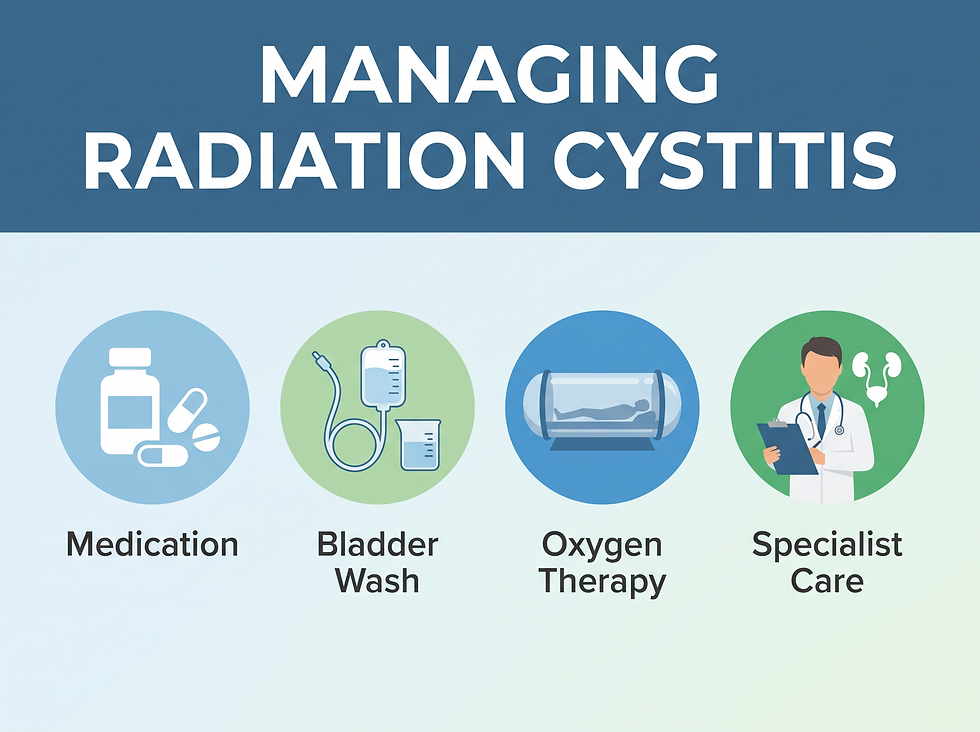
Treatment Options
Management is tailored to the severity of the inflammation and its impact on the patient's quality of life.
Medications: NSAIDs for inflammation, analgesics for pain, and antispasmodics for bladder cramps.
Bladder Irrigation: Delivering numbing or protective medications directly into the bladder via a catheter.
Sodium Hyaluronate Injections: Coating the bladder wall to protect it and reduce pain.
Hyperbaric Oxygen Therapy (HBOT): Using a pressurized oxygen chamber to stimulate healing in damaged bladder tissues.
Surgical Intervention: In rare, severe cases, urinary reconstruction or bladder removal (cystectomy) may be required.
Conclusion
Radiation cystitis is a common but manageable side effect of pelvic cancer treatment. While it can be uncomfortable and sometimes progressive, many effective treatments are available to alleviate symptoms and promote bladder health. If you are a cancer survivor experiencing new or worsening urinary symptoms, consult your healthcare provider to determine if radiation-induced changes are the cause.
Next step: If you are experiencing pain, urgency, or blood in your urine following radiation therapy, contact your urologist or oncology team for a comprehensive evaluation.
Frequently Asked Questions
Is radiation cystitis the same as a UTI?
No. While they share symptoms like burning and urgency, radiation cystitis is caused by tissue damage from radiation, not by bacteria. However, a person with radiation cystitis can still develop a secondary UTI.
Can radiation cystitis happen years after cancer treatment?
Yes. Delayed radiation cystitis can develop anywhere from six months to 20 years after completing radiation therapy.
Why does radiation cause bladder problems?
Radiation is designed to kill cancer cells, but it can also damage healthy nearby tissues, leading to inflammation, reduced blood flow, and the formation of scar tissue in the bladder.
What cancers are most linked to radiation cystitis?
It most commonly follows radiation for prostate, bladder, colorectal, uterine, and ovarian cancers.
Are men more likely to get radiation cystitis?
Yes, primarily because radiation therapy is a very common treatment for prostate cancer, which affects a large number of men.
What is hyperbaric oxygen therapy (HBOT)?
HBOT involves breathing 100% oxygen in a pressurized chamber. This increases the amount of oxygen in the blood, which helps repair tissues damaged by radiation.
Can mild radiation cystitis go away on its own?
Yes, acute cases often improve a few weeks or months after radiation therapy is completed.
What does "fibrosis" mean in the context of the bladder?
Fibrosis is the buildup of scar-like tissue. In the bladder, it makes the walls stiff and less able to expand, leading to a smaller bladder capacity.
Is blood in the urine always a sign of severe cystitis?
Hematuria (blood in the urine) is considered a more serious symptom and should always be evaluated by a healthcare provider immediately.
What are bladder spasms?
These are involuntary contractions of the bladder muscle that can cause a sudden, intense urge to urinate or cramping pain in the pelvic area.
Can I prevent radiation cystitis?
While it cannot always be prevented, radiation teams use advanced mapping to limit the dose to healthy tissue. Staying hydrated during treatment may also help.
What is a cystoscopy?
It is a procedure where a doctor uses a small camera to look inside the bladder. It is the best way to see the actual damage or inflammation caused by radiation.
Does radiation cystitis increase cancer risk?
Radiation cystitis itself is a side effect, not a precursor to new cancer, but long-term monitoring is always recommended for cancer survivors.
Are there specific foods I should avoid?
Some people find that bladder irritants like caffeine, alcohol, and spicy foods can worsen symptoms of urgency and pain.
When should I see a doctor about urinary symptoms?
You should contact your provider if you have blood in your urine, severe pain, or if urinary urgency is interfering with your daily life or sleep.
Related Reading and Resources
Urinary Tract Infection (UTI): Symptoms, Causes, Treatment, and Prevention: how to tell an infection from other causes of bladder pain.
American Cancer Society: coping with the physical side effects of radiation.
Urology Care Foundation: patient guides on bladder conditions and treatments.
Medical Disclaimer: This article is for informational purposes only and does not constitute medical advice. Always seek the advice of your physician or other qualified health provider with any questions you may have regarding a medical condition. Never disregard professional medical advice or delay in seeking it because of something you have read here. If you think you may have a medical emergency, call your doctor or emergency services immediately.
Comments