Radial Tunnel Syndrome: Symptoms, Causes, Diagnosis, and Treatment

Updated: 2 days ago
Medically reviewed by Dr. Baraa Alnahhal, MD · Last reviewed: September 2026
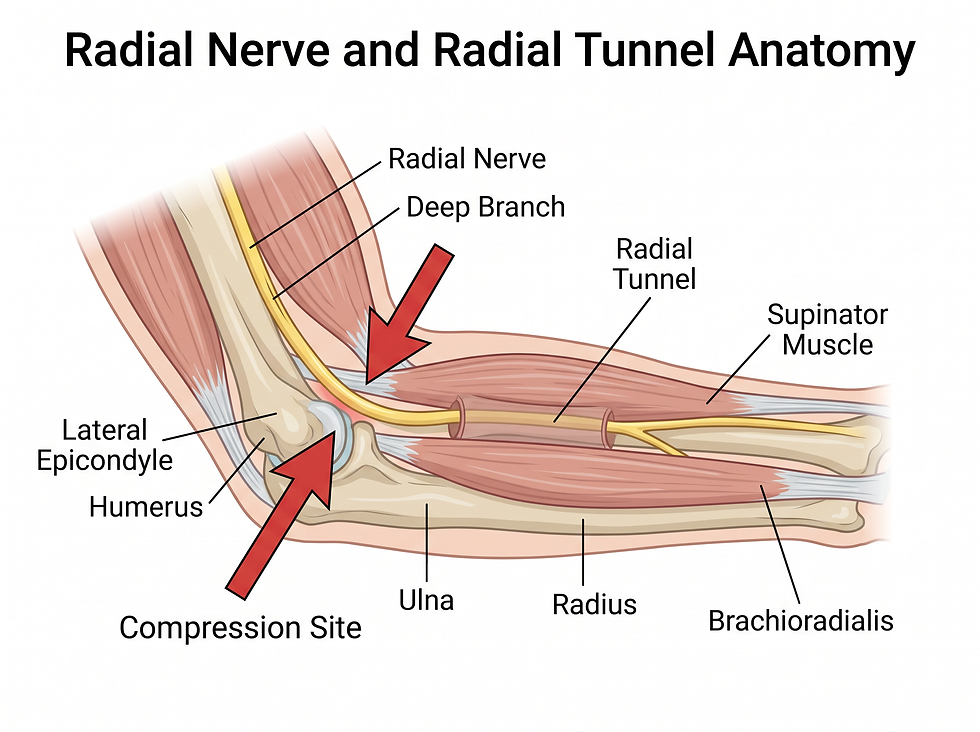
Radial tunnel syndrome is a rare and painful condition caused by the compression of the radial nerve as it passes through the elbow and forearm. Often confused with tennis elbow, it leads to a persistent ache, muscle weakness, and tenderness on the outside of the elbow. While the pinched nerve typically requires professional treatment to heal, most cases respond well to nonsurgical methods such as rest, physical therapy, and splinting.
Quick answer: Radial tunnel syndrome occurs when the radial nerve, a major nerve running through the arm, becomes pinched or compressed within the radial tunnel. This tunnel is a narrow passage of muscles and tendons located just below the elbow. When these surrounding structures become tight or swollen due to repetitive motion or injury, they put excessive pressure on the nerve, resulting in a nagging ache and potential muscle weakness in the forearm and wrist.
The condition is most common in women and individuals between the ages of 30 and 50. It is frequently triggered by repetitive tasks such as typing, using manual tools, or sports involving heavy push-and-pull motions. Diagnosis is primarily clinical, as there are no formal imaging tests that can confirm the syndrome; instead, providers use physical exams and resistance tests to rule out other conditions like tennis elbow. Treatment focuses on reducing inflammation through rest, anti-inflammatory medications, and targeted physical therapy, with surgery reserved for severe or persistent cases.
Symptoms and Clinical Indicators
Radial tunnel syndrome is characterized by a deep, nagging ache that often worsens with activity or during sleep.
Common Physical Signs
Tenderness: Sharp pain when pressure is applied to the outside of the elbow.
Forearm Fatigue: A persistent, heavy ache that travels down the forearm.
Muscle Weakness: Difficulty gripping objects or lifting the wrist (wrist drop).
Activity-Related Pain: Discomfort that spikes during heavy lifting, wrist flexing, or forearm rotation.
Radial Tunnel Syndrome vs. Tennis Elbow
While these conditions share similar locations, they have distinct clinical differences:
Feature | Radial Tunnel Syndrome | Tennis Elbow (Lateral Epicondylitis) |
Primary Cause | Compressed radial nerve | Inflammation of tendons (overuse) |
Pain Location | About 2 inches below the elbow joint | Directly on the bony bump of the elbow |
Main Symptom | Nagging ache and muscle weakness | Sharp pain during specific movements |
Nerve Involvement | Yes (radial nerve) | No |
Causes and Risk Factors
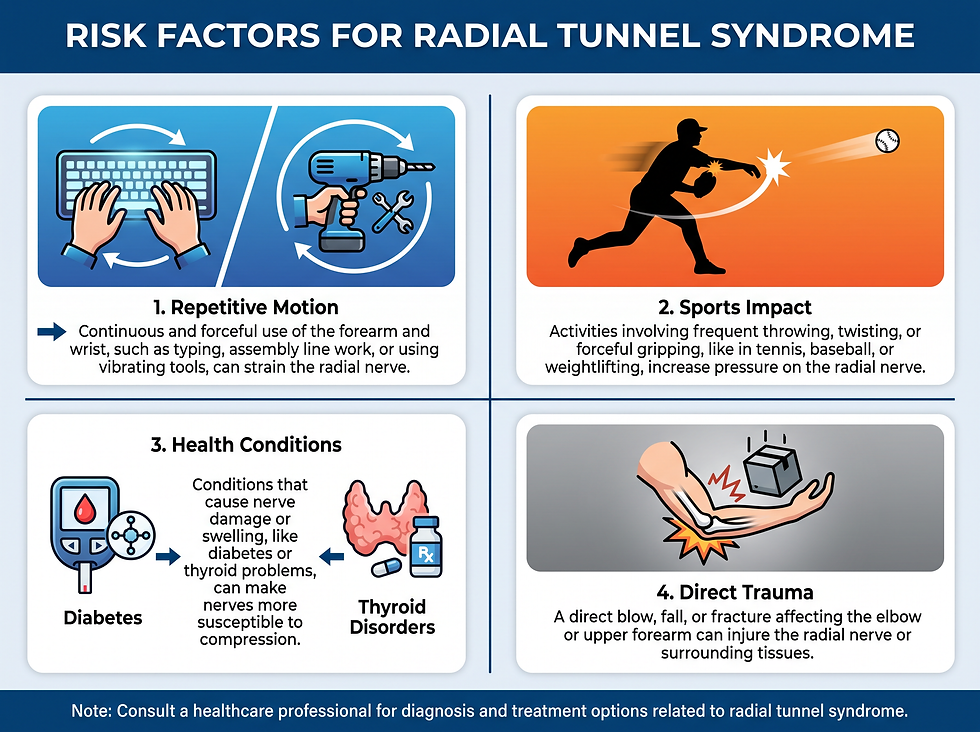
Inflammation and structural tightness are the primary drivers of nerve compression in the radial tunnel.
Primary Causes
Repetitive Motion: Frequent typing, using screwdrivers, or other repetitive work-related tasks.
Sports Impact: Push-and-pull activities like throwing a baseball or football.
Direct Trauma: A hard blow to the outside of the elbow or forearm.
Wrist Strain: Excessive pinching, gripping, or bending of the wrist.
High-Risk Groups
Demographics: Most common in women and adults aged 30 to 50.
Underlying Conditions: Diabetes, hypothyroidism, and radial nerve inflammation.
Physical Factors: Poor arm and wrist flexibility and inadequate warm-ups before activity.
Structural Issues: Tumors, ganglion cysts, or localized swelling (edema) in the arm.
Diagnosis and Management
Early intervention is critical, as a pinched radial nerve is unlikely to heal without targeted treatment.
Diagnostic Testing
Diagnosis is largely based on a physical evaluation and ruling out other injuries:
Resistance Tests: Assessing pain levels when the patient resists movement with their palm or middle finger.
Rule of Nine Test: Applying pressure to specific spots on the elbow to locate nerve compression.
Imaging (Process of Elimination): X-rays, MRIs, and EMGs may be used to rule out fractures, cysts, or other nerve disorders.
Treatment Pathways
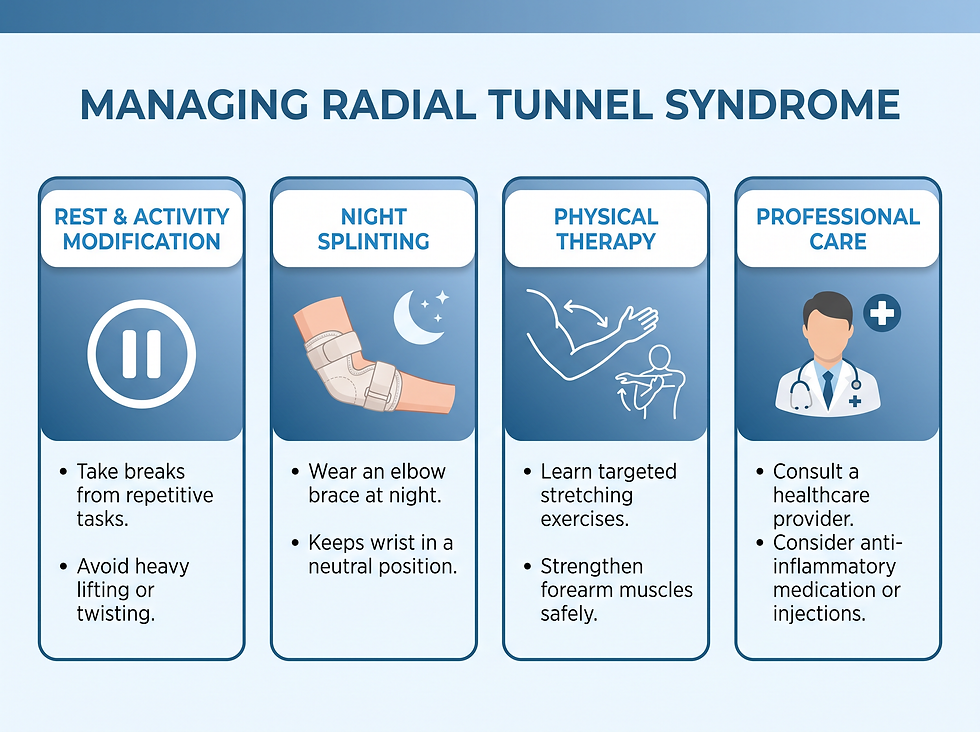
Most patients find relief within six weeks of following a conservative treatment plan:
Activity Modification: Stopping or drastically reducing the motions that trigger pain.
Medication: Over-the-counter NSAIDs to reduce inflammation and pain.
Splinting: Wearing an elbow or wrist splint, especially at night, to keep the nerve in a neutral position.
Physical Therapy: Stretching and strengthening exercises to loosen tight tissues around the nerve.
Steroid Injections: Used in some cases to provide rapid relief from localized inflammation.
Surgical Release: Reserved for severe cases where nonsurgical methods fail to relieve pressure on the nerve.
Conclusion
Radial tunnel syndrome can significantly impact your ability to work and enjoy daily activities. However, by recognizing the symptoms early and prioritizing rest and professional care, most individuals can achieve a full recovery. If you are experiencing persistent elbow or forearm pain, seeking a professional evaluation is the first step toward regaining strength and living pain-free.
Next step: If you have nagging forearm pain or weakness that doesn't improve with rest, schedule an appointment with an orthopedic specialist for a formal evaluation and personalized recovery plan.
Frequently Asked Questions
Can radial tunnel syndrome go away on its own?
It is unlikely. Because the condition is caused by physical compression of the nerve, it usually requires treatment and activity modification to heal.
How do I know if I have radial tunnel syndrome or tennis elbow?
Radial tunnel pain is typically felt about two inches below the elbow joint in the forearm muscles, whereas tennis elbow pain is felt directly on the bony bump of the outer elbow.
What is "wrist drop"?
Wrist drop is a severe symptom where the radial nerve is so compressed that you lose the ability to lift your hand or straighten your fingers.
Why is the pain worse at night?
Many people naturally bend their elbows or wrists while sleeping, which can increase the pressure on the radial nerve and trigger pain.
How long does recovery take?
With proper rest and nonsurgical treatment, most people see significant improvement within six weeks.
Is surgery always necessary?
No. Surgery (radial tunnel release) is typically a last resort and is only recommended if conservative treatments fail to provide relief.
Can typing cause radial tunnel syndrome?
Yes. Repetitive motions like typing or using a mouse for long periods can lead to inflammation in the radial tunnel.
Are women more at risk than men?
Yes, clinical data shows that women are significantly more likely to develop radial tunnel syndrome than men.
What kind of exercises help with radial tunnel syndrome?
Physical therapy often focuses on nerve gliding exercises and stretching the forearm muscles to reduce tension around the nerve.
Can a direct injury cause this condition?
Yes. A hard blow to the outside of the elbow or forearm can cause immediate swelling that compresses the radial nerve.
Does diabetes increase the risk?
Yes. Diabetes can lead to nerve inflammation and increased sensitivity to compression, making radial tunnel syndrome more likely.
What is a "Resistance Test"?
It is a diagnostic tool where a doctor asks you to push against their hand using your middle finger or palm to see if it triggers pain in the radial tunnel.
Can I still play sports with this condition?
You should rest your arm until the pain subsides. Continuing to play through the pain can worsen the nerve compression and lead to chronic issues.
What is a ganglion cyst?
It is a noncancerous lump that can grow near joints or tendons. If one develops in the radial tunnel, it can press against the radial nerve.
When should I see a doctor?
You should see a healthcare provider if you have persistent elbow or forearm pain, especially if you notice weakness in your wrist or grip.
Related Reading and Resources
Pinched Nerve (Radiculopathy): Symptoms, Causes, and the Full Treatment Pathway: tips for understanding and managing pinched nerves.
Physical Therapy: Enhancing Mobility, Strength, and Recovery: common approaches and what to expect.
American Academy of Orthopaedic Surgeons (AAOS): information on nerve compression syndromes.
American Society for Surgery of the Hand (ASSH): resources for hand and arm health.
Medical Disclaimer: This article is for informational purposes only and does not constitute medical advice. Always seek the advice of your physician or other qualified health provider with any questions you may have regarding a medical condition. Never disregard professional medical advice or delay in seeking it because of something you have read here. If you think you may have a medical emergency, call your doctor or emergency services immediately.
Comments