Pulmonary Arterial Hypertension: Symptoms, Causes, and Care

Updated: 3 days ago
Medically reviewed by Dr. Baraa Alnahhal, MD · Last reviewed: October 2026
Quick Answer
Pulmonary arterial hypertension (PAH) is a serious, progressive condition in which small lung blood vessels narrow, raising pressure in the pulmonary arteries and forcing the right side of the heart to work harder, which can lead to heart failure. [1] Symptoms include worsening breathlessness and fatigue. [1] It is life-threatening without treatment, but early diagnosis and targeted therapies improve outlook. [1]
What the research says
PAH is only one small piece of pulmonary hypertension. A global review estimates that pulmonary hypertension affects about 1% of the world's population, rising to as much as 10% of people over 65. Left-sided heart and lung disease are now its most frequent causes, and about 80% of affected patients live in developing countries, where it is often linked to congenital heart disease and infections such as schistosomiasis and HIV (PubMed: Hoeper et al., Lancet Respir Med, 2016) [2].
Pulmonary hypertension carries a high death toll, and PAH is the least lethal group. In an Ontario cohort of 50,529 people with pulmonary hypertension, adult mortality was 13.0% at 30 days, 36.4% at 1 year, and 62.4% at 5 years, and was lowest in group 1 (PAH). Among children, PAH was the most common form (65.2%), with a 5-year mortality of 21.4% (PubMed: Wijeratne et al., Circ Cardiovasc Qual Outcomes, 2018) [3].
What Is Pulmonary Arterial Hypertension?
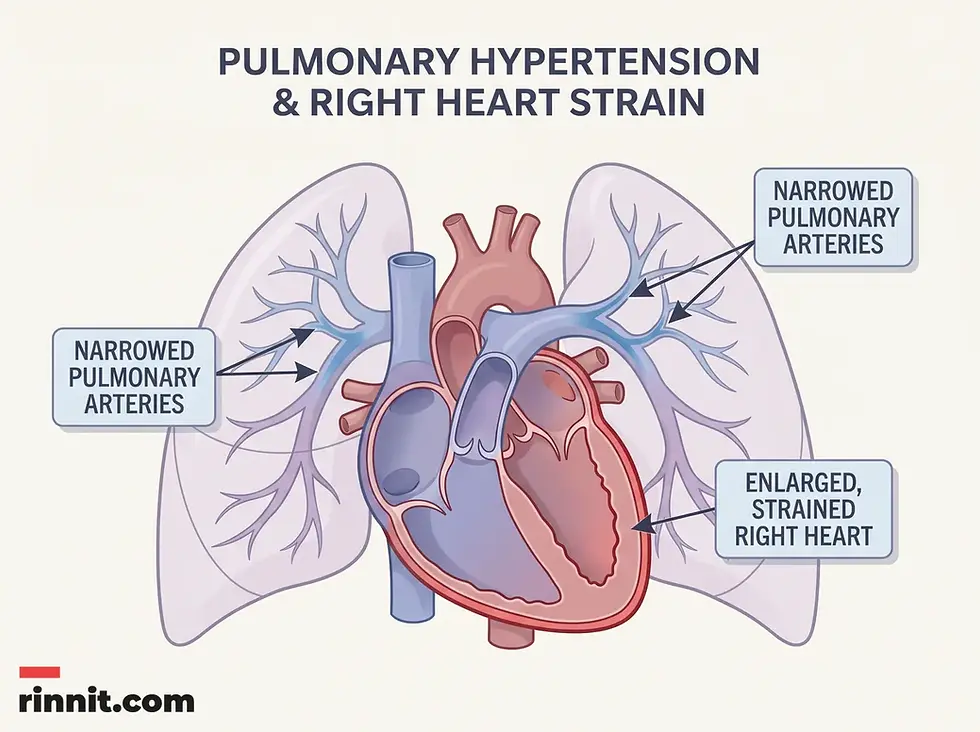
Pulmonary Arterial Hypertension (PAH) is a rare but life-threatening form of pulmonary hypertension characterized by elevated pressure in the arteries that carry blood from the heart to the lungs. In a healthy body, these vessels allow blood to flow freely to receive fresh oxygen. However, in individuals with PAH, the lining of these small blood vessels becomes damaged or narrow, creating significant resistance to blood flow. [1]
This condition is relatively rare, affecting approximately 25 per 1 million people in Western countries. It can affect adults of any age, though it is most commonly diagnosed in females between the ages of 30 and 60. Without proper medical management, the persistent strain on the heart's right ventricle can lead to right-sided heart failure and other systemic complications. [1]
Feature | Pulmonary arterial hypertension (PAH) |
Primary location | Small blood vessels within the lungs |
Heart impact | Strains the right ventricle; risk of heart failure |
Oxygenation | Reduced oxygen intake due to slowed blood flow |
Prevalence | Rare (approx. 500–1,000 U.S. cases annually) |
What are the symptoms and warning signs of pulmonary arterial hypertension?
One of the primary challenges in managing PAH is that symptoms often do not appear until the condition has significantly progressed. [1] Many patients initially dismiss early signs as general fatigue or a lack of fitness. As the narrowing of the arteries worsens, the body begins to show more clear indicators of respiratory and cardiovascular distress.
Common symptoms include:
Progressive breathlessness: Shortness of breath that intensifies over time, eventually occurring even during rest. [1]
Physical discomfort: Chest pain or pressure, dizziness, and fainting (syncope). [1]
Visible indicators: Bluish tint to the fingers or lips (cyanosis) and swelling, or edema, in the feet, legs, and eventually the abdomen. [1]
Heart rhythm: A racing or pounding heartbeat as the heart struggles to compensate for the high pressure. [1]
What causes pulmonary arterial hypertension, and who is at risk?
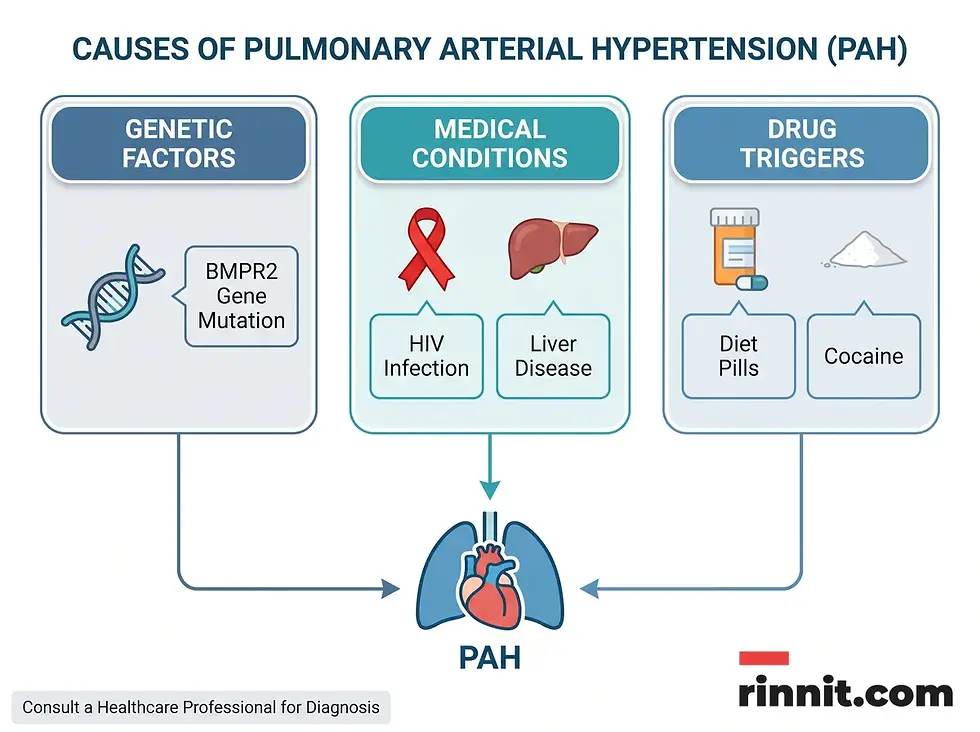
The exact cause of the damage to the lung's vessel lining is not always clear. When no specific trigger is found, the condition is termed idiopathic PAH. However, medical research has identified several known causes, including genetic mutations—most frequently in the BMPR2 gene—which can cause an overgrowth of cells in the arterial walls, leading to narrowing. [1]
Other significant risk factors and associations include:
Medical conditions: HIV, liver disease, congenital heart disease, and connective tissue disorders like lupus or scleroderma. [1]
Drug exposure: Past use of certain diet pills (e.g., "fen-phen") and recreational drugs such as cocaine or methamphetamine. [1]
Genetic inheritance: Heritable PAH can run in families, though some individuals may carry the gene without ever developing the disease. [1]
How is pulmonary arterial hypertension diagnosed and managed long term?
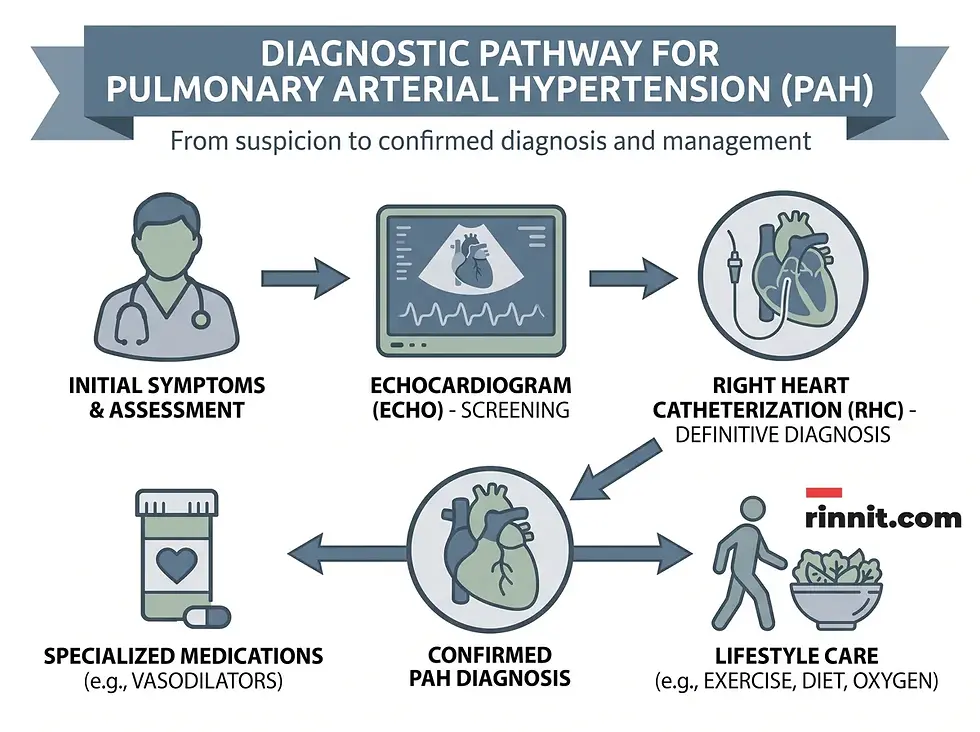
Diagnosing PAH requires a comprehensive evaluation because its symptoms overlap with many other heart and lung conditions. Pulmonologists and cardiologists use a series of tests to confirm the diagnosis and determine the severity of the disease. The "gold standard" for diagnosis is right heart catheterization, a procedure that directly measures the blood pressure within the pulmonary arteries. [1]
While PAH is a chronic condition, modern management strategies focus on improving symptoms and slowing disease progression [1]:
Targeted medications: Specialized drugs that help open narrowed blood vessels and reduce the workload on the heart. [1]
Lifestyle adjustments: Monitoring activity levels, managing fluid intake, and avoiding known triggers like smoking.
Surgical options: In advanced cases where medications are no longer effective, a lung transplant may be considered to restore respiratory function. [1]
Conclusion and Next Steps
Pulmonary Arterial Hypertension is a serious diagnosis that requires immediate and ongoing medical attention. While the condition is progressive, early detection and the use of specialized PAH medications have transformed the outlook for many patients, allowing for a better quality of life and increased longevity. If you are experiencing unexplained shortness of breath or persistent fatigue, consult a healthcare professional to discuss a cardiac and pulmonary screening.
Frequently Asked Questions
1. What is the main difference between PH and PAH?
Pulmonary Hypertension (PH) is a general term for high pressure in the lung arteries, while PAH is a specific, rare form caused by narrowing of the small blood vessels. [1]
2. Can PAH be cured?
There is currently no cure for PAH, but it can be effectively managed with specialized medications to improve symptoms and outlook. [1]
3. Why does PAH cause heart failure?
The heart must pump harder to push blood through the narrowed lung arteries, which eventually weakens the heart muscle. [1]
4. Is PAH hereditary?
Yes, some forms are heritable and linked to specific genetic mutations like the BMPR2 gene. [1]
5. What are the most common early symptoms?
Fatigue and shortness of breath during exercise are often the first signs, though they are frequently overlooked.
6. Who is most at risk for PAH?
Females between the ages of 30 and 60 are the most common demographic, though it can affect anyone. [1]
7. What is a right heart catheterization?
A right heart catheterization is a diagnostic procedure that measures blood pressure directly inside the heart and pulmonary arteries. [1]
8. Can diet pills cause PAH?
Yes, certain older diet medications like "fen-phen" have been linked to the development of PAH years later. [1]
9. What is cyanosis?
Cyanosis is a bluish discoloration of the skin, lips, or fingernails caused by low oxygen levels in the blood.
10. Is exercise safe for people with PAH?
Patients should follow their doctor's guidance, as heavy exertion can be dangerous, but light activity may be encouraged.
References
Cleveland Clinic. Pulmonary Arterial Hypertension. Cleveland Clinic. Last updated Jul. 22, 2022. https://my.clevelandclinic.org/health/diseases/23913-pulmonary-arterial-hypertension
Hoeper MM, Humbert M, Souza R, et al. A global view of pulmonary hypertension. Lancet Respir Med. 2016;4(4):306-322. doi:10.1016/S2213-2600(15)00543-3. PMID: 26975810.
Wijeratne DT, Lajkosz K, Brogly SB, et al. Increasing incidence and prevalence of World Health Organization Groups 1 to 4 pulmonary hypertension: a population-based cohort study in Ontario, Canada. Circ Cardiovasc Qual Outcomes. 2018;11(2):e003973. doi:10.1161/CIRCOUTCOMES.117.003973. PMID: 29444925.
Medical Disclaimer
This article is for informational purposes only and does not constitute medical advice. Always seek the advice of your physician or other qualified health provider with any questions you may have regarding a medical condition. Never disregard professional medical advice or delay in seeking it because of something you have read here.



Comments