Pseudotumor Cerebri: Symptoms, Causes, and Treatment

Updated: 2 days ago
Medically reviewed by [Dr. Baraa Alnahhal, MD](https://www.rinnit.com/dr-baraa-alnahhal). Last reviewed October 13, 2026. This content is for educational purposes and is not medical advice.
Quick Answer
Pseudotumor cerebri, or idiopathic intracranial hypertension, is high pressure inside the skull with no clear cause, mimicking a brain tumor [1]. It causes severe headaches, a pulsing whooshing sound in the ears and vision changes, including vision loss [1]. Obesity in women of childbearing age is the strongest risk factor. Treatment includes weight loss, acetazolamide and procedures if vision worsens [2].
What the research says
Weight loss lowers skull pressure. In a systematic review of 17 studies, bariatric surgery produced 27.2–27.8 kg of weight loss at 24 months and the biggest drop in intracranial pressure (−11.9 cm H2O), and the amount of weight lost was closely tied to the drop in pressure (Abbott et al., Neurology, 2023) [6].
GLP-1 weight-loss medicines look promising. Across 9 studies (1 randomized trial, 8 observational), GLP-1 drugs were linked to fewer headaches, weight loss, and less need for acetazolamide or surgery, with mostly mild stomach side effects; larger trials are still needed (Ognard et al., J Headache Pain, 2025) [7].
Venous sinus stenting often relieves the whooshing sound. Pooling 32 studies of 850 patients (641 with IIH), 89.8% had improvement in pulsatile tinnitus, 87.1% had it fully resolve, and 10.9% had it come back (Alipour Khabir et al., Otol Neurotol, 2026) [8].
Key Facts at a Glance
Aspect | Summary |
Full name | Idiopathic intracranial hypertension (IIH), also called pseudotumor cerebri [1] |
Pronunciation | SOO-doe-too-mur SER-uh-bry [1] |
What happens | Pressure inside the skull rises without a clear cause [1] |
Why the name | |
Main concern | |
Most affected | Women of childbearing age with obesity [1] |
How it's diagnosed | Eye exams, brain imaging (MRI/CT, MRV/CTV), and a lumbar puncture (spinal tap) [2] |
First-line treatment | Low-sodium weight-loss diet plus the diuretic acetazolamide [2] |
When surgery is used | If vision worsens despite other treatments [2] |
What Is Pseudotumor Cerebri?
Pseudotumor cerebri happens when pressure inside the skull rises without a clear cause [1]. Its medical name, idiopathic intracranial hypertension, breaks down as follows: "idiopathic" means the cause is unknown, "intracranial" means inside the skull, and "hypertension" means high pressure.
The symptoms mimic those of a brain tumor — bad headaches, vision changes, and nausea [1]. The condition is sometimes written out as "pseudotumor" because "pseudo" means false. There is no tumor; the problem is pressure [3].
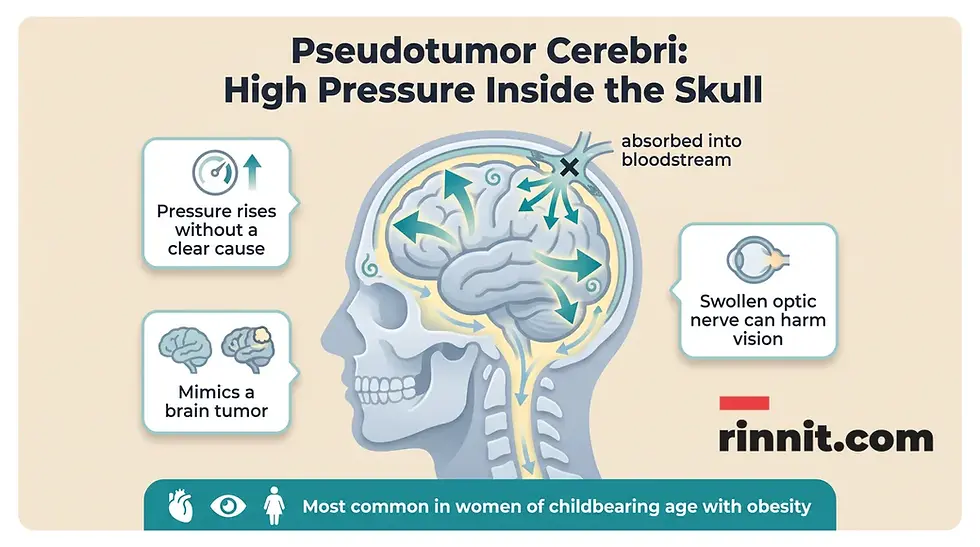
A key danger is the optic nerve, the bundle of fibers that connects the eye to the brain. The increased pressure can cause this nerve to swell, and that swelling can result in vision loss [1]. Medicines can often reduce the pressure and symptoms such as headaches, but sometimes surgery is necessary [1].
What Are the Symptoms?
Symptoms of pseudotumor cerebri center on the head and the eyes. The most common complaints include bad headaches that might begin behind the eyes and a whooshing sound in the head that pulses with the heartbeat [1] — a sound others can't hear, tied to the rhythm of the pulse.
Nausea, vomiting, and dizziness are common [1], and some people also develop neck, shoulder, or back pain [1].
The eye symptoms deserve close attention, because they signal pressure that can damage the optic nerve:
Eye-related symptom | What to watch for |
Vision loss | Progressive decrease in eyesight [1] |
Brief blindness episodes | Seconds-long blackout affecting one or both eyes [1] |
Side-vision trouble | Difficulty seeing to the side (peripheral vision) [1] |
Double vision | Seeing two images of one object [1] |
Light flashes | Brief bright flashes in the visual field [1] |
One important note: symptoms that have resolved can return months or years later [1]. That's why ongoing monitoring matters even after treatment works.

When to See a Healthcare Professional
If you have severe headaches with vision changes, a whooshing sound in the ears, or brief episodes of blindness, see a healthcare professional promptly. Because the condition can threaten vision, early diagnosis through eye exams and brain imaging matters.
What Causes Pseudotumor Cerebri?
The cause of idiopathic intracranial hypertension is not known. When a cause is found, doctors use a different name: secondary intracranial hypertension [1].
The mechanism behind the pressure is understood. The brain and spinal cord float in cerebrospinal fluid (CSF) — a liquid that cushions these vital tissues and protects them from injury. CSF is produced in the brain and is eventually absorbed into the bloodstream at a rate that usually keeps pressure in the head constant [1].
When cerebrospinal fluid isn't absorbed into the bloodstream at the proper rate, pressure inside the skull increases [1]. That excess pressure presses on the optic nerve and produces the headaches and vision symptoms.
What Are the Risk Factors?
Obesity, certain medicines, and some health conditions have been associated with this condition [1].
Obesity
The strongest known risk factor is weight. Women who are obese and of childbearing age are more likely to develop idiopathic intracranial hypertension [1]. Notably, even women who don't carry excess weight face higher risk after even a moderate amount of weight gain.
Medicines
Several substances have been linked to intracranial hypertension [1]:
Category | Examples |
Growth hormone | Growth hormone treatments |
Antibiotics | Tetracycline-class antibiotics, particularly doxycycline and minocycline |
Vitamin A derivatives | Particularly isotretinoin (acne medicine) |
Health Problems
Certain conditions and diseases have also been linked to intracranial hypertension [1]:
Associated condition | Associated condition |
Addison's disease | Polycystic ovary syndrome |
Anemia | Sleep apnea |
Blood-clotting disorders | Underactive parathyroid glands |
Kidney disease | Lupus |
What Are the Complications?
For some people with this condition, vision continues to worsen despite treatment, leading to permanent visual loss [1] [3]. Protecting the optic nerve is the central goal of every treatment decision, and once diagnosed, vision needs regular monitoring to catch any changes early [2].
How Is Pseudotumor Cerebri Diagnosed?
To diagnose IIH, a healthcare professional reviews your symptoms and medical history, performs a physical exam, and orders tests. Three types of testing are typically involved.
Eye Exams
A doctor trained in eye conditions — an ophthalmologist — conducts an eye exam, looking for a specific type of swelling affecting the optic nerve at the back of the eye [2].
You may also receive a visual field test to check for blind spots. Everyone has a small blind spot in each eye where the optic nerve enters the retina, but people with IIH can have a larger blind spot and other areas of visual loss [2]. Photos of the eyes and an imaging test called optical coherence tomography (OCT) may be used to measure the thickness of the retina's layers [2].
Brain Imaging
An MRI or CT scan can rule out other conditions that cause similar symptoms, such as brain tumors and blood clots [2]. You may also need magnetic resonance venography (MRV) or computerized tomography venography (CTV) — tests that use an injected contrast material to look for a blood clot in the brain known as cerebral venous thrombosis [2].
Spinal Tap (Lumbar Puncture)
A lumbar puncture measures the pressure inside your skull and analyzes your spinal fluid [2]. A specialist inserts a needle between two bones in the lower back and removes a small amount of cerebrospinal fluid, which is sent to a laboratory for testing. The fluid analysis helps confirm the diagnosis by ruling out infection or inflammation, and the pressure measurement directly shows whether intracranial pressure is elevated.
How Is Pseudotumor Cerebri Treated?
The goal of treatment is to improve symptoms and keep your eyesight from worsening [1]. Treatment typically moves through three levels: lifestyle changes, medicines, and — if vision keeps worsening — surgery.
Lifestyle: Weight Loss and Diet
If you carry excess weight, your healthcare professional might recommend a low-sodium weight-loss diet to help improve symptoms. You might work with a dietitian on weight-loss goals, and some people benefit from structured weight-loss programs or gastric surgery [2]. Maintaining a healthy weight also helps reduce the chance of the condition developing or returning.
Medications
Medicine | How it works | Notes |
Acetazolamide | A diuretic and glaucoma medicine; may reduce CSF production [2] | Often the first medicine tried; side effects can include stomach upset, fatigue, tingling of fingers, toes and mouth, and kidney stones [2] |
Topiramate | Not a diuretic; reduces headaches and may aid weight loss [2] | Used instead of or alongside acetazolamide; can cause tingling, taste changes, trouble finding words, kidney stones; not for use during pregnancy [2] |
Spironolactone, methazolamide, furosemide | Reduce body fluid by increasing urine output; used if acetazolamide isn't effective [2] | |
Migraine medicines | Ease the headaches caused by IIH [2] | Symptom relief |
Weight-loss medicines | GLP-1 receptor agonists such as semaglutide (Ozempic, Wegovy) | Newer options that help weight loss and may reduce pressure in the brain [2] |
Surgery
If vision gets worse despite other treatments, surgery to reduce pressure around the optic nerve or decrease intracranial pressure might be necessary [2].
Venous sinus stenting (VSS) places a small stent in a narrowed vein in the head to keep the vein open and improve blood flow. Keeping the vein open helps cerebrospinal fluid drain, which lowers brain pressure [2]. VSS is offered when tests show venous sinus narrowing and a clear pressure difference at the narrowed spot, and when other treatments haven't stopped vision loss or symptoms. Regular checkups are needed afterward, and rarely the stent can narrow again or a blood clot can form [2].
Optic nerve sheath fenestration involves a surgeon cutting a window into the membrane surrounding the optic nerve, allowing excess cerebrospinal fluid to escape. In most people, vision stabilizes or improves [2] — and improvement after surgery on one eye can benefit both eyes. However, the surgery isn't always successful and can make vision loss worse [2].
Spinal fluid shunt surgery inserts a long, thin tube into the brain or lower spine to drain excess cerebrospinal fluid [2] [3]. The tubing is threaded under the skin to the stomach, where the shunt releases the fluid. Shunts are considered only after other treatments have failed; they can clog, often need additional surgeries to keep working, and can cause low-pressure headaches or infections [2].

Ongoing Monitoring
Once you have had IIH, you need your vision checked regularly to monitor changes [2]. Symptoms that resolve can return months or years later [1], so staying on top of eye exams is part of long-term care.
How should you prepare for a pseudotumor cerebri appointment?
After discussing your symptoms, you may be referred to a specialist — a doctor trained in brain and nervous system conditions (neurologist), in eye conditions (ophthalmologist), or both (neuro-ophthalmologist) [2].
Before the visit, make a list of your symptoms (including any that seem unrelated, with when they began), key personal information such as major stresses or recent life changes, all medicines, vitamins, and supplements with their doses, and your questions. Bring recent test results and scans of your eyes, and take a family member or friend along to help remember the information [2].
Useful questions to ask include what's likely causing your symptoms, what tests you need, whether your condition is likely temporary or chronic, the best course of action, whether losing weight would help, how to manage other health conditions alongside it, whether any restrictions apply, whether you should see a specialist, and what printed materials or websites are recommended [2].
Your healthcare professional will likely ask when your symptoms started, whether they're continuous or occasional, how severe they are, and what seems to improve or worsen them [2].
Conclusion
Pseudotumor cerebri is a condition with a misleading name and a very real risk. There is no tumor — but the pressure inside the skull is genuinely elevated, and that pressure can silently damage the optic nerve and steal vision. The warning signs are distinctive: headaches starting behind the eyes, a whooshing sound in the ears that keeps time with your heartbeat, and vision changes ranging from double vision to brief seconds-long blindness.
The encouraging news is that the condition is diagnosable through a clear set of tests — eye exams, brain imaging, and a spinal tap — and treatable through a stepped approach that begins with weight management and diuretic medicines. For the minority of people whose vision keeps worsening, surgical options such as stenting, optic nerve fenestration, or a shunt offer ways to bring pressure down and protect eyesight.
If you've had persistent headaches with vision changes or that unusual whooshing sound, the most important step is to get checked. Vision lost to optic nerve damage often can't be restored — but caught early, pseudotumor cerebri is manageable.
Take the next step: If you have severe headaches with vision changes or a pulsing whooshing sound in your ears, book a visit with a healthcare professional — and ask about an eye exam. Bring a list of medicines and supplements, your recent test results, and a family member or friend.
FAQ: Pseudotumor Cerebri
What is the difference between pseudotumor cerebri and a brain tumor?
Pseudotumor cerebri (idiopathic intracranial hypertension) causes high pressure inside the skull with no tumor present. Its symptoms — headaches, nausea, vision changes — mimic a brain tumor, which is why imaging scans are used to rule a tumor out. There is no cancer or growth; the problem is pressure from cerebrospinal fluid that isn't being absorbed at the proper rate.
What does pseudotumor cerebri feel like?
The most common symptoms are bad headaches that may begin behind the eyes and a whooshing sound in the head that pulses with the heartbeat. People also report nausea, vomiting, dizziness, neck, shoulder or back pain, vision loss, brief seconds-long episodes of blindness, trouble seeing to the side, double vision, and light flashes. Symptoms can return months or years after they resolve.
What causes pseudotumor cerebri?
The cause of idiopathic intracranial hypertension is not known. The pressure rises when cerebrospinal fluid — the liquid cushioning the brain and spinal cord — isn't absorbed into the bloodstream at the proper rate. The strongest risk factor is obesity in women of childbearing age, and even moderate weight gain raises risk. Certain medicines (growth hormone, tetracycline antibiotics, isotretinoin) and conditions such as sleep apnea and polycystic ovary syndrome are also associated.
How is pseudotumor cerebri diagnosed?
Diagnosis involves eye exams by an ophthalmologist (checking for optic nerve swelling, visual field testing, eye photos, and OCT imaging), brain imaging with MRI or CT to rule out tumors and blood clots (sometimes with MRV/CTV venography), and a lumbar puncture (spinal tap) to measure skull pressure and analyze the spinal fluid.
How is pseudotumor cerebri treated, and can it come back?
Treatment aims to lower pressure and protect vision: a low-sodium weight-loss diet, the diuretic acetazolamide as the usual first medicine, and alternatives such as topiramate, other diuretics, migraine medicines, or GLP-1 weight-loss medicines. If vision worsens, surgery options include venous sinus stenting, optic nerve sheath fenestration, or a spinal fluid shunt. The condition can return — symptoms that resolved can come back months or years later — so regular vision checks are a lasting part of care.
Trusted External Resources
References
Mayo Clinic Staff. Pseudotumor cerebri (idiopathic intracranial hypertension) - Symptoms & causes. Mayo Clinic. December 17, 2025. https://www.mayoclinic.org/diseases-conditions/pseudotumor-cerebri/symptoms-causes/syc-20354031
Mayo Clinic Staff. Pseudotumor cerebri (idiopathic intracranial hypertension) - Diagnosis & treatment. Mayo Clinic. December 17, 2025. https://www.mayoclinic.org/diseases-conditions/pseudotumor-cerebri/diagnosis-treatment/drc-20354036
National Institute of Neurological Disorders and Stroke. Pseudotumor Cerebri. National Institute of Neurological Disorders and Stroke. Last reviewed March 13, 2026. https://www.ninds.nih.gov/health-information/disorders/pseudotumor-cerebri
UpToDate. Idiopathic intracranial hypertension (pseudotumor cerebri): Clinical features and diagnosis. UpToDate. Accessed October 30, 2026. https://www.uptodate.com/contents/idiopathic-intracranial-hypertension-pseudotumor-cerebri-clinical-features-and-diagnosis
UpToDate. Idiopathic intracranial hypertension (pseudotumor cerebri): Prognosis and treatment. UpToDate. Accessed October 30, 2026. https://www.uptodate.com/contents/idiopathic-intracranial-hypertension-pseudotumor-cerebri-prognosis-and-treatment
Abbott S, Chan F, Tahrani AA, et al. Weight Management Interventions for Adults With Idiopathic Intracranial Hypertension: A Systematic Review and Practice Recommendations. Neurology. 2023;101(21):e2138-e2150. PMID 37813577. https://doi.org/10.1212/WNL.0000000000207866
Ognard J, Alipour Khabir S, Ghozy S, et al. Use of glucagon-like peptide-1 receptor agonists in idiopathic intracranial hypertension: a systematic review. J Headache Pain. 2025;26(1):202. PMID 41057780. https://doi.org/10.1186/s10194-025-02148-3
Alipour Khabir S, Ognard J, El Hajj G, et al. Venous Sinus Stenting for Pulsatile Tinnitus: A Systematic Review and Meta-Analysis. Otol Neurotol. 2026;47(9):1061-1070. PMID 42476523. https://doi.org/10.1097/MAO.0000000000005016



Comments