Pimples: A Comprehensive Guide to Causes, Types, and Care

Updated: 2 days ago
Medically reviewed by Dr. Baraa Alnahhal, MD · Last reviewed: October 2026
Pimples are a common skin symptom of acne, affecting nearly everyone at some point in their lives. They occur when oil glands become clogged or inflamed due to excess sebum, bacteria, or dead skin cells. While they most frequently appear on the face, chest, and back, they can develop anywhere sebaceous glands exist. Effective management involves a combination of over-the-counter treatments, professional therapies, and avoiding the urge to pop or squeeze them to prevent scarring.
Quick Answer
Pimples are small skin growths caused by obstructed or inflamed oil glands. They are the primary symptom of acne and can manifest as blackheads, whiteheads, papules, pustules, nodules, or cysts. Treatment ranges from topical acids like salicylic and azelaic acid to professional procedures like chemical peels. Maintaining a consistent hygiene routine and avoiding skin irritation are key to long-term management. [1]
What the research says
Benzoyl peroxide works, and pairing it with adapalene or clindamycin appears to work better. A network meta-analysis of 40 trials (18,089 participants) with mild-to-moderate acne found that benzoyl peroxide (BPO) improved self-reported acne more than vehicle (35% vs. 26%). BPO plus adapalene (54% vs. 35%) or plus clindamycin (49% vs. 35%) ranked more effective than BPO alone, with only slightly higher trial withdrawal (2.5% and 2.7% vs. 1.6% for BPO alone). The authors rated their confidence in the evidence as low (Stuart et al., Br J Dermatol, 2021).
Combination topicals and chemical peels were among the most effective options for mild-to-moderate acne. A systematic review and network meta-analysis of 179 randomized trials (about 35,000 observations) found that a retinoid combined with BPO lowered total lesion counts by a mean difference of 26.16% versus placebo (95% CrI 16.75–35.36%), and chemical peels such as salicylic or mandelic acid by 39.70% (95% CrI 12.54–66.78%), though the evidence for peels was limited and uncertain (Mavranezouli et al., Br J Dermatol, 2022).
Acne is linked to depression and anxiety, so the emotional side deserves attention too. A meta-analysis of 42 studies found significant associations between acne and depression (r = 0.22; 95% CI 0.17–0.26) and anxiety (r = 0.25; 95% CI 0.19–0.31), and the authors suggested clinicians consider psychiatric screening or referral for people with acne (Samuels et al., J Am Acad Dermatol, 2020).
Research summaries are based on article abstracts retrieved from PubMed.
What Are Pimples?
Pimples are localized skin growths that often become inflamed or discolored. While many people use the terms interchangeably, acne is the underlying disease, whereas pimples are the visible symptoms. These growths primarily develop on the face, neck, shoulders, and upper back, though they can appear anywhere on the body where oil-producing sebaceous glands are present. [1]
Sebaceous glands produce sebum, an oily substance that keeps the skin and hair hydrated. When these glands become clogged with excess oil, abnormal keratin, or bacteria, a pimple forms. While they are most common during the hormonal shifts of adolescence, pimples can affect individuals of all ages, including infants and older adults. [1]

What are the different types of pimples?
Not all pimples are the same, and their appearance depends on the nature of the blockage and the level of inflammation. Understanding these distinctions is crucial for selecting the right treatment approach. [1]
Pimple Type | Description | Key Characteristics |
Blackheads | Open pores clogged with oil and dead skin. | Dark speck in the pore; not caused by dirt. |
Whiteheads | Closed pores clogged with oil and dead skin. | Small white or yellowish bumps. |
Papules | Small, solid bumps without a head. | Often red, inflamed, and painful to the touch. |
Pustules | Pus-filled pimples with a visible head. | White center surrounded by a discolored ring. |
Nodules | Large, solid masses deep in the skin. | Irregularly shaped and often very painful. |
Cysts | Deep, fluid-filled masses. | High risk of permanent scarring; requires professional care. |
Beyond physical symptoms, pimples can have a significant psychosocial impact. Many individuals experience anxiety, depression, or self-perception issues related to their skin’s appearance, making effective treatment important for both physical and mental well-being. [1]
How are pimples managed and treated?
Treating pimples involves reducing inflammation and clearing the blockages in the pores. Mild cases often respond well to nonprescription medications that target bacteria and exfoliate the skin. [1]
Common topical treatments include:
Azelaic Acid: A natural acid that kills microorganisms and reduces swelling.
Benzoyl Peroxide: An antibacterial agent that targets pimple-causing bacteria.
Retinoids: Vitamin A derivatives that prevent pores from clogging.
Salicylic Acid: A cleanser or lotion that dissolves dead skin cells to keep follicles clear. [1]
For more persistent or severe cases, healthcare providers may recommend professional therapies such as chemical peels, laser skin resurfacing, or microdermabrasion. These procedures aim to remove damaged skin layers and reduce oil production in the sebaceous glands. [1]

What home care helps pimples, and what should you avoid?
Daily habits and home remedies such as gentle exfoliation, tea tree oil and compresses can support pimple healing, but squeezing or popping pimples should be avoided. Gentle exfoliation with sugar or salt scrubs, the application of tea tree oil, and the use of warm or cold compresses can support the healing process. It is a good idea to check with your healthcare provider before trying a home remedy, since some can trigger an allergic reaction. [1]
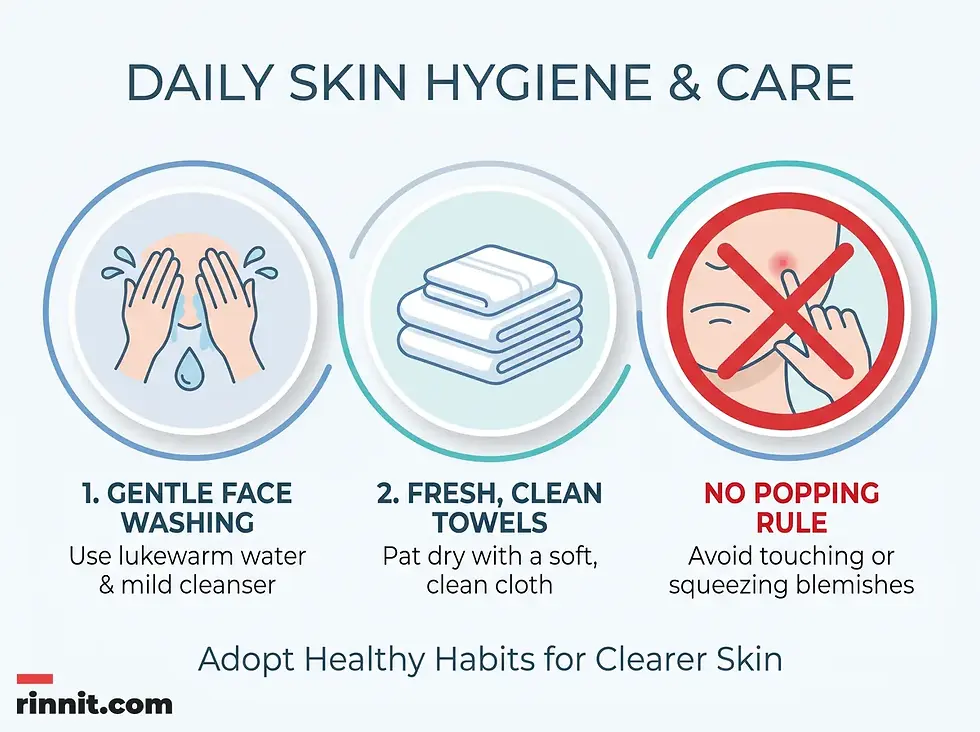
It is best not to squeeze or pop your pimples. Squeezing can push bacteria into the pimple opening, irritate your skin, and increase the risk of permanent scarring. [1]
To maintain clear skin, focus on consistent hygiene. Wash the skin no more than twice daily with a mild cleanser, and always use clean towels. If you experience a sudden or severe outbreak, especially later in life, consult a healthcare provider to rule out underlying conditions. [1]
Conclusion
Pimples are a nearly universal experience that can be managed effectively with the right knowledge and tools. By identifying the specific type of pimple and using targeted treatments, most individuals can achieve clearer skin. Remember that skin health is a journey, and avoiding aggressive habits like popping is the best way to ensure long-term skin integrity.
Frequently Asked Questions
Are pimples contagious?
No, pimples are not contagious. You cannot spread them to another person through skin-to-skin contact.
Why do I get pimples as an adult?
Adult acne can be caused by hormonal changes, stress, or a family history of skin issues. Some people even develop pimples for the first time in adulthood.
Is the dark spot in a blackhead dirt?
No. The dark appearance is caused by irregular light reflection off the clogged hair follicle, not by dirt or poor hygiene.
Can diet cause pimples?
The research on diet and pimples is not clear. Pimples form when pores are clogged by excess sebum, abnormal keratin, or bacteria. If you suspect a food trigger, talk to your healthcare provider.
How often should I wash my face?
It is recommended to wash the affected skin no more than twice a day. Over-washing can irritate the skin and worsen inflammation.
What is the risk of popping a cyst?
Cysts are deep and filled with pus; popping them significantly increases the risk of infection and permanent scarring.
Does tea tree oil actually work?
Tea tree oil has antibacterial properties that can help prevent or stop the growth of bacteria associated with pimples.
When should I see a dermatologist?
You should see a dermatologist if you have severe cystic acne or if milder treatments fail to improve your skin after several weeks.
Can stress cause a breakout?
Yes, healthcare providers often ask about significant stress during a skin exam, as it is considered a risk factor for pimples.
What is the difference between a papule and a pustule?
A papule is a small, solid inflamed bump, while a pustule is a similar bump that is filled with visible pus.
References
Cleveland Clinic. Pimples. Cleveland Clinic Health Library. Last updated March 4, 2022. https://my.clevelandclinic.org/health/diseases/22468-pimples
Stuart B, Maund E, Wilcox C, et al. Topical preparations for the treatment of mild-to-moderate acne vulgaris: systematic review and network meta-analysis. Br J Dermatol. 2021;185(3):512-525. PMID: 33825196. https://doi.org/10.1111/bjd.20080
Mavranezouli I, Daly CH, Welton NJ, et al. A systematic review and network meta-analysis of topical pharmacological, oral pharmacological, physical and combined treatments for acne vulgaris. Br J Dermatol. 2022;187(5):639-649. PMID: 35789996. https://doi.org/10.1111/bjd.21739
Samuels DV, Rosenthal R, Lin R, et al. Acne vulgaris and risk of depression and anxiety: A meta-analytic review. J Am Acad Dermatol. 2020;83(2):532-541. PMID: 32088269. https://doi.org/10.1016/j.jaad.2020.02.040
Medical disclaimer
This article is for informational purposes only and is not a substitute for professional medical advice, diagnosis, or treatment. Always seek the advice of your physician or other qualified health provider with any questions you may have about a medical condition.



Comments