Pimecrolimus Cream: A Comprehensive Guide to Eczema Management

Updated: 2 days ago
Medically reviewed by Dr. Baraa Alnahhal, MD · Last reviewed: October 2026
Pimecrolimus cream is a topical medication specifically designed to treat eczema by reducing inflammation, redness, and itching. It works by modulating an overactive immune response in the skin. Proper application involves applying a thin film to dry skin without using bandages. While effective, users must be aware of increased sun sensitivity and potential interactions with alcohol and other medications.
Quick Answer
Pimecrolimus cream is a non-steroidal topical treatment used to manage the dry, itchy patches associated with eczema. It works by slowing the immune system’s overactivity in the affected skin areas. The cream should be applied daily to dry skin, avoiding contact with eyes and open wounds. Patients should monitor their skin for changes and limit sun exposure. [1]
What the research says
A network meta-analysis of 219 trials ranked pimecrolimus among the most effective eczema topicals. The review behind the 2023 U.S. allergy and immunology eczema guidelines pooled 219 randomized trials (43,123 patients) testing 68 treatments. With high-certainty evidence, pimecrolimus improved 6 of 7 outcomes and was among the best for 2, and the leading treatments, including pimecrolimus, did not increase harm (Chu et al., J Allergy Clin Immunol, 2023).
Pooled data show no overall rise in cancer with topical calcineurin inhibitors, but a small lymphoma signal. A meta-analysis of 11 studies (8 cohort studies including 408,366 treated participants, plus 3 case-control studies) of tacrolimus and pimecrolimus found no association with cancer overall (RR 1.03; 95% CI 0.92–1.16) and no significant link with melanoma or keratinocyte carcinoma. Lymphoma risk was higher (RR 1.86; 95% CI 1.39–2.49 versus no active treatment; RR 1.35; 95% CI 1.13–1.61 versus topical steroids), but the authors note the absolute risk is low and the added risk for any one patient is likely very small (Lam et al., JAMA Dermatol, 2021).
A long-term European cohort found small differences in skin cancer rates among adults using pimecrolimus. The JOELLE study compared 61,841 adults who started pimecrolimus with users of moderate- or high-potency steroids. Pimecrolimus users had incidence rate ratios of 1.21 (95% CI, 1.03–1.41) for melanoma and 1.28 (1.20–1.35) for non-melanoma skin cancer, and ratios below 1 for non-Hodgkin lymphoma, Hodgkin lymphoma, and cutaneous T-cell lymphoma. The authors concluded there was little overall evidence of a link, noting that confounding and surveillance bias may have influenced the results and that any excess risk would have a low public health impact (Arana et al., Clin Epidemiol, 2021).
Research summaries are based on article abstracts retrieved from PubMed.
What is Pimecrolimus Cream?
Pimecrolimus is a specialized topical medication primarily prescribed for the treatment of atopic dermatitis, commonly known as eczema. Unlike traditional steroid creams, pimecrolimus belongs to a class of drugs that work by targeting the immune system directly at the site of inflammation. By slowing down an overactive immune response, the medication effectively reduces the swelling, redness, and intense itching that characterize eczema flare-ups. [1]
The medication is typically used when other treatments have not provided sufficient relief or when they are not suitable for the patient. It is available by prescription and is most commonly recognized under the brand name Elidel. While it is a powerful tool for skin health, it must be used strictly according to a healthcare provider’s instructions to ensure both safety and efficacy. [1]

How do you apply pimecrolimus cream correctly?
Achieving the best results with pimecrolimus cream requires a consistent and correct application technique. The medication is for external use only and should never be ingested. Before application, the affected skin area should be gently washed and patted completely dry. [1]
Step | Action Description |
Preparation | Wash hands thoroughly and ensure the skin is dry. |
Application | Apply a thin film to the affected area as directed on your prescription label. |
Frequency | Use at the same time every day as directed by your provider. |
Post-Care | Wash hands after use (unless treating the hands). |
Restrictions | Do not cover the area with bandages or dressings. |
It is important to avoid bathing, showering, or swimming immediately after applying the cream, as the water can wash the medication away before it has a chance to be absorbed. If the cream accidentally gets into the eyes, they should be rinsed immediately with plenty of cool tap water. [1]
What are the safety precautions and side effects of pimecrolimus cream?
While pimecrolimus is effective, it carries specific warnings that patients must discuss with their care team. It is essential to disclose any history of viral infections, such as cold sores or chickenpox, as well as any existing immune system disorders. [1]
Key Warnings
Sun Sensitivity: Pimecrolimus can make your skin more vulnerable to UV damage. Users should avoid direct sun exposure, wear protective clothing, and use sunscreen regularly. Tanning beds and sun lamps should be avoided entirely.
Cancer Risk: There is a potential increased risk of skin cancer or melanoma associated with long-term use. Patients should regularly check their skin for new growths or changes in existing moles.
Alcohol Interaction: Consuming alcoholic beverages while using this cream may cause the face or skin to become flushed, red, and feel hot.
Age Restrictions: While it can be used in children as young as two years old, specific pediatric precautions apply. [1]

What side effects and interactions can pimecrolimus cream cause?
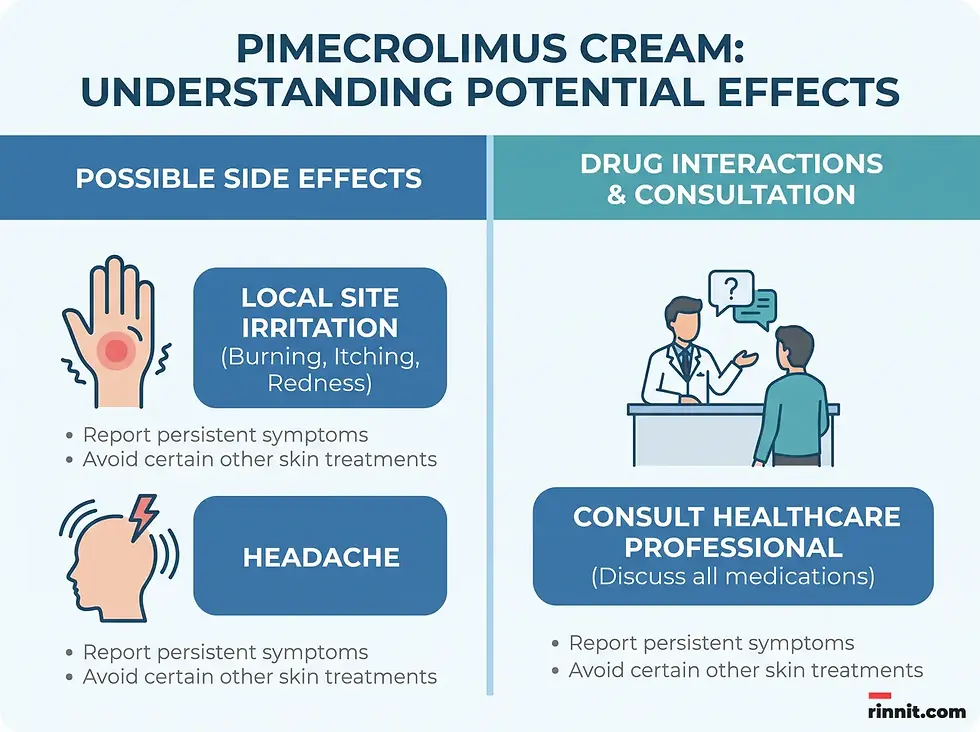
Most side effects of pimecrolimus cream are mild and occur at the site of application. However, some reactions require immediate medical attention. Common site reactions include a temporary burning sensation, itching, or redness when the cream is first applied. [1]
Side Effect Type | Symptoms to Monitor |
Report Immediately | Hives, facial swelling, fever, chills, or swollen lymph nodes. |
Common Site Issues | Burning, stinging, or mild itching at the application area. |
Other Reactions | Headache, sensitivity to light, or small red bumps near hair. |
Patients should also be aware of potential drug interactions. Medications such as calcium channel blockers, certain anti-fungal drugs, and vaccines may interact with pimecrolimus. Always provide your healthcare provider with a complete list of all medications, supplements, and herbal products you are currently using. [1]
Conclusion
Pimecrolimus cream offers a targeted, non-steroidal approach to managing the persistent discomfort of eczema. By understanding the correct application methods and adhering to safety guidelines regarding sun exposure and alcohol, patients can significantly improve their skin health and quality of life. Consistent monitoring and open communication with a healthcare provider are the cornerstones of a successful treatment plan.
Frequently Asked Questions
Can I use pimecrolimus cream on my face?
Yes, pimecrolimus is often used on sensitive areas like the face and neck where steroid creams might be too harsh, but you must avoid getting it in your eyes, nose, or mouth.
How long does it take for the cream to start working?
It may take several days or even weeks of consistent use before you notice a significant improvement in your eczema symptoms.
Should I use a moisturizer with pimecrolimus?
Consult your doctor about using moisturizers. If recommended, you should typically apply pimecrolimus first, let it absorb, and then apply your moisturizer.
Can I use pimecrolimus cream if I am pregnant?
You must inform your healthcare provider if you are pregnant or breastfeeding, as they will need to weigh the benefits against potential risks to the baby.
What happens if I miss a dose?
Apply the missed dose as soon as you remember. If it is almost time for your next dose, skip the missed one and continue with your regular schedule. Do not double the dose.
Why does my skin burn when I apply the cream?
A mild burning or stinging sensation is a common side effect when starting pimecrolimus. This usually decreases after a few days of use as your skin adjusts.
Is pimecrolimus cream a steroid?
No, pimecrolimus is a topical calcineurin inhibitor (TCI), which is a non-steroidal medication that works differently than traditional corticosteroid creams.
Can I drink alcohol while using this medication?
Drinking alcohol can cause skin flushing and a feeling of heat in the face. It is best to avoid alcohol or discuss this reaction with your doctor.
How should I store the cream?
Store it at room temperature (68–77°F, or 20–25°C) in a dry place. Do not freeze the medication and keep it out of the reach of children.
References
Cleveland Clinic. Pimecrolimus Cream. Cleveland Clinic Health Library. Accessed October 11, 2026. https://my.clevelandclinic.org/health/drugs/19016-pimecrolimus-cream
Chu DK, Chu AWL, Rayner DG, et al. Topical treatments for atopic dermatitis (eczema): Systematic review and network meta-analysis of randomized trials. J Allergy Clin Immunol. 2023;152(6):1493-1519. PMID: 37678572. https://doi.org/10.1016/j.jaci.2023.08.030
Lam M, Zhu JW, Tadrous M, et al. Association Between Topical Calcineurin Inhibitor Use and Risk of Cancer, Including Lymphoma, Keratinocyte Carcinoma, and Melanoma: A Systematic Review and Meta-analysis. JAMA Dermatol. 2021;157(5):549-558. PMID: 33787818. https://doi.org/10.1001/jamadermatol.2021.0345
Arana A, Pottegard A, Kuiper JG, et al. Long-Term Risk of Skin Cancer and Lymphoma in Users of Topical Tacrolimus and Pimecrolimus: Final Results from the Extension of the Cohort Study Protopic Joint European Longitudinal Lymphoma and Skin Cancer Evaluation (JOELLE). Clin Epidemiol. 2021;13:1141-1153. PMID: 35002327. https://doi.org/10.2147/CLEP.S331287
Medical disclaimer
This article is for informational purposes only and is not a substitute for professional medical advice, diagnosis, or treatment. Always seek the advice of your physician or other qualified health provider with any questions you may have about a medical condition.


Comments