Phelan-McDermid Syndrome: Understanding 22q13.3 Deletion

Updated: 2 days ago
Medically reviewed by Dr. Baraa Alnahhal, MD · Last reviewed: October 2026
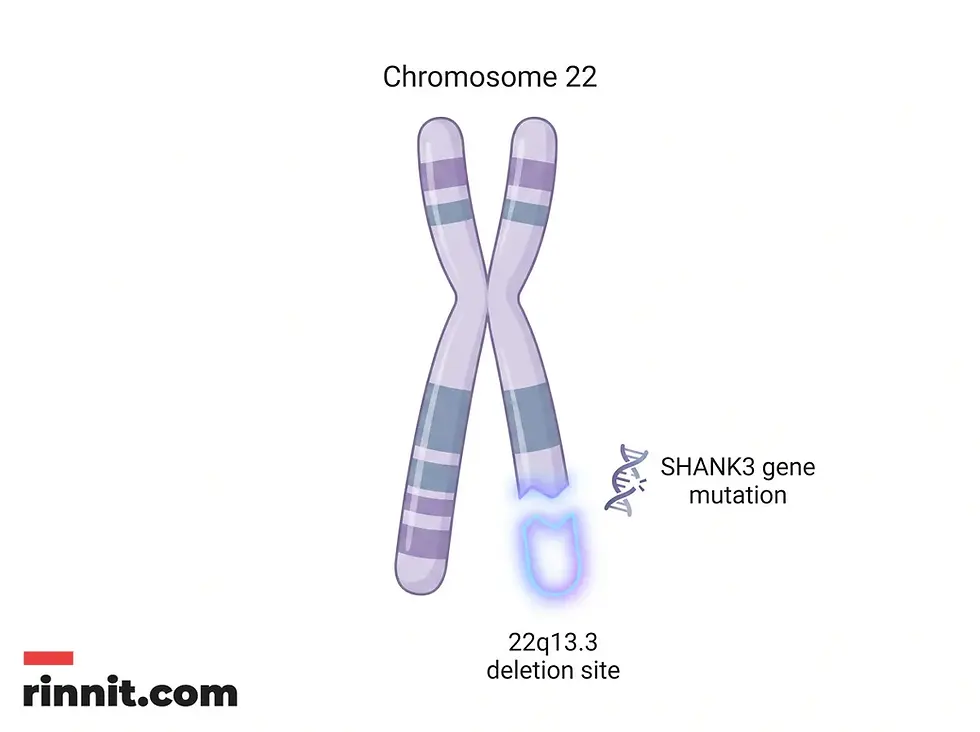
Phelan-McDermid syndrome, also known as 22q13.3 deletion syndrome, is a rare genetic disorder that impacts physical, intellectual, and behavioral development. Characterized by muscle weakness, speech delays, and a high correlation with autism spectrum disorder, the condition arises from a missing piece of chromosome 22. While there is currently no cure, a multidisciplinary approach involving specialized therapies and medical management can significantly improve the quality of life and functional outcomes for affected individuals.
Quick Answer
Phelan-McDermid syndrome is a rare chromosomal condition caused by deletion of the 22q13.3 region or a mutation in the SHANK3 gene. It causes developmental delays, hypotonia and significant speech challenges. It is diagnosed through specialized genetic testing and requires lifelong supportive care from a team of specialists to manage related concerns such as epilepsy and gastrointestinal issues. [1]
What the research says
Updated management guidelines now span 11 specialties, but PMS-specific evidence is still limited. A taskforce of clinical experts and parent representatives met between 2021 and 2022 across genetics, neurology, neurodevelopment, gastroenterology, primary care, physiatry, nephrology, endocrinology, cardiology, gynecology, and dentistry. It found limited evidence specific to PMS, so treatment mostly follows general guidelines for developmental disorders (Srivastava et al., Am J Med Genet A, 2023).
Most cases are new (de novo) changes, and ring chromosome 22 explains an estimated 10% to 20%. A European consensus review found that most people with PMS have a de novo deletion or SHANK3 variant. Among those with a ring chromosome 22, the tumor risk is about 2% to 4%, and the authors recommend genetic counseling and karyotyping for deletions found on molecular testing (Koza et al., Eur J Med Genet, 2023).
Psychiatric symptoms can emerge in the teen years. A systematic review of 18 articles describing 35 people with PMS-associated psychosis found an average onset around age 17, with about 69% also having catatonia and about 81% mood symptoms. About 76% had at least a partial or temporary response to antipsychotic treatment, though high-quality evidence is scarce (Colijn, Acta Neuropsychiatr, 2024).
Research summaries are based on article abstracts retrieved from PubMed.
What is Phelan-McDermid Syndrome?
Phelan-McDermid syndrome is a rare genetic condition that scientists estimate occurs in roughly 2 to 10 out of every 1 million live births. Because its symptoms can be subtle and overlap with other developmental disorders, it is often underdiagnosed, with only about 2,500 confirmed cases worldwide. The disorder is primarily defined by the loss of genetic material on the long arm of chromosome 22, a region critical for normal neurological and physical development. [1]
There is a significant link between Phelan-McDermid syndrome and autism spectrum disorder (ASD). Research indicates that many individuals with this syndrome also meet the criteria for autism, and it is estimated that approximately 1% of all people with ASD may have an underlying Phelan-McDermid diagnosis. This connection underscores the importance of genetic screening for children exhibiting significant developmental or speech delays. [1]
What are the symptoms and physical features of Phelan-McDermid syndrome?
The manifestations of Phelan-McDermid syndrome are diverse and can range from mild to severe. While some signs are apparent at birth, others may only become noticeable as a child misses key developmental milestones. [1]
Symptom Category | Common Characteristics |
Developmental | Muscle weakness (hypotonia), delayed walking, and significant speech delays or absence of speech. |
Physical Features | Deep-set eyes, drooping eyelids (ptosis), large ears, and fleshy hands or feet. |
Behavioral | High pain tolerance, sleep disturbances, social anxiety, and oversensitivity to touch. |
Medical | Reduced ability to sweat, feeding difficulties, and gastrointestinal issues like reflux. |

Beyond these common traits, some children may exhibit unique physical signs, such as the fusion of the second and third toes (syndactyly) or a long, narrow head shape with a pointed chin. Internally, the syndrome can occasionally involve congenital heart defects, kidney abnormalities, or fluid-filled sacs on the brain known as arachnoid cysts. [1]
What causes Phelan-McDermid syndrome, and how is it inherited?
Most cases of Phelan-McDermid syndrome are not inherited but occur as a random, spontaneous event during the formation of reproductive cells or early fetal development. However, the condition can be passed down in an autosomal dominant fashion, meaning a parent with the deletion has a 50% chance of passing it to their offspring. [1]
In instances where a chromosomal deletion is not detected, the syndrome may be caused by a mutation in the SHANK3 gene. This gene is responsible for providing instructions to create proteins that are essential for the functioning of synapses, the connections between brain cells. When this gene is missing or altered, it disrupts the brain's ability to communicate effectively, leading to the cognitive and behavioral challenges seen in the disorder. [1]
How is Phelan-McDermid syndrome diagnosed?
Diagnosing Phelan-McDermid syndrome typically involves a multi-step process beginning with a physical examination and a review of the child's developmental history. If the syndrome is suspected, a healthcare provider will request genetic testing, usually via a blood sample, to look for the specific 22q13.3 deletion. [1]
Once a diagnosis is confirmed, further evaluations are necessary to assess the full impact on the child's health:
Imaging: Brain MRIs or CT scans are used to check for arachnoid cysts that could cause intracranial pressure.
Organ Assessment: Renal ultrasounds and echocardiograms are performed to identify potential kidney or heart defects.
Sensory and Sleep Studies: Detailed eye exams, hearing evaluations, and sleep studies help manage secondary complications. [1]
How is Phelan-McDermid syndrome managed long term?
Phelan-McDermid syndrome has no cure, but a comprehensive treatment plan can help manage symptoms and maximize a child's functional abilities. Because the syndrome affects multiple systems, a multidisciplinary team of specialists is essential. [1]
Multidisciplinary Care Team
Specialists: Neurologists, cardiologists, nephrologists, and gastroenterologists manage specific organ health and seizure activity.
Therapeutic Support: Occupational, physical, and speech therapists work to improve daily living skills, muscle strength, and communication abilities.
Safety Considerations: Due to a reduced ability to sweat, caregivers must protect children from extreme heat and direct sunlight to prevent overheating. Additionally, because of a high pain tolerance, caregivers must stay alert for subtle behavioral cues that may indicate injury or illness. [1]

Conclusion
Phelan-McDermid syndrome presents a complex set of challenges, but with early diagnosis and a coordinated medical response, affected individuals can lead meaningful lives. The integration of specialized therapies and proactive medical management is the cornerstone of effective care. As research continues into the genetic drivers of the condition, families and healthcare providers remain focused on providing the best possible support for every child.
Frequently Asked Questions
Is Phelan-McDermid syndrome the same as autism?
No, but they are closely related. Many people with the syndrome have autism spectrum disorder, and about 1% of all autism cases are linked to this specific genetic deletion.
Can the condition be detected during pregnancy?
While not part of routine screening, specialized prenatal testing can be used, especially when a parent is known to carry the deletion. Most cases are diagnosed after birth.
Why is reduced sweating a concern?
A reduced ability to sweat makes it difficult for the body to cool itself down, increasing the risk of overheating and dehydration, especially in warm weather.
Does Phelan-McDermid syndrome affect life expectancy?
The condition itself is rarely life-threatening. However, many people with the syndrome need lifelong medical care and ongoing support, and good management of associated issues such as heart or kidney problems helps protect long-term health.
What is the SHANK3 gene?
The SHANK3 gene is a critical piece of DNA on chromosome 22 that helps brain cells communicate. Its absence or mutation is a primary driver of the syndrome's symptoms.
Do all children with the syndrome have speech delays?
Every child is affected differently, but delayed or absent speech is one of the most common features of the disorder.
How common are seizures in this syndrome?
Epilepsy is a frequent complication, and many children require management by a neurologist to control seizure activity.
Is there a specific diet for Phelan-McDermid syndrome?
There is no universal diet, but many children require specialized feeding plans due to swallowing difficulties or gastrointestinal issues like reflux.
Can parents have more children without the syndrome?
If the deletion was spontaneous (de novo), the risk for future children is very low. If a parent carries the deletion, genetic counseling is recommended to discuss the 50% inheritance risk.
References
Cleveland Clinic. Phelan-McDermid Syndrome. Cleveland Clinic Health Library. Last updated May 20, 2022. https://my.clevelandclinic.org/health/diseases/23087-phelan-mcdermid-syndrome
Srivastava S, Sahin M, Buxbaum JD, et al. Updated consensus guidelines on the management of Phelan-McDermid syndrome. Am J Med Genet A. 2023;191(8):2015-2044. PMID: 37392087. DOI: 10.1002/ajmg.a.63312
Koza SA, Tabet AC, Bonaglia MC, et al. Consensus recommendations on counselling in Phelan-McDermid syndrome, with special attention to recurrence risk and to ring chromosome 22. Eur J Med Genet. 2023;66(7):104773. PMID: 37120077. DOI: 10.1016/j.ejmg.2023.104773
Colijn MA. Phelan-McDermid syndrome-associated psychosis: a systematic review. Acta Neuropsychiatr. 2024;37:e15. PMID: 39563191. DOI: 10.1017/neu.2024.46
Medical disclaimer
This article is for informational purposes only and is not a substitute for professional medical advice, diagnosis, or treatment. Always seek the advice of your physician or other qualified health provider with any questions you may have about a medical condition.



Comments