Pediatric Headaches: Recognizing Types, Triggers, and Effective Care

Updated: 2 days ago
Medically reviewed by Dr. Baraa Alnahhal, MD · Last reviewed: October 2026
Quick Answer: What causes headaches in children?
Headaches in children are primarily caused by complex signals between the brain, blood vessels and surrounding nerves. Common triggers include viral illnesses like the flu, stress, anxiety and lack of sleep [1]. Rarely, headaches stem from underlying conditions such as meningitis or a brain tumor [1]. Genetics also play a significant role, particularly with migraines, which often run in families [1].

What the research says
Most children and teens have headaches, and tension-type headache is more common than migraine. A systematic review and meta-analysis of 48 studies of 8- to 18-year-olds estimated that 62% (95% CI 53-70%) have primary headaches, including migraine in 11% (95% CI 9-14%) and tension-type headache in 17% (95% CI 12-23%), with high variation between studies (Onofri et al., The Journal of Headache and Pain, 2023) [2].
Ibuprofen outperformed placebo for acute migraine in children, but the evidence is limited. A Cochrane review of 27 randomized trials (9,158 children and adolescents) found more pain-free children with ibuprofen than placebo at two hours in two small studies of 162 children (risk ratio 1.87, 95% CI 1.15-3.04; low-quality evidence), while paracetamol (acetaminophen) was not better than placebo in one small study of 80 children (Richer et al., Cochrane Database of Systematic Reviews, 2016) [3].
About 1 in 5 children and adolescents live with chronic pain, and headache is among the most common types. A meta-analysis of 119 population-based studies including 1,043,878 children found an overall chronic pain prevalence of 20.8%, with headache and musculoskeletal pain the most prevalent types (25.7%) and girls generally reporting more pain than boys (Chambers et al., Pain, 2024) [4].
Key Takeaways
Feature | Description |
Prevalence | Affects 25% of younger children and 75% of adolescents [1]. |
Primary Types | Migraines, Tension-type, and Mixed Headache Syndrome [1]. |
Common Triggers | Stress, lack of sleep, and viral infections [1]. |
Genetic Link | About 60% of people with migraines have an immediate family member with the condition [1]. |
Warning Signs | Sudden severe pain, fever, stiff neck, or dizziness [1]. |
Outlook | Less than 3% of pediatric headaches indicate a serious brain condition [1]. |
What are the categories of pediatric headaches?
Headaches in children are generally classified into four main categories based on their origin and symptoms [1].
1. Migraines
Migraines are severe, episodic headaches that can be highly disruptive. In children, these often present with sensitivity to light and noise, frequently followed by nausea and vomiting [1]. Unlike adult migraines, pediatric versions may be shorter in duration, typically lasting between two and 72 hours [1].
2. Tension Headaches
Tension-type headaches are the most frequent variety in the pediatric population [1]. They are often described as a "band" of pressure across the forehead [1]. These are further divided into:
3. Mixed Headache Syndrome
This condition is a combination of migraine and chronic tension-type headaches [1]. Children with this syndrome may experience frequent daily headaches with periodic severe migraine symptoms.
4. Traction and Inflammatory Headaches
These are rare and usually stem from an underlying brain disorder or illness, such as a tumor, hemorrhage, or infection like meningitis [1].

What are the symptoms and warning signs of pediatric headaches?
Symptoms vary significantly depending on the type of headache a child is experiencing.
Acute and Recurrent Symptoms
Acute headaches appear suddenly and are often sharp or throbbing. Recurrent headaches, such as migraines, may include:
Chronic Progressive Warning Signs
If a child’s headaches gradually become more frequent and severe, it is classified as chronic progressive. When paired with neurological symptoms like weakness, balance problems, or visual disturbances, this requires immediate medical evaluation to rule out conditions like hydrocephalus or tumors [1].
Cleveland Clinic notes that children's headaches often differ from adults': they often don't last as long, children tend to feel the pain all over the head instead of on just one side, and stomach complaints such as abdominal pain, nausea, and vomiting are more common [1].
What are the common causes and triggers of pediatric headaches?
Identifying the underlying cause is essential for effective treatment.
Lifestyle and Environmental Factors
Many pediatric headaches are triggered by everyday stressors and habits:
Illness and Infection
Common infections often present with a secondary headache:
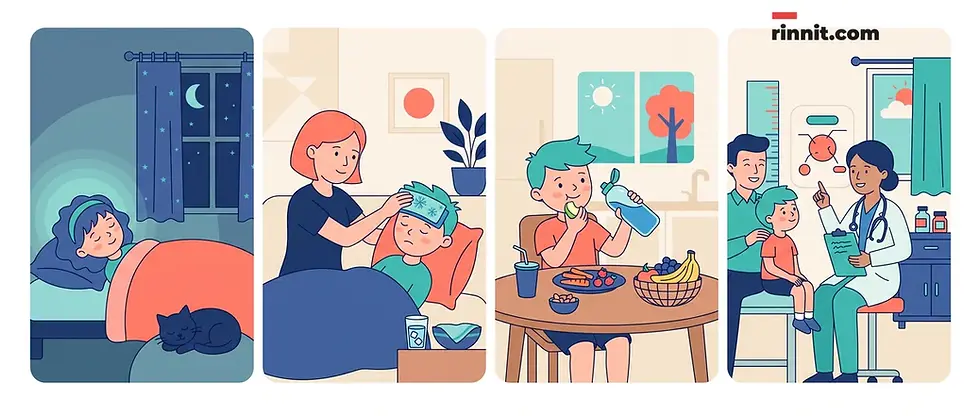
How are pediatric headaches managed, and what support helps?
Treatment plans are tailored to the child’s age, the type of headache, and the frequency of symptoms.
Lifestyle Adjustments
The foundation of management often lies in establishing healthy routines:
Hydration and Nutrition: Ensuring the child drinks plenty of water and eats regular, balanced meals [1].
Sleep Hygiene: Getting enough sleep every night: 9 to 12 hours for ages 6 to 12 and 8 to 10 hours for teens.
Trigger Avoidance: Keeping a headache diary to identify and avoid specific dietary or environmental triggers [1].
Medical Interventions
Healthcare providers may recommend several pharmacological approaches:
Symptomatic Relief: Over-the-counter medications like ibuprofen or acetaminophen for immediate pain relief [1]. Never give aspirin to children or teens because of the risk of Reye's syndrome, and avoid using pain relievers more than 2 to 3 days a week, which can cause rebound headaches.
Abortive Therapy: Medications taken at the very first sign of a migraine to stop the progression [1].
Preventive Therapy: Daily medications intended to reduce the frequency and severity of chronic headaches [1].
Stress Management
Addressing the emotional roots of tension is vital. This may include relaxation techniques, breathing exercises, or professional counseling to manage anxiety and depression [1].
Related Reading on Rinnit
Conclusion
While headaches can be distressing for both children and parents, the vast majority are manageable and do not indicate serious underlying health issues [1]. By focusing on lifestyle stability, stress reduction, and professional medical guidance, most children can achieve significant relief and return to their normal activities.
Helpful External Resources
Frequently Asked Questions (FAQ)
Are headaches common in toddlers?
Yes, headaches can occur even in very young children, though they are more frequent in adolescents.
Can stress cause a child to have a headache?
Stress is one of the most common triggers for tension headaches in children.
Is a migraine the same as a regular headache?
No, migraines are severe, episodic, and often accompanied by nausea and light sensitivity.
How long do pediatric migraines usually last?
They typically last between two and 72 hours.
Do pediatric headaches always happen on one side of the head?
No, children often feel pain all over their head rather than just on one side.
Can dehydration cause a headache?
Yes, lack of proper hydration is a frequent trigger for pediatric headaches.
Are headaches hereditary?
Migraines have a strong genetic link; about 60% of people with migraines have an immediate family member who also has them.
Can a child’s diet trigger a headache?
Yes, certain foods or skipping meals can initiate a headache episode.
What is an aura?
An aura is a sensory disturbance, like seeing bright lights or blind spots, that sometimes precedes a migraine.
Do headaches cause brain damage in children?
No, headaches do not cause brain damage or negatively affect the brain's structure.
When should I worry about my child’s headache?
Seek medical attention if the pain is sudden and severe, or accompanied by a stiff neck and fever. Go to the emergency room if a headache comes with weakness, numbness, confusion, vision loss, shortness of breath, or vomiting that won't stop.
What is a tension headache?
It is a common headache often described as a tight band of pressure around the forehead.
Can eye strain cause headaches?
Yes, excessive screen time or uncorrected vision issues can lead to headaches.
How is a pediatric headache diagnosed?
Diagnosis usually involves a physical exam and a detailed interview about symptoms and triggers.
Are brain tumors a common cause of headaches?
No, less than 3% of pediatric headaches are caused by serious conditions like tumors.
Can ear infections cause head pain?
Yes, the pressure from an ear infection often manifests as a headache.
What is abortive therapy?
It is medication taken at the start of a headache to stop it from becoming severe.
What is preventive therapy?
It is daily medication used to reduce how often chronic headaches occur.
Can a child have both migraines and tension headaches?
Yes, this is known as mixed headache syndrome.
Does exercise help or hurt headaches?
Regular moderate exercise is good, but over-exertion can be a trigger for some.
Should I keep a headache diary for my child?
Yes, it is a highly effective tool for identifying patterns and triggers.
Can caffeine cause headaches?
Both caffeine intake and caffeine withdrawal can trigger headaches in some children.
Is vomiting common with pediatric headaches?
It is a frequent symptom of migraines in children.
Can sinus infections cause headaches?
Yes, congestion and pressure in the sinuses often lead to frontal head pain.
What is a chronic progressive headache?
It is a headache that gradually increases in frequency and intensity over time.
Can lack of sleep trigger a migraine?
Sleep deprivation is a very common trigger for pediatric migraines.
Are headaches a symptom of juvenile diabetes?
While not a primary symptom, they can indicate low blood sugar related to diabetes.
Can loud noises trigger a headache?
Yes, many children with migraines are highly sensitive to noise.
What is pallor?
Pallor is a pale skin color that often occurs during a pediatric migraine.
Can weather changes cause headaches?
Some children are sensitive to changes in barometric pressure or extreme temperatures.
Is ibuprofen safe for children's headaches?
It is commonly used for symptomatic relief, but always consult a pediatrician first.
What is hydrocephalus?
It is an abnormal build-up of fluid in the brain that can cause progressive headaches.
Can anxiety cause daily headaches?
Yes, chronic anxiety can lead to frequent tension-type headaches.
Do children outgrow migraines?
Some children do, while others may continue to experience them into adulthood.
Can a head injury cause a headache?
Yes, trauma to the head is a direct cause of acute headaches.
What is a "band" headache?
It is a description of the pressure felt during a tension headache.
Can strong smells trigger a migraine?
Yes, some children are sensitive to perfumes, smoke, or chemical odors.
Is fever always present with a headache?
No, but it can occur with migraines or if the headache is caused by an infection.
Can a child get a headache from playing video games?
Yes, due to eye strain, posture, and intense light stimulation.
What is the difference between episodic and chronic?
Episodic happens occasionally; chronic happens 15 or more days a month.
Can a child get a headache from a sore throat?
Yes, infections like strep throat can cause secondary headaches.
Are imaging tests like MRIs always necessary?
No, they are usually only ordered if a serious underlying cause is suspected.
Can relaxation techniques help?
Yes, they are very effective for managing tension and stress-related headaches.
What is an inflammatory headache?
A headache caused by inflammation, such as from meningitis or encephalitis.
Can allergies cause headaches?
Yes, allergic reactions and sinus congestion are known triggers.
Is it normal for a child to want to sleep during a headache?
Yes, many children find relief by sleeping in a dark, quiet room.
Can high blood pressure cause headaches in kids?
While rare, it is something a doctor will check during a diagnosis.
What is MRA?
It is a type of MRI that specifically looks at the blood vessels (arteries) in the brain.
Can school absences be a sign of chronic headaches?
Frequent absences are often a major indicator of a significant headache disorder.
Can a pediatrician treat all types of headaches?
Most can, but they may refer you to a pediatric neurologist for complex cases.
References
Cleveland Clinic. Headaches in Children. Cleveland Clinic. Last updated June 24, 2022. https://my.clevelandclinic.org/health/diseases/4225-headaches-in-children
Onofri A, Pensato U, Rosignoli C, et al. Primary headache epidemiology in children and adolescents: a systematic review and meta-analysis. The Journal of Headache and Pain. 2023;24(1):8. PMID: 36782182. https://doi.org/10.1186/s10194-023-01541-0
Richer L, Billinghurst L, Linsdell MA, et al. Drugs for the acute treatment of migraine in children and adolescents. Cochrane Database of Systematic Reviews. 2016;4:CD005220. PMID: 27091010. https://doi.org/10.1002/14651858.CD005220.pub2
Chambers CT, Dol J, Tutelman PR, et al. The prevalence of chronic pain in children and adolescents: a systematic review update and meta-analysis. Pain. 2024;165(10):2215-2234. PMID: 38743558. https://doi.org/10.1097/j.pain.0000000000003267
Disclaimer
The information provided in this article is for educational purposes only and should not be used as a substitute for professional medical advice, diagnosis, or treatment. Always seek the advice of your physician or other qualified health provider with any questions you may have regarding a medical condition.



Comments