Papillary Fibroelastoma: Symptoms, Causes, and Surgical Treatment

Updated: 2 days ago
Medically reviewed by Dr. Baraa Alnahhal, MD · Last reviewed: September 2026
TL;DR: Papillary fibroelastoma is a benign, primary heart tumor that most commonly grows on the heart valves. While noncancerous, these small, mobile growths are dangerous because they can break off and travel through the bloodstream, leading to life-threatening complications like stroke or heart attack. Surgery is the standard curative treatment, often recommended even for patients without symptoms to prevent future embolic events.
Quick Answer: What is a Papillary Fibroelastoma?
A papillary fibroelastoma is a noncancerous (benign) tumor that originates in the heart, primarily affecting the heart valves. It is one of the most common types of primary cardiac tumors, typically appearing in adults over age 40. Despite being noncancerous, it poses a significant risk because it can become embolic—meaning pieces of the tumor or associated blood clots can break off and travel to the brain, lungs, or coronary arteries. Diagnosis is often incidental during imaging for other conditions. Surgical removal is the primary treatment, offering a high cure rate and preventing serious complications like stroke or sudden cardiac death.
Understanding Papillary Fibroelastoma
Papillary fibroelastoma is classified as a primary heart tumor because it begins within the heart tissue rather than spreading from another part of the body. It is distinguished by its unique appearance and high mobility within the heart.

Typical Characteristics
Location: In approximately 80% of cases, these tumors grow on the heart valves. The aortic valve is the most common site, followed by the mitral valve.
Appearance: On imaging, the tumor often resembles a sea anemone due to small, hair-like projections (papillary fronds) extending from its surface.
Size and Structure: They are typically small (less than 1 cm) and pedunculated, meaning they are attached by a stalk that allows them to sway back and forth in the bloodstream.
Valve Function: Unlike other heart tumors like myxomas, papillary fibroelastomas usually do not interfere with how the valve opens or closes because they typically grow on the "downstream" side of the valve.
Risks and Complications
The primary danger of a papillary fibroelastoma is not its size or cancerous potential, but its ability to trigger blood clots or break apart. These traveling pieces, called emboli, can block blood flow to vital organs.
Potential Embolic Complications
Traveling clots or tumor fragments can reach several areas of the body, leading to severe medical events:
Target Area | Potential Result |
Brain | Stroke or Transient Ischemic Attack (TIA). |
Coronary Arteries | Heart attack or angina (chest pain). |
Lungs | Pulmonary embolism. |
Retinas | Sudden vision loss or impairment. |
Spinal Cord | Neurological damage or paralysis. |
Heart Rhythm | Ventricular fibrillation or sudden cardiac death. |
Symptoms and Diagnosis
More than half of individuals diagnosed with a papillary fibroelastoma do not experience any symptoms. For those who do, the signs are often related to the complications the tumor causes rather than the tumor itself.
Common Symptoms
Shortness of breath (dyspnea).
Fainting (syncope).
Chest pain (angina), particularly during physical activity.
Symptoms of a mini-stroke (TIA) or full stroke.
Diagnostic Process
Because symptoms are rare, these tumors are most often found "incidentally" during tests performed for unrelated reasons. Echocardiography is the gold standard for diagnosis:
Transthoracic Echo (TTE): A standard ultrasound of the heart through the chest wall.
Transesophageal Echo (TEE): A more detailed ultrasound performed through the esophagus, often used to detect very small tumors or provide a clearer view of the heart valves.

Management and Treatment
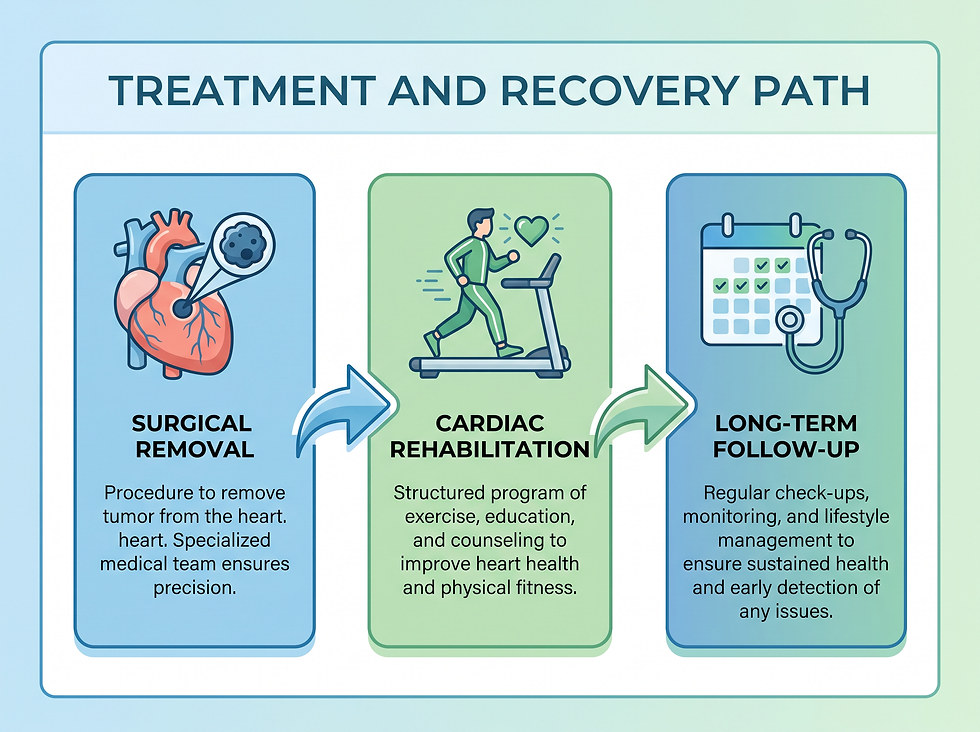
Surgery is the standard of care for most patients diagnosed with a papillary fibroelastoma, even if they are currently asymptomatic. The goal is to eliminate the risk of future embolic events.
Surgical Intervention
The procedure typically involves:
Complete removal of the tumor and its stalk.
Repair or replacement of the affected heart valve if it was damaged by the tumor.
A thorough inspection of the heart chambers to ensure no other growths are present.
While traditional open-heart surgery is common, some patients may be candidates for minimally invasive robotic surgery. If a patient is not a candidate for surgery due to other health risks, doctors may prescribe anticoagulants (blood thinners) to reduce the risk of clot formation.
Recovery and Outlook
The prognosis following successful surgical removal is excellent. Because the tumor is benign, it does not spread to other organs, and the risk of it recurring in the heart is very low.
Conclusion
Papillary fibroelastoma is a unique and potentially dangerous heart tumor that requires careful management. Although it is noncancerous, its high mobility and tendency to cause emboli make it a significant risk factor for stroke and heart attack. Fortunately, modern surgical techniques provide a definitive cure for most patients, allowing for a full return to normal activities with a very low risk of recurrence. Early detection, even when incidental, is key to preventing life-altering complications.
Diagnosed with a heart mass or concerned about cardiac symptoms? Consult a cardiovascular specialist for a detailed evaluation.
Frequently Asked Questions
1. Is a papillary fibroelastoma cancerous?
No, it is a benign (noncancerous) tumor, meaning it does not spread to other parts of the body like cancer does.
2. Why is a noncancerous tumor dangerous?
It is dangerous because pieces of the tumor or blood clots can break off and travel to the brain or heart, causing a stroke or heart attack.
3. Where do these tumors usually grow?
They most commonly grow on the heart valves, particularly the aortic and mitral valves on the left side of the heart.
4. What does "pedunculated" mean?
It means the tumor is attached to the heart tissue by a small stalk or stem, which allows it to move freely in the blood flow.
5. How common are primary heart tumors?
They are very rare, affecting fewer than 1 in 2,000 people. Papillary fibroelastomas are one of the most common types among these rare tumors.
6. Who is most likely to be affected?
Most diagnoses occur in adults around the age of 60, though it can affect anyone over age 40 and, rarely, children with heart defects.
7. Can I have this tumor without knowing it?
Yes, more than half of people with a papillary fibroelastoma have no symptoms at all.
8. How is it usually discovered?
It is often found accidentally during imaging tests (like an echocardiogram) performed for another reason.
9. What is the "sea anemone" appearance?
This refers to the small, hair-like fronds that extend from the tumor, giving it a distinctive look on an ultrasound.
10. Is surgery always necessary?
Surgery is usually recommended to prevent complications, but if surgery is too risky, blood-thinning medications may be used instead.
11. Can the tumor interfere with heart valve function?
Usually not, because it typically grows on the side of the valve where blood is flowing away, rather than blocking the opening.
12. What are the risks of leaving it untreated?
Untreated tumors can grow larger and significantly increase the risk of stroke, heart attack, or sudden cardiac death.
13. What is the recovery like after surgery?
Recovery time varies, but most patients require a few weeks of restricted activity and may participate in cardiac rehab to regain strength.
14. Can the tumor come back after surgery?
The risk of recurrence is considered very low once the tumor has been completely removed.
15. What is the difference between this and a myxoma?
Myxomas are usually larger, less likely to be on valves, and more likely to physically block blood flow through the heart.
Medical Disclaimer: This content is for informational purposes only and does not constitute medical advice. Always seek the advice of your physician or other qualified health provider with any questions you may have regarding a medical condition.
Comments