Overflow Incontinence: Managing Chronic Urinary Retention and Leaks

Updated: 2 days ago
Medically reviewed by Dr. Baraa Alnahhal, MD · Last reviewed: September 2026
TL;DR
Overflow incontinence is a condition where the bladder becomes overfilled, leading to constant dribbling or leaking of urine. It is primarily caused by chronic urinary retention, often due to an obstruction like an enlarged prostate or nerve damage that prevents the bladder from emptying completely. While less common than other types of incontinence, it can be effectively managed through bladder training, medications, and, in some cases, catheterization.
Quick Answer: What Is Overflow Incontinence?
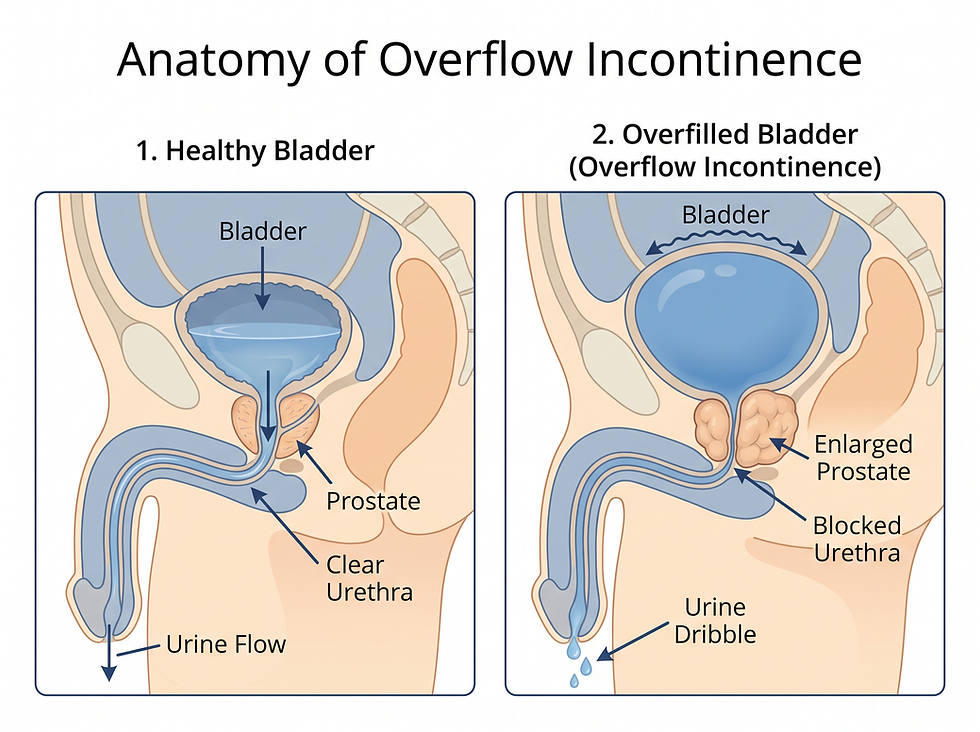
Overflow incontinence is a type of urinary incontinence characterized by the involuntary leaking or dribbling of urine because the bladder is too full. This occurs when the bladder cannot empty properly, a condition known as urinary retention. When the bladder reaches its maximum capacity, any additional urine produced causes the bladder to "overflow," resulting in frequent or constant leakage.
Common causes include physical blockages, such as an enlarged prostate in men or urethral strictures (scar tissue), as well as weak bladder muscles or nerve damage from conditions like diabetes or spinal cord injuries. Symptoms often include a weak urine stream, difficulty starting to pee, and a persistent feeling that the bladder is not empty. Diagnosis typically involves a combination of a bladder diary, ultrasounds to measure post-void residual urine, and urodynamic testing. Treatment focuses on addressing the underlying cause and may include timed voiding, medications to shrink the prostate, or the use of catheters to ensure the bladder is emptied regularly.
Symptoms of Overflow Incontinence
The symptoms of overflow incontinence are distinct from other types of urinary leakage, as they are often related to the bladder's inability to empty rather than sudden pressure or urges.
Key Indicators
Frequent Dribbling: A constant or near-constant leak of small amounts of urine.
Weak Urine Stream: Difficulty starting to urinate or a stream that is thin and slow.
Interrupted Flow: Starting and stopping several times during a single trip to the bathroom.
Incomplete Emptying: Feeling like you still need to pee immediately after finishing.
Frequent Urination: Needing to go often, but only passing small volumes each time.
Causes and Risk Factors
Overflow incontinence is almost always the result of an underlying physical or neurological issue that prevents normal bladder function.
Primary Causes
Obstructions: The most common cause, particularly in men. An enlarged prostate (BPH) or prostate cancer can squeeze the urethra, blocking the exit for urine.
Scar Tissue: Previous surgeries or radiation therapy can cause urethral strictures, which narrow the passage for urine.
Weak Bladder Muscles: Over time, the bladder muscle (detrusor) may lose its ability to contract effectively.
Nerve Damage: Conditions such as diabetes, multiple sclerosis, or spinal cord injuries can disrupt the signals between the brain and the bladder.
Risk Factors
Risk Factor | Impact on Bladder Function |
Aging | Increases the likelihood of prostate issues and muscle weakness. |
Diabetes | Can cause "neurogenic bladder" due to long-term nerve damage. |
Prostate Surgery | May lead to the development of scar tissue or urethral blockages. |
Medications | Certain diuretics or drugs that affect the nervous system can increase urine volume or decrease bladder sensation. |
Diagnosis and Testing
Accurate diagnosis is crucial to determine if the issue is a physical blockage or a muscle/nerve problem.
The Diagnostic Process
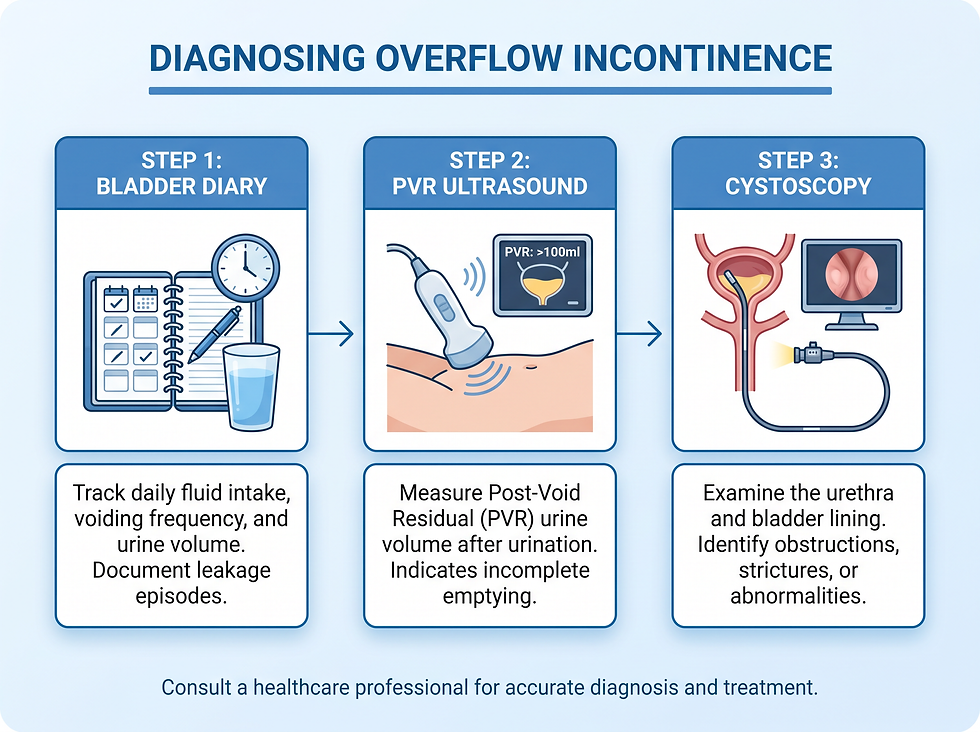
Health History and Physical Exam: Including a pelvic exam or digital rectal exam to check for obstructions.
Bladder Diary: A 2–3 day log of fluid intake, urination frequency, and leakage episodes.
Urinalysis: To rule out infections (UTIs) or blood in the urine.
Post-Void Residual (PVR) Test: Using an ultrasound after you pee to see exactly how much urine remains in the bladder.
Cystoscopy: Using a small camera to look inside the bladder and urethra for blockages or scar tissue.
Management and Treatment Options
Treatment is highly personalized and focuses on ensuring the bladder can empty regularly and completely.
Natural Management Techniques
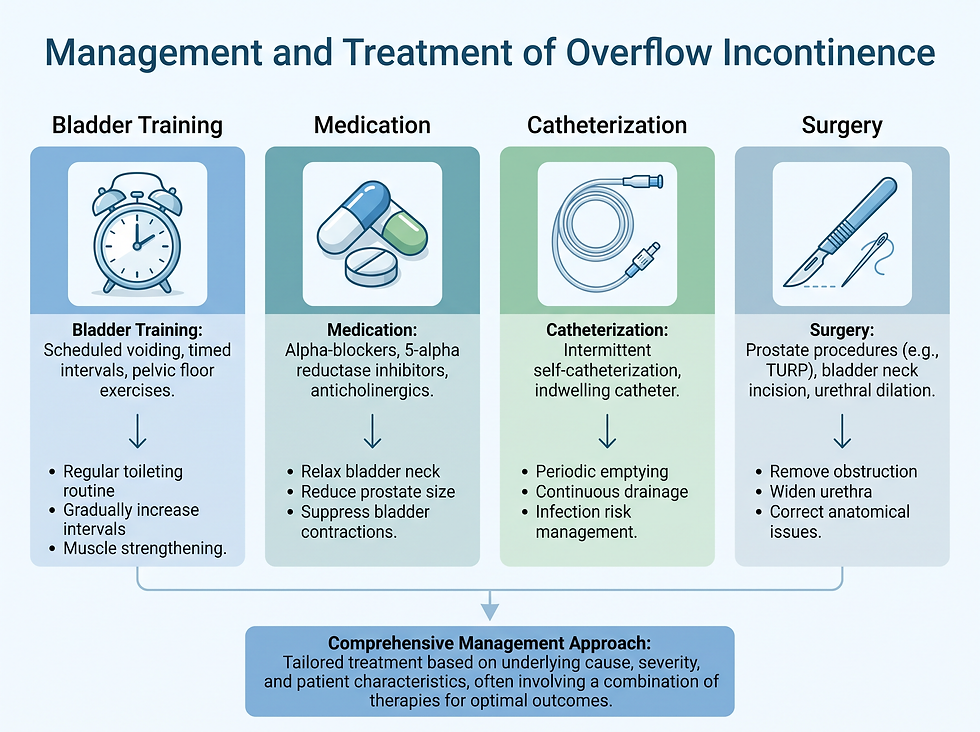
Timed Voiding: Using the bathroom at set intervals (e.g., every 2–3 hours) regardless of the urge to pee.
Double Voiding: Attempting to urinate a second time immediately after finishing to ensure the bladder is empty.
Medical and Surgical Treatments
Medications: Drugs to relax bladder muscles or shrink an enlarged prostate.
Intermittent Catheterization: Inserting a catheter several times a day to empty the bladder and then removing it.
Indwelling Catheterization: A permanent catheter that drains into a bag (see our Foley catheter guide).
Surgery: Procedures to remove blockages, such as a TURP for an enlarged prostate, or to repair urethral strictures.
Nerve Stimulation: Sacral neuromodulation involves a small implanted device that sends electrical pulses to the nerves controlling the bladder.
Conclusion
Overflow incontinence is a manageable condition that should not be dismissed as a "normal" part of aging. By identifying the specific cause—whether it be an obstruction or a neurological issue—healthcare providers can offer targeted treatments that restore comfort and confidence. If you are experiencing constant dribbling or difficulty starting your urine stream, seeking a professional evaluation is the first step toward effective relief.
Call to Action
If you find yourself struggling with persistent urinary leaks or the feeling of an incomplete bladder, schedule an appointment with a urologist to discuss your symptoms and explore a personalized management plan.
Frequently Asked Questions (FAQ)
Is overflow incontinence a normal part of getting older?
No. While aging increases the risk of conditions that cause it (like BPH), leaking urine is not an inevitable part of aging and can be treated.
How is overflow incontinence different from urge incontinence?
Urge incontinence involves a sudden, intense need to pee followed by a leak. Overflow incontinence involves constant dribbling because the bladder is already full.
Can women get overflow incontinence?
Yes. While more common in men due to prostate issues, women can develop it due to severe pelvic organ prolapse, nerve damage, or scar tissue from previous surgeries.
What is a bladder diary?
It is a detailed record of everything you drink and every time you urinate or leak over a few days to help your doctor see patterns.
What happens if overflow incontinence is left untreated?
Chronic urinary retention can lead to frequent UTIs, bladder stones, and even kidney damage due to back-pressure.
Can diabetes cause this condition?
Yes. Long-term high blood sugar can damage the nerves that signal when the bladder is full or tell the bladder muscles to contract.
Is surgery always necessary?
No. Many people manage the condition with bladder training, medications, or intermittent catheterization.
What is a post-void residual (PVR) test?
It is a simple ultrasound done immediately after you urinate to measure how much urine is "left over" in the bladder.
Can I still drink water if I have overflow incontinence?
Yes. Staying hydrated is important. However, you should work with your doctor on a timed voiding schedule to manage the fluid.
What is "double voiding"?
It is the practice of waiting a minute after you finish urinating and then trying to pee again to ensure as much urine as possible is removed.
How does nerve stimulation work?
A small device is implanted to send gentle electrical pulses to the nerves that control the bladder, helping it contract more effectively.
Are there medications that make overflow incontinence worse?
Yes. Certain antihistamines, decongestants, and antidepressants can interfere with bladder contraction or increase urine retention.
What is an indwelling catheter?
It is a tube that stays in the bladder for an extended period, continuously draining urine into an external bag.
Can an enlarged prostate be shrunk with medicine?
Yes, several types of medications are designed specifically to reduce the size of the prostate and improve urine flow.
Is overflow incontinence permanent?
Not necessarily. If the underlying cause (like a blockage) is removed or successfully managed, the symptoms can significantly improve or disappear.
Medical Disclaimer: The information provided in this article is for educational purposes only and is not intended as medical advice. Always seek the advice of your physician or other qualified health provider with any questions you may have regarding a medical condition. Never disregard professional medical advice or delay in seeking it because of something you have read here. If you think you may have a medical emergency, call your doctor or 911 immediately.
Comments