
Orthostatic Hypotension: Symptoms, Causes, and Treatment — When Standing Makes You Dizzy

Updated: 2 days ago
Medically reviewed by Dr. Baraa Alnahhal, MD · Last reviewed: September 2026
Orthostatic hypotension (postural hypotension) is a form of low blood pressure that occurs when standing up after sitting or lying down, causing dizziness, blurry vision, weakness, or fainting that usually lasts less than a few minutes. It is diagnosed when blood pressure drops 20 mm Hg systolic or 10 mm Hg diastolic within 2 to 5 minutes of standing. Common causes include dehydration, heart problems, endocrine disorders, nervous system disorders, and medications; key risk factors are age 65+, blood pressure medications, heat exposure, and bed rest. Treatment targets the underlying cause — often lifestyle changes such as hydration, slow rising, compression stockings, and medication adjustments; prescription drugs like midodrine or fludrocortisone are used when needed. Fainting or frequent episodes require prompt medical evaluation.
TL;DR
Orthostatic hypotension — also called postural hypotension — is a form of low blood pressure that happens when you stand up after sitting or lying down. The signature symptom is dizziness or lightheadedness upon standing, and episodes usually last less than a few minutes.
Here is the key distinction that shapes everything else: occasional episodes are usually caused by something obvious, such as dehydration or lengthy bed rest, and are easily treated. Chronic (long-lasting) orthostatic hypotension is usually a sign of another health problem, so treatment depends on the cause.
For most people, the first and simplest relief is surprisingly simple — sit or lie back down immediately after feeling lightheaded, and symptoms often disappear.
Quick Answer: What You Need to Know About Orthostatic Hypotension
Orthostatic hypotension is low blood pressure triggered by standing up after sitting or lying down; it may also be called postural hypotension.
The main symptom is dizziness or lightheadedness upon standing; blurry vision, weakness, fainting, and confusion can also occur.
Episodes usually last less than a few minutes, and mild cases often resolve by sitting or lying back down.
Diagnosis is objective: a drop of 20 mm Hg in the top number (systolic) or 10 mm Hg in the bottom number (diastolic) within 2 to 5 minutes of standing.
Common causes include dehydration, heart problems, endocrine disorders, nervous system disorders, and medications for blood pressure or heart disease.
Treatment targets the cause, not the low blood pressure itself — hydration, medication adjustments, compression stockings, and other lifestyle steps come first.
See a health care provider if episodes are frequent, and seek care right away if you lose consciousness even briefly.
What Is Orthostatic Hypotension?
Orthostatic hypotension is a form of low blood pressure that happens when standing after sitting or lying down. The blood pressure drop can cause dizziness or lightheadedness and, in more pronounced cases, fainting.
The mechanism is straightforward. When you stand up from a sitting or lying position, gravity causes blood to collect in your legs and belly. With less blood flowing back to the heart, blood pressure drops. Your body normally compensates: special cells called baroreceptors, located near the heart and neck arteries, sense the lower pressure and signal the brain to make the heart beat faster and narrow the blood vessels. Orthostatic hypotension occurs when something interrupts this compensating process.

Fact | What It Means |
What it is | A form of low blood pressure that occurs when standing up after sitting or lying down |
Also called | Postural hypotension |
Main symptom | Dizziness or lightheadedness upon standing, usually lasting less than a few minutes |
How it's diagnosed | A systolic drop of 20 mm Hg or diastolic drop of 10 mm Hg within 2 to 5 minutes of standing |
Occasional vs. chronic | Occasional episodes usually have an obvious, easily treated cause; chronic cases often signal another health problem |
First-line relief | Sit or lie back down immediately after feeling lightheaded |
What Are the Symptoms of Orthostatic Hypotension?
The most common symptom is lightheadedness or dizziness when standing after sitting or lying down. Symptoms usually last less than a few minutes.
Beyond dizziness, a cluster of related symptoms can accompany the blood pressure drop.
Symptom | What People Experience |
Dizziness or lightheadedness | The hallmark sign, triggered by standing up; brief episodes |
Blurry vision | Vision may dim or blur as blood pressure drops |
Weakness | A feeling of physical weakness during the episode |
Fainting (syncope) | More pronounced drops can cause loss of consciousness |
Confusion | Some people experience confusion during or after an episode |
An important nuance about severity: orthostatic hypotension can be mild, and episodes might be brief. However, long-lasting orthostatic hypotension can signal more-serious problems. That is why frequent lightheadedness when standing deserves a medical evaluation rather than being brushed off.
When Should You Seek Care?
Occasional dizziness or lightheadedness can be minor — triggered by mild dehydration, low blood sugar, or overheating. It can also simply result from standing up after sitting for a long time. If these symptoms happen only occasionally, there is likely no cause for concern.
The thresholds below follow clinical guidance for when to act.
Situation | What to Do |
Symptoms happen only occasionally (after dehydration, overheating, long sitting) | Likely minor; monitor and stay hydrated |
Frequent lightheadedness when standing up | See a health care provider |
Losing consciousness, even for just a few seconds | See a provider right away — this is serious |
Symptoms occur at dangerous times, such as while driving | Tell your care provider specifically about these situations |
Keeping a symptom record helps: note when symptoms occurred, how long they lasted, and what you were doing at the time. This record gives your provider a much clearer diagnostic picture.
What Causes Orthostatic Hypotension?
The underlying mechanism — blood pooling in the legs when standing, with the body's compensation process interrupted — can be triggered by many different conditions.
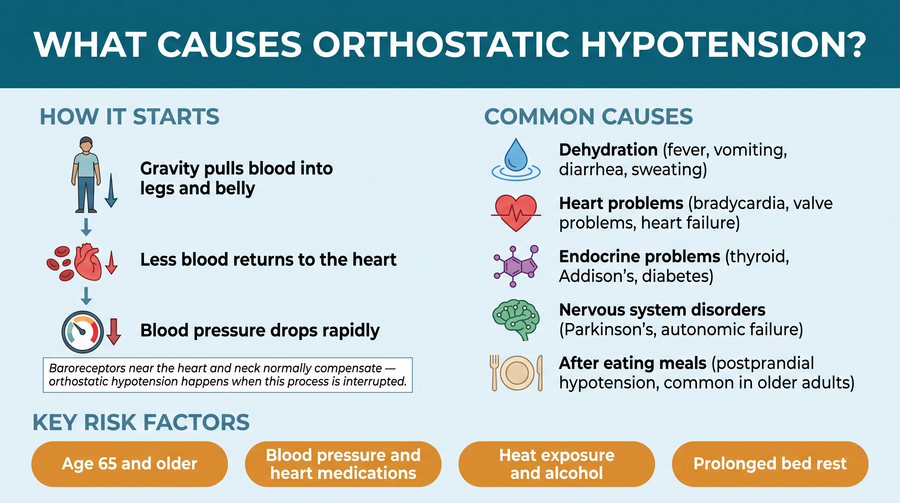
Common Underlying Causes
Cause Category | Specific Examples | How It Triggers the Drop |
Dehydration | Fever, vomiting, not drinking enough fluids, severe diarrhea, strenuous exercise with heavy sweating | Decreases blood volume; even mild dehydration can cause weakness, dizziness, and fatigue |
Heart problems | Extremely low heart rate (bradycardia), heart valve problems, heart attack, heart failure | The body cannot quickly pump more blood when standing up |
Endocrine problems | Thyroid conditions, adrenal insufficiency (Addison's disease), low blood sugar (hypoglycemia) | Hormonal imbalance disrupts blood pressure regulation; diabetes can also damage the nerves that control blood pressure |
Nervous system disorders | Parkinson's disease, multiple system atrophy, Lewy body dementia, pure autonomic failure, amyloidosis | Disrupts the body's ability to control blood pressure |
Eating meals | Low blood pressure after meals (postprandial hypotension) | More common in older adults |
One reassuring framing: when the cause is something obvious like dehydration or lengthy bed rest, the condition is usually easily treated. When it is chronic, treatment depends on identifying and addressing the underlying health problem.
What Are the Risk Factors?
Several factors make orthostatic hypotension more likely, with age and medications at the top of the list.
Risk Factor | Why It Matters |
Age 65 and older | Baroreceptors near the heart and neck arteries that control blood pressure can slow with age, and an aging heart can have a harder time speeding up to compensate |
Medications | Blood pressure and heart disease drugs — diuretics, alpha blockers, beta blockers, calcium channel blockers, ACE inhibitors, and nitrates — plus Parkinson's medications, certain antidepressants, certain antipsychotics, muscle relaxants, erectile dysfunction medications, and narcotics |
Certain diseases | Heart valve problems, heart attack, heart failure; nervous system disorders such as Parkinson's disease; nerve-damage diseases (neuropathy) such as diabetes |
Heat exposure | Hot environments cause heavy sweating and possible dehydration, which lowers blood pressure and can trigger episodes |
Prolonged bed rest | Staying in bed for a long time because of illness or injury causes weakness that can lead to orthostatic hypotension |
Alcohol | Drinking alcohol can increase the risk |
What Are the Possible Complications?
Persistent orthostatic hypotension can cause serious complications, especially in older adults. These are the three documented risks.
Complication | Why It Happens |
Falls | Falling as a result of fainting is a common complication in people with orthostatic hypotension |
Stroke | The swings in blood pressure from standing and sitting can reduce blood supply to the brain, making orthostatic hypotension a risk factor for stroke |
Cardiovascular disease | The condition can be a risk factor for chest pain, heart failure, or heart rhythm problems |
How Is Orthostatic Hypotension Diagnosed?
The goal of diagnosis is to find the cause and determine treatment. Sometimes the cause is not found. A provider will review your medical history, medications, and symptoms, and conduct a physical exam. Diagnosis centers on one definitive test plus a set of supporting investigations.
The Definitive Test: Blood Pressure Monitoring
The diagnostic threshold is precise. A drop of 20 millimeters of mercury (mm Hg) in the top number (systolic blood pressure) within 2 to 5 minutes of standing is a sign of orthostatic hypotension. A drop of 10 mm Hg in the bottom number (diastolic blood pressure) within the same window also indicates the condition.
Supporting Tests
Test | What It Checks | Why It's Used |
Blood pressure monitoring | BP measured sitting and standing | Confirms the 20/10 mm Hg drop threshold |
Blood tests | Overall health indicators | Detects low blood sugar (hypoglycemia) or low red blood cells (anemia), both of which can cause low blood pressure |
Electrocardiogram (ECG/EKG) | Electrical activity of the heart via electrodes on the chest, arms, or legs | Shows heart rhythm or structure changes and blood/oxygen supply problems |
Holter monitor | Heart activity recorded over a day or more during daily activities | Catches occasional rhythm changes a brief ECG might miss |
Echocardiogram | Sound-wave pictures of the heart in motion | Shows blood flow through the heart and valves; identifies structural heart disease |
Stress test | Heart response during exercise (treadmill or medication-induced) | Monitored with ECG, echocardiography, or other tests |
Tilt table test | How the body reacts to position changes — the table tilts to mimic standing while blood pressure is taken frequently | Directly reproduces the standing trigger under controlled monitoring |
Valsalva maneuver | Heart rate and blood pressure response while pushing air out through pursed lips, as if blowing up a stiff balloon | A noninvasive check of how well the autonomic nervous system is working |

How Is Orthostatic Hypotension Treated?
The guiding principle of treatment: it is directed at the cause rather than the low blood pressure itself.
For example, if dehydration causes the condition, the provider may suggest lifestyle changes such as drinking more water. If a medication causes low blood pressure when standing, treatment may involve changing the dose or stopping the drug.
For mild orthostatic hypotension, one of the simplest treatments is to sit or lie back down immediately after feeling lightheaded upon standing — often, symptoms will disappear. Sometimes medications are needed when lifestyle changes are not enough.
Prescription Medications
If orthostatic hypotension doesn't improve with lifestyle changes, medications may be used to increase blood pressure or blood volume. The type depends on the type of orthostatic hypotension.
Medication | Brand Name | Role |
Midodrine | Orvaten | Raises blood pressure |
Droxidopa | Northera | Raises blood pressure |
Fludrocortisone | — | Increases blood volume |
Pyridostigmine | Mestinon, Regonol | Supports nerve signaling for blood pressure control |
Always discuss the risks and benefits of these drugs with your health care provider to determine which one is best for you.
Self-Care: Nine Steps That Help
Several simple steps can help manage or prevent orthostatic hypotension day to day.
Self-Care Step | How to Do It |
Get up slowly | Move slowly from lying to standing; when getting out of bed, sit on the edge of the bed for a minute before standing |
Raise the head of the bed | Sleeping with the head slightly raised helps fight the effects of gravity |
Wear waist-high compression stockings | Improve blood flow and reduce symptoms; wear during the day, take off for bed and lying down |
Get plenty of fluids | Stay hydrated; drink plenty of water before long periods of standing or trigger activities |
Avoid alcohol | Alcohol can worsen the condition; limit or avoid it completely |
Increase salt in the diet | Only after discussing with a provider — too much salt can raise blood pressure beyond a healthy level |
Eat small meals | If blood pressure drops after eating, small low-carbohydrate meals might help |
Exercise regularly | Cardiovascular and strengthening exercises might reduce symptoms; avoid exercising in very hot, humid weather |
Use counter-pressure maneuvers | Stretch and flex calf muscles before sitting up; squeeze thighs together and squeeze stomach and buttock muscles when symptoms start; squat, march in place, or rise onto tiptoes |
Preparing for Your Appointment
There is no special preparation for having your blood pressure checked, but a few practical steps will make the visit much more productive.
Track your blood pressure at home first. Keep a log of your readings and bring it to the appointment. The recommended routine: take your blood pressure first thing in the morning — lie down for the first reading, wait one minute, then stand and take the second reading. Also take readings after you eat, when symptoms are least severe, when symptoms are most severe, when you take blood pressure medications, and one hour after taking them.
Bring a complete picture to the visit: a list of your symptoms (including any that seem unrelated to low blood pressure, what triggers them, and when they began), key personal information (family history of low blood pressure, major stresses, recent life changes), and all medications, vitamins, and supplements with doses — or the bottles themselves. A few important notes: some medications such as cold medicines, antidepressants, and birth control pills can affect blood pressure, and you should not stop any prescription medication without your provider's advice.
Questions worth asking your provider: What's the most likely cause of my symptoms? Could my medications be a factor? What tests will I need? What's the most appropriate treatment? How often should I be screened, and should I measure blood pressure at home? Do I need any diet or activity restrictions?
Key Takeaways
Orthostatic hypotension is a form of low blood pressure that happens when standing up after sitting or lying down. The signature symptom is dizziness or lightheadedness that usually lasts less than a few minutes, sometimes accompanied by blurry vision, weakness, fainting, or confusion.
The distinction between occasional and chronic matters: occasional episodes usually have an obvious, easily treated cause like dehydration, while chronic cases often signal another health problem that needs attention.
The good news for most people: mild cases often resolve simply by sitting or lying back down, and self-care steps — slow rising, hydration, compression stockings, and small meals — help many people manage the condition day to day. When those aren't enough, targeted prescription medications are available.
The action item to remember: frequent lightheadedness when standing deserves a medical evaluation, and losing consciousness — even for a few seconds — requires seeing a provider right away.
Talk to a healthcare professional if standing up regularly leaves you dizzy — a proper evaluation identifies the cause and puts the right treatment plan in place.
Frequently Asked Questions
What is orthostatic hypotension?
Orthostatic hypotension (also called postural hypotension) is a form of low blood pressure that happens when standing after sitting or lying down. Gravity causes blood to pool in the legs and belly, less blood returns to the heart, and blood pressure drops — causing dizziness or lightheadedness and possibly fainting.
Why do I feel dizzy when I stand up?
The most common cause of dizziness when standing is a temporary blood pressure drop — orthostatic hypotension. Symptoms usually last less than a few minutes. Occasional episodes are often triggered by dehydration, low blood sugar, or overheating and are usually minor. Frequent episodes deserve medical evaluation.
How is orthostatic hypotension diagnosed?
It is diagnosed with blood pressure monitoring: a drop of 20 mm Hg in the systolic (top) number or 10 mm Hg in the diastolic (bottom) number within 2 to 5 minutes of standing indicates the condition. Supporting tests include blood tests, ECG, echocardiogram, tilt table testing, and the Valsalva maneuver.
Is orthostatic hypotension dangerous?
Occasional episodes are usually minor and easily treated. But long-lasting orthostatic hypotension can signal a more-serious health problem, and persistent cases raise the risk of falls, stroke, and cardiovascular complications — especially in older adults. Fainting, even briefly, requires seeing a provider right away.
What causes orthostatic hypotension?
Common causes include dehydration, heart problems (bradycardia, valve problems, heart attack, heart failure), endocrine disorders (thyroid conditions, Addison's disease, hypoglycemia, diabetes), nervous system disorders (Parkinson's disease, multiple system atrophy), and postprandial hypotension (blood pressure drops after eating).
Which medications can cause orthostatic hypotension?
Blood pressure and heart medications — diuretics, alpha blockers, beta blockers, calcium channel blockers, ACE inhibitors, and nitrates — are the main culprits. Others include Parkinson's medications, certain antidepressants and antipsychotics, muscle relaxants, erectile dysfunction medications, and narcotics.
What is the quickest relief for orthostatic hypotension?
For mild episodes, sit or lie back down immediately after feeling lightheaded upon standing — symptoms often disappear. Getting up slowly and sitting on the edge of the bed for a minute before standing also helps prevent episodes.
Can orthostatic hypotension be treated?
Yes. Treatment targets the underlying cause rather than the low blood pressure itself — drinking more water for dehydration, adjusting or stopping a medication when a drug is the cause. Self-care steps like compression stockings, hydration, small low-carb meals, and counter-pressure maneuvers help many people, and prescription medications such as midodrine, droxidopa, fludrocortisone, and pyridostigmine are options when lifestyle changes aren't enough.
Related Reading
Sources
Health information, not medical advice. This article is for general education and is not a substitute for professional diagnosis or treatment. Always consult a qualified healthcare provider about your own health, and seek emergency care for urgent symptoms.
Comments