Orthopoxvirus: Symptoms, Transmission, and Prevention

Updated: 2 days ago
Medically reviewed by Dr. Baraa Alnahhal, MD · Last reviewed: October 2026
Quick Answer
Orthopoxviruses are a group of viruses, including mpox and smallpox, that cause a distinctive bumpy rash that eventually crusts over, often with fever, muscle aches and swollen lymph nodes. [1] An orthopoxvirus usually spreads from animals to humans, though mpox can spread between people. [1] Severe cases are treated with specialized antivirals, and vaccination is recommended for those at high risk. [1]
What the research says
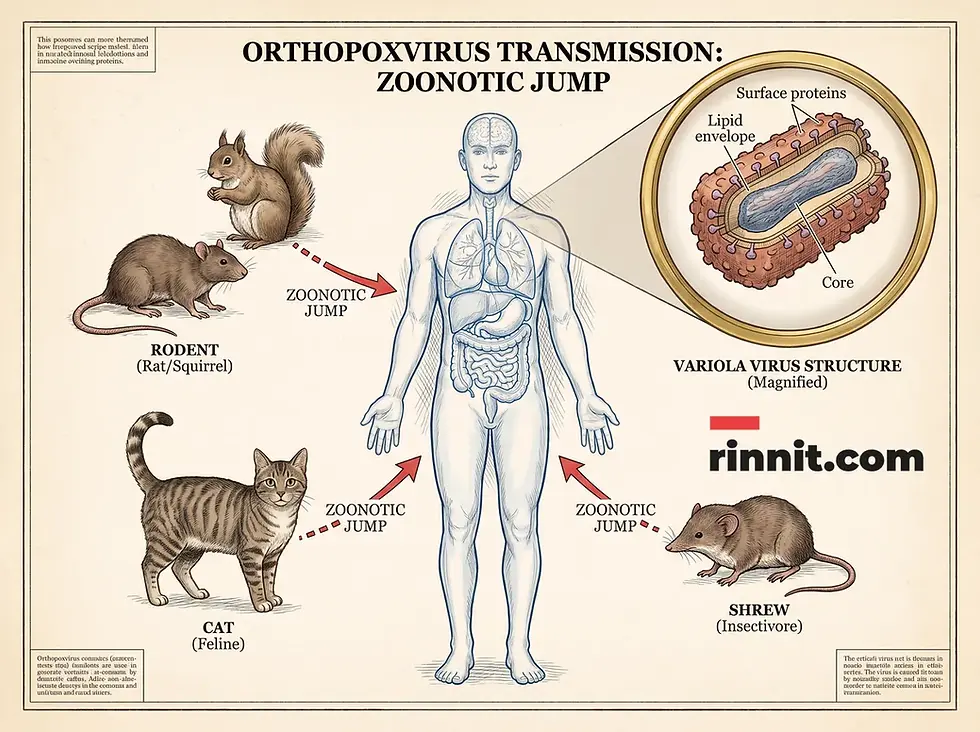
Animals carry mpox at measurable rates. In a meta-analysis of 15 reports (ten reports, n = 2,680, tested for infection by molecular or blood tests), pooled mpox prevalence was 16.0% (95% CI 3.0–29.0%) in non-human primates, 8.0% (95% CI 4.0–12.0%) in rodents, and 1.0% (95% CI 0.0–3.0%) in shrews (PubMed: Bonilla-Aldana et al., J Infect Public Health, 2024) [2].
In recent mpox outbreaks, most spread has been through close contact between people. In a systematic review of 222 studies including 45,553 mpox patients (published September 2022 to September 2024), 95.3% reported sexual contact (65.1% confirmed, 30.3% suspected) and 2.9% close non-sexual contact; sexual contact accounted for more than 90% of transmission in every region except Africa (PubMed: Alshamrani et al., J Infect Public Health, 2025) [3].
Evidence for mpox vaccines and antivirals is still limited. A systematic review of 69 articles (from 4,342 screened records) found potential for the MVA-BN vaccine, though efficacy concerns exist, and identified tecovirimat as the prominent antiviral in the recent outbreak; the authors note limited evidence and call for further clinical trials (PubMed: Eslami et al., J Chemother, 2023) [4].
What Is Orthopoxvirus?
Orthopoxvirus is a specific genus of viruses that infect mammals, including humans, cows, cats, and rodents. [1] These viruses are categorized as zoonotic diseases because they frequently jump from animals to people. The most historically significant member of this genus is the variola virus, which caused smallpox until its global eradication in 1980. [1]
Common examples of orthopoxviruses
The genus contains several distinct viruses, each with different primary hosts and geographic ranges.
Virus name | Primary host or context | Spread between people? |
Mpox virus | Small rodents (rats, squirrels) | Yes (currently active) |
Variola virus | Humans (smallpox) | Eradicated since 1980 |
Alaskapox virus | Voles and shrews | No |
Cowpox virus | Wild rodents; cats and cows can also be infected | No |
Vaccinia virus | Used in smallpox vaccines | Vaccine virus |
What are the symptoms of orthopoxvirus infection, and how does the rash progress?
The hallmark of an orthopoxvirus infection is a well-defined, raised, and bumpy rash. [1] This rash is often painful or itchy and follows a predictable set of stages over several weeks. [1]
Stages of the rash
Flat spots: the initial appearance of the rash. [1]
Papules: the spots become raised and firm.
Vesicles: the bumps fill with clear or cloudy fluid.
Crusting: the sores dry out and form a scab before falling off.
Systemic symptoms
In addition to the rash, which can appear on the hands (especially the palms), the soles of the feet, the anus, and the genitals, patients may experience:
How does an orthopoxvirus spread?
Transmission occurs through two primary pathways: animal-to-person and person-to-person. [1]
Animal-to-person contact
Most orthopoxviruses are contracted through direct interaction with infected wildlife or domestic pets. This includes being bitten or scratched, or coming into contact with an animal's blood, bodily fluids, or rash. [1] Common carriers include squirrels, rats, mice, and even domestic cats or dogs. [1]
Person-to-person contact
Currently, mpox is the only orthopoxvirus that actively spreads between humans (smallpox also spread between people, but it has been eradicated since 1980). [1] Spread occurs through:
Respiratory droplets: close contact during coughing, sneezing, or talking. [1]
Direct contact: touching the fluid from an infected person's sores. [1]
Intimate contact: kissing, sexual activity, and prolonged skin-to-skin contact. [1] [3]
Contaminated objects: handling bedding or clothing used by an infected person. [1]

How are orthopoxvirus infections diagnosed and managed?
Healthcare providers may suspect an orthopoxvirus infection from the appearance of the rash and other symptoms, along with a detailed history of potential animal or human exposure.
Diagnostic testing
To confirm the virus, providers may test:
Treatment options
Healthcare providers don't often treat orthopoxviruses unless you are very sick. [1] For severe cases, especially involving mpox, doctors may sometimes use:
How can you prevent orthopoxvirus infection?
Reducing the risk of infection involves a combination of behavioral changes and medical intervention.
Preventive actions
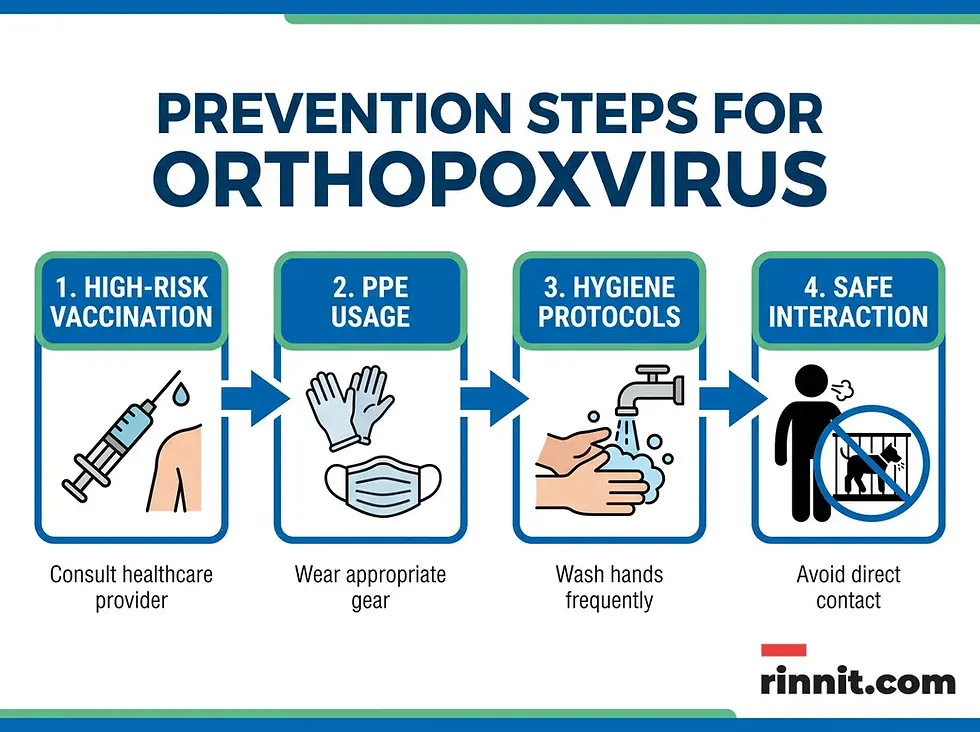
Vaccination: vaccines are available for mpox and smallpox for people at high risk of exposure. [1]
Hand hygiene: wash your hands frequently with soap and water. [1]
Protective equipment: use gloves and masks when handling animals or caring for sick people. [1]
Safe food practices: thoroughly cook all foods that contain animal meat or parts. [1]
Material safety: avoid touching bedding or laundry that has been in contact with an infected person or animal. [1]
Safe sex: use condoms and dental dams. [1]
Avoid infected animals: this includes dead animals. [1]
What are the emergency warning signs of an orthopoxvirus infection?
Most orthopoxvirus cases resolve without major issues, but certain symptoms indicate a serious medical emergency that needs care right away. Go to the emergency room if you have:
Key Takeaways
Orthopoxvirus is a genus of viruses known for causing a characteristic raised, bumpy rash in both humans and animals. While smallpox has been eradicated, other members of this group, such as mpox and Alaskapox, continue to pose health risks. These viruses are primarily zoonotic, spreading from animals to humans through direct contact, bites, or scratches. Mpox is currently the only orthopoxvirus that spreads between humans via respiratory droplets or intimate contact. Diagnosis involves clinical evaluation of the rash and laboratory testing. While many cases are mild, vaccines and antiviral treatments are available for some orthopoxvirus diseases. Prevention focuses on avoiding infected animals, practicing good hygiene, and using personal protective equipment.
Take the Next Step
If you develop a new, unexplained bumpy rash, especially after contact with animals or an infected person, contact your healthcare provider promptly. Early diagnosis is critical for managing symptoms and preventing further spread.
Further reading: Cleveland Clinic — Orthopoxvirus
Frequently Asked Questions
1. Is chickenpox an orthopoxvirus?
No. Despite the similar name, chickenpox is caused by the varicella-zoster virus, which is a member of the herpes virus family, not the orthopoxvirus genus. [1]
2. Can my cat give me an orthopoxvirus?
Yes, certain orthopoxviruses like cowpox can infect domestic cats, which can then pass the virus to their owners through scratches or direct contact with sores. [1]
3. How long does the rash last?
The rash typically goes through its various stages — from flat spots to scabs — over a period of a few weeks. [1]
4. Is smallpox still a threat?
Naturally occurring smallpox was eradicated globally in 1980. [1] It no longer spreads among the population.
5. Are there vaccines for these viruses?
Yes, vaccines exist for mpox and smallpox. They are generally recommended for individuals at high risk of exposure. [1]
6. Can I get an orthopoxvirus from a dead animal?
Yes. Direct contact with the body or fluids of an infected animal, even if it is dead, can transmit the virus. [1]
7. How is mpox different from other orthopoxviruses?
Mpox is currently the only orthopoxvirus that regularly spreads from person to person through close or intimate contact. [1] [3]
8. Do I need treatment if I have a mild case?
In many cases, healthcare providers only recommend managing symptoms at home. Antiviral treatments are usually reserved for severe illness. [1]
9. Where does the rash usually appear?
The rash can appear in different places depending on the virus. It is frequently found on the hands (especially the palms), the soles of the feet, and in the genital or anal areas. [1]
References
Cleveland Clinic. Orthopoxvirus. Cleveland Clinic Health Library. Medically reviewed; last updated March 15, 2024. https://my.clevelandclinic.org/health/diseases/orthopoxvirus
Bonilla-Aldana DK, Bonilla-Aldana JL, Ulloque-Badaracco JR, et al. Mpox infection in animals: a systematic review and meta-analysis. J Infect Public Health. 2024;17(7):102431. doi:10.1016/j.jiph.2024.04.015. PMID: 38820901.
Alshamrani MM, El-Saed A, Al-Fayez S, et al. Routes of transmission of mpox by virus clade and geographic distribution: a systematic review. J Infect Public Health. 2025;18(12):102985. doi:10.1016/j.jiph.2025.102985. PMID: 41092779.
Eslami A, Alimoghadam S, Khoshravesh S, et al. Mpox vaccination and treatment: a systematic review. J Chemother. 2023;36(2):85-109. doi:10.1080/1120009X.2023.2289270. PMID: 38069596.
Medical Disclaimer
This article is for informational purposes only and does not constitute medical advice. Always seek the advice of your physician or other qualified health provider with any questions you may have regarding a medical condition. Never disregard professional medical advice or delay in seeking it because of something you have read here.



Comments