Occipital Neuralgia: Understanding the Sharp Pain of Scalp Nerve Inflammation

Updated: 3 days ago
Medically reviewed by Dr. Baraa Alnahhal, MD · Last reviewed: October 2026
Quick Answer: What is Occipital Neuralgia?
Occipital neuralgia occurs when the occipital nerves, the primary sensory nerves for the scalp, become swollen, pinched, or irritated. This leads to bouts of intense pain that can feel like electric shocks or throbbing aches. Unlike typical tension headaches, the pain follows the specific path of these nerves, often triggered by neck muscle tightness or injury.
What the research says
It is often confused with migraine, and the two frequently overlap. A meta-analysis of 15 clinic-based studies (579 patients) found that 73% were female, pain was one-sided in 81% and stabbing in 59%, 46% had coexisting migraine, and 30% had a history of neck trauma. No population-based studies were found (Melchior et al., Cephalalgia, 2025). [1]
Nerve block relief varies widely. In 95 people with treatment-refractory headache who received a greater occipital nerve block, 44% of those who lay down afterward reported substantial benefit for a median of 70 days. This was a single-center, non-randomized study of headache in general, not only occipital neuralgia (Vanderpol and Jonker, Clin Neurol Neurosurg, 2019). [2]
Nerve stimulation has only lower-level evidence. A guideline update screened 307 articles and reviewed 18 in full. All of the studies on occipital nerve stimulation were Class III evidence, and the guideline says clinicians may use it for medically refractory occipital neuralgia (Staudt et al., Neurosurgery, 2023). [3]
How does occipital neuralgia compare with common headache disorders?
Feature | Occipital Neuralgia | Migraine | Tension Headache |
Primary Location | Back of head, scalp, or behind one eye. | Often one-sided, temples, or forehead. | Band-like pressure around the whole head. |
Pain Quality | Sharp, electric, burning, or stinging. | Pulsating, throbbing, often with nausea. | Dull ache, steady pressure. |
Triggers | Neck movement, touching the scalp, muscle tightness. | Light, sound, smells, hormonal changes. | Stress, poor posture, eye strain. |
Primary Cause | Nerve inflammation or irritation. | Complex neurological and vascular issues. | Muscle tension and stress. |

What are the symptoms and pain patterns of occipital neuralgia?
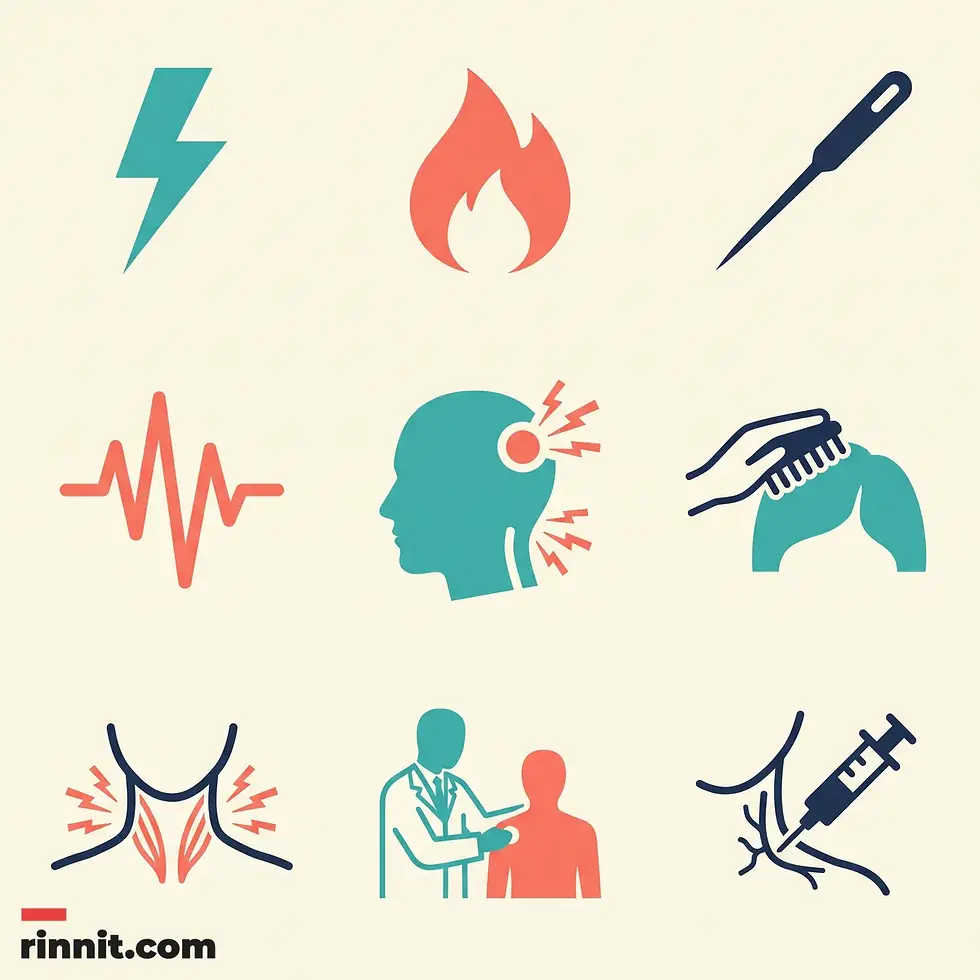
The hallmark of occipital neuralgia is the specific nature and location of the pain. Bouts can be brief, lasting only seconds, or they can become chronic and persistent. [4]
Sensation Types: Patients often describe the pain as sudden electric shocks, burning sensations, throbbing aches, or sharp, piercing stabs. [4]
Pain Origin: The discomfort typically starts at the base of the skull where the neck meets the head and radiates upward through the scalp.
Ocular Impact: It is very common for the pain to be felt directly behind one eye, even though the nerve starts in the neck.
Scalp Sensitivity: The scalp may become extremely sensitive to the touch, making even brushing hair uncomfortable.
What causes occipital neuralgia and who is at risk?
Occipital neuralgia is most commonly caused by pinched nerves in the upper spine, extreme neck muscle tightness or injuries like whiplash, and conditions such as osteoarthritis raise the risk.
Physical Triggers: The most common causes are pinched nerves in the upper spine or extreme tightness in the neck muscles. Injuries like whiplash are also frequent contributors.
Medical Conditions: Individuals with osteoarthritis of the upper spine, degenerative disk disease, or diabetes are at a higher risk. [4]
Inflammatory Factors: Gout and vasculitis (inflammation of the blood vessels) can also lead to secondary nerve irritation. [4]
Chronic Strain: Prolonged periods of poor posture that strain the neck muscles can eventually lead to nerve compression.
How is occipital neuralgia diagnosed?
Because occipital neuralgia mimics other headache types, neurologists must use a process of elimination to confirm the diagnosis.
Physical Examination: Checking for tenderness along the path of the occipital nerves.
Imaging (MRI/CT): Used to rule out other causes and to check for structural issues in the upper spine like disk degeneration. [4]
Occipital Nerve Block: This is a diagnostic tool where numbing medication is injected near the nerve. If the pain subsides immediately, it confirms the occipital nerve is the source.
How is occipital neuralgia treated and managed?
The goal of treatment is to reduce inflammation and block pain signals, allowing the nerve to heal.
Nonsurgical Approaches
For mild to moderate cases, noninvasive methods are usually tried first and often help within a few weeks.
Therapies: Hot therapy (heating pads), professional massage, and physical therapy to release neck tension. [4]
Injections: Nerve blocks (steroids combined with numbing agents) or Botox injections to reduce chronic pain and muscle tension. [4]
Medications: NSAIDs for inflammation, muscle relaxants for tightness, and anticonvulsants, which are often effective at calming overactive pain signals from nerves. [4]
Surgical Options
For patients who do not respond to conservative care and other treatments, specialized procedures may be considered.

Frequently Asked Questions
What is occipital neuralgia?
It is a headache disorder caused by the inflammation of the nerves that run through the scalp.
Where does the pain usually start?
At the base of the skull, radiating upward through the scalp.
Can it be felt in the eyes?
Yes, it often causes a throbbing or sharp pain behind one eye.
Is it a type of migraine?
No, but it is frequently mistaken for one because the symptoms overlap, and many people have both.
What does the pain feel like?
It is often described as an electric shock, burning, or sharp piercing sensation.
What causes the nerves to become inflamed?
Common causes include pinched nerves, muscle tightness, or neck injuries like whiplash.
Is occipital neuralgia life-threatening?
No, it is not life-threatening, but it can be very painful.
Who is most at risk?
People with osteoarthritis, diabetes, gout, or degenerative disk disease.
How long do the pain bouts last?
They can last from a few seconds to minutes, and a background ache can linger for longer.
Can stress cause this?
Stress leads to muscle tension in the neck, which can trigger or worsen the condition.
What is a 'chin tuck'?
A specific stretching exercise used to release neck tension and prevent flares.
How is it diagnosed?
Through physical exams, imaging like MRIs, and diagnostic nerve blocks.
What is an occipital nerve block?
An injection of numbing medicine and steroids near the nerve to stop pain.
How long does a nerve block last?
It varies from person to person. According to Cleveland Clinic, relief can last from several hours to several months.
Are there medications for this?
Yes, including NSAIDs, muscle relaxants, and certain anticonvulsants.
Why are anticonvulsants used?
They help stabilize overactive nerve signals that cause chronic pain.
Can massage help?
Yes, massage therapy can release the tight muscles that pinch the occipital nerves.
Does heat or cold work better?
Heating pads are generally recommended to relax the muscles around the nerves.
What is occipital nerve stimulation?
A surgical procedure where electrodes are used to block pain signals.
Can I prevent it?
Regular stretching and maintaining good posture can help reduce the risk of flares.
Is it permanent?
Many people get lasting relief, but the pain can return depending on the treatment and the underlying cause.
Can it affect both sides of the head?
Yes, though it often affects only one side at a time.
Does Botox help?
Yes, Botox injections are sometimes used to reduce chronic pain and muscle tension.
What is whiplash?
A neck injury caused by a sudden jerking of the head, a common cause of this condition.
What is vasculitis?
Inflammation of the blood vessels, which can contribute to nerve irritation.
How fast does treatment work?
It varies. Mild cases may improve within weeks, while severe or long-standing cases can take longer.
When should I see a doctor?
If you have sudden, sharp head pain that doesn't respond to over-the-counter meds.
Is surgery common for this?
No, surgery is usually reserved for cases that don't respond to any other treatments.
What is a 'neurologist'?
A doctor who specializes in disorders of the brain, spine, and nerves.
Can poor posture cause this?
Yes, 'tech neck' or leaning forward for long periods can strain the neck muscles.
Does the pain feel like a normal headache?
No, it is usually much sharper and more localized than a tension headache.
Can it cause vision loss?
No, vision loss is not a symptom of occipital neuralgia and indicates a different emergency.
What is degenerative disk disease?
The wear and tear of the spinal disks, which can lead to nerve pinching.
Can gout affect the neck?
Yes, inflammatory crystals from gout can cause irritation in the spinal joints.
Is it related to high blood pressure?
Not directly, though severe pain can temporarily raise blood pressure.
What is a spinal cord stimulator?
A device that uses electrical pulses to block pain signals in the spine.
Can physical therapy fix it?
It is a primary treatment for releasing the muscle tension that causes the blockage.
Does the pain come back?
It can return if the underlying muscle tension or inflammation isn't managed.
Is it safe to exercise?
Gentle stretching is good, but you should stop if any exercise increases the pain.
Can I drive with this condition?
If a flare causes sudden, sharp pain that distracts you, it may be unsafe to drive.
What is an 'electric shock' sensation?
A common way patients describe the sudden, intense nerve pain.
Does it cause nausea?
It is less common than in migraines, but intense pain can sometimes cause nausea.
Is there a specific test for it?
There is no single conclusive test; it is diagnosed through a combination of findings.
What is 'nerve overactivity'?
When a damaged or irritated nerve sends constant, unnecessary pain signals to the brain.
Can I use a heating pad every day?
Yes, as long as it's used safely to avoid skin irritation.
What is a 'flare'?
A period where symptoms become significantly worse or more frequent.
Can a chiropractor help?
Some find relief, but you should consult a neurologist first to ensure there's no disk damage.
Is it more common in older adults?
It can affect any age, but risk factors like osteoarthritis are more common in older adults.
What is 'tech neck'?
Strain caused by looking down at phones or computers, which can trigger neck-related headaches.
When is it an emergency?
If the pain is sudden and severe, or is accompanied by fever, confusion, vision loss, or numbness, seek emergency care.
References
Melchior AG, Al-Khazali S, Christensen RH, et al. Epidemiology and clinical features of occipital neuralgia: a systematic review and meta-analysis. Cephalalgia. 2025;45(2):3331024251317595. PMID 40017062. https://doi.org/10.1177/03331024251317595
Vanderpol J, Jonker L. Influence of patient positioning on reported clinical outcomes after greater occipital nerve block for treatment of headache: results from prospective single-centre, non-randomised, proof-of-concept study. Clin Neurol Neurosurg. 2019;176:73-77. PMID 30537565. https://doi.org/10.1016/j.clineuro.2018.12.001
Staudt MD, Hayek SM, Rosenow JM, et al. Congress of Neurological Surgeons systematic review and evidence-based guidelines for occipital nerve stimulation for the treatment of patients with medically refractory occipital neuralgia: update. Neurosurgery. 2023;93(3):493-495. PMID 37458729. https://doi.org/10.1227/neu.0000000000002578
Cleveland Clinic. Occipital neuralgia. Cleveland Clinic. Last updated May 21, 2022. https://my.clevelandclinic.org/health/diseases/23072-occipital-neuralgia
Cleveland Clinic. Occipital nerve block. Cleveland Clinic. Last reviewed May 1, 2023. https://my.clevelandclinic.org/health/treatments/24934-occipital-nerve-block
Disclaimer
The information provided in this article is for educational purposes only and should not be considered medical advice. Always consult with a qualified healthcare professional for diagnosis and treatment of any medical condition. If you have a sudden, severe headache, or head pain with fever, confusion, vision loss, or numbness, seek emergency care immediately.



Comments