NTM Lung Disease: Understanding Nontuberculous Mycobacterial Infections

Updated: 2 days ago
Medically reviewed by Dr. Baraa Alnahhal, MD · Last reviewed: October 2026
Quick Answer: What is NTM Lung Disease?
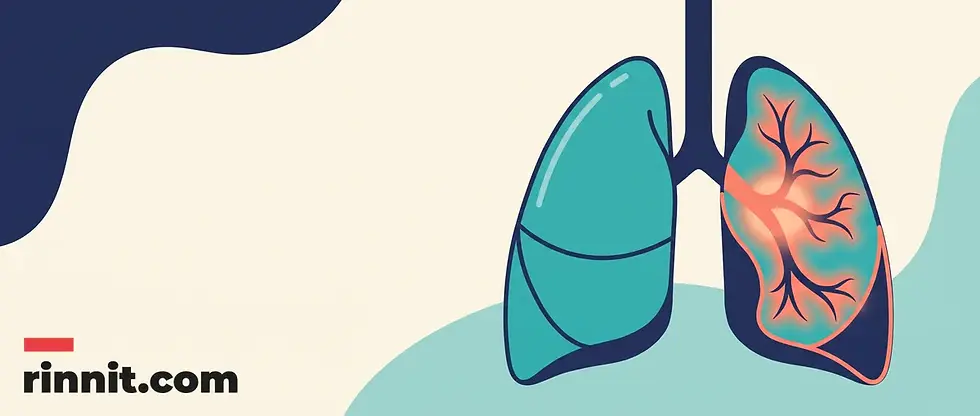
NTM lung disease is a lung infection caused by nontuberculous mycobacteria, bacteria found in soil, dust and water. Unlike tuberculosis, it is generally not contagious, except in specific cases involving people with cystic fibrosis. It mainly affects people with underlying lung damage or weakened immunity and causes chronic inflammation, lung scarring and cavities in the lung tissue. [1]
What the research says
Adding inhaled amikacin helped more patients clear MAC from their sputum. In CONVERT, a randomized trial of 336 adults whose Mycobacterium avium complex (MAC) lung disease persisted despite at least 6 months of guideline-based therapy, 29.0% (65 of 224) of those given amikacin liposome inhalation suspension plus standard therapy reached culture conversion by month 6, compared with 8.9% (10 of 112) on standard therapy alone (odds ratio 4.22) (Griffith et al., Am J Respir Crit Care Med, 2018). [4]
The benefit came with more breathing-related side effects. Respiratory adverse events, mainly dysphonia, cough, and dyspnea, occurred in 87.4% of the inhaled-amikacin group versus 50.0% with standard therapy alone, while serious adverse events were similar (20.2% versus 17.9%) (Griffith et al., Am J Respir Crit Care Med, 2018). [4]
International guidelines give 31 evidence-based treatment recommendations. The 2020 ATS/ERS/ESCMID/IDSA guideline, built on systematic reviews of 22 clinical questions, covers pulmonary disease in adults without cystic fibrosis or HIV caused by MAC, M. kansasii, M. xenopi, and M. abscessus, among more than 190 NTM species and subspecies (Daley et al., Clin Infect Dis, 2020). [3]
Key Takeaways: NTM Lung Disease at a Glance
Feature | Details |
Primary Cause | Environmental bacteria (MAC, M. kansasii, M. abscessus). |
Common Sources | Soil, water, dust, and mist sprayers. |
Main Symptoms | Chronic cough, night sweats, fatigue, and weight loss. |
Risk Factors | COPD, Bronchiectasis, age 65+, and low BMI in females. |
Diagnosis | Sputum cultures, bronchoscopy, and CT scans. |
Treatment | Multi-year antibiotic therapy and chest physiotherapy. |
What are the symptoms of NTM lung disease?
The symptoms of NTM lung disease often develop slowly and can be mistaken for other chronic respiratory conditions. However, the persistence of these signs is a key indicator that an infection may be present.
Respiratory Distress: A persistent cough, sometimes producing blood, along with wheezing and shortness of breath. [1]
Systemic Signs: Low-grade fever, night sweats, extreme fatigue, and unexplained weight loss. [1]
Physical Changes: Swollen lymph nodes and chest pain are also common as the body attempts to fight the infection. [1]
Frequent Illness: A history of recurring respiratory infections that don’t seem to fully resolve. [1]
How do NTM lung infections develop?
NTM bacteria enter the lungs through the inhalation of contaminated particles or the ingestion of water containing the organisms. While environmental exposure is constant, the disease only takes hold when the lungs’ natural defense mechanisms are compromised. [1]
Exposure Route | Examples |
Water Contact | Drinking, bathing, or showering in contaminated water. |
Airborne Particles | Inhaling dust or dirt during gardening or outdoor work. |
Mist Inhalation | Using hot tubs or sprayers that create a fine bacterial mist. |
Medical Devices | Contaminated intubation tubes or other invasive equipment. |

Who is at risk of NTM lung disease?
Not everyone who encounters NTM bacteria will develop the disease. Vulnerability is largely determined by the health of the lungs and the strength of the immune system. [1]
Pre-existing Lung Disease: Conditions like COPD, bronchiectasis, cystic fibrosis, and previous tuberculosis provide an environment where NTM can thrive.
Age and Sex: Individuals over the age of 65 and females with a low Body Mass Index (BMI) are statistically at higher risk. [1]
Immune Status: Those with weakened immune systems due to HIV, cancer, or immunosuppressant medications are significantly more susceptible. [1]
Environmental Exposure: Frequent contact with soil (especially potting soil) or mist-producing water sources increases the likelihood of infection. [1]
How is NTM lung disease diagnosed, and what are its complications?
Diagnosing NTM lung disease is a meticulous process because the bacteria are so common in the environment. Healthcare providers must distinguish between simple colonization and active disease. This usually requires at least two positive sputum cultures or a sample obtained via bronchoscopy. Imaging tests like chest X-rays and CT scans are used to look for characteristic scarring (fibrosis) or cavities in the lung tissue. If left untreated, the resulting inflammation can lead to permanent lung damage and, eventually, respiratory failure.
How is NTM lung disease managed and treated long term?
Treating NTM lung disease is rarely a quick process. Because the bacteria are resilient, patients often require a combination of antibiotics delivered through various methods.
Antibiotic Regimens: Medications may be taken as pills, liquids, IV infusions, or inhaled as a mist or powder using nebulizers and inhalers. [1]
Chest Physiotherapy: Airway clearance techniques are essential to help the lungs expel mucus and bacteria. [1]
Long-Term Monitoring: Treatment often lasts for years, and even after completion, the infection can recur.
Individualized Care: In some cases, providers may choose to delay treatment and monitor the condition if the risks of side effects outweigh the immediate benefits.

Conclusion
NTM lung disease is a complex and challenging condition that requires long-term commitment to treatment. While the journey to recovery can be frustrating, most patients experience significant symptom improvement once the right antibiotic regimen is established. By taking preventive measures—such as wearing masks during gardening and avoiding mist-producing water sources—those at risk can reduce their chances of infection and maintain better lung health.
For more resources on respiratory health and medical infographics, visit our infographic templates.
Frequently Asked Questions
What is NTM lung disease?
It is a bacterial infection in the lungs caused by nontuberculous mycobacteria found in soil and water.
Is it the same as tuberculosis?
No, while related, NTM is caused by different bacteria and is generally not contagious between people.
How do you catch NTM?
By inhaling contaminated dust or mist, or through contact with contaminated water.
Who is most at risk?
People with chronic lung diseases like COPD or bronchiectasis, and those with weakened immune systems.
What are the most common symptoms?
Chronic cough, fatigue, weight loss, night sweats, and shortness of breath.
Can NTM cause you to cough up blood?
Yes, severe infections can lead to coughing up blood (hemoptysis).
Is NTM lung disease contagious?
Generally no, but it can spread between individuals with cystic fibrosis.
What bacteria cause it?
The most common are M. avium complex (MAC), M. kansasii, and M. abscessus.
How is it diagnosed?
Through multiple sputum cultures, chest imaging, and sometimes bronchoscopy.
Why do I need two positive cultures?
Because NTM is common in the environment, one positive test might just be a contaminant.
What is a bronchoscopy?
A procedure where a thin, lighted tube is used to look inside the lungs and collect samples.
How long does treatment last?
It often lasts for several years to ensure the bacteria are fully eradicated.
What kind of antibiotics are used?
A combination of oral, IV, and inhaled antibiotics is typically required.
What is chest physiotherapy?
Techniques used to help clear mucus and bacteria from the airways.
Can NTM lung disease be fatal?
Yes, if left untreated or if it leads to severe respiratory failure, it can be fatal.
Will the infection come back?
Recurrence is possible even after successful treatment.
Can I work in my garden?
Yes, but you should wear a particle-filtering mask and avoid potting soil if you are at risk.
Should I avoid hot tubs?
Yes, hot tubs create a fine mist that can easily carry NTM bacteria into the lungs.
Is a low BMI a risk factor?
Yes, particularly for females, a low BMI is associated with a higher risk of NTM.
Does NTM cause lung scarring?
Yes, chronic inflammation leads to fibrosis (scarring) and cavities in the lungs.
What is MAC lung disease?
It is a specific type of NTM caused by the Mycobacterium avium complex.
Can I drink tap water?
While usually safe for most, those at high risk may need to take precautions with water sources.
Do I need to see an infectious disease specialist?
Yes, they often work alongside pulmonologists to manage NTM infections.
Can NTM affect other parts of the body?
While this article focuses on the lungs, NTM can occasionally affect skin or lymph nodes.
Is there a vaccine for NTM?
No, there is currently no vaccine available for NTM lung disease.
Does smoking make it worse?
Yes, smoking and vaping damage the lungs and significantly increase the risk and severity.
What is a nebulizer?
A machine that turns liquid medicine into a mist that you can breathe in.
Why is my treatment being delayed?
Sometimes providers monitor the disease first if symptoms are mild to avoid antibiotic side effects.
Can NTM cause chest pain?
Yes, inflammation in the lungs and pleura can cause discomfort or sharp pain.
What are night sweats?
Excessive sweating during sleep, often to the point of soaking through clothes or bedding.
Is wheezing common?
Yes, as the airways become inflamed and obstructed by mucus.
Can NTM lead to respiratory failure?
In advanced cases with significant lung damage, respiratory failure can occur.
How often will I need follow-up tests?
Regular sputum cultures and imaging are needed to monitor treatment progress.
Can I travel with NTM?
Yes, but you should discuss your travel plans and medication needs with your doctor.
Does NTM cause a fever?
It often causes a persistent low-grade fever.
What is sputum?
The thick mucus (phlegm) that is coughed up from the lower airways.
Can NTM affect children?
It is much more common in older adults, but children with cystic fibrosis are at risk.
Are there support groups for NTM?
Yes, many organizations provide resources and support for people living with NTM.
How does NTM differ from COPD?
COPD is a chronic obstructive disease, while NTM is an active bacterial infection.
Can I use a humidifier?
Humidifiers should be cleaned meticulously, as they can harbor NTM bacteria.
What is M. abscessus?
A particularly fast-growing and difficult-to-treat type of NTM bacteria.
Does NTM cause swollen lymph nodes?
Yes, particularly in the chest area (hilar or mediastinal nodes).
Can NTM cause loss of appetite?
Yes, chronic infection often leads to decreased appetite and weight loss.
Is it safe to shower?
Most people are fine, but those at extreme risk may use specialized showerheads to reduce mist.
What are airway clearance techniques?
Specific ways of coughing or using devices to help move mucus out of the lungs.
Can NTM be cured?
While “cure” is difficult, the infection can be successfully managed and suppressed.
Does the BMI risk apply to men?
The correlation is strongest in women, but overall health and weight are important for everyone.
How does NTM affect quality of life?
Chronic cough and fatigue can be limiting, but treatment helps regain function.
What is M. kansasii?
A type of NTM that often behaves similarly to tuberculosis in the lungs.
Should I wear a mask outdoors?
If you are at high risk and doing dusty work like gardening, a mask is highly recommended.
References
Cleveland Clinic. NTM Lung Disease. Cleveland Clinic. Last updated January 9, 2026. https://my.clevelandclinic.org/health/diseases/22861-ntm-lung-disease
American Lung Association. Symptoms and Diagnosis of NTM Lung Disease. American Lung Association. Last updated October 2, 2026. https://www.lung.org/lung-health-diseases/lung-disease-lookup/nontuberculous-mycobacteria/ntm-symptoms-causes-risks
Daley CL, Iaccarino JM, Lange C, et al. Treatment of nontuberculous mycobacterial pulmonary disease: an official ATS/ERS/ESCMID/IDSA clinical practice guideline. Clin Infect Dis. 2020;71(4):e1-e36. PMID 32628747. https://doi.org/10.1093/cid/ciaa241
Griffith DE, Eagle G, Thomson R, et al. Amikacin liposome inhalation suspension for treatment-refractory lung disease caused by Mycobacterium avium complex (CONVERT): a prospective, open-label, randomized study. Am J Respir Crit Care Med. 2018;198(12):1559-1569. PMID 30216086. https://doi.org/10.1164/rccm.201807-1318OC
Disclaimer
This information is for educational purposes only and does not constitute medical advice. Always seek the counsel of a qualified healthcare professional regarding any medical condition or emergency. If you are experiencing a life-threatening emergency, call 911 or your local emergency services immediately.



Comments