Neurofibromatosis Type 1 (NF1): Symptoms, Causes, Diagnosis and Treatment

Updated: 3 days ago
Medically reviewed by Dr. Baraa Alnahhal, MD · Last reviewed: October 17, 2026
Neurofibromatosis type 1 (NF1) is a rare genetic condition that affects about 1 in 2,500 children. It causes light brown skin spots, freckling in skin folds, and tumors on nerve tissue that are usually benign. There is no cure, but FDA-approved medicines can shrink the tumors that grow along multiple nerves, surgery can relieve pressure on tissue and organs, and regular monitoring catches complications early [1] [2].
Quick Answer: What is neurofibromatosis type 1?
Neurofibromatosis type 1 (NF1) is a genetic condition caused by an altered gene on chromosome 17, typically appearing in childhood as cafe au lait spots, armpit or groin freckling and soft bumps called neurofibromas. Diagnosis requires at least two characteristic signs. There is no cure, but medicines and surgery can treat certain tumors, and yearly checkups keep complications manageable. [1] [2]
What the research says
Selumetinib shrinks inoperable plexiform neurofibromas in most children. In a phase 2 trial of 50 children with NF1 and inoperable plexiform neurofibromas, 35 (70%) had a confirmed partial response, 28 of them lasting at least a year, and children reported a clinically meaningful drop in tumor pain (about 2 points on a 0-10 scale) after a year (Gross et al., N Engl J Med, 2020 [3]).
Mirdametinib also works in adults. In the ReNeu trial of 58 adults and 56 children, a confirmed tumor response occurred in 41% of adults (24 of 58) and 52% of children (29 of 56), with a median best tumor volume change of about -41% and -42%, plus improvements in pain and quality of life (Moertel et al., J Clin Oncol, 2025 [4]).
NF1 varies widely, and some gene changes predict a more severe course. The birth incidence is about 1 in 2,000-3,000; among 162 people with missense changes at codons 844-848 of the NF1 gene, plexiform and spinal neurofibromas were more common than in classic NF1 and the risk of cancer was higher (p=0.0061) (Koczkowska et al., Am J Hum Genet, 2018 [5]).
What Is Neurofibromatosis Type 1?
Neurofibromatosis type 1 (NF1) is a genetic condition that causes changes in skin pigment and the growth of tumors on nerve tissue. The tumors can develop anywhere in the nervous system, including the brain, the spinal cord, and the nerves throughout the body [1].
The condition is rare. About 1 in 2,500 children are born with NF1. Symptoms usually appear at birth or shortly afterward, and almost always by age 10. Most symptoms are mild to moderate, but they vary from person to person [1].
The tumors are often not cancerous (benign), but they can sometimes become cancerous. Although symptoms are often mild, complications can occur, including trouble with learning, heart and blood vessel conditions, vision loss, and pain [1].

The hallmark signs of NF1 are flat light brown skin spots, freckling in skin folds, and soft nerve-tissue tumors.
What are the symptoms and early signs of neurofibromatosis type 1 (NF1)?
NF1 is usually diagnosed during childhood. The symptoms tend to be mild to moderate, but they can vary from person to person [1].
Skin and Eye Signs
Cafe au lait spots are flat, light brown spots that are common in many people, but having six or more suggests NF1. They are often present at birth or appear in the first years of life, and new spots stop appearing after childhood. Freckling in the armpits or groin often appears by ages 3 to 5; these freckles are smaller than cafe au lait spots and tend to occur in clusters in skin folds. The eyes can show Lisch nodules, tiny bumps on the iris that cannot easily be seen and do not affect vision [1].
Tumors on Nerve Tissue
Soft, pea-sized bumps on or under the skin called neurofibromas give the condition its name. These noncancerous tumors usually grow in or under the skin but can also grow inside the body. A growth that involves many nerves is called a plexiform neurofibroma, which can cause visible changes on the face. Neurofibromas may increase in number with age [1].
Other Signs
Sign of NF1 | What it looks like | When it typically appears |
Cafe au lait spots | Six or more flat, light brown skin spots | Birth or the first years of life |
Freckling | Clusters of freckles in the armpits or groin | By ages 3 to 5 |
Neurofibromas | Soft, pea-sized bumps on or under the skin | Throughout life; may increase with age |
Bone changes | Curved spine (scoliosis) or bowed lower leg; irregular bone formation | Childhood onward |
Optic pathway glioma | Tumor on the nerve that connects the eye to the brain | Usually by age 6 |
Learning disability | Trouble with reading or math; ADHD; speech delay | School years |
Larger head size | Above-average head size from increased brain volume | Early childhood |
Short stature | Below-average height | Childhood onward |
NF1 can also cause bone changes: irregular bone development and low bone mineral density can produce a curved spine (scoliosis) or a bowed lower leg. An optic pathway glioma usually appears by age 6, rarely in late childhood and among teenagers, and almost never in adults. Learning disabilities are common in children with NF1, often a specific difficulty with reading or math, and ADHD and speech delay are also common [1].
When to See a Doctor
See a healthcare professional if you or your child has symptoms of NF1. The tumors are often not cancerous and are slow growing, and complications can be managed. If you or your child has a plexiform neurofibroma, a medicine is available to treat it [1].
What causes neurofibromatosis type 1 (NF1)?
NF1 is caused by an altered gene that either is passed down by a parent or occurs at conception. The NF1 gene is located on chromosome 17 and produces a protein called neurofibromin that helps regulate cell growth. When the gene is altered, neurofibromin is lost, which allows cells to multiply [1].
What are the risk factors for neurofibromatosis type 1 (NF1)?
The biggest risk factor for NF1 is a family history. For about half of people who have NF1, the condition was passed down from a parent; people who have NF1 and whose relatives are not affected are likely to have a new change to the gene [1].
NF1 follows an autosomal dominant inheritance pattern: the changed gene is a dominant gene on one of the nonsex chromosomes, so only one changed gene is needed to be affected. Any child of an affected parent has a 50% chance of inheriting the altered gene and a 50% chance of being unaffected. It is possible to have NF1 without any family history [1].
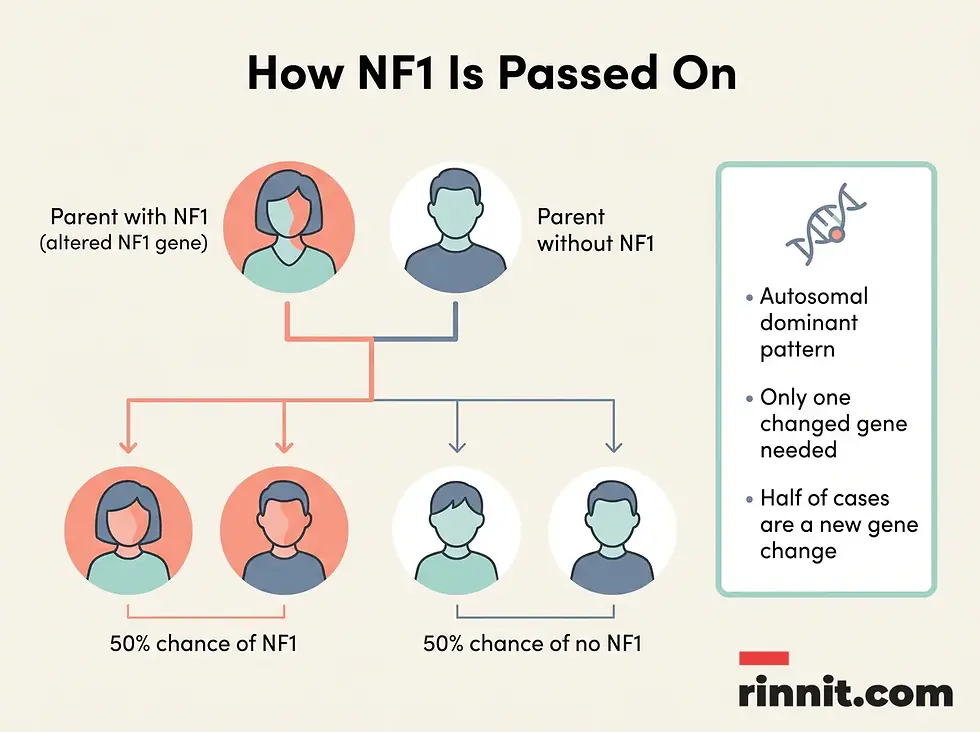
NF1 is inherited in an autosomal dominant pattern, and about half of cases are a new gene change.
What complications can neurofibromatosis type 1 (NF1) cause?
Complications vary, even within the same family. They generally occur when tumors affect nerve tissue or press on internal organs [1].
Complication | What happens |
Neurological symptoms | Trouble with learning and thinking is most common; epilepsy and excess fluid buildup in the brain are less common |
Appearance worries | Widespread spots, facial neurofibromas, or large neurofibromas can cause anxiety and emotional distress |
Skeletal symptoms | Bowed legs, fractures that do not heal, scoliosis needing bracing or surgery, and osteoporosis from low bone mineral density |
Vision changes | An optic pathway glioma on the optic nerve can affect vision |
Hormonal changes | Puberty or pregnancy might increase neurofibromas; most pregnancies are healthy but need monitoring by an obstetrician familiar with NF1 |
Cardiovascular symptoms | Increased risk of high blood pressure and blood vessel conditions |
Trouble breathing | Rarely, plexiform neurofibromas put pressure on the airway |
Cancer | Cancerous tumors can arise from neurofibromas; higher risk of breast cancer, leukemia, brain tumors, and soft tissue cancers |
Pheochromocytoma | A benign adrenal gland tumor that raises blood pressure and often needs surgery |
Breast cancer screening should begin earlier, at age 30, for women with NF1 compared with the general population [1].
Can NF1 Be Prevented?
Because NF1 is caused by an altered gene, there is no way to prevent it. About half of cases are inherited from a parent, and the other half result from a new gene change at conception. Families concerned about passing the gene to children can discuss genetic counseling and, in some cases, genetic testing during pregnancy with a healthcare professional [1] [2].
How Is Neurofibromatosis Type 1 Diagnosed?
Neurofibromatosis type 1 (NF1) diagnosis begins with a review of personal and family medical history and a physical exam. The child's skin is checked for cafe au lait spots, which can help diagnose the condition. Other tests may include [2]:
Test | What it checks |
Eye exam | Lisch nodules and vision loss |
X-rays, CT, MRI | Bone changes, tumors in the brain or spinal cord, and very small tumors |
MRI | May be used to diagnose optic gliomas |
Genetic tests | Support the diagnosis; can be done during pregnancy; genetic counseling is available |
For a diagnosis of NF1, at least two symptoms of the condition must be present. A child who has only one symptom and no family history of NF1 is likely to be monitored for other symptoms. A diagnosis can be made by age 4 [2].

Doctors diagnose NF1 with a physical exam, an eye exam, imaging, and genetic testing.
How is neurofibromatosis type 1 (NF1) treated?
Neurofibromatosis type 1 (NF1) has no cure, but symptoms can be managed. Generally, the sooner someone is under the care of a specialist trained in treating NF1, the better the outcome [2].
Monitoring and Checkups
Children with NF1 often have yearly age-appropriate checkups to check the skin for new neurofibromas or changes in existing ones, look for signs of high blood pressure, track growth and development (height, weight, and head circumference on growth charts for children with NF1), look for early puberty and skeletal changes, check learning development and school progress, and get a complete eye exam [2]. Adults with NF1 need screening tests that may include:
Adult screening | Detail |
Mammograms | Annual, starting at age 30; a contrast-enhanced mammogram may be recommended |
Blood pressure | Screenings for high blood pressure and related conditions |
Scoliosis | Yearly screenings for a curved spine |
Plexiform neurofibromas | Imaging, especially if there are symptoms such as pain |
Pheochromocytoma | Tests for this rare adrenal gland tumor |
Mental health and cognition | Screenings for depression, ADHD, and cognitive impairment |
Adults who want to start a family can talk to a genetic counselor about the risk of passing NF1 to a child. Contact your healthcare team right away if you notice changes in symptoms between visits, because many complications of NF1 can be treated effectively if therapy starts early [2].
Medications
The U.S. Food and Drug Administration has approved medicines to treat plexiform neurofibromas, the tumors that grow in multiple nerves. Clinical trials of similar medicines are underway [2].
Medicine | Approved for | What it does |
Selumetinib (Koselugo) | Children | Shrinks plexiform neurofibromas |
Mirdametinib (Gomekli) | Children and adults | Shrinks plexiform neurofibromas |
Surgery and Other Procedures
Surgery to remove tumors may be needed to treat serious symptoms or complications. Symptoms can be relieved by removing all or part of tumors that are compressing nearby tissue or damaging organs [2].
Cancer Treatment
Cancers related to NF1 are treated with standard cancer therapies, such as surgery, chemotherapy, and radiation therapy. Early diagnosis and treatment are the most important factors for a good outcome [2].
Potential Future Treatments
Researchers are testing gene therapies for NF1. Potential new treatments could include replacing the NF1 gene to restore the function of neurofibromin, the protein that regulates cell growth [2].
Can alternative medicine help, and how can people live with NF1?
No alternative or natural remedy treats the genetic cause of neurofibromatosis type 1 (NF1) or shrinks neurofibromas. Living well with NF1 centers on regular specialist care, early intervention for complications, and academic and emotional support. Discuss any supplement or alternative approach with your healthcare team, because some supplements can interact with prescription medicines.
How can people cope with neurofibromatosis type 1 (NF1)?
Living with NF1 can be challenging, but many people live healthy lives with few, if any, complications. Find a healthcare professional you trust who can coordinate your care with other specialists; if you are a parent of a child with NF1, the Children's Tumor Foundation has an online tool to find a specialist near you. Join a support group for people with NF1, and if you are a parent, seek out other parents caring for children with NF1. Accept help with daily needs when you need it, and if your child has NF1 and a learning disability, seek academic support [2].
How should you prepare for an appointment about neurofibromatosis type 1 (NF1)?
You may be referred to a neurologist, a doctor who specializes in brain and nervous system conditions. To get ready, write down a list of concerns and when you first noticed them, bring a complete medical and family history, note major stresses or recent life changes, list all medicines, vitamins, and supplements you or your child take, bring photographs of family members, living or deceased, who may have had similar symptoms, and write down your questions [2].
Basic questions to ask include whether the doctor suspects NF1, what tests are recommended, what treatments are available, and how the condition should be monitored for changes. The doctor will likely ask when you first noticed symptoms, whether they have changed over time, and whether there is a family history of NF1.
Key Takeaways
NF1 is a genetic condition affecting about 1 in 2,500 children that is usually diagnosed in childhood from at least two characteristic symptoms, most commonly cafe au lait spots and freckling. The gene change is either inherited from a parent (in about half of cases) or new at conception. Tumors are usually benign, and FDA-approved medicines can now shrink the nerve tumors that grow along multiple nerves. With yearly monitoring, adult cancer screening starting at age 30, and specialist coordination, most people with NF1 live healthy lives. If you or your child shows the early skin signs, talk to a healthcare professional: early specialist care leads to better outcomes [1] [2].
Frequently Asked Questions
What is neurofibromatosis type 1 (NF1)?
Neurofibromatosis type 1 (NF1) is a rare genetic condition that causes changes in skin pigment and the growth of tumors on nerve tissue, including the brain, spinal cord, and nerves. It affects about 1 in 2,500 children and is usually diagnosed in childhood.
Is NF1 genetic?
Yes. NF1 is caused by an altered gene on chromosome 17 that either is passed down by a parent or occurs at conception. The altered gene reduces production of neurofibromin, a protein that regulates cell growth.
Is NF1 inherited or contagious?
NF1 is not contagious. It is inherited in an autosomal dominant pattern: a parent with NF1 has a 50% chance of passing the altered gene to each child. About half of people with NF1 have a family history; the other half have a new gene change.
What do NF1 spots look like?
NF1 skin signs include cafe au lait spots (flat, light brown spots; six or more suggests NF1), freckling in clusters in the armpits or groin, and soft pea-sized bumps called neurofibromas on or under the skin.
When do NF1 symptoms appear?
Symptoms are seen at birth or shortly afterward and almost always by age 10. A diagnosis of NF1 requires at least two characteristic symptoms and can be made by age 4.
Are NF1 tumors cancerous?
Most NF1 tumors are benign (not cancerous) and slow growing. However, they can sometimes become cancerous, and people with NF1 have a higher risk of other cancers, including breast cancer, leukemia, brain tumors, and soft tissue cancers.
Can NF1 be cured?
No. There is no cure for NF1, but symptoms can be managed. FDA-approved medicines can shrink plexiform neurofibromas, surgery can relieve tumors pressing on tissue or organs, and regular monitoring helps manage complications.
What medicines treat NF1 tumors?
Two FDA-approved medicines treat plexiform neurofibromas: selumetinib (Koselugo) for children, and mirdametinib (Gomekli) for both children and adults. Both can shrink tumor size.
Does NF1 affect learning?
Yes. Learning disabilities are common in children with NF1, often as specific trouble with reading or math. ADHD and speech delay are also common. Trouble with learning and thinking is the most common neurological complication.
What screening do adults with NF1 need?
Adults with NF1 need annual mammograms starting at age 30, blood pressure screenings, yearly scoliosis screenings, imaging of symptomatic plexiform neurofibromas, tests for pheochromocytoma, and screenings for depression, ADHD, and cognitive impairment.
Can you have NF1 with no family history?
Yes. About half of people with NF1 inherit it from a parent, but others have a new change to the gene that occurs at conception, so NF1 can occur without any family history.
Related Resources
External resources for deeper reading:
References
Mayo Clinic. Neurofibromatosis type 1: Symptoms and causes. Mayo Clinic. July 14, 2026. https://www.mayoclinic.org/diseases-conditions/neurofibromatosis-type-1/symptoms-causes/syc-20350490
Mayo Clinic. Neurofibromatosis type 1: Diagnosis and treatment. Mayo Clinic. July 14, 2026. https://www.mayoclinic.org/diseases-conditions/neurofibromatosis-type-1/diagnosis-treatment/drc-20350495
Gross AM, Wolters PL, Dombi E, et al. Selumetinib in children with inoperable plexiform neurofibromas. N Engl J Med. 2020;382(15):1430-1442. PMID 32187457. https://doi.org/10.1056/NEJMoa1912735
Moertel CL, Hirbe AC, Shuhaiber HH, et al. ReNeu: a pivotal, phase IIb trial of mirdametinib in adults and children with symptomatic neurofibromatosis type 1-associated plexiform neurofibroma. J Clin Oncol. 2025;43(6):716-729. PMID 39514826. https://doi.org/10.1200/JCO.24.01034
Koczkowska M, Chen Y, Callens T, et al. Genotype-phenotype correlation in NF1: evidence for a more severe phenotype associated with missense mutations affecting NF1 codons 844-848. Am J Hum Genet. 2018;102(1):69-87. PMID 29290338. https://doi.org/10.1016/j.ajhg.2017.12.001
Medical disclaimer
This article is for informational purposes only and is not a substitute for professional medical advice, diagnosis, or treatment. The clinical information in this guide reflects source material last reviewed in July 2026.



Comments