Neck Spasms: Causes, Symptoms, and Effective Relief Strategies

Updated: 3 days ago
Medically reviewed by Dr. Baraa Alnahhal, MD · Last reviewed: October 2026
Quick Answer: Key Facts About Neck Spasms
Neck spasms are sudden, involuntary tightenings of one or more neck muscles, often caused by muscle strain, poor posture, stress or dehydration. [1] They cause sharp pain, stiffness and hard-feeling muscles. [1] Most clear up within about a week with gentle stretching, heat or cold and pain relievers. [1] See a doctor if symptoms are severe, persist or follow an injury. [1]
Feature | Details |
Definition | Sudden, involuntary tightening of one or more of the 20+ neck muscles. [1] |
Common Causes | Muscle strain, poor posture, stress, and dehydration. [1] |
Key Symptoms | Sharp pain, stiffness, hard-feeling muscles, and dizziness. [1] |
Typical Duration | Most clear up within about a week; some last longer. [1] |
Primary Treatment | Gentle stretching, heat/cold therapy, and OTC pain relievers. [1] |
When to See a Doctor | If symptoms last over a week, are severe, or follow a traumatic injury (e.g., whiplash). [1] |
What the research says
Long sitting is linked to neck pain, and the risk climbs with the hours. A meta-analysis of 25 studies (43,184 participants) found sedentary behavior raised the odds of neck pain (OR 1.46, 95% CI 1.33–1.60), with higher odds at 4 or more hours a day (OR 1.60) and 6 or more hours a day (OR 1.88). Mobile-phone use carried the greatest screen-related risk (OR 1.82, 95% CI 1.27–2.61). (Meng et al., BMC Public Health, 2025 [3])
Smartphone overuse more than doubled the odds of neck pain. Pooling 7 studies with 10,715 participants, people who overused a smartphone had a pooled adjusted odds ratio of 2.34 (95% CI 1.44–3.82) for neck pain. (Chen et al., Postgraduate Medical Journal, 2025 [4])
Neck pain is common worldwide, and stress is a recognized risk factor. The age-standardized prevalence was 27.0 per 1,000 people in 2019, and long-term stress, anxiety, and depression were identified as important psychological risk factors. (Kazeminasab et al., BMC Musculoskeletal Disorders, 2022 [5])
What are Neck Spasms?
Neck spasms occur when the muscles in your neck suddenly and involuntarily tighten. [1] This contraction is often unpredictable and can range from a mild, annoying twitch to debilitating pain that restricts the movement of your head and shoulders. These spasms are the body's protective response to irritation, inflammation, or injury in the complex network of muscles, ligaments, and nerves that support the cervical spine.
While the immediate sensation of a spasm can be alarming, most instances are not a sign of a permanent health issue. However, because the neck houses critical structures, spasms that are severe or follow an accident must be monitored closely. Symptoms can last anywhere from a few minutes to several weeks, and in some cases, the surrounding muscles may remain sore even after the active spasms have ceased. [1]

What are the symptoms of neck spasms?
A neck spasm is rarely just a localized twitch; it typically involves a cluster of related sensations that affect your upper body.
Physical Sensations
Sharp, Sudden Pain: An intense jolt of pain that often spikes when you attempt to turn your head or tilt your neck. [1]
Muscular Rigidity: The affected muscles may feel unusually hard, tight, or knotted to the touch. [1]
Restricted Mobility: A significant difficulty moving your head, neck, or shoulders through their normal range of motion. [1] [2]
Related Symptoms
In addition to direct muscular pain, neck spasms can trigger secondary issues such as headaches, dizziness, and a "pins and needles" tingling sensation at the base of the neck. [1]
What causes neck spasms, and who is at risk?
The vast majority of neck spasms are caused by everyday habits and minor musculoskeletal strains.
Lifestyle Triggers
Tech Neck: Craning the neck forward for extended periods to look at smartphones, tablets, or computer screens. [1] [2]
Poor Ergonomics: Cradling a phone between the ear and shoulder or carrying heavy bags on a single shoulder. [1] [2]
Sleep and Posture: Sleeping in an awkward position or using a pillow that does not provide adequate support for the cervical spine. [1]
Internal Stressors: Holding emotional tension in the neck and shoulders, grinding teeth during sleep (bruxism), and dehydration. [1]

Serious Underlying Conditions
While rare, neck spasms can be a symptom of more severe issues such as a herniated disk, spinal stenosis, or meningitis. [1] Neurological conditions like cervical dystonia, where the head turns involuntarily, also present with severe spasms. [1]
How can neck spasms be managed and relieved at home?
Most neck spasms can be effectively managed at home using a combination of movement and soothing therapies.
Active Recovery
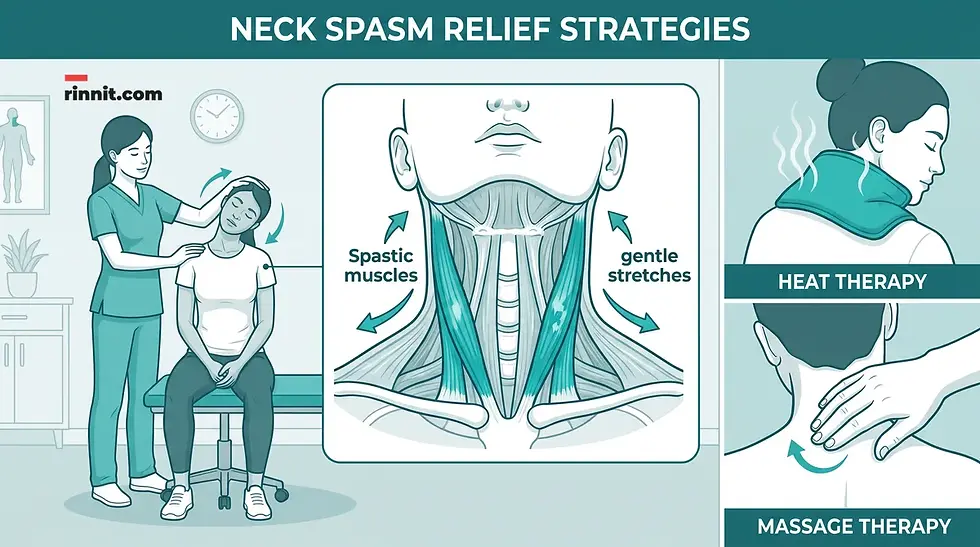
Gentle Stretching: Targeted neck stretches are considered one of the most effective ways to loosen the seized muscles and restore mobility. [1]
Light Activity: While rest is important, complete immobilization can lead to further stiffness. Short walks or light yoga can help maintain healthy blood flow to the affected tissues. [1]
Soothing Therapies
Temperature Control: Applying cold packs during the first 72 hours helps reduce pain. [1] After the initial phase, heat therapy (such as a warm shower or heating pad) can help the muscles relax and loosen. [1] Wrap packs in a thin towel and limit each application to about 20 minutes. [1]
Medication and Massage: Over-the-counter pain relievers such as ibuprofen can manage pain and swelling, if they are safe for you. Gentle, circular massage at the site of the tension can also provide relief. [1]
How can neck spasms be prevented?
Reducing the frequency of neck spasms involves making small, consistent adjustments to your daily routine.
Ergonomic Adjustments: Ensure your workspace is set up so your screen is at eye level, preventing the need to crane your neck. [1] [2]
Regular Movement: Take frequent "stretch breaks" if your job requires long periods of sitting. [1]
Hydration and Support: Drink plenty of water to maintain muscle health and use a supportive pillow that keeps your head and spine aligned during sleep. [1] [2]
Conclusion
Neck spasms are a painful but generally manageable condition that often serves as a signal from your body to improve posture or reduce stress. By implementing gentle stretching and proper ergonomics, most people can find relief within a few days. However, if your pain is severe, follows an injury, or is accompanied by neurological symptoms, consulting a healthcare professional is essential to rule out more serious spinal or systemic issues.
Take the Next Step
For more expert resources on managing muscle pain and improving spinal health, visit Rinnit.com.
Frequently Asked Questions
How long do neck spasms typically last?
Most minor spasms clear up within a week with home care, though severe strains can take longer to fully heal.
Can stress really cause my neck to seize up?
Yes. Stress often leads to unconscious muscle tension in the neck and shoulders, which can trigger a painful spasm.
Is it better to use ice or heat for a neck spasm?
Cold therapy is especially useful during the first 72 hours. Heat can then help the muscles relax and improve blood flow. Either one can be applied for up to 20 minutes at a time, with a thin towel between the pack and your skin.
Should I stop exercising if I have a neck spasm?
Avoid high-intensity exercise, but light movement like walking or gentle yoga is actually beneficial for recovery.
Why does my neck spasm cause a headache?
Tension in the neck muscles can contribute to headaches. Headache is a common companion of neck spasms.
Can dehydration cause muscle spasms in the neck?
Dehydration is one of the recognized contributors to neck spasms, which is why staying hydrated is part of prevention.
What is the best sleeping position for neck pain?
Sleeping on your back or side with a supportive pillow is best. Avoid sleeping on your stomach with your head turned to the side, which forces the neck into a twisted position.
When should I see a doctor for a neck spasm?
Seek medical advice if the pain is severe, lasts longer than a week, or occurs after a traumatic event like a car accident or a fall, or if you also have numbness, difficulty moving your arms or legs, or loss of bladder or bowel control. Go to the emergency room right away if a stiff neck comes with headache, sudden confusion, sudden fever or chills, or bruise-like marks on the skin, which can signal meningitis.
Can grinding my teeth cause neck pain?
Yes. Clenching or grinding your teeth (bruxism) during sleep can contribute to neck tension and spasms.
Are neck spasms a sign of a stroke?
Generally, no. However, if neck pain is accompanied by sudden numbness, facial drooping, or speech issues, seek emergency care immediately.
Can a new pillow stop my neck spasms?
If your current pillow doesn't keep your neck aligned, switching to a supportive pillow can help prevent morning stiffness.
What is "tech neck"?
Tech neck is strain caused by repeatedly and for long periods looking down or craning forward at electronic devices, a common trigger for neck pain and spasms.
Can a massage make a spasm worse?
Only if the pressure is too intense. A gentle, circular massage is usually helpful for relaxing tight tissue.
Is a neck spasm the same as whiplash?
No. A spasm is a muscle contraction; whiplash is a specific type of injury caused by a rapid back-and-forth motion that can cause spasms.
Related Reading
Cervical Dystonia: Symptoms, Causes, and Treatment — Complete Guide explains the nerve condition that causes ongoing neck muscle contractions.
Muscle Spasms and Muscle Cramps: Causes, Treatment and Prevention explains why muscles cramp suddenly and how to ease them.
Neck Pain: Symptoms, Causes, Diagnosis, and Treatment covers common causes of neck pain and treatment options.
Whiplash: Symptoms, Causes, Diagnosis, and Treatment Explained explains the neck injury that often follows car accidents.
References
Cleveland Clinic. Neck spasms. Cleveland Clinic. Last updated November 22, 2022. https://my.clevelandclinic.org/health/diseases/24462-neck-spasms
Mayo Clinic Staff. Neck pain: Symptoms & causes. Mayo Clinic. May 13, 2026. https://www.mayoclinic.org/diseases-conditions/neck-pain/symptoms-causes/syc-20375581
Meng Y, Xue Y, Yang S, et al. The associations between sedentary behavior and neck pain: a systematic review and meta-analysis. BMC Public Health. 2025;25(1):453. PMID 39905389. https://doi.org/10.1186/s12889-025-21685-9
Chen YJ, Hu CY, Wu WT, et al. Association of smartphone overuse and neck pain: a systematic review and meta-analysis. Postgrad Med J. 2025;101(1197):620-626. PMID 39764644. https://doi.org/10.1093/postmj/qgae200
Kazeminasab S, Nejadghaderi SA, Amiri P, et al. Neck pain: global epidemiology, trends and risk factors. BMC Musculoskelet Disord. 2022;23(1):26. PMID 34980079. https://doi.org/10.1186/s12891-021-04957-4
Medical disclaimer
This article is for general informational purposes only and does not constitute medical advice. Always consult a qualified healthcare professional for diagnosis and treatment decisions.



Comments