Multiple Organ Dysfunction Syndrome: Symptoms and Treatment

Updated: 2 days ago
Medically reviewed by Dr. Baraa Alnahhal, MD · Last reviewed: October 2026
Quick Answer: What is multiple organ dysfunction syndrome?
Multiple organ dysfunction syndrome is a condition in which two or more organ systems fail to support the body's needs, developing quickly after severe illness, injury or infection, most commonly sepsis. Symptoms may include confusion, breathing changes and loss of consciousness. It requires emergency hospital care, often in intensive care. Call emergency services if you suspect organ failure.
What the research says
Mortality rises with the number and severity of failing organs, but scoring tools vary widely. A consensus review of 54 studies of critically ill children found that organ-dysfunction scores showed higher mortality with greater severity and number of organ dysfunctions, yet their performance ranged widely and the criteria and cut-offs used varied substantially. The authors called for unified, data-driven organ-dysfunction criteria (Schlapbach et al., Pediatrics, 2022). [2]
Sepsis, the most common trigger, has international evidence-based management guidance for adults. The Surviving Sepsis Campaign guidelines set out consensus recommendations for managing sepsis and septic shock in adults, which is why early recognition and cause-directed treatment sit at the center of MODS care (Evans et al., Intensive Care Med, 2021). [3]
Inflammation and reduced blood flow appear to be a shared pathway to organ injury. A systematic review of postoperative complications describes oxidative stress as a common final pathway of processes such as inflammation and ischemia-reperfusion, and notes that more severe complications can progress to multiple organ dysfunction or sepsis (Toro-Pérez & Rodrigo, Redox Rep, 2021). [4]

Multiple organ dysfunction syndrome (MODS) is an acute, serious illness in which two or more organ systems stop working as they should. It can make it difficult for the body to function without life support.
MODS is a medical emergency. It can develop after sepsis, major trauma, a severe heart attack, pancreatitis, liver failure, toxic injury or another major illness, injury or infection. Immediate hospital treatment is essential.
The condition can affect the lungs, heart, brain, kidneys, liver and blood. Symptoms vary according to the organs involved and may include confusion, quick shallow breathing, a fast or irregular heartbeat, swelling, jaundice, cyanosis, chest or abdominal pain and loss of consciousness.
What does MODS mean for the body?
Organ systems are groups of organs that work together to perform essential functions, such as breathing, digesting food or removing waste in urine. In MODS, at least two systems stop working as they should.
MODS can affect any organ system. It often begins during a severe illness or injury and can worsen as inflammation, reduced blood flow and low oxygen damage additional organs.
Most people who develop MODS after a sudden serious event need intensive monitoring and organ support. Life support helps perform some of the work that failing organs can no longer do.
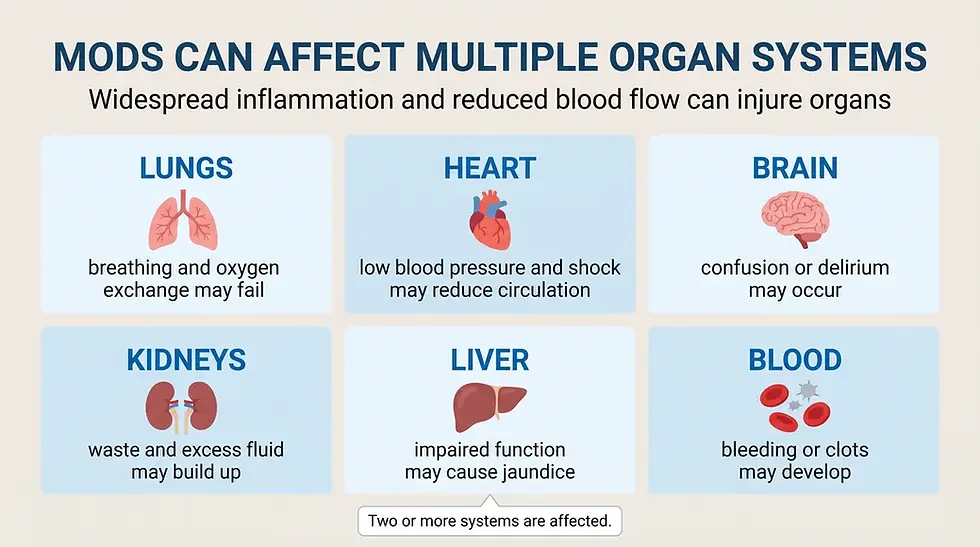
Which organs can be affected by MODS?
MODS can involve two or more of any organ systems. The lungs, heart, brain, kidneys, liver and blood are commonly affected.
Organ system | What can happen in MODS |
Respiratory system | The lungs may not provide enough oxygen or remove enough carbon dioxide. Respiratory failure, hypoxia or acute respiratory distress syndrome may occur, and mechanical ventilation may be needed. |
Cardiovascular system | The heart may pump too weakly or blood vessels may dilate and leak. Low blood pressure, shock, reduced tissue blood flow, swelling or heart failure may result. |
Blood system | Changes in blood proteins can lead to bleeding, clots, bruising, internal bleeding or disseminated intravascular coagulation. |
Neurologic system | Reduced brain blood flow, inflammation or clotting problems may lead to brain injury or delirium. |
Renal system | The kidneys may lose the ability to filter waste and remove excess fluid. Kidney failure can occur. |
Hepatic system | Inflammation and reduced blood flow may impair liver function and cause jaundice. Liver failure can contribute to other organ failures. |
Nearly all people with MODS initially have problems with their lungs, although clinicians and researchers do not fully understand why lung dysfunction usually comes first.
What are the symptoms of MODS?
Symptoms depend on the organs affected. They may be mild early in the illness that leads to MODS or severe as organ dysfunction progresses.
Possible symptoms include:
Nausea and vomiting.
Loss of appetite.
Feeling very weak or tired.
Fever or chills.
Confusion or difficulty concentrating.
Quick, shallow breathing.
A fast or irregular heartbeat.
Long-lasting chest pain or abdominal pain.
Abdominal swelling.
Swelling in the hands or feet.
A yellow tint to the skin or eyes, called jaundice.
A blue or gray, white or pale tint to the skin, lips, tongue, gums, nails or eyes, called cyanosis.
Loss of consciousness.
These symptoms can have many causes, but a combination of severe illness and organ-related changes requires emergency evaluation.
Warning sign | Why urgent assessment matters |
Confusion or difficulty concentrating | May signal reduced brain blood flow, delirium or severe illness. |
Quick, shallow breathing | May indicate respiratory distress or inadequate oxygen exchange. |
Fast or irregular heartbeat | May occur with cardiovascular stress, infection or low blood pressure. |
Persistent chest or abdominal pain | Can accompany serious heart, lung, abdominal or systemic illness. |
Swelling or abdominal swelling | May reflect fluid or blood-vessel changes. |
Jaundice or cyanosis | May indicate impaired liver function, low oxygen or another serious problem. |
Loss of consciousness | Requires emergency care. |
What causes multiple organ dysfunction syndrome?
Any major illness, injury or infection can result in MODS. The most common cause is sepsis or septic shock, in which a serious infection triggers widespread inflammation.
Other causes include:
Cause | Examples and context |
Sepsis or septic shock | A serious bacterial or viral infection can trigger widespread inflammation. |
Traumatic injury | A motor-vehicle crash, severe burns, stabbing or gunshot wound can trigger the process. |
Pancreatitis | Inflammation of the pancreas can be related to gallstones, alcohol use disorder, certain medicines or other factors. |
Massive heart attack | A blockage in a blood vessel supplying the heart can cause severe heart injury. |
Liver failure | Hepatitis B or C, fatty liver disease, alcohol use disorder and cirrhosis are possible contributors. |
Toxic injury or poisoning | Drug or alcohol exposure, poisonous chemicals, old insulation material and some bacterial infections can cause toxic injury. |
MODS may involve more than the initial event. A severe illness can trigger a dangerous immune overreaction, widespread inflammation and reduced blood flow. A later infection or surgery may add further stress.
What happens during MODS?
Current understanding suggests that widespread inflammation and reduced blood flow often contribute to MODS. When blood flow and oxygen delivery fall, organs can become injured.
A possible sequence is:
A triggering event, such as sepsis, major trauma or a serious heart attack, causes acute illness.
The immune system overreacts, creating widespread inflammation.
Blood vessels may dilate or become leaky, reducing effective circulation and causing swelling.
Low blood flow and oxygen damage organs.
A later infection or surgery may add another stressor.
This sequence is an educational overview, not a way to determine what is happening to a particular person. Clinicians use vital signs, examinations, laboratory results, cultures, imaging and organ-specific tests to assess the situation.
Who is at risk of MODS?
Anyone can develop MODS after a major illness, injury or infection. Risk may be higher in people with an underlying chronic disease or a condition that affects the immune system, such as immunodeficiency.
MODS is common during acute critical illness. Studies described in the clinical material report it in 28% to 88% of critically ill people. It is also considered a frequent cause of death among people admitted to surgical intensive care units.
This range describes critically ill populations and should not be used to estimate one person’s risk.
How is MODS diagnosed?
Clinicians use different tests to assess organ failure throughout the body. The evaluation depends on the suspected cause, symptoms and organ systems involved.
Possible tests include:
Test | What it may help assess |
Blood tests | General organ function and signs of infection or inflammation. |
Arterial blood gas | Oxygen, carbon dioxide and acid-base status. |
Liver-function tests | How well the liver is working. |
Kidney-function tests | Waste removal and kidney performance. |
Blood and tissue cultures | Whether bacteria or other organisms may be causing infection. |
Echocardiogram | Heart structure and pumping function. |
Ultrasound or CT scan | Possible injury, infection, fluid or organ changes. |
There is no single home test for MODS. A person with suspected MODS needs immediate evaluation in an emergency department or hospital.
How is MODS treated?
Treatment depends on the cause and the organ systems affected. The main goals are to treat the initial illness, restore circulation and oxygen delivery, support failing organs and prevent additional organ injury.
Possible treatments include:
IV fluids to support low blood flow.
Vasopressors to increase blood flow through blood vessels and tissues.
Antibiotics for infection or sepsis.
Blood transfusion to replace blood lost during injury or surgery.
Oxygen therapy to increase oxygen available to the body.
Mechanical ventilation when a person cannot breathe adequately on their own.
Dialysis to remove waste products and excess fluid when kidneys cannot do so.
Extracorporeal membrane oxygenation (ECMO) to add oxygen to blood and remove carbon dioxide.
Molecular absorbent recirculating system (MARS) to support the liver.
Surgery for severe injuries or another correctable cause.
Transplant surgery to replace a diseased or failing organ in selected situations.
Parenteral or enteral nutrition when gastrointestinal disease or bleeding, or physical inability to eat, prevents adequate nutrition.

Why life support may be needed
Life support helps perform the work of failing organs while clinicians treat the underlying illness. Examples include mechanical ventilation for breathing, dialysis for kidney function and ECMO for oxygen and carbon-dioxide exchange.
Needing life support does not by itself determine whether recovery is possible. The treating team considers the cause, the number of affected systems, the severity of organ injury and the response to treatment.
How soon will recovery begin?
Recovery depends on the underlying causes and the treatments required. A healthcare provider can give a better estimate based on the specific illness, organ systems involved and response to care.
Some or all organs may recover, and temporary life support may be needed during recovery. Late-stage conditions may cause permanent organ damage, long-term life-support needs or a need for transplant.
What is the outlook for MODS?
The outlook depends primarily on the cause, the severity of illness and how the organs respond to treatment. Early recognition and treatment of MODS and its underlying cause are very important.
The clinical material describes a MODS survival rate of 50% to 60%. This is a broad estimate for critically ill populations, not an individual prediction. Different ICU settings and underlying conditions can produce very different outcomes.
Some people recover some or all organ function. Others may have lasting organ damage, need long-term support or require a transplant. MODS can be fatal, especially when treatment is delayed or the initial illness is severe.
Ask the care team to explain what is causing organ dysfunction, which organs are improving, what support is needed now and what the next decision points are.
Can MODS be prevented?
Some causes of MODS cannot be prevented, and there is no specific medication known to prevent it. Researchers continue to study ways to identify and treat early organ dysfunction before it worsens.
Steps that may protect organ health or reduce risk include:
Wearing a seatbelt in a vehicle.
Using protective padding during high-impact sports.
Receiving recommended vaccines to prevent serious infections.
Avoiding or limiting medicines outside a provider’s instructions that can damage the kidneys, such as NSAIDs.
Avoiding or limiting things that can cause stomach bleeding, including NSAIDs, smoking and alcohol.
Treating high blood pressure.
In the hospital, clinicians may reduce worsening risk by minimizing ventilator-related lung injury, limiting blood transfusions until needed and using blood thinners when necessary to prevent clots.
These measures do not guarantee that MODS will be prevented. They should not delay emergency treatment for a serious illness.
Living with MODS after critical illness
Some people recover after the original illness is treated, but recovery can take time. Follow-up depends on the organs affected and any lasting damage.
Ask the healthcare team about changes in breathing, kidney function, liver function, heart function, cognition, mobility, nutrition and medication needs. A person may need temporary support, rehabilitation or monitoring for a chronic condition.
Families may also need support. It can be frightening to hear that several organ systems are not working well. Ask the team to explain the goals of care, what can improve, what support is temporary and what decisions may need to be made.
Questions to ask the care team
What caused the organ dysfunction?
Which organ systems are affected right now?
What tests are being used to monitor each system?
What treatments are addressing the initial illness?
Which forms of life support are needed, and are they expected to be temporary?
What signs show that an organ is improving?
What are the goals of care today?
What treatment decisions may come next?
What changes should the family report immediately?
What support may be needed after leaving the hospital?
When should I go to the emergency room?
Go to the nearest emergency room or call 911 or your local emergency number if you or someone else has signs that could indicate MODS, including confusion, quick shallow breathing, severe weakness, fast or irregular heartbeat, persistent chest or abdominal pain, jaundice, cyanosis, loss of consciousness or rapidly worsening illness.
MODS can be fatal without prompt medical treatment. Do not wait for a routine appointment, online explanation or home test to confirm what is happening.
Conclusion: MODS needs immediate, coordinated care
Multiple organ dysfunction syndrome is an acute illness in which two or more organ systems fail to support the body’s needs. It is a medical emergency that often requires intensive care and life support.
Sepsis is the most common cause, but major trauma, severe burns, heart attack, pancreatitis, liver failure, toxic injury and other major illnesses can also trigger MODS. Widespread inflammation and reduced blood flow and oxygen can damage the lungs, heart, brain, kidneys, liver and blood.
Symptoms vary but may include confusion, breathing changes, an abnormal heartbeat, swelling, jaundice, cyanosis, persistent chest or abdominal pain and loss of consciousness. Diagnosis and treatment require hospital-based evaluation.
Treatment focuses on the underlying cause and support for the organs involved. Some people recover some or all organ function, while others need long-term support or experience permanent injury. Prognosis depends on the cause and response to treatment, and population-level survival estimates cannot predict an individual outcome.
If someone has signs of serious illness or possible organ failure, call emergency services or go to the nearest emergency room now.
Frequently Asked Questions
What is multiple organ dysfunction syndrome?
MODS is an acute, serious illness in which two or more organ systems stop working as they should. It can make life support necessary while clinicians treat the underlying cause.
Is MODS the same as multiple organ failure?
The terms are used for the same general condition in which two or more organ systems fail to meet the body’s needs. MODS is also called multiple organ system failure.
Is MODS a medical emergency?
Yes. MODS can be fatal without prompt medical treatment. People with signs of organ failure should go to the nearest emergency room or call 911 or the local emergency number.
What causes MODS?
Sepsis is the most common cause. Other causes include major trauma, severe burns, a massive heart attack, pancreatitis, liver failure, toxic injury or poisoning and other major illnesses, injuries or infections.
Which organs can fail in MODS?
MODS can affect any organ system. Commonly affected systems include the lungs, heart, brain, kidneys, liver and blood.
What are the early signs of MODS?
Possible signs include nausea, vomiting, loss of appetite, severe weakness, fever, chills, confusion, quick shallow breathing, fast or irregular heartbeat, persistent chest or abdominal pain, swelling, jaundice, cyanosis and loss of consciousness.
Why do the lungs often become affected first?
Nearly all people with MODS initially have lung problems, but clinicians and researchers do not fully understand why lung dysfunction usually precedes other organ dysfunction.
How is MODS diagnosed?
Clinicians may use blood tests, arterial blood gas, liver and kidney function tests, blood and tissue cultures, echocardiogram and imaging such as ultrasound or CT. The tests depend on the suspected cause and affected organ systems.
How is MODS treated?
Treatment addresses the underlying cause and supports failing organs. Possible treatments include IV fluids, vasopressors, antibiotics, transfusion, oxygen, mechanical ventilation, dialysis, ECMO, liver support, surgery, transplant or parenteral or enteral nutrition.
Does MODS always require life support?
MODS may make life support necessary, and many people require intensive-care monitoring and organ support. The treatment team decides which forms of support are needed based on the affected organs and the person’s response.
Can MODS be reversed?
Some or all organs may recover after the underlying cause is treated. Recovery depends on the cause, severity, timing of treatment and response. Late-stage illness can cause permanent damage or a need for long-term support.
What is the survival rate for MODS?
A broad survival estimate of 50% to 60% is described for MODS, but this cannot predict an individual outcome. Prognosis varies by cause, affected organs, ICU setting and response to treatment.
Can MODS be prevented?
There is no specific medication known to prevent MODS, and some causes cannot be prevented. Risk-reduction measures include recommended vaccines, injury prevention, treating high blood pressure and using medicines only as directed.
What should families ask the care team?
Ask what caused MODS, which organ systems are affected, what tests are being used, which treatments are needed, whether life support may be temporary, what signs show improvement and what the goals of care are.
When should I call emergency services?
Call emergency services for confusion, quick shallow breathing, severe weakness, fast or irregular heartbeat, persistent chest or abdominal pain, jaundice, cyanosis, loss of consciousness or rapidly worsening illness. Do not wait for a home test or routine appointment.
References
Centers for Disease Control and Prevention. Sepsis. Centers for Disease Control and Prevention. Accessed October 30, 2026. https://www.cdc.gov/sepsis/index.html
Schlapbach LJ, Weiss SL, Bembea MM, et al. Scoring systems for organ dysfunction and multiple organ dysfunction: the PODIUM consensus conference. Pediatrics. 2022;149(1 Suppl 1):S23-S31. PMID 34970683. https://doi.org/10.1542/peds.2021-052888D
Evans L, Rhodes A, Alhazzani W, et al. Surviving sepsis campaign: international guidelines for management of sepsis and septic shock 2021. Intensive Care Med. 2021;47(11):1181-1247. PMID 34599691. https://doi.org/10.1007/s00134-021-06506-y
Toro-Pérez J, Rodrigo R. Contribution of oxidative stress in the mechanisms of postoperative complications and multiple organ dysfunction syndrome. Redox Rep. 2021;26(1):35-44. PMID 33622196. https://doi.org/10.1080/13510002.2021.1891808
Disclaimer
This article is for general educational purposes and is not a substitute for professional medical advice, diagnosis or treatment. Always seek the advice of a qualified healthcare professional with any questions about a medical condition or treatment.
MODS is a medical emergency and should be evaluated by emergency and intensive-care professionals. Do not delay calling emergency services because of this article. Do not start, stop or change medication or life-support decisions without the treating team. Population-level statistics cannot predict an individual outcome.



Comments