More Than a Vestige: A Guide to Appendix Function and Health

Updated: 2 days ago
Medically reviewed by Dr. Baraa Alnahhal, MD · Last reviewed: October 2026
Quick Answer: What is the appendix?
The appendix is a thin pouch of tissue, approximately three to four inches long, attached to the cecum, the first part of the large intestine. [1] It stores beneficial gut bacteria that can repopulate the intestines after illness and supports the immune system with B and T cells. [1] Appendicitis, its most common disorder, is a medical emergency. [1]
What the research says
Antibiotics alone are being studied as an alternative to surgery for uncomplicated appendicitis. A Cochrane review of 13 randomized trials (1,675 people given antibiotics and 1,683 given appendectomy) found that 30.7% of those treated with antibiotics (95% CI 24.0 to 37.8) needed an appendectomy within one year, so more than two-thirds avoided surgery in that time. Treatment was more likely to be unsuccessful with antibiotics (about 76 more people per 1,000), though the authors rated the evidence as low to very uncertain (Doleman et al., Cochrane Database Syst Rev, 2024 [2]).
Evidence on how the appendix affects immune-related disease is still emerging. In a meta-analysis of 30 studies including 118,733 patients, having an appendectomy before an ulcerative colitis diagnosis was linked to a lower risk of later colectomy (odds ratio 0.76, 95% CI 0.65 to 0.89), but also to a higher risk of colorectal cancer or high-grade dysplasia (OR 2.27, 95% CI 1.11 to 4.66) (Welsh et al., Inflamm Bowel Dis, 2023 [3]).
Findings are not consistent across studies. A Danish cohort of 154,434 people who had an appendectomy found no significant reduction in hospitalization for ulcerative colitis (84 cases versus 97.0 expected; relative risk 0.87, 95% CI 0.69 to 1.07) (Frisch et al., Surgery, 2001 [4]).
What is the anatomy and structure of the appendix?
The appendix is located on the lower right side of the abdomen at the junction where the small and large intestines meet. [1] It hangs specifically from the cecum, which is the initial segment of the large intestine. [1] Typically measuring about the length of a middle finger [1], this small organ possesses a complex, multi-layered structure that supports its biological roles.
Its internal layers include the mucosa (the lining), the submucosa (which contains a dense concentration of lymphoid tissue), the muscularis propria (a muscle layer for movement), and the serosa (the outer protective sheath). [1] This anatomical complexity reflects its active participation in the body's internal environment, rather than being a dormant structure.
Layer | Component | Function |
Mucosa | Innermost lining | Provides a barrier and surface for bacterial storage. |
Submucosa | Lymphoid tissue | Houses B and T cells for immune defense and antibody production. [1] |
Muscularis propria | Muscle layer | Assists in the movement of contents within the pouch. [1] |
Serosa | Outer layer | Protects the organ within the abdominal cavity. [1] |

What role does the appendix play in immunity and the microbiome?
Modern medicine has shifted its view of the appendix from a vestigial organ to a specialized immune hub. It contains a high volume of immune cells that help the body distinguish between safe and harmful microbes. [1] By producing antibodies, the appendix assists in training the immune system, a role that is particularly crucial during early development. [1]
Furthermore, the appendix acts as a biological "safe house." When the gut's bacterial balance is disrupted by illness or infection, the beneficial bacteria stored within the appendix can emerge to repopulate the intestines. [1] This helps digestion run smoothly and prevents harmful bacteria from dominating the gut environment. [1]

What common appendix conditions need emergency care?
The most recognized condition affecting this organ is appendicitis, which occurs when the appendix becomes infected and inflamed. [1] This is considered a medical emergency because an untreated appendix can rupture [1], leading to life-threatening complications. In such cases, an appendectomy (surgical removal) is performed immediately.
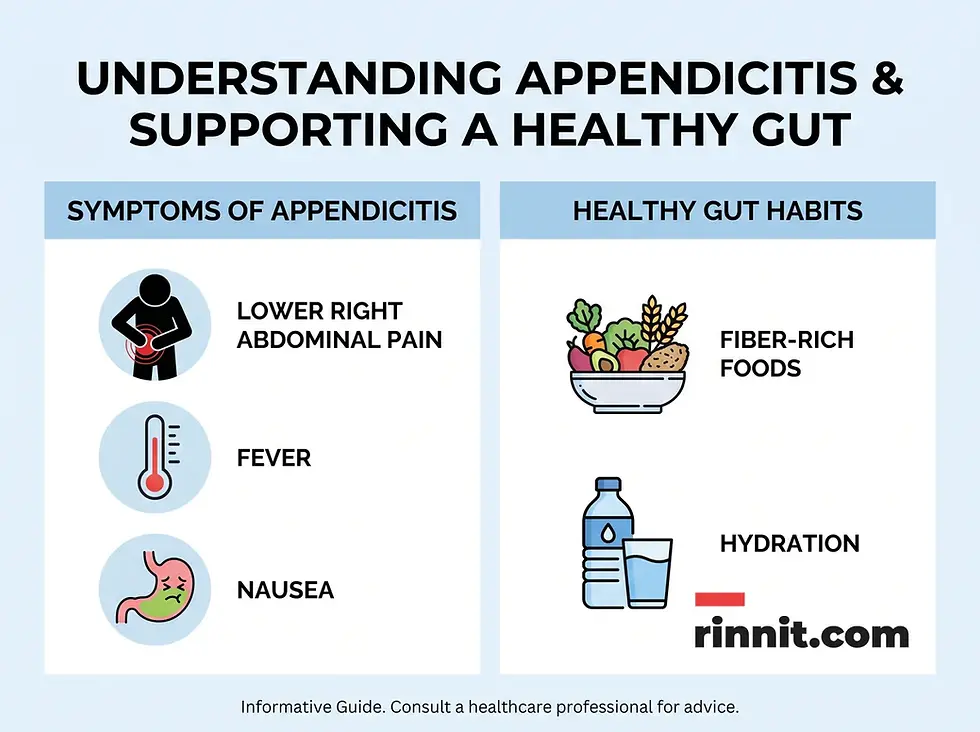
Other, less common issues include appendicoliths, which are hard, stonelike clumps of minerals and waste, and rare growths or tumors. [1] Maintaining gut health through a high-fiber diet, adequate hydration, and the occasional use of probiotics can help support the appendix and the broader digestive system. [1]
Can you live a healthy life without an appendix?
Yes, the appendix is not essential for survival, and most people who have an appendectomy live full, healthy lives. Most people who undergo an appendectomy live full, healthy lives as the rest of the immune system and the gut microbiome adapt to its absence. [1] Some research suggests a minor increase in the long-term risk of certain infections [1], but the body's ability to "shift gears" ensures that overall health remains strong.
Frequently Asked Questions
1. What is the appendix?
A small, tube-shaped organ attached to the large intestine in the lower right abdomen.
2. Is the appendix useless?
No, it supports the immune system and stores beneficial gut bacteria.
3. Where exactly is the appendix located?
The appendix hangs off the cecum, where the small and large intestines meet.
4. How long is the average appendix?
Usually about 3 to 4 inches long.
5. What are the main functions of the appendix?
Immune support and maintaining gut microbiome balance.
6. What immune cells are found in the appendix?
The appendix has a high concentration of B cells and T cells.
7. What is appendicitis?
A medical emergency in which the appendix becomes inflamed and swollen.
8. What happens if an inflamed appendix isn't treated?
An inflamed appendix can burst, causing a serious infection.
9. What is an appendectomy?
The surgical removal of the appendix.
10. What is an appendicolith?
A hard, stonelike lump of stool and minerals that can form in the appendix.
11. Can you live without your appendix?
Yes, the body and immune system adapt to its removal.
12. Does removing the appendix affect gut bacteria?
Removing the appendix may lead to a slight reduction in the gut's safe-house bacteria.
13. How can I keep my appendix healthy?
Eat high-fiber foods, drink water, and stay active.
14. What are the symptoms of an appendix problem?
Lower right belly pain, fever, nausea, and loss of appetite. These symptoms need prompt medical attention.
15. Are appendix tumors common?
No, tumors or growths in the appendix are relatively rare.
Related Reading
Trusted External Resources
References
Cleveland Clinic. Appendix. Cleveland Clinic. Last updated January 18, 2026. https://my.clevelandclinic.org/health/body/appendix
Doleman B, Fonnes S, Lund JN, et al. Appendectomy versus antibiotic treatment for acute appendicitis. Cochrane Database Syst Rev. 2024;4(4):CD015038. PMID 38682788. https://doi.org/10.1002/14651858.CD015038.pub2
Welsh S, Sam Z, Seenan JP, et al. The role of appendicectomy in ulcerative colitis: systematic review and meta-analysis. Inflamm Bowel Dis. 2023;29(4):633-646. PMID 35766795. https://doi.org/10.1093/ibd/izac127
Frisch M, Johansen C, Mellemkjaer L, et al. Appendectomy and subsequent risk of inflammatory bowel diseases. Surgery. 2001;130(1):36-43. PMID 11436010. https://doi.org/10.1067/msy.2001.115362
Medical Disclaimer
This article is for informational purposes only and does not constitute medical advice. Always seek the advice of your physician or other qualified health provider with any questions you may have regarding a medical condition. Never disregard professional medical advice or delay in seeking it because of something you have read in this article.



Comments