Milk Allergy: The Complete Guide

Updated: 3 days ago
Medically reviewed by Dr. Baraa Alnahhal, MD · Last reviewed: October 2026
Quick Answer
Milk allergy is an immune system response to milk and milk products and one of the most common food allergies in children, usually triggered by cow's milk. Symptoms start within minutes to hours and range from hives and vomiting to anaphylaxis, a severe, life-threatening reaction. The primary treatment is avoiding milk products, and most children outgrow the allergy.
What the research says
Cow's milk allergy is usually outgrown, but treatments that build tolerance carry real risks. A World Allergy Organization guideline review (13 randomized trials and 109 observational studies) notes that cow's milk allergy is the most common food allergy in infants and is usually outgrown by 5 years of age. Oral immunotherapy increased the chance of drinking at least 150 ml of milk in controlled settings compared with an elimination diet (risk ratio 12.3, 95% CI 5.9–26.0; low-certainty evidence), but it also increased anaphylaxis (rate ratio 60.0, 95% CI 15–244), and tolerance persisted in only 36% of patients 2 to 8 weeks after a successful course stopped. (Bognanni et al., World Allergy Organ J, 2022) [3]
Amino-acid formulas worked as well as extensively hydrolyzed formulas — and helped when those failed. A systematic review of 20 studies found that in randomized comparisons, both formula types were equally effective at relieving cow's milk allergy symptoms. Infants who did not tolerate extensively hydrolyzed formula, such as those with persisting symptoms, often improved on amino-acid formula, and catch-up growth was seen. (Hill et al., Clin Exp Allergy, 2007) [4]
Milk Allergy at a Glance
Key Question | Answer |
What is it? | An immune system response to milk and milk products |
Who is affected? | Primarily children — one of the most common childhood food allergies |
Usual trigger | Cow's milk (sheep, goat, and buffalo milk also trigger reactions) |
The 2 allergy proteins | Casein (curd) and whey (liquid) |
Biggest danger | Anaphylaxis — milk is the 3rd most common food to cause it |
Main treatment | Avoiding milk and milk products |
Will a child outgrow it? | Most children do; some must continue avoiding milk |
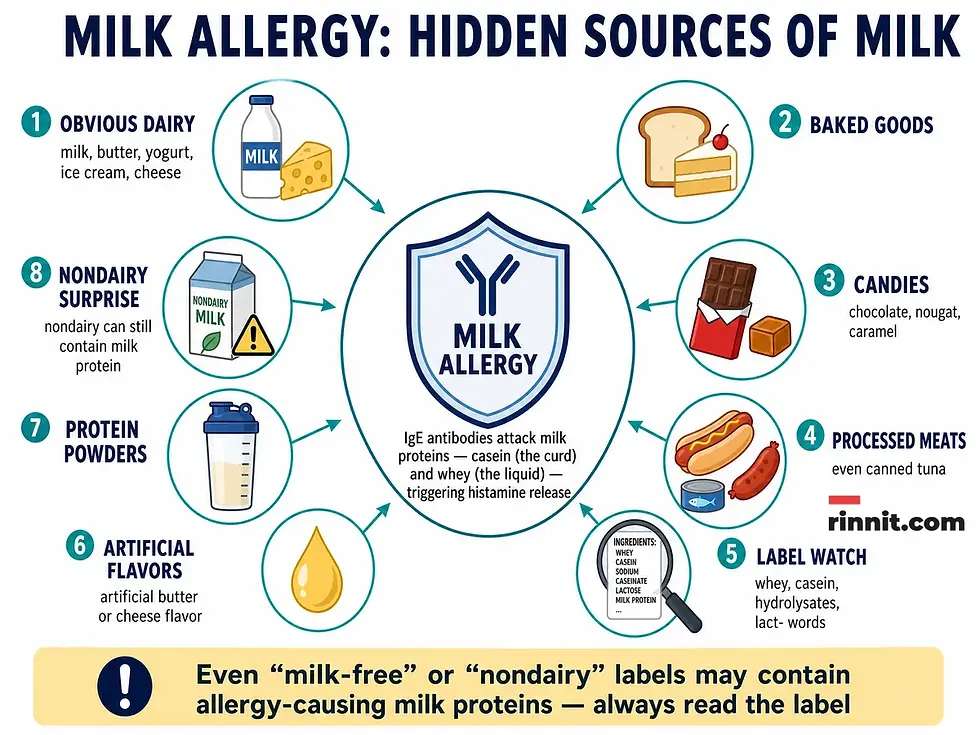
What Is a Milk Allergy?
Milk allergy is an atypical immune system response to milk and products containing milk. It is one of the most common food allergies in children. Cow's milk is the usual cause, but milk from sheep, goats, buffalo, and other mammals can also cause a reaction.
An allergic reaction usually happens soon after consuming milk. Symptoms range from mild to severe and can include wheezing, vomiting, hives, and digestive problems. Milk allergy can also cause anaphylaxis, a severe, life-threatening reaction.
Avoiding milk and milk products is the primary treatment. Fortunately, most children outgrow milk allergy. Those who don't may need to continue avoiding milk products.
What are the symptoms of a milk allergy?
Milk allergy symptoms differ from person to person and start a few minutes to a few hours after you or your child drinks milk or eats milk products.
Timing | Symptoms |
Immediate | Hives; wheezing; itching or tingling around the lips or mouth; swelling of the lips, tongue, or throat; coughing or shortness of breath; vomiting |
Delayed (develop over more time) | Loose stools or diarrhea (sometimes with blood); abdominal cramps; runny nose; watery eyes; colic in babies |
Milk Allergy or Milk Intolerance?
A true milk allergy differs from milk protein intolerance and lactose intolerance. Unlike milk allergy, intolerance does not involve the immune system — and it requires different treatment. Common intolerance symptoms are digestive problems, such as bloating, gas, or diarrhea, after consuming milk or products containing milk.
Anaphylaxis: The Life-Threatening Emergency
Milk allergy can cause anaphylaxis, a life-threatening reaction that narrows the airways and can block breathing. Notably, milk is the third most common food — after peanuts and tree nuts — to cause anaphylaxis.
Anaphylaxis Warning Sign | What It Looks Like |
Airway constriction | A swollen throat that makes it difficult to breathe |
Skin | Facial flushing and itching |
Circulation | Shock — a marked drop in blood pressure |
Anaphylaxis is a medical emergency requiring an epinephrine (adrenaline) shot (such as EpiPen or Adrenaclick) and a trip to the emergency room.
Report every reaction. If you or your child reacts to milk, tell a healthcare professional — no matter how mild the reaction. Tests can confirm milk allergy so you can avoid future, potentially worse reactions.
When to See a Doctor
See a healthcare professional if you or your child experiences milk allergy symptoms shortly after consuming milk — ideally during the allergic reaction, which helps with diagnosis. Seek emergency treatment immediately for any symptoms of anaphylaxis.

What Causes Milk Allergy?
All true food allergies are caused by an immune system malfunction. If you have milk allergy, your immune system identifies certain milk proteins as harmful and triggers the production of immunoglobulin E (IgE) antibodies to neutralize the protein (the allergen). The next time you come into contact with these proteins, the IgE antibodies recognize them and signal your immune system to release histamine and other chemicals — causing a range of allergic symptoms.
The two main proteins in cow's milk that can cause an allergic reaction:
Protein | Where It Is Found |
Casein | The solid part (curd) of milk that curdles |
Whey | The liquid part of milk that remains after milk curdles |
You or your child may be allergic to only one milk protein or to both. These proteins can be hard to avoid because they are also present in some processed foods. Importantly, most people who react to cow's milk will also react to sheep, goat, and buffalo milk.
FPIES: The Delayed Food Allergy
A food allergen can also cause a reaction sometimes called a delayed food allergy — food protein-induced enterocolitis syndrome (FPIES). Any food can be a trigger, but milk is one of the most common. The reaction — commonly vomiting and diarrhea — usually occurs within hours of eating the trigger rather than within minutes. Unlike some food allergies, FPIES usually resolves over time, and preventing it involves avoiding milk and milk products.
What are the risk factors for a milk allergy?
Risk Factor | Why It Matters |
Other allergies | Many children allergic to milk also have other allergies — and milk allergy may develop before them |
Atopic dermatitis | Children with this common, chronic skin inflammation are much more likely to develop a food allergy |
Family history | Risk rises if one or both parents have a food allergy or another allergy or allergic disease, including hay fever, asthma, hives, or eczema |
Age | More common in children; as they age, digestive systems mature and the body becomes less likely to react to milk |
What complications can a milk allergy cause?
Complication | Details |
Nutritional deficiencies | Dietary restrictions and feeding challenges can slow growth and cause vitamin and mineral deficiencies |
Reduced quality of life | Many common — sometimes unexpected — foods contain milk, such as salad dressings or even hot dogs. Severe allergy can raise stress and anxiety around food choices |
How can you prevent a milk allergy reaction?
A milk allergy cannot be reliably prevented, but you can prevent reactions by avoiding milk, reading labels carefully and asking about ingredients when eating out. If you or your child is allergic to milk, the core habits are simple: read food labels carefully — watch for casein, a milk derivative found in unexpected places like some canned tuna, sausage, or nondairy products — and question ingredients when ordering in restaurants.
Obvious Sources of Milk
Dairy Product | Examples |
Fluid milk | Whole, low-fat, skim, buttermilk |
Other staples | Butter, yogurt, half-and-half |
Frozen and aged | Ice cream, gelato, cheese — and anything containing cheese |
Hidden Sources of Milk
Hidden Milk Source | Hidden Milk Source |
Whey | Candies (chocolate, nougat, caramel) |
Casein | Protein powders |
"Lact-" ingredients (lactose, lactate) | Artificial butter flavor |
Hydrolysates | Artificial cheese flavor |
Even if a food is labeled "milk-free" or "nondairy," it may still contain allergy-causing milk proteins — read the label carefully, and when in doubt, contact the manufacturer. When eating out, ask how foods were prepared: Does your steak have melted butter? Was the seafood dipped in milk before cooking?
If you are at risk of a serious reaction, discuss carrying and using emergency epinephrine with a healthcare professional. If you have already had a severe reaction, wear a medical alert bracelet or necklace that lets others know you have a food allergy.
Milk Alternatives for Infants
For children allergic to milk, breastfeeding and hypoallergenic formula can prevent allergic reactions:
Option | What to Know |
Breastfeeding | The best source of nutrition; breastfeeding for as long as possible is recommended, especially for infants at high risk. Note: cow's milk proteins passed through breast milk may still cause a reaction — the breastfeeding parent may need to exclude all milk products |
Hypoallergenic formulas | Enzymes break down (hydrolyze) the milk proteins, sometimes with further heat and filtering. Extensively hydrolyzed and amino-acid (elemental) formulas are used for milk allergy; partially hydrolyzed formulas are not hypoallergenic and are not suitable. Amino-acid-based formulas — besides extensively hydrolyzed ones — are the least likely to cause a reaction |
Soy-based formulas | Built on soy protein instead of milk and fortified to be nutritionally complete — but some milk-allergic children also develop a soy allergy |
If you or your child follows a milk-free diet, a dietitian can help plan nutritionally balanced meals. Supplements may be needed to replace the calcium and nutrients found in milk, such as vitamin D and riboflavin.
How is a milk allergy diagnosed?
When food causes an allergic reaction, identifying the blame food is not always easy. A healthcare professional may ask detailed questions about symptoms, perform a physical exam, have you keep a detailed food diary, and try an elimination diet — removing milk, then adding it back to see whether it causes a reaction.
One or both of these tests may be recommended:
Test | How It Works | Limitation |
Skin test | The skin is pricked and exposed to small amounts of milk proteins; a raised bump (hive) forms at the test site if allergic. Allergy specialists are usually best equipped to perform and interpret it | Not completely accurate for detecting milk allergy |
Blood test | Measures the immune system's response to milk by checking the amount of IgE antibodies in the blood | Not completely accurate for identifying milk allergy |
If the exam and tests cannot confirm milk allergy, a healthcare professional might administer an oral challenge: you are fed different foods that may or may not contain milk in increasing amounts to see whether you react. Have allergy tests performed by an allergist trained to manage serious reactions. If your professional suspects another cause, other tests may be used to identify or rule out other medical problems.
How is a milk allergy treated?
The only way to prevent an allergic reaction is to avoid milk and milk proteins — challenging because milk is a common ingredient in many foods. That said, some people with milk allergy can tolerate milk in certain forms, such as milk heated in baked goods or some processed foods like yogurt. Talk to a healthcare professional about what specifically to avoid.
Scenario | What to Do |
Serious reaction (anaphylaxis) | Emergency epinephrine (adrenaline) injection and a trip to the emergency room |
At risk of a severe reaction | Carry injectable epinephrine (EpiPen, Adrenaclick) at all times; have your provider or pharmacist demonstrate the device so you are prepared |
Mild symptoms from milk exposure | An antihistamine may lessen discomfort — but watch for more-severe symptoms requiring medical attention |
How can people cope with a milk allergy and find support?
Having a serious allergy — or parenting a child with a potentially life-threatening one — can be stressful. Talking to others in similar situations helps: they offer support, encouragement, and coping tips, such as working effectively with school officials to ensure your child's medical needs are met. Ask a healthcare professional about local support groups, or contact the Asthma and Allergy Foundation of America.
How should you prepare for a milk allergy appointment?
You will likely start with your regular healthcare team or your child's pediatrician, who may refer you to an allergist or immunologist — a doctor specializing in allergic disorders.
What you can do beforehand:
Ask about restrictions. If allergy testing is planned, you may need to stop antihistamine medicines for a set period before the test.
Write down all symptoms, including ones that seem unrelated to milk allergy.
List every medication, vitamin, and supplement.
Prepare your questions, such as:
Do you think this is milk allergy or lactose intolerance?
What tests diagnose milk allergy, and do they require preparation?
Is it possible to outgrow this allergy?
What treatments exist?
Is avoiding all milk products necessary?
Which foods are likely to contain milk?
Do I need to stay away from others drinking milk?
What should I tell my child's school?
How is milk allergy best managed alongside other conditions?
Do I need to carry injectable epinephrine at all times?
What the doctor will ask: when you or your child first reacted to milk; how the reaction looked; whether it happens every time; how soon symptoms begin; how severe they are; what improves them (allergy medicine, milk avoidance); what worsens them; whether lactose-intolerance products were tried and helped; and whether anyone else in the family is allergic to milk.
Frequently Asked Questions
What is a milk allergy?
Milk allergy is an immune system response to milk and products containing milk. Cow's milk is the usual trigger, though sheep, goat, and buffalo milk can also cause reactions. It is one of the most common food allergies in children and usually appears soon after milk is consumed.
What proteins cause milk allergy?
Two main cow's milk proteins: casein, found in the solid curd of milk, and whey, the liquid that remains after milk curdles. You may be allergic to one or both — and most people who react to cow's milk also react to sheep, goat, and buffalo milk.
How is milk allergy different from lactose intolerance?
Milk allergy is an immune system reaction involving IgE antibodies, while lactose intolerance is a digestive problem that does not involve the immune system. Intolerance causes bloating, gas, or diarrhea after milk and requires different treatment than allergy.
Can milk allergy be life-threatening?
Yes. Milk allergy can cause anaphylaxis, a reaction that narrows the airways and can block breathing. Milk is the third most common food — after peanuts and tree nuts — to cause anaphylaxis, making an epinephrine shot and emergency room care critical.
Where does milk hide in foods?
Beyond obvious dairy (milk, butter, yogurt, cheese, ice cream), milk hides in baked goods, chocolate, nougat, caramel, processed meats like sausages and even canned tuna, protein powders, artificial butter or cheese flavor, and hydrolysates. Even "nondairy" labeled products may contain milk proteins.
Can babies with milk allergy be breastfed?
Yes — breastfeeding is the best nutrition for infants and is recommended for as long as possible. However, cow's milk proteins can pass through breast milk, so the breastfeeding parent may need to exclude all milk products. Hypoallergenic or amino-acid-based formulas are the safest alternatives.
Will my child outgrow milk allergy?
Most children outgrow milk allergy as their digestive systems mature. Those who do not may need to continue avoiding milk products, and a healthcare professional should guide any reintroduction.
Conclusion
Three lessons matter most when it comes to milk allergy. First, the immune system is the driver — IgE antibodies target the casein and whey proteins in milk, which is why reactions happen fast and why true allergy is fundamentally different from lactose intolerance. Second, the emergency risk is real: milk is the third most common food to trigger anaphylaxis, so every reaction deserves a professional report and anyone at risk deserves access to epinephrine. Third, avoidance is manageable and hopeful — labels, label vocabulary ("whey," "casein," "lact-"), and restaurant questions form your daily toolkit, and most children outgrow this allergy as their digestive systems mature.
This guide covered the symptoms, causes, hidden milk sources, infant feeding alternatives, diagnosis, and treatment so you can protect yourself or your child at home, at school, and at the table. If you are navigating another common trigger, our food allergy guide is a natural next read.
Disclaimer: This article is for informational purposes only and is not a substitute for professional medical advice, diagnosis, or treatment. Always seek the advice of a qualified healthcare provider with any questions about a medical condition.
References
Mayo Clinic Staff. Milk allergy - Symptoms & causes. Mayo Clinic. September 19, 2025. https://www.mayoclinic.org/diseases-conditions/milk-allergy/symptoms-causes/syc-20375101
Mayo Clinic Staff. Milk allergy - Diagnosis & treatment. Mayo Clinic. September 19, 2025. https://www.mayoclinic.org/diseases-conditions/milk-allergy/diagnosis-treatment/drc-20375106
Bognanni A, et al. World Allergy Organization (WAO) Diagnosis and Rationale for Action against Cow's Milk Allergy (DRACMA) guideline update - XIII - Oral immunotherapy for CMA - Systematic review. World Allergy Organ J. 2022;15(9):100682. PMID 36185550. https://doi.org/10.1016/j.waojou.2022.100682
Hill DJ, et al. The efficacy of amino acid-based formulas in relieving the symptoms of cow's milk allergy: a systematic review. Clin Exp Allergy. 2007;37(6):808-22. PMID 17517094. https://doi.org/10.1111/j.1365-2222.2007.02724.x



Comments