Managing Bladder Control During and After Pregnancy

Updated: 3 days ago
Medically reviewed by Dr. Baraa Alnahhal, MD · Last reviewed: October 2026
Quick Answer
Bladder control problems during pregnancy, known as urinary incontinence, are common because the growing fetus presses on the bladder and hormones loosen pelvic floor muscles. [4] Stress incontinence, leaking during a cough or sneeze, is the most frequent type. [4] It often resolves after childbirth, and Kegel exercises and bladder training help. [4] Discuss problems persisting six weeks postpartum with a provider. [4]
What the research says
Starting pelvic floor muscle training (PFMT) in pregnancy lowers the risk of leaking. A Cochrane review of 46 trials involving 10,832 women found that, in pregnant women who were continent, antenatal PFMT cut the risk of urinary incontinence in late pregnancy by 62% (RR 0.38; 95% CI 0.20 to 0.72; 6 trials, 624 women; moderate-quality evidence) and by 29% three to six months after birth (RR 0.71; 95% CI 0.54 to 0.95; 5 trials, 673 women; high-quality evidence). The authors noted that many trials were small and at moderate to high risk of bias (PubMed: Woodley et al., Cochrane Database Syst Rev, 2020) [1].
A more recent meta-analysis points the same way. Across 30 randomized trials (N = 6,691), PFMT during pregnancy reduced the risk of urinary incontinence (RR 0.72; 95% CI 0.59 to 0.87; I² = 59%) and of third- or fourth-degree perineal tears (RR 0.50; 95% CI 0.31 to 0.80), but it did not reduce episiotomy (RR 0.95; 95% CI 0.85 to 1.07) (PubMed: Zhang et al., Acta Obstet Gynecol Scand, 2024) [2].
About one in four women leak after birth, and delivery mode matters. A meta-analysis of 32 articles covering 28,303 women estimated that postpartum urinary incontinence affects 26% (95% CI 21% to 30%). Twelve factors were linked to it, including vaginal delivery, age 35 or older, two or more deliveries, a baby over 4 kg and a pre-pregnancy BMI of 24 or higher, while cesarean delivery was identified as a protective factor (PubMed: Dai et al., BMC Pregnancy Childbirth, 2023) [3].
Why Does Pregnancy Affect Bladder Control?
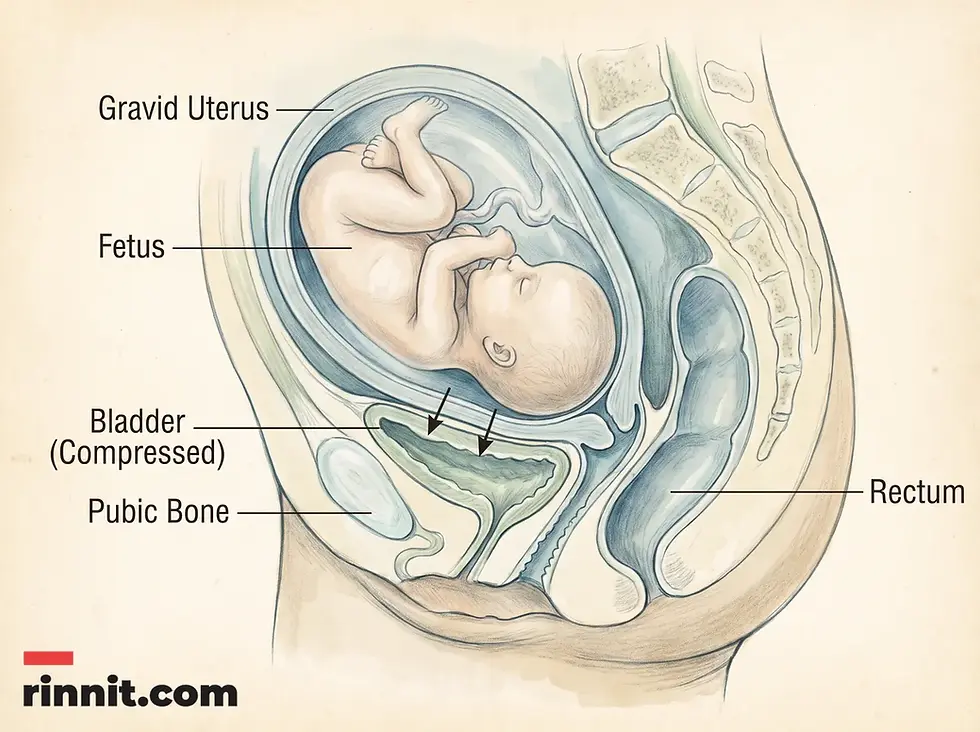
During pregnancy, the body undergoes significant anatomical and hormonal shifts designed to support fetal growth. The uterus, positioned directly behind the bladder, expands as the fetus develops, physically squishing the bladder and reducing its capacity to hold urine. [4] This physical pressure is most intense during the third trimester when the fetus is at its heaviest.
Hormonal changes also play a critical role. An increase in progesterone causes the pelvic floor muscles—which support the bladder and urethra—to become more flexible and relaxed. [4] While this flexibility is necessary for delivery, it simultaneously weakens the support system for the bladder, making it harder to prevent leaks when pressure increases. [4]
What types of bladder control problems happen during and after pregnancy?
Most individuals experience one of two primary types of bladder control loss. Understanding which type you are experiencing can help in choosing the most effective management strategy.
Type of Incontinence | Description | Common Triggers |
Stress Urinary Incontinence (SUI) | The most common type; occurs when physical pressure is put on the bladder [4] | Coughing, sneezing, laughing, or exercising |
Urge Urinary Incontinence (UUI) | A sudden, intense need to urinate followed by an involuntary loss of urine | Bladder muscle spasms or contractions [4] |
What are the risk factors for bladder control problems after pregnancy?
Bladder control problems after pregnancy are more likely with vaginal delivery, higher body weight, older age at first delivery and dietary irritants. [4] Factors such as pre-pregnancy bladder health, delivery methods, and lifestyle choices all contribute to the risk profile.
Delivery Method: Vaginal deliveries are more likely to cause postpartum incontinence compared to C-sections due to potential nerve and muscle injury. [3] [4]
Body Weight: Individuals with a BMI over 25 or 30 have a significantly higher risk, as excess weight places additional strain on the pelvic floor. [4]
Maternal Age: First-time deliveries for individuals over age 30 are associated with higher rates of stress incontinence. [4]
Dietary Irritants: Regular consumption of caffeine, alcohol, and carbonated beverages can irritate the bladder lining. [4]

How are bladder control problems during and after pregnancy managed?
Fortunately, several non-invasive strategies can help improve bladder control both during and after pregnancy. The goal of these treatments is to strengthen the pelvic floor and reduce the frequency of leakage episodes.
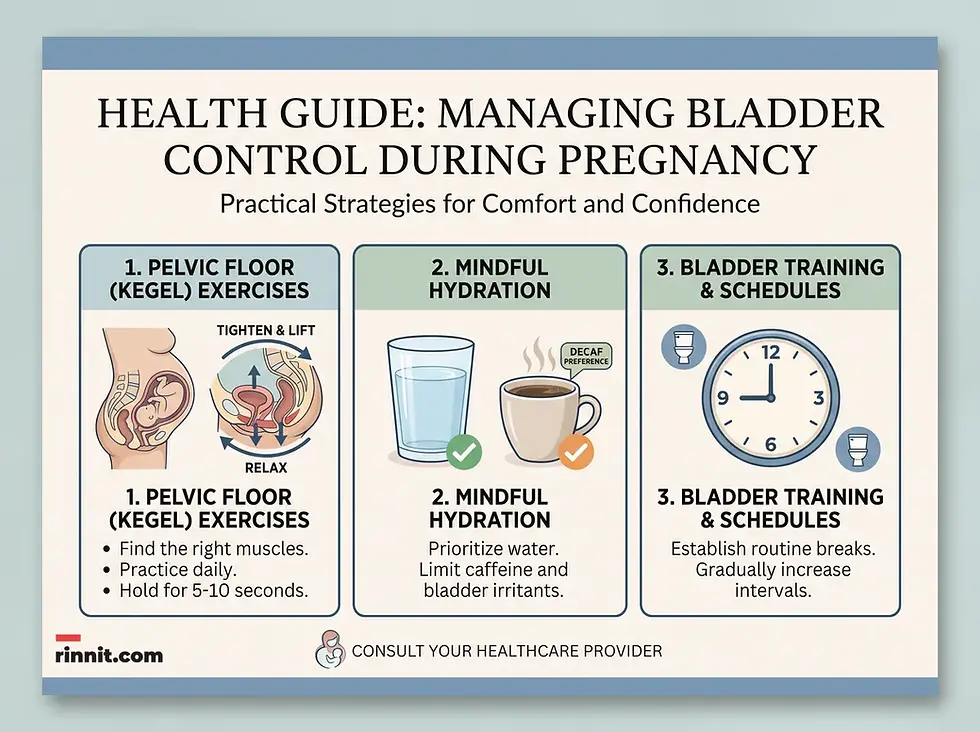
Kegel Exercises: Regularly squeezing and relaxing the pelvic floor muscles can build the strength needed to support the bladder. [4]
Bladder Training: This involves scheduling bathroom breaks and gradually increasing the time between them to “teach” the bladder to hold more urine. [4]
Dietary Adjustments: Reducing intake of bladder irritants like coffee and spicy foods can decrease the sudden urge to urinate. [4]
Fluid Management: Limiting fluid intake in the evening can reduce the need for multiple bathroom trips during the night. [4]
When should you see a provider about bladder control after pregnancy?
Most bladder control problems clear a few months after delivery, but see a provider if significant leakage or urgency continues six weeks after pregnancy ends. [4] If you are still experiencing significant leakage or urgency six weeks after your pregnancy has ended, it is important to consult a provider. They can perform diagnostic tests, such as a bladder stress test or ultrasound, to rule out conditions like pelvic organ prolapse (POP). [4]
Conclusion
Experiencing changes in bladder control is a normal part of the pregnancy journey for many. By utilizing strengthening exercises and making simple lifestyle adjustments, you can effectively manage these symptoms and focus on your health and your baby. Remember that professional support is available if symptoms persist beyond the initial postpartum recovery period.
Frequently Asked Questions
1. Is it normal to leak pee during pregnancy?
Yes, it is very common, affecting 40% to over 50% of pregnant individuals due to increased pressure on the bladder.
2. What is stress incontinence?
Stress incontinence is the most common type of leakage during pregnancy, occurring when you cough, sneeze, or laugh.
3. Will my bladder control return to normal?
In most cases, yes. Bladder function typically returns to normal a few months after the pregnancy ends.
4. How do Kegel exercises help?
Kegels strengthen the pelvic floor muscles that support your bladder, giving you better control over urination.
5. Can my diet affect my bladder?
Yes, caffeine, alcohol, and carbonated drinks can irritate the bladder and increase the urge to pee.
6. Does weight impact incontinence risk?
Yes. Being overweight or having obesity raises the risk of bladder control problems, and some studies suggest obesity can more than double it.
7. Is postpartum incontinence permanent?
Usually no, but if it persists beyond six weeks after delivery, you should consult a healthcare provider.
8. What causes urge incontinence?
Urge incontinence is caused by the bladder muscles squeezing without your control, creating a sudden, intense need to urinate.
9. Can vaginal delivery cause bladder issues?
Vaginal deliveries are more likely to lead to bladder control problems than C-sections due to potential muscle or nerve injury.
10. What is pelvic organ prolapse?
Pelvic organ prolapse occurs when pelvic muscles become too weak to support organs, causing the bladder to sag or droop.
References
Woodley SJ, Lawrenson P, Boyle R, et al. Pelvic floor muscle training for preventing and treating urinary and faecal incontinence in antenatal and postnatal women. Cochrane Database Syst Rev. 2020;5(5):CD007471. PMID 32378735. https://doi.org/10.1002/14651858.CD007471.pub4
Zhang D, Bo K, Montejo R, et al. Influence of pelvic floor muscle training alone or as part of a general physical activity program during pregnancy on urinary incontinence, episiotomy and third- or fourth-degree perineal tear: systematic review and meta-analysis of randomized clinical trials. Acta Obstet Gynecol Scand. 2024;103(6):1015-1027. PMID 38140841. https://doi.org/10.1111/aogs.14744
Dai S, Chen H, Luo T. Prevalence and factors of urinary incontinence among postpartum: systematic review and meta-analysis. BMC Pregnancy Childbirth. 2023;23(1):761. PMID 37898733. https://doi.org/10.1186/s12884-023-06059-6
Cleveland Clinic. Pregnancy and Bladder Control. Cleveland Clinic. Aug. 31, 2023. https://my.clevelandclinic.org/health/diseases/16094-pregnancy-and-bladder-control
Medical Disclaimer
This article is for informational purposes only and does not constitute medical advice. Always seek the advice of your physician or other qualified health provider with any questions you may have regarding a medical condition. Never disregard professional medical advice or delay in seeking it because of something you have read here.



Comments