Lysosomal Storage Diseases: Symptoms, Types, Causes, Diagnosis, and Treatment

Updated: 2 days ago
Medically reviewed by Dr. Baraa Alnahhal, MD · Last reviewed: October 2026
Quick Answer: What are lysosomal storage diseases?
Lysosomal storage diseases are rare genetic disorders that affect lysosomes, structures inside cells that help break down substances such as fats, sugars, proteins, and older cell parts. When a needed enzyme or enzyme helper is missing, these materials can accumulate and harm cells and organs. [1]
There are no cures, but treatment may manage symptoms and lessen organ and tissue damage. [1]
What the research says
When newborns were screened for six lysosomal storage disorders, the combined birth prevalence was much higher than the traditional estimate, and most diagnoses were later-onset forms. In a cohort of 50,108 newborns in Shanghai screened for Gaucher, acid sphingomyelinase deficiency, Krabbe, mucopolysaccharidosis type I, Fabry and Pompe diseases, 353 screened positive and 27 (7.7%) were diagnosed with one of the six disorders, a combined birth prevalence of 1 in 1,856 live births. Later-onset forms accounted for 24 of the 27 diagnoses (88.9%) and early-onset forms for 3 (11.1%) (Chang et al., JAMA Netw Open, 2024). [2]
Enzyme replacement therapy is an established treatment for several lysosomal storage diseases, but a systematic review found its cost-effectiveness ratios far above usual willingness-to-pay thresholds. Across economic evaluations for Pompe, Fabry and Gaucher diseases and lysosomal acid lipase deficiency, the incremental cost per quality-adjusted life year ranged from about €286,114 for infantile-onset Pompe disease (at the lower dose) to €884,994 for Gaucher disease, €2.7 million for lysosomal acid lipase deficiency and €6.1 million for Fabry disease. Medication cost dominated the analyses, and the authors call for steep price reductions or a new assessment framework (Katsigianni & Petrou, Cost Eff Resour Alloc, 2022). [3]

How do lysosomes and enzymes work?
Lysosomes are structures inside cells that help with metabolism. Enzymes assist lysosomes by causing chemical reactions that break down carbohydrates, fats, proteins, and older cells. [1]
In an LSD, a needed enzyme or enzyme activator or modifier is missing or not working properly. The body cannot break down certain substances as it normally would. Those substances can collect inside cells, become toxic, and damage other cells and organs. [1]
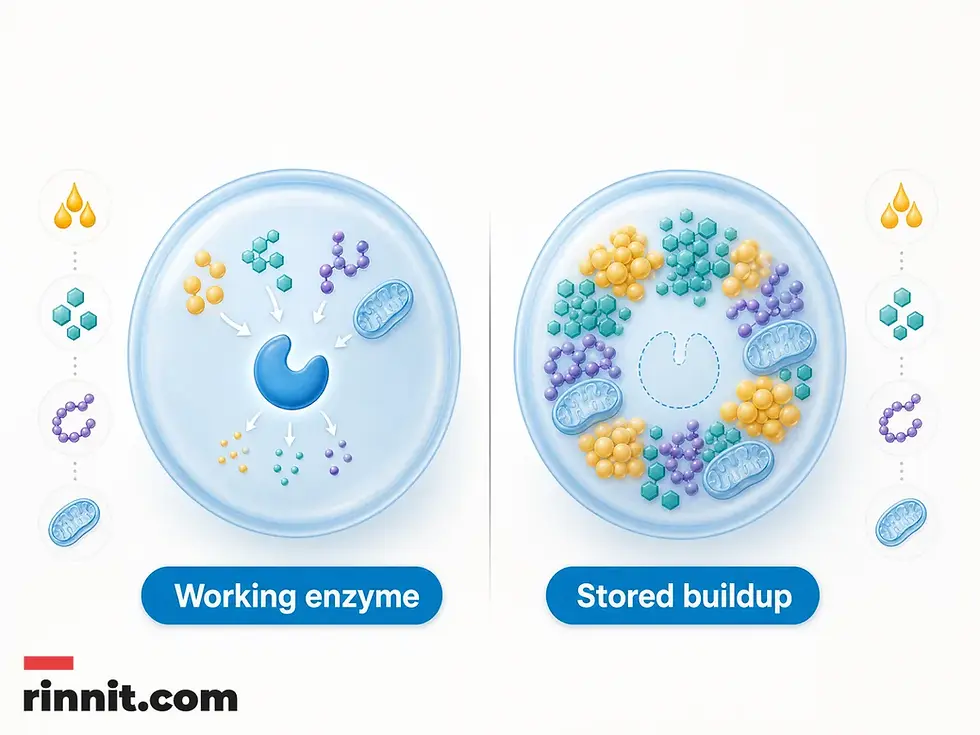
The damage can affect many parts of the body, including the brain, central nervous system, heart, skeletal system, and skin. [1]
When do lysosomal storage diseases appear?
LSDs usually appear during pregnancy or soon after birth. More rarely, an adult may develop an LSD. Earlier-onset disease is often more severe, while later-onset disease is often milder. [1]
The timing of symptoms is not enough to identify a specific disorder. Different LSDs affect different substances, cells, and organs, so evaluation by a qualified healthcare provider is important.
What are the main types of lysosomal storage diseases?
Researchers have identified dozens of LSDs and continue to identify more. The main groups are generally based on which enzyme is lacking. [1]
Type | What is missing or affected | Examples |
Lipidoses | An enzyme needed to break down fats. | Cholesteryl ester storage disease and Wolman disease. |
Mucopolysaccharidoses | An enzyme needed to break down complex sugar molecules called glycosaminoglycans. | Hunter syndrome and Hurler’s disease. |
Sphingolipidoses | An enzyme needed to break down fatty substances called sphingolipids. | Fabry disease, Gaucher disease, Krabbe disease, metachromatic leukodystrophy, Niemann-Pick disease, Sandhoff disease, and Tay-Sachs disease. |
Other named LSDs | Disorders that do not fit the three broad groups above. | Batten disease, cystinosis, Danon disease, and Pompe disease. |
What are lipidoses?
Lipidoses occur when the body lacks an enzyme needed to break down fats. The named examples are cholesteryl ester storage disease and Wolman disease. [1]
What are mucopolysaccharidoses?
Mucopolysaccharidoses occur when the body lacks an enzyme needed to break down complex sugar molecules, also called glycosaminoglycans. The named examples are Hunter syndrome and Hurler’s disease. [1]
What are sphingolipidoses?
Sphingolipidoses occur when the body does not have enough of an enzyme needed to break down sphingolipids. These fatty substances have specific jobs in cells, including helping protect the cell surface. Named examples include Fabry disease, Gaucher disease, Krabbe disease, metachromatic leukodystrophy, Niemann-Pick disease, Sandhoff disease, and Tay-Sachs disease. [1]
Who can have a lysosomal storage disease?
Anyone can have an LSD. Some ethnic groups and geographic areas have a higher incidence of certain LSDs. Eastern European Jewish people and people in Finland have a higher incidence of certain lysosomal storage disorders.
Each LSD is rare on its own, but as a group they affect about 1 in 7,700 live births, and newborn screening suggests they may be even more common. This is a broad estimate for the group rather than a prediction for any one person or individual disorder.
What causes lysosomal storage diseases?
LSDs are inherited metabolic disorders. Most are autosomal recessive, which means a person generally needs to inherit a changed gene from each parent to develop the disease. Parents may carry the gene changes without having an LSD themselves. [1]
When both parents carry a changed gene, each pregnancy has a 1-in-4 chance of not having the changed gene, a 1-in-4 chance of developing an LSD, and a 1-in-2 chance of being a carrier without developing the disease. [1]
Some LSDs have X-linked inheritance, in which only one parent may carry the gene change. The named X-linked conditions are Danon disease, Fabry disease, and Hunter syndrome. [1]
Inflammation and oxidative stress may also contribute to some lysosomal storage diseases. [1]
Inheritance or contributor | Plain-language explanation |
Autosomal recessive inheritance | A person generally inherits a changed gene from each parent. Parents may be carriers without having the disease. |
Carrier possibility | When both parents carry a changed gene, a child may be a carrier without developing an LSD. |
X-linked inheritance | In some conditions, one parent may carry the gene change. |
Inflammation and oxidative stress | These are listed as possible triggers or contributors. |
What are the symptoms of lysosomal storage diseases?
Symptoms vary based on the type of LSD and the cells or organs affected. Common symptoms across many LSDs include abnormally large organs in the abdomen, skeletal muscle changes, coarse facial features, and developmental delay that worsens over time.
Abdominal organs that may become enlarged include the kidneys, liver, pancreas, spleen, or stomach. Coarse facial features may include a bulging forehead, flat nose, and large lips.
A symptom pattern cannot identify the exact LSD by itself. A healthcare provider uses the symptoms, the suspected disease type, and test results to understand what is happening.
Symptom or finding | What it may look like |
Enlarged abdominal organs | The kidneys, liver, pancreas, spleen, or stomach may become unusually large. |
Skeletal muscle changes | Changes may affect skeletal muscle. |
Coarse facial features | Features may include a bulging forehead, flat nose, and large lips. |
Developmental delay | Developmental delay may worsen over time. |
How are lysosomal storage diseases diagnosed?
Diagnosis may occur during pregnancy, through newborn screening, or later in childhood or adulthood. The exact testing plan depends on the suspected LSD and the organs or systems that may be affected. [1]
Prenatal and newborn testing
During pregnancy, a provider may use amniocentesis or chorionic villus sampling. Newborn screening may use dried blood spots collected with a finger prick to look for the missing enzyme. The blood is placed on absorbent paper, allowed to dry, and then tested. [1]
Testing in children and adults
A provider may refer a person or child to an endocrinologist or pediatric endocrinologist. Possible tests include blood tests to check enzyme levels, genetic testing for gene changes, a punch biopsy, and urine testing to measure substances that the missing enzymes would normally act on.
Additional tests may check for organ damage. These may include a complete blood count, eye exam, hearing test, echocardiogram, electrocardiogram, kidney function tests, liver function tests, MRI, and X-ray. [1]
Evaluation stage | Examples of tests or assessments |
Pregnancy | Amniocentesis or chorionic villus sampling. |
Newborn period | Dried blood spot testing for the missing enzyme. |
Children and adults | Enzyme-level blood tests, genetic testing, punch biopsy, and urinalysis. |
Organ assessment | Blood count, eye and hearing exams, heart tests, kidney and liver function tests, MRI, and X-ray. |

How are lysosomal storage diseases treated?
Providers usually treat LSDs in specialized medical centers. Treatment depends on the specific disorder, symptoms, organs affected, and available options. [1]
Enzyme replacement therapy
Enzyme replacement therapy, or ERT, gives a genetically engineered enzyme through a vein. The aim is to replace the missing enzyme involved in the disease. [1]
Stem cell transplants
A stem cell transplant may use cells from a donor or umbilical cord blood. These cells may help produce the missing enzyme and can also reduce inflammation and tissue damage. [1]
Substrate reduction therapy
Substrate reduction therapy, or SRT, uses medication to reduce substances that build up in cells. Miglustat is one example used for Gaucher disease, and other SRTs are in clinical trials. [1]
Developing approaches
Researchers continue to test gene therapy and pharmacological chaperone therapy. Gene therapy, which replaces damaged genes with healthy genes, is mostly still experimental, although one gene therapy (atidarsagene autotemcel, Lenmeldy) is FDA-approved for children with metachromatic leukodystrophy. Pharmacological chaperone therapy uses small molecules that bind to damaged enzymes and improve how lysosomes work. One chaperone, migalastat (Galafold), is already approved for some people with Fabry disease. [1]
Symptom-management care
Other treatments may help manage symptoms and organ-related effects. Options listed include immunosuppressants, nonsteroidal anti-inflammatory drugs, orthopedic braces, other medications, physical therapy, speech therapy, and surgery.
Treatment approach | How it works |
Enzyme replacement therapy | A genetically engineered enzyme is given intravenously. |
Stem cell transplant | Donor or umbilical-cord-blood stem cells may help produce the missing enzyme and reduce inflammation or tissue damage. |
Substrate reduction therapy | Medication reduces substances that build up inside cells. |
Gene therapy | An experimental approach that replaces damaged genes with healthy genes. |
Pharmacological chaperone therapy | Small molecules may bind to damaged enzymes and improve lysosomal function. |
Symptom management | May include medication, braces, physical therapy, speech therapy, and surgery. |
Is there a cure for lysosomal storage diseases?
Lysosomal storage diseases cannot be cured with any of the treatments currently available. However, treatments may help manage symptoms and lessen damage to organs and tissues. [1]
Some treatment approaches are established options for particular disorders, while others are experimental or still being tested. A specialized care team can explain which options apply to the specific LSD.
What is the outlook?
Outlook depends on the age at diagnosis, the treatment received, the type of LSD, and access to healthcare facilities that specialize in these disorders. Severe disease may shorten lifespan. People with milder forms may live longer when treatment begins before organ damage occurs. [1]
These factors describe general possibilities, not an individual prediction. The treating team is best positioned to explain what the diagnosis may mean for a particular person.
Can lysosomal storage diseases be prevented?
The risk of developing an LSD cannot be reduced. Prompt treatment for you or your child may help improve quality of life. [1]
Because most LSDs are inherited, families may find it helpful to ask a qualified healthcare provider how the specific condition is passed through families and whether genetic evaluation is appropriate.
How can someone live with an LSD?
Living with an LSD may involve ongoing medical care and emotional support. A psychologist may provide tools for coping with the emotional effects of the condition. Support groups can connect people with others facing similar situations and challenges. [1]
If symptoms worsen or treatment has not produced results after some time, contact the healthcare provider. The provider may suggest other treatments that could help.
What questions should you ask the care team about lysosomal storage diseases?
Question | Why it may help |
Which lysosomal storage disease is being considered? | There are many LSDs, and symptoms vary by disease type and affected organs. |
Which enzyme or substance is affected? | LSDs involve a missing enzyme or enzyme helper that normally breaks down cellular materials. |
Which tests are needed? | Testing may include blood, urine, genetic, biopsy, prenatal, newborn, and organ-focused tests. |
Should care take place in a specialized center? | Providers usually treat LSDs in specialized medical centers. |
Which treatments apply to this condition? | Options may include ERT, stem cell transplant, SRT, medication, and symptom-focused care. |
What should we watch for at home? | A provider can explain which changes should prompt a call. |
What support is available? | Psychology support and support groups may help with coping and connection. |
Conclusion: Understanding the enzyme problem is the starting point
Lysosomal storage diseases are inherited metabolic disorders in which missing enzyme activity allows substances to build up inside cells. The buildup can damage organs and tissues. Symptoms vary, but common findings include enlarged abdominal organs, skeletal muscle changes, coarse facial features, and developmental delay. [1]
Diagnosis may begin during pregnancy or newborn screening and may later include blood, urine, genetic, biopsy, imaging, and organ-focused tests. There is no cure, but specialized care can include enzyme replacement therapy, stem cell transplant, substrate reduction therapy, developing therapies, and symptom management. [1]
Frequently Asked Questions
What are lysosomal storage diseases?
Lysosomal storage diseases are rare genetic conditions in which a missing enzyme or enzyme helper causes substances to build up inside cells. The buildup can become toxic and damage organs and tissues.
What are lysosomes supposed to do?
Lysosomes help with metabolism. With the help of enzymes, they break down carbohydrates, fats, proteins, and older cells.
What are common lysosomal storage disease symptoms?
Common findings include unusually large abdominal organs, skeletal muscle changes, coarse facial features, and developmental delay that worsens over time. Symptoms vary by the disease type and organs affected.
What are the main types of LSDs?
The broad groups are lipidoses, mucopolysaccharidoses, and sphingolipidoses. Other named disorders include Batten disease, cystinosis, Danon disease, and Pompe disease.
Are lysosomal storage diseases inherited?
Yes. Most are autosomal recessive, meaning a person generally inherits a changed gene from each parent. Some conditions have X-linked inheritance.
How are LSDs diagnosed?
Diagnosis may include prenatal tests, newborn dried blood-spot screening, blood tests for enzyme levels, genetic testing, punch biopsy, urinalysis, and tests for organ effects.
Is there a cure?
There are no cures for LSDs, but treatments can help manage symptoms and lessen damage to organs and tissues.
What treatments are available?
Treatment may include enzyme replacement therapy, stem cell transplant, substrate reduction therapy, experimental gene or pharmacological chaperone therapy, and symptom-management treatments such as medication, braces, physical therapy, speech therapy, or surgery.
When should I contact a healthcare provider?
Contact the provider if symptoms get worse or if treatment has not produced results after some time. The provider can discuss whether another treatment approach may help.
Can adults be diagnosed with a lysosomal storage disease?
Yes, though it is less common. Most LSDs appear during pregnancy or soon after birth, but some later-onset forms show up in older children or adults and are often milder.
Related guides
Related guides on Fabry disease, Pompe disease, Batten disease and inherited metabolic disorders can help you learn more about lysosomal storage diseases.
References
Cleveland Clinic. Lysosomal Storage Diseases. Cleveland Clinic. Last updated June 27, 2022. https://my.clevelandclinic.org/health/diseases/23383-lysosomal-storage-diseases
Chang S, Zhan X, Liu Y, et al. Newborn screening for 6 lysosomal storage disorders in China. JAMA Netw Open. 2024;7(5):e2410754. PMID 38739391. https://doi.org/10.1001/jamanetworkopen.2024.10754
Katsigianni EI, Petrou P. A systematic review of economic evaluations of enzyme replacement therapy in lysosomal storage diseases. Cost Eff Resour Alloc. 2022;20(1):51. PMID 36123734. https://doi.org/10.1186/s12962-022-00369-w
Disclaimer
This article is for general educational purposes and is not a substitute for professional medical advice, diagnosis or treatment. Always seek the advice of a qualified healthcare professional with any questions about a medical condition or treatment.



Comments