Lymphoma in Children: Symptoms, Types, Diagnosis, Treatment, and Support

Updated: 3 days ago
Medically reviewed by Dr. Baraa Alnahhal, MD · Last reviewed: October 2026
Quick Answer: What is lymphoma in children?
Childhood lymphoma is a type of blood cancer that begins in lymphocytes, white blood cells found throughout the lymphatic system. Non-Hodgkin lymphoma is the most common type in children, while Hodgkin lymphoma is more common in teenagers. Diagnosis usually includes a lymph node biopsy, treatment depends on type and stage, and most cases can be cured. [1]
What the research says
In contemporary Children’s Oncology Group trials, nearly all children with Hodgkin lymphoma were alive five years after diagnosis, although relapse still occurred in about one in six. A pooled analysis of 1,605 patients (younger than 1 to 21 years) treated in phase III trials from 2002 to 2012 found unadjusted five-year event-free survival of 83% and overall survival of 97%. The cumulative incidence of relapse was 17% at a median follow-up of 6.9 years. Event-free survival did not differ by race or ethnicity, but adjusted overall survival was worse in nonwhite patients, driven by higher mortality after relapse (Kahn et al., J Clin Oncol, 2019). [2]
For newly diagnosed high-risk classical Hodgkin lymphoma in children and young adults, regimens that added brentuximab vedotin were associated with better event-free survival than chemotherapy alone. A systematic review of 12 US studies (32 publications) reported five-year event-free or progression-free survival of 86% to 100% with brentuximab vedotin–containing regimens versus 79% to 94% with chemotherapy alone, and the randomized trials showed significantly longer event-free or progression-free survival with brentuximab vedotin. Blood-count problems and peripheral neuropathy were the most commonly reported adverse events, although safety data were inconsistently reported (Flerlage et al., Pediatr Blood Cancer, 2024). [3]

What is lymphoma in children?
The lymphatic system is a network of tissues, vessels, and organs. It contains lymphocytes, infection-fighting white blood cells found in lymph nodes, the spleen, and other parts of the system. Childhood lymphoma can begin when lymphocytes change, or mutate, into cancer cells. These cells can grow and multiply quickly and eventually form tumors. [1]
Most genetic mutations that cause childhood lymphoma happen randomly. They are acquired, which means a child was not born with them. The reason these changes occur is not always known. [1]
Lymphomas are described as the third most common type of childhood cancer and make up 10% to 15% of all childhood cancers. [1]
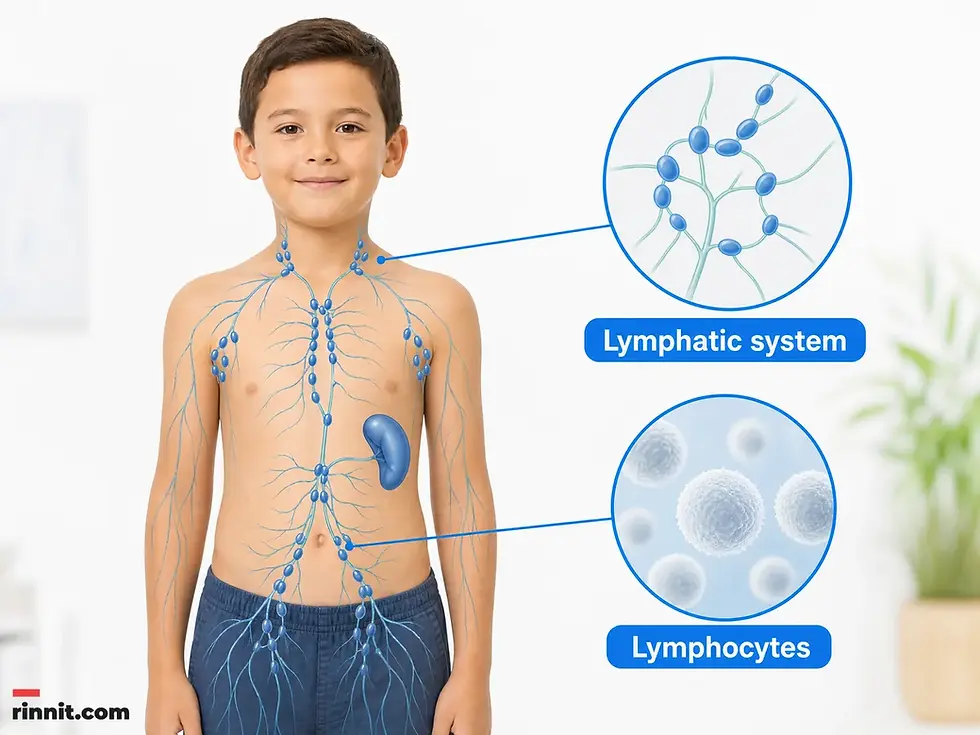
What are the types of childhood lymphoma?
The two main types are Hodgkin lymphoma and non-Hodgkin lymphoma. Both affect lymphocytes, but providers distinguish them by their cell features, subtypes, and patterns. [1]
Type | Key points |
Non-Hodgkin lymphoma | The most common type of pediatric lymphoma. It has more than 70 subtypes. About 85% of non-Hodgkin lymphomas begin in B lymphocytes; others begin in T lymphocytes or natural killer cells. |
Hodgkin lymphoma | More common among teenagers ages 15 to 19. It starts in B cells and is identified by large abnormal cells called Reed-Sternberg cells. |
How do Hodgkin and non-Hodgkin lymphoma differ?
Hodgkin lymphoma often develops slowly, so symptoms may not be noticed for months. Non-Hodgkin lymphoma can grow more quickly, with symptoms appearing over days to weeks. Hodgkin lymphoma in children typically begins in lymph nodes in the neck or chest, while non-Hodgkin lymphoma can begin in lymph nodes throughout the body. [1]
The two types also differ in their number of subtypes and reported five-year survival rates. There are four Hodgkin lymphoma subtypes and more than 70 non-Hodgkin lymphoma subtypes. The comparison provided reports a five-year survival rate of about 90% for Hodgkin lymphoma and about 80% for non-Hodgkin lymphoma. [1]
These figures describe broad groups, not an individual child. A child’s healthcare team uses the exact type and stage to discuss outlook.
What are the warning signs of lymphoma in children?
The most common symptom is a swollen lymph node. These lumps are often firm and rubbery, and they are not usually painful. They may be felt in the neck, chest, armpits, belly, or groin. [1]
Other symptoms can include fevers, night sweats, and unexplained weight loss. These are sometimes called “B symptoms.” Depending on the type of lymphoma, a child may also have a cough, trouble swallowing, noisy breathing, trouble breathing while lying down, extreme tiredness, itching, or loss of appetite. Severe or worsening trouble breathing, noisy breathing or being unable to lie flat can mean a chest tumor is pressing on the airway: call 911 or go to the emergency room. [1]
Lymphoma symptoms can look like many less serious illnesses. A healthcare provider should evaluate symptoms that concern a family rather than trying to identify lymphoma from a symptom list alone.
Symptom pattern | What families may notice |
Lymph nodes | Firm, rubbery, usually painless lumps in the neck, chest, armpits, belly, or groin. |
B symptoms | Fever, night sweats, or unexplained weight loss. |
Breathing or swallowing | Cough, trouble swallowing, noisy breathing, or trouble breathing while lying down. |
Whole-body changes | Extreme tiredness, itching, or loss of appetite. |
What causes lymphoma in children?
Childhood lymphoma happens when lymphocytes change into cancer cells. The cells can then grow and multiply, eventually becoming tumors. Most of the genetic mutations involved are random and acquired rather than inherited. The reason for these changes is not always known. [1]
Several factors may increase a child’s risk, but a risk factor does not mean a child will definitely develop lymphoma. Families should discuss concerns with the child’s healthcare provider. [1]
Possible risk factor | What it means |
Family history | A biological family history of lymphoma may increase risk. |
Previous cancer treatment | Treatment for another type of cancer in the past may increase risk. |
Epstein-Barr virus or mononucleosis | A previous infection with Epstein-Barr virus or the illness commonly called mono is listed as a possible risk factor. |
Weakened immune system | Risk may be higher with an organ transplant, transplant medicines, or HIV. |
Immune-related genetic or autoimmune conditions | Some genetic disorders or autoimmune diseases that affect the immune system are listed as possible risk factors. |
How is lymphoma diagnosed in children?
Evaluation usually begins with a pediatric visit. The provider asks about symptoms, performs a physical exam, looks for lumps or swollen lymph nodes, and reviews family medical history. The child may then be referred to an oncologist or hematologist. [1]
A lymph node biopsy is needed to make a diagnosis. During the procedure, a provider removes all or part of a swollen lymph node and sends it to a laboratory. A pathologist examines the tissue for signs of cancer. [1]
Other tests help providers learn more about the illness and determine its type and stage. [1]
Test or evaluation | What it may be used to assess |
Physical exam and medical history | Symptoms, lumps, swollen nodes, unusual findings, and family history. |
Lymph node biopsy | Tissue from a swollen lymph node is examined by a pathologist for signs of cancer. |
Blood tests | CBC, CMP, LDH, sed rate, immunophenotyping of white blood cells, and uric acid may be used. |
Imaging | Chest X-ray, ultrasound, CT, MRI, or PET scan may be used to examine areas of concern. |
Staging tests | Blood chemistry analysis, bone marrow aspiration and biopsy, or lumbar puncture may be used after diagnosis to learn more about the cancer. |
What does staging mean?
Staging is the process of gathering more information after a diagnosis. The additional tests help the care team understand more about the cancer. That information helps the oncologist plan treatment and discuss outlook. [1]
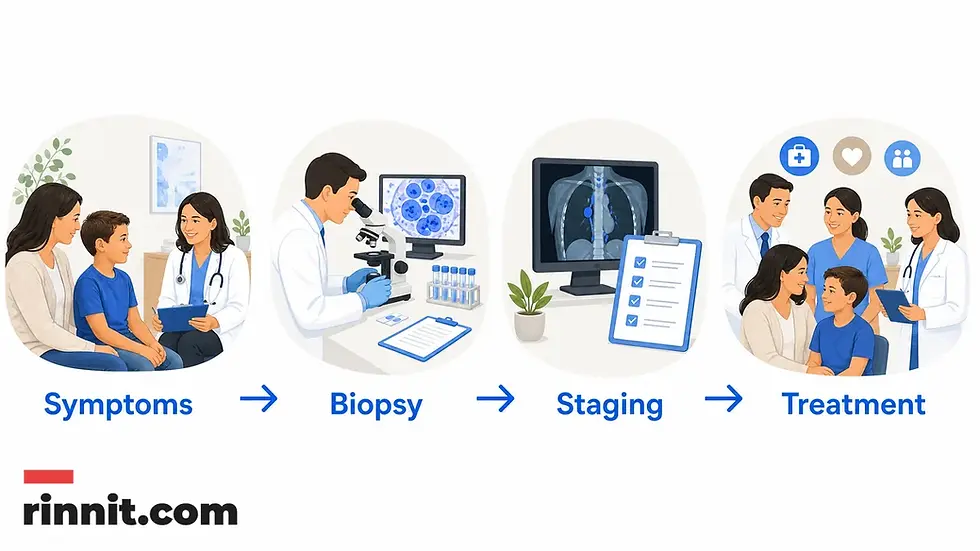
How is childhood lymphoma treated?
Treatment depends on the type and stage of the child’s lymphoma. The child’s oncologist explains which treatments may be most effective for that specific condition. [1]
In some cases, a surgical oncologist can remove tumors during a biopsy. Most children still need other cancer treatments, such as chemotherapy. Other treatments may include monoclonal antibody therapy, radiation therapy, immunotherapy, targeted therapy, stem cell transplant, or a clinical trial. [1]
Treatment category | How it appears in the source material |
Chemotherapy | Most children need additional cancer treatment beyond the biopsy, and chemotherapy is one example. |
Monoclonal antibody therapy | A listed treatment option. |
Radiation therapy | A listed treatment option. |
Immunotherapy | A listed treatment option. |
Targeted therapy | A listed treatment option. |
Stem cell transplant | A listed treatment option. |
Clinical trials | A listed treatment option to discuss with the oncology team. |
Treatment choices are not interchangeable. The appropriate plan depends on the exact diagnosis, stage, and the child’s health history.
What is the outlook for a child with lymphoma?
A child’s prognosis depends on the type and stage of lymphoma. The overall five-year survival rate for all types of lymphoma in children is higher than 85%. [1]
A broad survival figure cannot predict what will happen for one child. The oncology team uses the child’s diagnosis and staging results to explain the expected course and the purpose of treatment.
How can families support a child with lymphoma?
Cancer can be difficult for children and families. Young children may not understand why they feel unwell or why they need tests and treatment. Teenagers may understand more about the illness and feel angry, afraid, or overwhelmed.
Families can ask the child’s healthcare provider about support services at the hospital. Child life specialists help children and families cope with cancer-related challenges. Cancer survivorship programs support children and families through the cancer journey. [1]
A practical next step is to write down questions before appointments. Families may want to ask what each test is for, what the diagnosis means, how staging affects the plan, what side effects to watch for, and which support services are available.
When should a child see a healthcare provider?
Contact the child’s healthcare provider when symptoms or changes are concerning. Swollen lymph nodes, fever, night sweats, unexplained weight loss, breathing or swallowing problems, extreme tiredness, itching, or loss of appetite can have many causes, but they deserve professional evaluation when they persist or worry a family.
A symptom list cannot confirm or rule out lymphoma. A healthcare provider can decide whether testing is needed and whether referral to a specialist is appropriate.
What questions should parents ask the care team about childhood lymphoma?
Question | Why it may help |
What might be causing these symptoms? | It opens a discussion about the possible reasons for the child’s changes and whether testing is needed. |
What does the biopsy show? | The biopsy is the tissue test used to make a lymphoma diagnosis. |
What type and stage is the lymphoma? | Type and stage guide treatment discussions and outlook. |
What tests are needed next? | Staging may involve blood chemistry, imaging, bone marrow testing, or lumbar puncture. |
Which treatments are being considered? | Treatment options depend on the specific diagnosis and stage. |
What support services are available? | Child life specialists and survivorship programs may help children and families cope. |
Conclusion: Understanding the next step in childhood lymphoma care
Lymphoma in children begins in lymphocytes within the lymphatic system. The two main types are Hodgkin lymphoma and non-Hodgkin lymphoma, and symptoms can include swollen lymph nodes, fever, night sweats, unexplained weight loss, breathing or swallowing problems, tiredness, itching, or loss of appetite. [1]
A healthcare provider can evaluate concerning symptoms, arrange the right tests, and refer a child to specialists when appropriate. Diagnosis commonly requires a lymph node biopsy, while additional tests help determine the type and stage. Treatment is individualized, and family support services can help children and caregivers manage the emotional and practical challenges of care. [1]
Frequently Asked Questions
What is the most common lymphoma in children?
Non-Hodgkin lymphoma is the most common type of pediatric lymphoma. In teenagers ages 15 to 19, Hodgkin lymphoma is more common.
Are swollen lymph nodes always lymphoma?
No. Swollen lymph nodes can occur with many illnesses, and a symptom list cannot diagnose lymphoma. A healthcare provider can examine the child and decide whether tests are needed.
What are the first warning signs of childhood lymphoma?
The most common symptom is a firm, rubbery, usually painless swollen lymph node. Other possible signs include fever, night sweats, unexplained weight loss, cough, trouble swallowing, noisy breathing, breathing trouble while lying down, extreme tiredness, itching, or loss of appetite.
How is lymphoma confirmed in a child?
A lymph node biopsy is needed to make a diagnosis. A provider removes all or part of a swollen lymph node, and a pathologist examines the tissue for signs of cancer.
What treatments may be used for childhood lymphoma?
Treatment depends on the type and stage. Options may include chemotherapy, monoclonal antibody therapy, radiation therapy, immunotherapy, targeted therapy, stem cell transplant, and clinical trials.
What is the survival rate for childhood lymphoma?
The overall five-year survival rate for all types of childhood lymphoma is reported as higher than 85%. An individual child’s outlook depends on the type and stage, so families should ask the oncology team for an individualized explanation.
How can parents help a child with lymphoma?
Families can ask the healthcare provider about child life specialists and cancer survivorship programs. These services may help children and families cope with tests, treatment, and the broader cancer journey.
Is childhood lymphoma inherited?
Usually not. Most of the gene changes that cause it happen by chance and are not passed down from parents. A family history of lymphoma may raise the risk somewhat.
What is the difference between Hodgkin and non-Hodgkin lymphoma in children?
Both start in white blood cells called lymphocytes. Non-Hodgkin lymphoma is the most common type in children and can grow quickly, while Hodgkin lymphoma is more common in teens and often grows more slowly.
Can lymphoma treatment cause long-term side effects?
Some treatments can cause effects years later, such as heart or lung problems, fertility issues or a higher risk of another cancer. Survivorship programs follow children over time to find and manage these problems early.
Related guides
Related guides on lymphoma, childhood cancer, childhood leukemia and swollen lymph nodes can help families learn more about lymphoma in children.
References
Cleveland Clinic. Lymphoma in Children. Cleveland Clinic. Last updated November 10, 2025. https://my.clevelandclinic.org/health/diseases/6198-non-hodgkins-lymphoma-children
Kahn JM, Kelly KM, Pei Q, et al. Survival by race and ethnicity in pediatric and adolescent patients with Hodgkin lymphoma: a Children’s Oncology Group study. J Clin Oncol. 2019;37(32):3009-3017. PMID 31539308. https://doi.org/10.1200/JCO.19.00812
Flerlage JE, Waters-Banker C, Fanale M, et al. A systematic literature review of clinical evidence and treatment burden in newly diagnosed high-risk pediatric patients with classical Hodgkin lymphoma. Pediatr Blood Cancer. 2024;71(8):e31027. PMID 38761013. https://doi.org/10.1002/pbc.31027
National Cancer Institute. Childhood Cancers. National Cancer Institute. Updated April 24, 2025. https://www.cancer.gov/types/childhood-cancers
Disclaimer
This article is for general educational purposes and is not a substitute for professional medical advice, diagnosis or treatment. Always seek the advice of a qualified healthcare professional with any questions about a medical condition or treatment.



Comments