Understanding Loeys-Dietz Syndrome: A Comprehensive Guide to Connective Tissue Health

Updated: 3 days ago
Medically reviewed by Dr. Baraa Alnahhal, MD · Last reviewed: October 2026
Loeys-Dietz syndrome (LDS) is a genetic condition that affects the connective tissue giving strength and flexibility to the body, mainly in the heart and blood vessels, bones and joints, eyes, and skin. Its most serious risks are aortic aneurysm and dissection, but close monitoring and treatment can help keep complications at bay [1].
Quick Answer: What is Loeys-Dietz syndrome?
Loeys-Dietz syndrome (LDS) is a genetic condition affecting connective tissue, typically causing aneurysms, twisted arteries, widely spaced eyes and a split or broad uvula. Aortic dissection and other cardiovascular complications are the most serious risks. There is no cure, but medications, routine imaging and surgery when needed can slow aortic enlargement and prevent complications. [1]
What the research says
LDS is a multisystem disorder with a high burden of complications. A systematic review of 392 studies covering 3,896 reported cases found that the most common features were aortic aneurysms and dissections, arterial tortuosity, a high-arched palate, an abnormal uvula, and widely spaced eyes; among 222 women who had 522 pregnancies, 4% experienced an aortic dissection and the peripartum mortality rate was 1% (Gouda et al., Int J Cardiol, 2022 [2]).
Blood pressure may matter for aortic risk. In a small Chinese cohort of 57 patients with thoracic aortic aneurysms or dissections who carried rare variants in LDS genes, aortic dissection occurred in 5 of 8 patients (62.5%) with variants of uncertain significance who also had hypertension, compared with 3 of 12 (25.0%) without hypertension (p = 0.047) (Yang et al., Orphanet J Rare Dis, 2020 [3]).
The type of gene change shapes aortic risk. Among 34 people with pathogenic or likely pathogenic TGFB3 variants (LDS type V), 29% had aortic dilation and 6% (2 people) had an aortic dissection, and no one died; the authors describe this form as later-onset and less penetrant than other TGF-beta forms and suggest that a larger aortic size threshold for preventive surgery may be appropriate (Lim et al., J Med Genet, 2025 [4]).
What Is Loeys-Dietz Syndrome?
Loeys-Dietz syndrome (LDS) is a genetic condition that affects your connective tissue, which typically provides strength and flexibility to many structures in your body. It mainly affects the heart and blood vessels, bones and joints, eyes, and skin. You are born with LDS, but you might not notice signs and symptoms until childhood or adulthood. It affects each person differently, and the health effects range in severity [1].
The syndrome is named for two doctors who first identified it in 2005. Before that, providers misdiagnosed it as Marfan syndrome, another connective tissue disease that affects the body in similar ways. Because LDS affects so many parts of the body, you need a team of healthcare providers to manage it [1].

Widely spaced eyes and a split uvula are two craniofacial hallmarks of Loeys-Dietz syndrome.
What are the four main features of Loeys-Dietz syndrome (LDS)?
Most people with LDS have four main features, which help providers tell it apart from other connective tissue conditions [1]:
Feature | Description |
Aneurysms | A widening of an artery. It often affects the aorta, but aneurysms can occur in other arteries. You may have no symptoms, but imaging tests can detect them. |
Arterial tortuosity | Arteries that are twisted or spiraled, most often those in the neck. Imaging tests can detect them. |
Orbital hypertelorism | Widely spaced eyes, a distinctive craniofacial feature of LDS. |
Bifid or broad uvula | The uvula, the small piece of tissue hanging at the back of the mouth, is split or larger than usual. |
What other signs and conditions are linked to Loeys-Dietz syndrome?
LDS can also affect other parts of the body, causing other features [1]:
Craniofacial and skeletal features: cleft lip and palate, craniosynostosis (early fusion of skull bones), clubfoot or flat feet, long fingers and toes, scoliosis, and a sunken or protruding chest.
Joints and skin: overly flexible joints (hypermobility), and skin that bruises and scars easily or is translucent and velvety soft.
Heart conditions present from birth: patent ductus arteriosus, atrial or ventricular septal defects, and bicuspid aortic valve.
Other conditions: inflammatory bowel disease, dural ectasia (ballooning of the sac around the spinal cord), eye muscle disorders, hernias, and food or environmental allergies.
What causes Loeys-Dietz syndrome, and how is it inherited?
Changes to certain genes cause LDS. These genes play roles in how cells function during growth and development, and they help manage the formation of the extracellular matrix, the structure between cells that is important for tissue strength and repair [1]. Researchers describe LDS as a connective tissue disorder arising from changes that alter transforming growth factor beta (TGF-beta) signaling [2].
An estimated 3 out of 4 people with LDS have no biological family history of the syndrome; for unknown reasons, a gene changes for the first time. In about 1 out of 4 cases, LDS is inherited from a biological parent. It has an autosomal dominant pattern of inheritance, which means inheriting one copy of the changed gene is enough to cause it, and a parent with LDS has a 1 in 2 (50%) chance of passing it to each child [1].

In autosomal dominant inheritance, an affected parent has a 50% chance of passing the gene change to each child.
Types of LDS
Changes in different genes cause five distinct types of LDS. Symptoms can overlap between all five types, but each type tends to have distinct features, and types I and II are the most common [1]:
Type I (TGFBR1): mainly craniofacial (head and face) features.
Type II (TGFBR2): mainly skin features.
Type III (SMAD3): mainly aneurysms and osteoarthritis.
Type IV (TGFB2): mainly Marfan syndrome-like features, such as aortic aneurysm problems.
Type V (TGFB3): mainly aneurysms in the thoracic and/or abdominal aorta.
What are the cardiovascular risks of Loeys-Dietz syndrome?
Cardiovascular complications are the most common and most serious complications of Loeys-Dietz syndrome (LDS), with aortic dissection the most serious risk. Examples include [1]:
Aortic dissection.
Left ventricular hypertrophy.
Mitral valve prolapse.
Subclavian artery dissection.
Stroke.
Other complications of LDS may include degenerative disk disease, rupture of hollow organs such as the intestine, spleen, or uterus, osteoarthritis, osteoporosis and bone fractures, and retinal detachment [1].
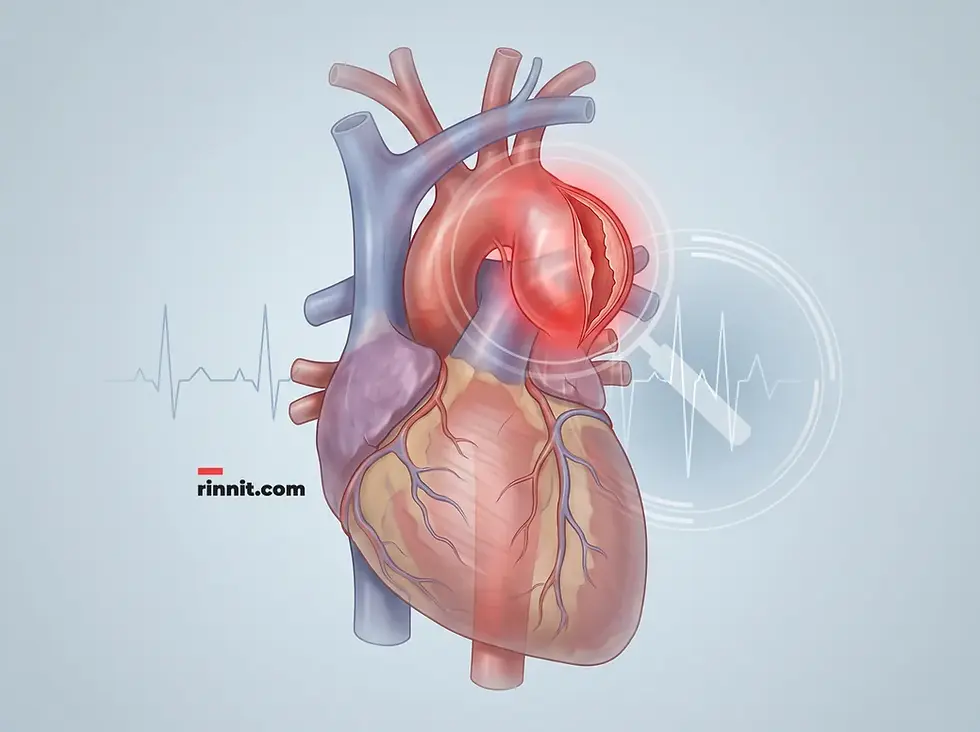
A tear in the wall of the aorta (aortic dissection) is the most serious cardiovascular risk in LDS, which is why providers monitor the aorta closely.
How is Loeys-Dietz syndrome diagnosed?
Your healthcare provider will do a physical exam and ask about your medical history. If they think you may have LDS, they will refer you to a geneticist, who does a blood test to look for the gene changes that cause the syndrome [1].
Your provider may recommend other tests to look for cardiovascular conditions linked to LDS [1]:
An echocardiogram to check for aorta problems and heart defects.
A computed tomography angiogram (CTA) or magnetic resonance angiogram (MRA) from your head to your pelvis to check for aneurysms and twisting arteries.
How is Loeys-Dietz syndrome (LDS) managed and treated?
Loeys-Dietz syndrome (LDS) has no cure, but treatments and strategies can help manage symptoms and prevent complications. You will need a treatment plan specific to your health issues, which may include medication, frequent monitoring, and surgery [1].
Medications and Monitoring
Medication: beta-blockers and angiotensin II receptor blockers (ARBs) can help slow the enlargement of your aorta and other arteries [1].
Routine monitoring: regular appointments, usually with imaging tests, track your heart and blood vessels (in particular the size of your aorta), your eyes, and your skeletal system. Your team will tell you how often you need them [1].
Physical Activity Guidance
Intense physical activity can strain the aorta and other connective tissues affected by LDS. Providers generally recommend low- to moderate-intensity exercise, and activities such as hiking, biking, and swimming may be safer. In general, you will likely need to avoid contact sports, exercise to exhaustion, and isometric exercises such as planks and wall sits. A physical therapist can help you find exercises and sports that are safe for you [1].
Surgery
Providers often recommend certain heart surgeries to prevent complications such as aortic dissection, and the most common is aortic root replacement. You might need open-heart surgery to fix an aortic aneurysm or a defective heart valve, and some valve replacements require an anticoagulant medication for life. Orthopedic surgery or braces can help with scoliosis or foot deformities [1].
What are the outlook, pregnancy and mental health concerns with Loeys-Dietz syndrome?
LDS affects everyone differently, and experts are still studying how it affects health and life expectancy. Research so far shows that earlier detection and preventive treatment are helping people with LDS live longer. Cardiovascular impairment is still the most common cause of death, mainly from sudden death in undiagnosed cases, and it is more likely in people who are diagnosed late [1].
Pregnancy with LDS carries a risk of uterine rupture during pregnancy or labor and delivery, which can be life-threatening for the mother and baby. Care from a perinatologist (maternal-fetal medicine doctor) is important, and your provider may recommend early delivery or a cesarean section [1].
Living with LDS can also affect mental health because of the need for lifelong treatment, changes in appearance, chronic pain and fatigue, and limits on physical activity. This raises the risk of anxiety, depression, bullying, and social isolation. A mental health specialist or a support group can help [1].
What is the bottom line on Loeys-Dietz syndrome?
LDS is a serious, lifelong condition, but earlier diagnosis and preventive care are helping people live longer. Working closely with a team of specialists and following your monitoring plan are the best ways to manage the risks [1].
Your next step: if you or a family member has signs of LDS, such as widely spaced eyes, a split uvula, or an aortic aneurysm, ask your healthcare provider about a referral to a geneticist for evaluation [1].
Frequently Asked Questions
How is LDS different from Marfan syndrome?
Both affect connective tissue and often cause aortic aneurysms, but they result from different gene changes, and LDS often causes twisted or spiraled arteries, which Marfan syndrome does not.
Can Loeys-Dietz syndrome be inherited?
Yes. It follows an autosomal dominant pattern, so a parent with LDS has a 50% chance of passing it to each child. However, an estimated 3 out of 4 people with LDS have no family history because the gene changed for the first time.
What are the early signs of LDS in children?
Features that may be noticed early include a split or broad uvula, widely spaced eyes, clubfoot, craniosynostosis, cleft palate, and overly flexible joints, although signs may not appear until childhood or adulthood.
Is surgery always required for LDS?
Not always, but providers often recommend heart surgery, most commonly aortic root replacement, to prevent complications such as aortic dissection. The plan depends on your symptoms.
What activities should people with LDS avoid?
Most people will need to avoid contact sports, exercise to exhaustion, and isometric exercises such as planks and wall sits. Low- to moderate-intensity activities such as hiking, biking, and swimming may be safer.
How often is imaging needed for LDS?
Monitoring usually involves imaging tests, and your healthcare team will tell you how often you need them.
Can LDS affect pregnancy?
Yes. Pregnancy carries a risk of uterine rupture during pregnancy or delivery, so care from a maternal-fetal medicine specialist is important.
What is the life expectancy for someone with LDS?
It varies, and experts are still studying it. Earlier detection and preventive treatment are helping people live longer, although cardiovascular problems remain the most common cause of death.
How is LDS different from Ehlers-Danlos syndrome?
Both affect connective tissue, but LDS mainly affects the heart and arteries, while Ehlers-Danlos syndrome mainly affects the skin and joints.
Can LDS affect mental health?
Yes. Lifelong treatment, chronic pain, and limits on activity can raise the risk of anxiety, depression, and social isolation. A mental health specialist or support group can help.
References
Cleveland Clinic. Loeys-Dietz Syndrome (LDS). Cleveland Clinic. April 21, 2025. https://my.clevelandclinic.org/health/diseases/23237-loeys-dietz-syndrome
Gouda P, Kay R, Habib M, et al. Clinical features and complications of Loeys-Dietz syndrome: a systematic review. Int J Cardiol. 2022;362:158-167. PMID 35662564. https://doi.org/10.1016/j.ijcard.2022.05.065
Yang H, Ma Y, Luo M, et al. Genetic profiling and cardiovascular phenotypic spectrum in a Chinese cohort of Loeys-Dietz syndrome patients. Orphanet J Rare Dis. 2020;15(1):6. PMID 31915033. https://doi.org/10.1186/s13023-019-1282-3
Lim MS, Guo DC, Velasco Torrez W, et al. Aortic and arterial manifestations and clinical features in TGFB3-related heritable thoracic aortic disease: results from the Montalcino Aortic Consortium. J Med Genet. 2025;62(2):82-88. PMID 39653386. https://doi.org/10.1136/jmg-2024-110251
Medical disclaimer
This article is for informational purposes only and is not a substitute for professional medical advice, diagnosis, or treatment. The clinical information in this guide reflects source material last reviewed in April 2025.



Comments