Lichen Spinulosus: Understanding Symptoms, Causes, and Management

Updated: 2 days ago
Medically reviewed by Dr. Baraa Alnahhal, MD · Last reviewed: October 2026
Lichen spinulosus is a harmless, non-contagious skin condition that causes small, spiny bumps and rough patches to form in the hair follicles. Primarily affecting children and adolescents, it is often a cosmetic concern that resolves on its own within one to two years. While the exact cause is unknown, management involves gentle skin care, moisturizing with specialized acids, and occasionally using medicated creams to control symptoms like itching or dryness.
Quick Answer: What is lichen spinulosus?
Lichen spinulosus is an uncommon, benign skin disorder causing clusters of tiny, spiny bumps in hair follicles that form rough patches 3 to 6 centimeters wide, often on the trunk, arms and thighs. It is most common in children and teens and not contagious. Most cases resolve within two years, and gentle cleansers, exfoliation and moisturizers help. [1]
What the research says
Published research on lichen spinulosus itself is limited, so guidance leans on the closely related condition keratosis pilaris. An update on keratosis pilaris lists lichen spinulosus among the conditions that can look similar, and recommends hydrating the skin, avoiding long baths or showers, and using mild soaps or cleansers, with topical keratolytic agents as first-line therapy, followed by topical retinoids and corticosteroids, and lasers or microdermabrasion if topical treatment fails (Kodali et al., Ital J Dermatol Venerol, 2023 [2]).
What Is Lichen Spinulosus?
Lichen spinulosus is a benign skin condition that primarily affects the hair follicles, causing the development of small, spiny bumps known as papules [1]. These papules often cluster together to form rough patches or plaques on the skin's surface. Pronounced “LIKE-en spine-you-LOH-sis,” the condition is considered a variant of keratosis pilaris, a common follicular skin disorder.
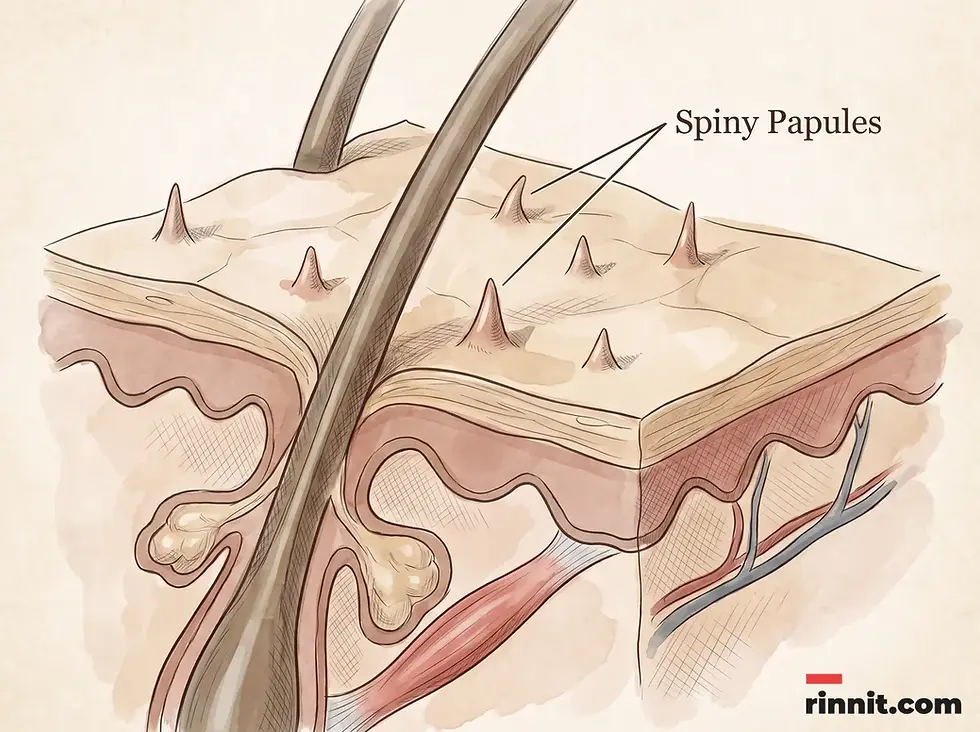
Tiny, spiny papules rise from hair follicles in lichen spinulosus.
Although anyone can develop lichen spinulosus, it is most frequently observed in children and adolescents, while remaining rare in adults. While the appearance of the skin may cause distress or discomfort, the condition does not harm internal organs or affect overall bodily functions.
What are the signs and symptoms of lichen spinulosus?
The primary indicator of lichen spinulosus is the presence of tiny bumps, roughly the size of a crayon tip, which feature small, scaly spines [1]. These bumps typically form rough, reddish, or pink patches that feel like sandpaper when touched.
Symptom Category | Common Manifestations |
|---|---|
Primary Sign | Small bumps with tiny, scaly spines at the center. |
Texture | Rough, sandpaper-like patches (plaques). |
Plaque Size | Typically 3 to 6 centimeters (1 to 2 inches) in diameter. |
Common Locations | Abdomen, back, chest, arms, buttocks, knees, and thighs. |
Physical Sensation | May be asymptomatic or cause itchy skin (pruritus). |

Lichen spinulosus plaques have a rough, sandpaper-like texture from clusters of tiny spines.
Unlike keratosis pilaris, lichen spinulosus does not typically appear on the face. Individuals may have a single plaque or multiple patches distributed across the body.
What causes lichen spinulosus, and who is at risk?
The precise cause of lichen spinulosus is currently unknown to healthcare providers [1]. However, medical researchers believe several factors may contribute to its development, including genetic predispositions, infections, or exposure to certain toxins such as diphtheria.
Additionally, malnutrition—specifically a deficiency in Vitamin A—has been theorized as a potential trigger. It is important to note that the condition is not contagious and cannot be transmitted through physical contact. Certain underlying health conditions, such as Crohn’s disease, HIV/AIDS, or alcohol use disorder, may potentially worsen the skin symptoms.
How is lichen spinulosus diagnosed?
Healthcare providers typically diagnose lichen spinulosus through a straightforward physical examination and visual inspection of the affected skin areas [1]. The unique “spiny” appearance of the papules within the follicles is often enough to distinguish it from other conditions.
In rare cases where the diagnosis is uncertain, a doctor may perform a skin biopsy for microscopic analysis. Additional testing, such as allergy panels or blood tests for Hepatitis C, may be recommended to rule out other dermatological disorders that mimic these symptoms.
How is lichen spinulosus managed and treated?
While there is no permanent cure for lichen spinulosus, the condition is self-limiting and usually clears up on its own within one to two years [1]. Management focuses on controlling symptoms and improving the skin's appearance.
Recommended Skin Care Routine
Adjusting your daily skin care can significantly improve the texture and comfort of the skin:
Cleansing: Avoid harsh soaps that can dry out the skin; use soap-free alternatives instead.
Exfoliation: Gently exfoliate the affected areas to remove dead skin cells and keratin buildup.
Moisturizing: Apply creams containing alpha-hydroxy acids, salicylic acid, or urea to soften the plaques.

A gentle routine of soap-free cleansing followed by moisturizing helps soften lichen spinulosus plaques.
Medical and Advanced Options
For persistent or bothersome cases, a dermatologist may suggest:
Retinoids: Medicated creams containing retinol to help regulate skin cell turnover.
Laser Hair Removal: In some instances, removing the hair follicle through laser treatment can prevent the bumps from returning.
How can people live with lichen spinulosus?
Lichen spinulosus is primarily a cosmetic concern and does not pose a threat to long-term health [1]. However, the condition can sometimes return after it has cleared, requiring a resumption of specialized skin care.
When to Seek Medical Advice
You should consult a healthcare provider if you notice new or unexplained bumps on your skin, especially if they are accompanied by intense itching or dryness that does not respond to over-the-counter moisturizers.
Frequently Asked Questions
What is lichen spinulosus?
Lichen spinulosus is a harmless skin condition that causes small, spiny bumps to form in clusters on the skin. [1]
Is it contagious?
No, you cannot catch it from someone else or spread it through contact.
Who gets it most often?
Lichen spinulosus is most common in children and adolescents; it is rare in adults.
Where does it usually appear?
Common sites include the trunk (back and chest), arms, thighs, and buttocks.
Does it appear on the face?
Unlike similar conditions, it does not typically affect the face.
What does it feel like?
The patches usually feel rough, like sandpaper, and may occasionally be itchy.
What causes these bumps?
The exact cause is unknown, but it may be linked to genetics, toxins, or Vitamin A deficiency.
How long does it last?
Lichen spinulosus often resolves on its own within one to two years.
How is it diagnosed?
A doctor usually diagnoses it by looking at the skin during a physical exam.
What are the treatment options?
Management includes using specialized moisturizers, gentle exfoliation, and avoiding harsh soaps.
References
Cleveland Clinic. Lichen Spinulosus. Cleveland Clinic. January 16, 2023. https://my.clevelandclinic.org/health/diseases/24608-lichen-spinulosus
Kodali N, Patel VM, Schwartz RA. Keratosis pilaris: an update and approach to management. Ital J Dermatol Venerol. 2023;158(3):217-223. PMID: 37166753. DOI: https://doi.org/10.23736/S2784-8671.23.07594-1
Medical disclaimer
This article is for informational purposes only and is not a substitute for professional medical advice, diagnosis, or treatment. The clinical information in this guide reflects source material last reviewed in January 2023.



Comments