Leishmaniasis: Causes, Types, and Global Health Impact

Updated: 2 days ago
Medically reviewed by Dr. Baraa Alnahhal, MD · Last reviewed: October 2026
Leishmaniasis is a parasitic infection transmitted by the bite of an infected sandfly. It appears in three main forms: cutaneous, affecting the skin; mucosal, affecting the nose and mouth; and visceral, affecting internal organs and potentially fatal if untreated. It is uncommon in the United States but remains a significant health concern in tropical regions, and managing it requires specialized diagnostic testing and antiparasitic medications [1].
Quick Answer: What is leishmaniasis?
Leishmaniasis is a disease caused by Leishmania parasites spread through the bites of infected sandflies. Its forms are cutaneous, causing slow-healing skin ulcers; mucosal, affecting the nose, mouth and throat; and visceral, the most severe, targeting organs like the spleen and liver. Diagnosis finds the parasite in tissue samples, and antiparasitic medications such as amphotericin B treat it. [1]
What the research says
Leishmaniasis affects a large number of people every year. A WHO-led review covering 98 countries and three territories estimated that about 0.2 to 0.4 million visceral and 0.7 to 1.2 million cutaneous cases occur each year, with cutaneous leishmaniasis more widely distributed: about one-third of cases occur in each of the Americas, the Mediterranean basin, and western Asia (Alvar et al., PLoS One, 2012 [2]).
A single infusion of liposomal amphotericin B cured visceral leishmaniasis about as well as 15 conventional infusions. In a trial of 412 patients in India, six-month cure rates were 95.7% (95% CI 93.4 to 97.9) with a single 10 mg/kg dose of liposomal amphotericin B versus 96.3% (95% CI 92.6 to 99.9) with 15 alternate-day infusions of amphotericin B deoxycholate, and the single dose was not inferior and was less expensive (Sundar et al., N Engl J Med, 2010 [3]).
Insecticide-treated nets and curtains are among the most effective ways to protect homes from disease vectors. A systematic review of 32 studies (from 1,416 articles assessed) of household protection against Chagas disease, dengue, leishmaniasis, and lymphatic filariasis found that indoor residual spraying and insecticide-treated materials, especially nets or curtains, were among the most effective measures, and that the quality of delivery (coverage and reapplication) is crucial (Horstick and Runge-Ranzinger, Lancet Infect Dis, 2018 [4]).
What is Leishmaniasis?
Leishmaniasis is the collective name for a group of parasitic infections caused by Leishmania protozoa [1]. These microscopic, one-celled organisms are found in many regions of the world and spread to humans mainly through the bite of an infected phlebotomine sandfly. The disease is uncommon in the United States, but it is a significant public health issue in parts of Africa, Asia, Southern Europe, and Central and South America.
The infection can look very different depending on the type of Leishmania parasite and the part of the body it affects. Some forms cause disfiguring skin ulcers that last for months or even years, while others affect vital internal organs and can be life-threatening if not diagnosed and treated promptly [1].

Leishmania parasites circulate between sandflies, animal hosts, and people.
What are the types of leishmaniasis?
Healthcare professionals classify the disease by the tissues it affects and by its clinical presentation [1].
Type | Clinical Characteristics | Primary Regions |
Cutaneous (CL) | Causes bumps that enlarge into slow-healing ulcers at the bite site. | Africa, Asia, Central/South America, Middle East. |
Mucosal (ML) | Affects the nose, mouth, or throat; often follows cutaneous infection. | Primarily Central and South America. |
Visceral (VL) | Also known as kala-azar; targets internal organs such as the spleen and liver. | Brazil, India, Nepal, Yemen, East Africa. |
What are the symptoms and warning signs of leishmaniasis?
Symptoms vary a great deal depending on the form of the disease, and recognizing them early is critical for effective management [1].
Cutaneous and Mucosal Symptoms
Cutaneous leishmaniasis usually begins as a nodule at the site of a sandfly bite that grows into a large, crusty ulcer with a hard border and a sunken center. Swollen lymph nodes near the affected area are also common. In mucosal cases, sores can appear in the nose, mouth, or throat, leading to nosebleeds, a hoarse voice, and difficulty swallowing [1].
Visceral (Internal) Symptoms
The visceral form is systemic and can take months or even years to develop after the initial bite. Key signs include [1]:
Systemic distress: Recurring fever, chills, and cold sweats.
Organ impact: A swollen belly from an enlarged spleen, along with weight loss and general weakness.
Skin changes: Dark or discolored patches on the skin.
What causes leishmaniasis, and how is it transmitted?
Leishmania parasites live in both humans and animals, including dogs, rodents, and foxes. The infection is not contagious between people through casual contact [1].

Leishmania protozoa seen under the microscope, both free and inside host cells.
The most common route of infection is the bite of a sandfly that has previously fed on an infected host. Less common routes include sharing needles, blood transfusions, and transmission from a pregnant woman to her fetus. The risk is highest for people who live in rural tropical regions or in areas without modern sanitation, and for people with weakened immune systems [1].
How is leishmaniasis diagnosed?
Accurate diagnosis depends on finding the Leishmania parasites in tissue samples. Where the disease is common, clinicians may diagnose it from the symptoms or the appearance of the skin, but laboratory confirmation is preferred [1].
Skin biopsy: A small tissue sample is taken from an ulcer on the skin or in the nose or mouth and tested for parasites.
Needle biopsy: A needle is used to take samples from the lymph nodes, spleen, or bone marrow (bone marrow is the preferred sample for visceral leishmaniasis).
Serology: Blood tests can sometimes detect signs of infection, but they are usually less reliable than tissue analysis for diagnosing a current infection.
How is leishmaniasis managed and treated?
Several antiparasitic medications treat leishmaniasis, and the choice depends on the type and severity of the infection [1].
Commonly prescribed medications include amphotericin B, miltefosine, and pentavalent antimony compounds such as sodium stibogluconate. They may be given by mouth, applied to the skin, or given through an intravenous (IV) line. For cutaneous disease, treatments such as thermotherapy (heat), cryotherapy (cold), or laser therapy can also be used to kill the parasites and help the wound heal [1].
Conclusion
Leishmaniasis ranges from localized skin disease to life-threatening infection of the internal organs. It remains a major health challenge in tropical and subtropical regions, but better diagnostic testing and antiparasitic therapy have improved the outlook. Early treatment is especially important for the mucosal and visceral forms, and avoiding sandfly bites remains the foundation of prevention [1].
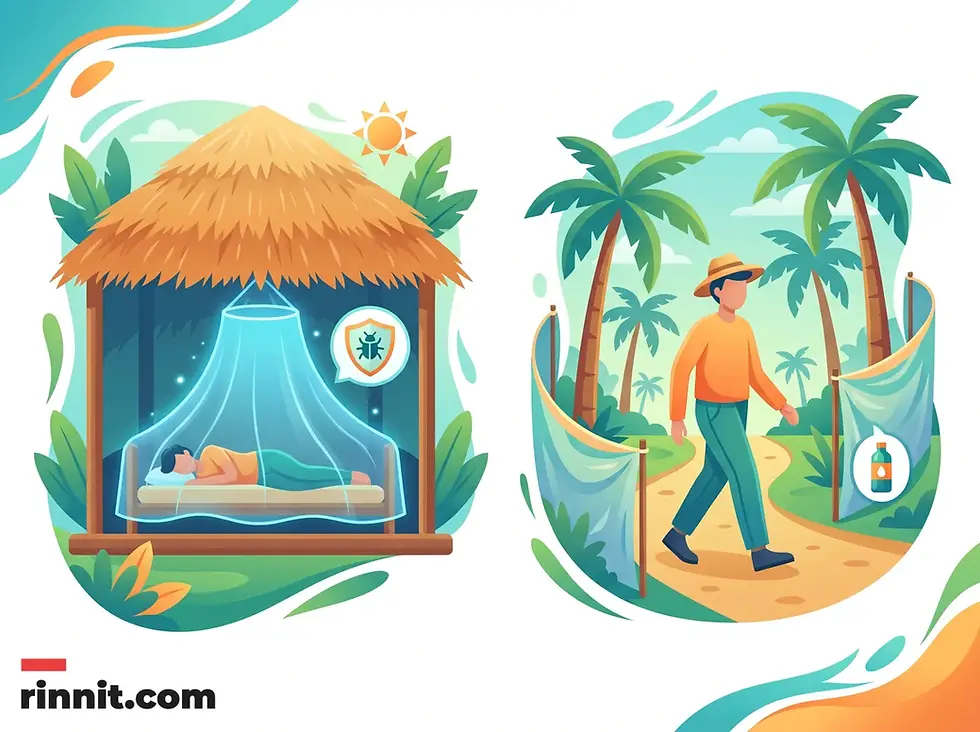
Bed nets, protective clothing, and repellent help prevent sandfly bites.
Professional Consultation and Support
If you have traveled to an area where leishmaniasis is common and you notice a wound that is not healing or symptoms such as a persistent fever, see an infectious disease specialist promptly. Early treatment is the most effective way to prevent permanent scarring and severe organ damage.
Frequently Asked Questions
What is leishmaniasis?
Leishmaniasis is a parasitic infection caused by Leishmania protozoa and transmitted through sandfly bites.
Is leishmaniasis contagious?
No, it does not spread through casual contact between people.
Where is the disease most common?
Leishmaniasis is prevalent in tropical and subtropical regions of Africa, Asia, and the Americas.
What are the main types?
The three main types are cutaneous (skin), mucosal (mouth/nose), and visceral (internal organs).
What does a cutaneous ulcer look like?
A cutaneous ulcer is often a slow-healing sore with a hard border and a sunken center, similar to a volcano.
How is visceral leishmaniasis diagnosed?
The preferred method is a bone marrow biopsy to look for parasites under a microscope.
Can leishmaniasis be fatal?
Yes, the visceral and mucosal forms can be fatal if they are not treated promptly.
What medications are used for treatment?
Antiparasitic drugs like amphotericin B and miltefosine are commonly used.
How can I prevent infection?
Prevention involves avoiding sandfly bites using DEET repellent, protective clothing, and treated bed nets.
Are there cases in the United States?
While rare, cases have been reported in Texas, Oklahoma, and Arizona.
References
Cleveland Clinic. Leishmaniasis. Cleveland Clinic. August 13, 2026. https://my.clevelandclinic.org/health/diseases/24539-leishmaniasis
Alvar J, Vélez ID, Bern C, et al. Leishmaniasis worldwide and global estimates of its incidence. PLoS One. 2012;7(5):e35671. PMID 22693548. https://doi.org/10.1371/journal.pone.0035671
Sundar S, Chakravarty J, Agarwal D, Rai M, Murray HW. Single-dose liposomal amphotericin B for visceral leishmaniasis in India. N Engl J Med. 2010;362(6):504-512. PMID 20147716. https://doi.org/10.1056/NEJMoa0903627
Horstick O, Runge-Ranzinger S. Protection of the house against Chagas disease, dengue, leishmaniasis, and lymphatic filariasis: a systematic review. The Lancet Infectious Diseases. 2018;18(5):e147-e158. PMID 29074038. https://doi.org/10.1016/S1473-3099(17)30422-X
Medical disclaimer
This article is for informational purposes only and is not a substitute for professional medical advice, diagnosis, or treatment. The clinical information in this guide reflects source material last reviewed in August 2026.



Comments