Ischial Bursitis: Understanding Sit Bone Pain and Recovery

Updated: 2 days ago
Medically reviewed by Dr. Baraa Alnahhal, MD · Last reviewed: October 2026
Quick Answer: Key Facts About Ischial Bursitis
Ischial bursitis is inflammation of the bursae, the cushions under the sit bones, causing a deep ache in the buttock and tenderness when sitting. It results from repetitive pressure from sitting or friction from muscles and tendons, with risk raised by sedentary jobs and cycling. It is usually managed with conservative care and typically improves within a few weeks.
Feature | Details |
Core Problem | Inflammation of the bursae (cushions) under the sit bones (ischia). |
Common Symptoms | Deep ache in the butt, tenderness when sitting, and reduced motion. |
Primary Causes | Repetitive pressure from sitting or friction from muscles/tendons. |
Risk Factors | Sedentary jobs, cycling, horseback riding, and long-distance hiking. |
Recovery Time | Typically a few weeks with proper rest and home care. |
Medical Urgency | Low to moderate; usually managed with conservative care. |
What the research says
The closest look-alike, hamstring tendinopathy, responded the same to two common treatments. In a randomized trial of 100 people with proximal hamstring tendinopathy (lower buttock pain with running and sitting), individualized physiotherapy and shockwave therapy showed no significant differences in the primary outcomes of overall improvement and function at any point up to 52 weeks (Rich et al., Am J Sports Med, 2025) [2]
Surgery has helped some people whose bursitis did not respond to injections. In a case series of 21 patients with refractory ischiogluteal bursitis, all of whom had already received a steroid and local anesthetic injection, surgical excision was followed by a mean pain score of 0.7 and a Harris hip score of 98.1 at one month — though this is a small series without a comparison group (Lee et al., Hip Pelvis, 2023) [3]
Image guidance may improve injection results, but the evidence is very early. In a retrospective pilot study of 9 patients with refractory ischial bursitis, fluoroscopically guided injections gave a mean pain relief of 86.25% versus 55.00% with landmark-based injections (p < 0.05); the authors call for larger randomized studies (Hasoon et al., Cureus, 2025) [4]
What is Ischial Bursitis?
Ischial bursitis is an inflammatory condition that occurs in the tissues providing a cushion for the sit bones, technically known as the ischia. These bones are the two "U"-shaped structures at the base of the pelvis that support the body's weight during sitting. To prevent friction and absorb shock, small fluid-filled sacs called bursae are positioned between these bones and the surrounding gluteus maximus and hamstring muscles. When these sacs become irritated due to excessive pressure or friction, the resulting inflammation is termed bursitis. [1]
Historically, this condition was widely known as "weaver's bottom" because it frequently affected laborers who spent long hours sitting on hard wooden seats. Today, it remains a common issue for athletes and individuals in sedentary occupations. The specific area of inflammation is often the ischial tuberosity, the rounded part of the bone where the hamstring tendon attaches. Because this area is central to both sitting and lower body movement, the pain can significantly impact daily activities and athletic performance. [1]
What are the symptoms and signs of ischial bursitis?
The most prevalent symptom of ischial bursitis is a dull, deep ache located in the buttocks or the back of the thighs. Most patients can pinpoint the exact spot of discomfort, which often feels tender to the touch. The pain typically intensifies during exercise or after prolonged periods of sitting. In some cases, visible swelling may occur, and the inflammation can lead to a reduced range of motion in the hip joint, making certain movements or sleeping positions difficult. [1]
It is important to distinguish ischial bursitis from other conditions that mimic its symptoms. Hamstring tendonitis, for instance, involves inflammation of the tendon itself and is more common among runners or those performing heavy squats. Sciatica involves nerve compression that radiates pain from the lower back through the butt and down the leg; however, sciatica pain is generally less specific to the sit bone and may actually improve with movement or massage, unlike bursitis which is aggravated by it. [1]

What causes ischial bursitis and who is at risk?
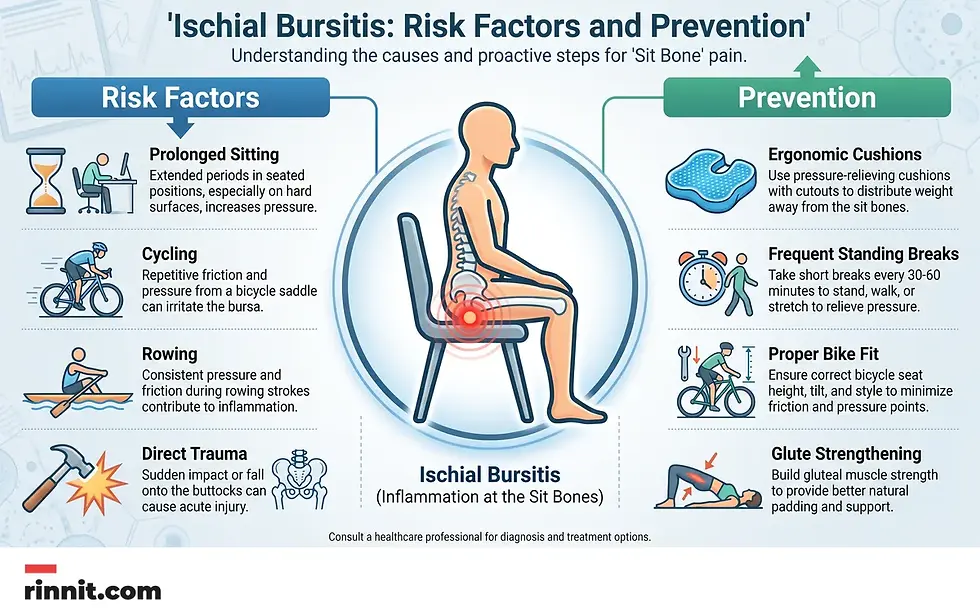
The primary driver of ischial bursitis is repetitive stress, which can manifest as either direct pressure or mechanical friction. Pressure is most commonly caused by sitting for extended periods, especially on hard or poorly cushioned surfaces. Friction occurs when the gluteus maximus muscle or the hamstring tendon repeatedly moves against the sit bone during physical activity. While most cases develop gradually, traumatic bursitis can occur suddenly following a heavy fall on the sit bones or a direct impact to the area. [1]
Certain occupations and hobbies significantly increase the risk of developing this condition. Risk factors include:
Sedentary Lifestyles: Jobs requiring long-distance driving or office work without ergonomic support.
Repetitive Sports: Cycling, horseback riding, canoeing, and long-distance hiking.
Chronic Conditions: Inflammatory diseases like rheumatoid arthritis, lupus, and gout can occasionally trigger bursitis as a secondary symptom.
Infections: Though rare, infections such as septic arthritis or tuberculosis can lead to bursal inflammation. [1]
How is ischial bursitis diagnosed and treated?
Diagnosing ischial bursitis typically begins with a thorough physical examination and a review of the patient's activity history. A healthcare provider will often perform movement tests, gently rotating the hips to see if specific positions trigger the characteristic pain. If the diagnosis is unclear, imaging tests like an ultrasound or MRI may be ordered to visualize the inflammation or rule out other injuries. Blood tests are occasionally used if an underlying systemic disease or infection is suspected. [1]
The cornerstone of treatment is allowing the inflamed bursae time to heal through rest and activity modification.
Conservative Care: The application of ice and the use of over-the-counter anti-inflammatory medications (NSAIDs) like ibuprofen are effective for mild to moderate cases.
Ergonomic Adjustments: Using specialized cushions, such as "donut" seats or pillows placed under the thighs, can significantly reduce pressure on the sit bones during recovery.
Medical Intervention: For severe or persistent pain, a physician may administer a corticosteroid injection combined with local anesthesia directly into the bursa to rapidly reduce inflammation.
Physical Therapy: As the pain subsides, stretching and strengthening exercises for the glutes and hamstrings are recommended to improve support for the pelvis and prevent recurrence. [1]

What is the prognosis for ischial bursitis, and how can it be prevented?
The long-term outlook for ischial bursitis is excellent, with most acute cases resolving within a few weeks of consistent rest and home care. However, recovery can be delayed if the aggravating activity is not stopped. If pain persists despite rest, it may indicate a chronic condition like tendinosis or an underlying inflammatory disease that requires more specialized medical management. The goal is to return to full activity gradually, ensuring that the surrounding muscles are strong enough to handle the stress. [1]
Prevention is largely a matter of ergonomics and proper technique. Individuals in high-risk occupations should ensure their seating is well-padded and take frequent breaks to stand and move. Athletes, particularly cyclists and rowers, should consult with professionals or occupational therapists to adjust their equipment and form. By prioritizing pelvic support and avoiding excessive pressure on the sit bones, the risk of developing this "pain in the butt" can be dramatically reduced. [1]
Frequently Asked Questions
Can I walk with ischial bursitis?
Yes, gentle walking is usually fine, but you should avoid long-distance hiking or activities that involve heavy use of the hamstrings until the inflammation subsides.
Why is it called "weaver's bottom"?
The name comes from the 19th century when weavers spent all day sitting on hard wooden benches, which frequently caused this specific type of sit bone inflammation.
Is a donut cushion better than a regular pillow?
A donut cushion is specifically designed to remove pressure from the center of the sit bones, which can be more effective than a standard pillow for some patients.
Can ischial bursitis cause leg numbness?
While bursitis itself doesn't cause numbness, the swelling can sometimes irritate the nearby sciatic nerve, leading to sensations similar to sciatica.
How do I know if it's bursitis or a hamstring tear?
Bursitis pain is usually deep and felt most when sitting, while a hamstring tear typically causes sharp pain during explosive movements like sprinting.
Can I use heat for ischial bursitis?
Ice is generally better for acute inflammation. Heat may be helpful later in recovery to relax tight muscles, but check with your doctor first.
Does weight loss help with sit bone pain?
Maintaining a healthy weight can reduce the overall pressure on your sit bones, potentially lowering the risk of recurring bursitis.
Is surgery ever needed for ischial bursitis?
Surgery is extremely rare and only considered if the bursa is chronically infected or if all other treatments have failed over a long period.
Can children get ischial bursitis?
Ischial bursitis is rare in children unless they are involved in intensive repetitive sports or have suffered a traumatic fall on their buttocks.
What exercises should I avoid?
During the acute phase, avoid deep squats, lunges, and cycling, as these put significant stress and friction on the ischial bursae.
How long should I ice the area?
Applying ice for 15–20 minutes several times a day is a standard recommendation for reducing inflammation.
Can I drive a long distance with this condition?
Long-distance driving is a major aggravator. If you must drive, use a supportive cushion and take frequent breaks to stand.
Is ischial bursitis a sign of arthritis?
Not necessarily, but people with inflammatory arthritis (like RA) are more prone to developing bursitis in various parts of their body.
What is the difference between a bursa and a tendon?
A bursa is a fluid-filled cushion, while a tendon is a tough band of tissue that connects muscle to bone. Both can become inflamed in the hip area.
Can massage therapy help?
Massage can help relax the surrounding gluteal muscles, but direct deep pressure on the inflamed bursa itself may be painful and counterproductive.
Conclusion
Ischial bursitis is a manageable condition that serves as a reminder of the importance of ergonomic health in our daily lives. By recognizing the deep ache of "weaver's bottom" early and implementing simple changes like better cushioning and targeted rest, most individuals can achieve a full recovery. Protecting your sit bones today ensures a more comfortable and active future.
Learn more. For more expert guides on musculoskeletal health and ergonomic wellness, visit Rinnit.com.
Related Reading
References
Cleveland Clinic. Ischial Bursitis. Cleveland Clinic. Last updated May 9, 2024. https://my.clevelandclinic.org/health/diseases/ischial-bursitis
Rich A, Ford J, Cook J, et al. Physiotherapy compared with shockwave therapy for the treatment of proximal hamstring tendinopathy: a randomized controlled trial. Am J Sports Med. 2025;53(14):3396-3407. PMID 41243328. https://doi.org/10.1177/03635465251391134
Lee SH, Jang WY, Lee MS, et al. Surgical excision for refractory ischiogluteal bursitis: a consecutive case series of 21 patients. Hip Pelvis. 2023;35(1):24-31. PMID 36937219. https://doi.org/10.5371/hp.2023.35.1.24
Hasoon J, Varrassi G, Viswanath O. Comparative efficacy of fluoroscopically guided vs. landmark-based injections in the management of ischial bursitis: a pilot study. Cureus. 2025;17(1):e77185. PMID 39925593. https://doi.org/10.7759/cureus.77185
Medical disclaimer
The information provided in this article is for educational purposes only and is not intended as medical advice. Always seek the advice of your physician or other qualified health provider with any questions you may have regarding a medical condition or persistent pelvic pain.



Comments