Illness Anxiety Disorder: When Fear of Getting Sick Takes Over, and What Actually Helps

Updated: 2 days ago
Medically reviewed by Dr. Baraa Alnahhal, MD · Last reviewed: October 2026
Quick Answer: What Is Illness Anxiety Disorder?
Illness anxiety disorder is a condition of constant preoccupation with having or getting a serious disease, despite reassurance from negative tests and exams. Common signs include repeatedly checking your body, frequent doctor visits for reassurance or avoiding care, and searching online for symptom causes. Treatment centers on cognitive behavioral therapy, sometimes with antidepressants, plus stress management and self-care habits. [1] [2]
What the research says
CBT is effective for health anxiety. A meta-analysis of 19 randomized trials found a moderate-to-large pooled effect of cognitive behavior therapy on health anxiety (g = 0.79; 95% CI 0.57–1.01; 0.62 after adjusting for publication bias), with effects largely sustained 12–18 months after treatment. The pooled response rate was 66% and the remission rate 48%, and therapist-guided internet-delivered CBT had effects comparable to face-to-face CBT (Axelsson & Hedman-Lagerlöf, Expert Rev Pharmacoecon Outcomes Res, 2019 [3]).
Medication helps modestly, and CBT effects may be overstated. A meta-analysis of 13 randomized trials (1,405 participants) found a moderate-to-large effect for CBT versus controls (g = −0.70; 95% CI −0.99 to −0.41) and a modest effect for SSRIs versus pill placebo (g = −0.29; 95% CI −0.57 to −0.01); the authors noted that wait-list controls and researcher allegiance may have inflated the CBT effect sizes (Fineberg et al., Compr Psychiatry, 2022 [4]).
What Is Illness Anxiety Disorder?
Illness anxiety disorder, sometimes called hypochondriasis or health anxiety, is worrying excessively that you are or may become seriously ill. You may have no physical symptoms at all. Or you may believe that normal body sensations or minor symptoms are signs of severe illness, even though a thorough medical exam does not reveal a serious medical condition.
You may experience extreme anxiety that body sensations, such as muscle twitching or fatigue, are associated with a specific, serious illness. This excessive anxiety — rather than the physical symptom itself — results in severe distress that can disrupt your life.
Illness anxiety disorder is a long-term condition that can fluctuate in severity. It may increase with age or during times of stress. But psychological counseling (psychotherapy) and sometimes medication can help ease your worries.
Key point: it is the excessive anxiety — not the physical symptom — that causes the distress and disruption in illness anxiety disorder, and that anxiety is treatable.
Illness anxiety disorder vs. hypochondriasis and somatic symptom disorder
The current diagnostic manual published by the American Psychiatric Association no longer includes hypochondriasis (hypochondria) as a diagnosis. People previously diagnosed with hypochondriasis may instead be diagnosed with illness anxiety disorder, in which the focus of the fear is on uncomfortable or unusual physical sensations being an indication of a serious medical condition.
A related disorder, somatic symptom disorder, is different: it involves focusing on the disabling nature of physical symptoms, such as pain or dizziness, without the worry that these symptoms represent a specific illness.
Condition | Where the focus lies |
Illness anxiety disorder | Worry that physical sensations indicate a serious illness, even with no or minor symptoms |
Somatic symptom disorder | Distress focused on the disabling nature of physical symptoms themselves, without specific-illness worry |
Hypochondriasis | An older term no longer used as a diagnosis in the current diagnostic manual |
Signs and Symptoms
Symptoms of illness anxiety disorder involve preoccupation with the idea that you are seriously ill, based on normal body sensations (such as a noisy stomach) or minor signs (such as a minor rash).
Sign or symptom | What it looks like |
Preoccupation | Being preoccupied with having or getting a serious disease or health condition |
Minor symptoms loom large | Worrying that minor symptoms or body sensations mean you have a serious illness |
Easy alarm | Being easily alarmed about your health status |
Little reassurance | Finding little or no reassurance from doctor visits or negative test results |
Family history worry | Worrying excessively about a specific condition or your risk because it runs in your family |
Distress and dysfunction | So much distress about possible illnesses that it is hard to function |
Body checking | Repeatedly checking your body for signs of illness or disease |
Care-seeking patterns | Frequently making medical appointments for reassurance — or avoiding medical care for fear of being diagnosed with a serious illness |
Avoidance | Avoiding people, places or activities for fear of health risks |
Health talk | Constantly talking about your health and possible illnesses |
Online searching | Frequently searching the internet for causes of symptoms or possible illnesses |
Not everyone shows every behavior. Some people seek constant medical reassurance while others avoid care entirely out of fear of a diagnosis — both patterns are part of the same condition.

What Causes Illness Anxiety Disorder?
The exact cause of illness anxiety disorder is not clear, but certain factors may play a role.
Possible factor | How it may contribute |
Beliefs | Difficulty tolerating uncertainty about uncomfortable or unusual body sensations can lead to misinterpreting all body sensations as serious, followed by searching for evidence of a serious disease |
Family | Higher likelihood of health anxiety if you had parents who worried excessively about their own health or yours |
Past experience | A serious illness in childhood can make physical sensations frightening later in life |
Risk Factors
Illness anxiety disorder usually begins in early or middle adulthood and may get worse with age. For older individuals, health-related anxiety may focus on the fear of losing their memory.
Risk factor | Detail |
Major life stress | A time of major life stress |
A false alarm | A threat of a serious illness that turns out not to be serious |
Childhood abuse | A history of abuse as a child |
Childhood illness | A serious childhood illness or a parent with a serious illness |
Personality | Personality traits such as a tendency toward being a worrier |
Internet use | Excessive health-related internet use |
Complications
Illness anxiety disorder may be associated with several kinds of problems if it goes unaddressed.
Complication | How it shows up |
Relationship strain | Relationship or family problems because excessive worrying frustrates others |
Work problems | Work-related performance problems or excessive absences |
Daily functioning | Problems functioning in daily life, possibly even resulting in disability |
Financial strain | Financial problems due to excessive health care visits and medical bills |
Co-occurring conditions | Another mental health disorder, such as somatic symptom disorder, other anxiety disorders, depression, or a personality disorder |
When to See a Doctor
Because symptoms can be related to real health problems, it is important to be evaluated by your primary care provider if this has not already been done. If your provider believes that you may have illness anxiety disorder, he or she may refer you to a mental health professional.
Caring for a loved one. Significant health anxiety causes real distress for the person, and reassurance is not always helpful — sometimes providing reassurance can make things worse. This can be frustrating and stressful for families and relationships. Encourage your loved one to consider a mental health referral to learn ways to cope with illness anxiety disorder.
How Illness Anxiety Disorder Is Diagnosed
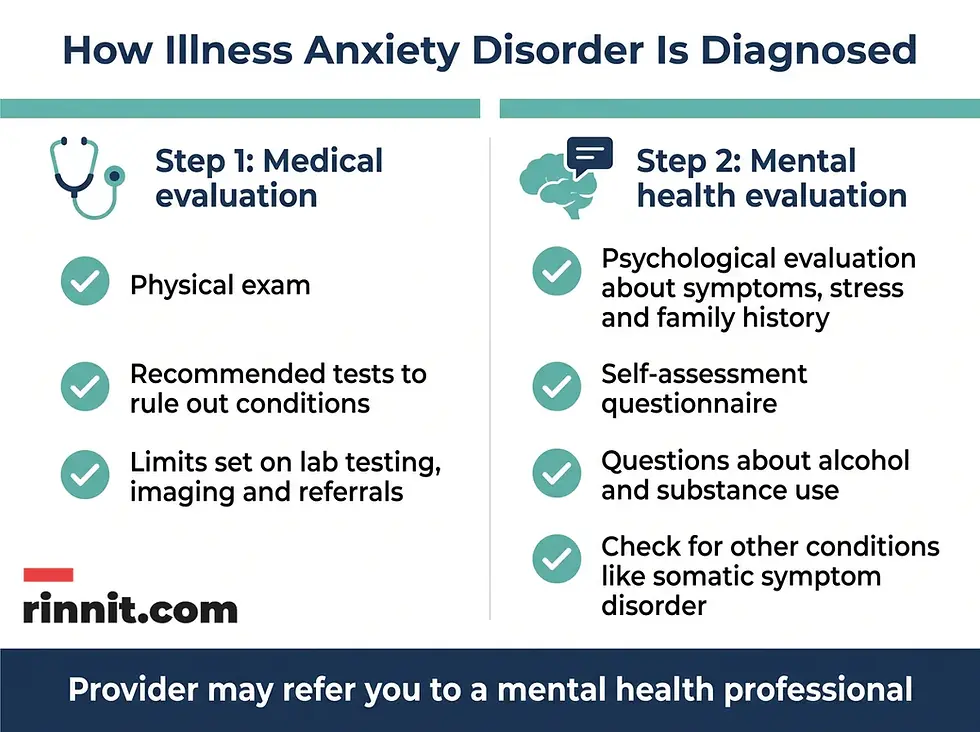
To determine a diagnosis, you will likely have a physical exam and any tests your primary care provider recommends. Your provider can help determine whether you have any medical conditions that require treatment and can set limits on lab testing, imaging, and referrals to specialists.
Your primary care provider may also refer you to a mental health professional, who may do the following.
Evaluation step | What happens |
Psychological evaluation | A conversation about your symptoms, stressful situations, family history, fears or concerns, and how your anxiety is negatively affecting your life |
Self-assessment | Filling out a psychological self-assessment or questionnaire |
Substance use | Questions about alcohol, drug, or other substance use |
Ruling out other conditions | Determining whether your illness preoccupation is better explained by another mental disorder, such as somatic symptom disorder or generalized anxiety disorder |
Treatment Options
The goal of treatment is to help you manage anxiety about your health and improve your ability to function in daily life. Psychotherapy — also called talk therapy — can be helpful for illness anxiety disorder, and sometimes medications may be added.
Psychotherapy
Because physical sensations can be related to emotional distress and health anxiety, psychotherapy — particularly cognitive behavioral therapy (CBT) — can be an effective treatment. CBT helps you learn skills to manage illness anxiety disorder and find different ways to manage your worries instead of excessive medical testing or avoiding medical care.
CBT can help you with the following.
What CBT helps with | Outcome |
Identifying fears and beliefs | Recognizing your fears and beliefs about having a serious medical disease |
Reframing body sensations | Learning alternate ways to view your body sensations by changing unhelpful thoughts |
Self-awareness | Becoming more aware of how your worries affect you and your behavior |
New responses | Changing the way you respond to your body sensations and symptoms |
Coping skills | Learning skills to cope with and tolerate anxiety and stress |
Reducing avoidance | Reducing avoidance of situations and activities due to physical sensations |
Breaking checking habits | Reducing behaviors like frequently checking your body for signs of illness and repeatedly seeking reassurance |
Better daily life | Improving daily functioning at home, at work, in relationships, and in social situations |
Co-occurring issues | Addressing other mental health disorders, such as depression |
Other therapies, such as behavioral stress management and exposure therapy, may also be helpful.
Medications
Antidepressants, such as selective serotonin reuptake inhibitors (SSRIs), may help treat illness anxiety disorder. Medications to treat mood or anxiety disorders, if present, may also help. Talk with your doctor about medication options and the possible side effects and risks.
Lifestyle and Home Remedies
In addition to professional treatment, these self-care steps can help.
Self-care step | How it helps |
Work with your provider | Build a regular schedule for visits with one trusted provider, discuss concerns openly, and set reasonable limits on tests, evaluations, and specialist referrals. Avoid seeking advice from multiple doctors or emergency room visits, which can make care harder to coordinate and lead to duplicate testing |
Stress management | Practice stress management and relaxation methods, such as progressive muscle relaxation, which may help reduce anxiety |
Physical activity | A graduated activity program may calm your mood, reduce anxiety, and improve physical functioning |
Stay involved | Stay involved in work as well as social and family activities, which provide support |
Avoid alcohol and drugs | Substance use can make care more difficult; talk to your provider if you need help quitting |
Avoid online searching | The vast amount of health information online may or may not relate to your situation and can cause confusion and anxiety. If symptoms concern you, discuss them at your next scheduled appointment instead |

Conclusion: Real Relief Is Possible
Illness anxiety disorder is real, it is distressing, and it is treatable. The constant fear of serious illness is not a character flaw or attention-seeking — it is a recognized condition in which excessive anxiety, rather than any physical symptom, drives the suffering and disruption.
The path forward usually starts with a thorough medical evaluation, followed by treatment built around cognitive behavioral therapy and, when helpful, medication. Everyday habits — one trusted provider, regular visits with reasonable limits, stress management, physical activity, staying connected, and stepping away from symptom searches — reinforce the treatment and help you get back to daily life.
If health worry has taken over your days, reach out for an evaluation today.
Frequently Asked Questions
What is illness anxiety disorder?
Illness anxiety disorder, sometimes called hypochondriasis or health anxiety, is excessive worry that you are or may become seriously ill, even when medical exams reveal no serious condition. The anxiety itself — not the physical symptom — causes severe distress and can disrupt daily life.
What are the main symptoms?
Common signs include being preoccupied with having or getting a serious disease, easily alarmed health status, little reassurance from negative tests, repeatedly checking your body, frequent doctor visits for reassurance (or avoiding care), avoiding activities over health risks, constant health talk, and frequent internet searches about symptoms.
Can you have illness anxiety disorder with no physical symptoms?
Yes. You may have no physical symptoms at all, or you may believe that normal body sensations or minor symptoms are signs of severe illness despite thorough exams showing nothing serious.
What causes illness anxiety disorder?
The exact cause is not clear, but difficulty tolerating uncertainty about body sensations, parents who worried excessively about health, and a serious childhood illness may all play a role.
Who is at risk?
Illness anxiety disorder usually begins in early or middle adulthood and may worsen with age. Risk factors include major life stress, a false-alarm scare about a serious illness, childhood abuse, a serious childhood illness or an ill parent, a worrier personality, and excessive health-related internet use.
How is illness anxiety disorder different from somatic symptom disorder?
Illness anxiety disorder centers on worry that sensations signal a serious illness, often with minimal symptoms. Somatic symptom disorder centers on distress about the disabling nature of physical symptoms like pain, without the specific-illness worry.
What is the best treatment?
Cognitive behavioral therapy is a particularly effective treatment, helping you reframe body sensations, reduce checking and reassurance-seeking, and improve daily functioning. Antidepressants such as SSRIs may also help, sometimes added to therapy.
What self-care steps help?
Working with one trusted provider on a regular visit schedule, practicing stress management and relaxation, staying physically active, staying involved in work and social life, avoiding alcohol and drugs, and avoiding internet searches about possible diseases.
Should I avoid searching symptoms online?
Yes. The vast amount of health information online may or may not relate to your situation and can cause confusion and anxiety. If symptoms concern you, bring them to your provider at your next scheduled appointment.
Can family members help?
Yes, but reassurance is not always helpful and can sometimes make things worse. The most helpful step is encouraging a mental health referral so your loved one learns ways to cope with the condition.
References
Mayo Clinic Staff. Illness anxiety disorder - Symptoms and causes. Mayo Clinic. April 19, 2021. https://www.mayoclinic.org/diseases-conditions/illness-anxiety-disorder/symptoms-causes/syc-20373782
Mayo Clinic Staff. Illness anxiety disorder - Diagnosis and treatment. Mayo Clinic. April 19, 2021. https://www.mayoclinic.org/diseases-conditions/illness-anxiety-disorder/diagnosis-treatment/drc-20373787
Axelsson E, Hedman-Lagerlöf E. Cognitive behavior therapy for health anxiety: systematic review and meta-analysis of clinical efficacy and health economic outcomes. Expert Rev Pharmacoecon Outcomes Res. 2019;19(6):663-676. PMID 31859542. https://doi.org/10.1080/14737167.2019.1703182
Fineberg NA, Pellegrini L, Clarke A, et al. Meta-analysis of cognitive behaviour therapy and selective serotonin reuptake inhibitors for the treatment of hypochondriasis: implications for trial design. Compr Psychiatry. 2022;118:152334. PMID 36007340. https://doi.org/10.1016/j.comppsych.2022.152334
Further reading: National Institute of Mental Health. Anxiety Disorders. National Institute of Mental Health. December 2024. https://www.nimh.nih.gov/health/topics/anxiety-disorders · American Psychiatric Association. Diagnostic and Statistical Manual of Mental Disorders. 5th ed, text rev (DSM-5-TR). American Psychiatric Association Publishing; 2022. https://doi.org/10.1176/appi.books.9780890425787 · Anxiety & Depression Association of America. ADAA: The Trusted Resource for Anxiety & Depression Since 1979. Anxiety & Depression Association of America. Accessed October 30, 2026. https://adaa.org.
Medical disclaimer
This article is for general informational purposes and is not a substitute for professional medical advice, diagnosis, or treatment. Always consult a qualified healthcare professional about any medical condition.



Comments