Hypoxic-Ischemic Encephalopathy (HIE): A Comprehensive Guide to Causes, Symptoms, and Care

Updated: 3 days ago
Medically reviewed by Dr. Baraa Alnahhal, MD · Last reviewed: October 2026
Quick Answer
Hypoxic-ischemic encephalopathy (HIE) is a brain injury that occurs when the brain doesn't get enough blood and oxygen, often in newborns after a difficult birth. Emergency signs include abnormal muscle tone, abnormal breathing and seizures. Treatment includes therapeutic hypothermia, seizure monitoring and supportive care. It can be fatal or cause long-term neurological conditions, though mild cases recover fully. [1]
What the research says
Cooling reduces death and major disability. A Cochrane systematic review of 11 randomized trials (1,505 term and late preterm infants with moderate or severe encephalopathy) found that therapeutic hypothermia lowered the combined outcome of death or major neurodevelopmental disability at 18 months (typical risk ratio 0.75, 95% CI 0.68 to 0.83), roughly one extra infant with a good outcome for every 7 cooled. It also lowered mortality (typical risk ratio 0.75). Cooling increased sinus bradycardia and thrombocytopenia, and the authors advised starting it before six hours of age. (Jacobs et al., Cochrane Database Syst Rev, 2013)
Evidence for cooling mild cases is limited. A meta-analysis of 117 babies with mild neonatal encephalopathy who were enrolled in five cooling trials found adverse outcomes in 11 of 56 cooled babies (19.6%) versus 12 of 61 babies given usual care (19.7%; risk ratio 1.11, 95% CI 0.55 to 2.25). The authors concluded the evidence is insufficient to recommend routine cooling for mild encephalopathy. (Kariholu et al., Arch Dis Child Fetal Neonatal Ed, 2020)
Seizure treatment now has formal guidance. The International League Against Epilepsy (ILAE) Neonatal Task Force reviewed the evidence and recommended phenobarbital as the first-line antiseizure medicine in neonates (unless a channelopathy is likely), and noted that therapeutic hypothermia may reduce seizure burden in neonates with HIE. (Pressler et al., Epilepsia, 2023)
What is hypoxic-ischemic encephalopathy (HIE)?
Hypoxic-ischemic encephalopathy, usually shortened to HIE, is a brain injury that happens when the brain doesn't get enough blood and oxygen. This can permanently change how the brain functions. HIE usually affects newborns who had a difficult birth, but it can also affect older children and adults who experience severe respiratory distress, such as drowning. [1]
You may hear a newborn's healthcare provider describe HIE as birth asphyxia, neonatal encephalopathy or perinatal hypoxia. HIE is graded as mild, moderate or severe, and the grade helps predict outcomes. All grades need emergency medical attention to prevent life-threatening complications. [1]
HIE affects an estimated 1 to 6 infants out of every 1,000 births. In the United States, that equals about 9,000 to 12,000 newborns each year. [1]
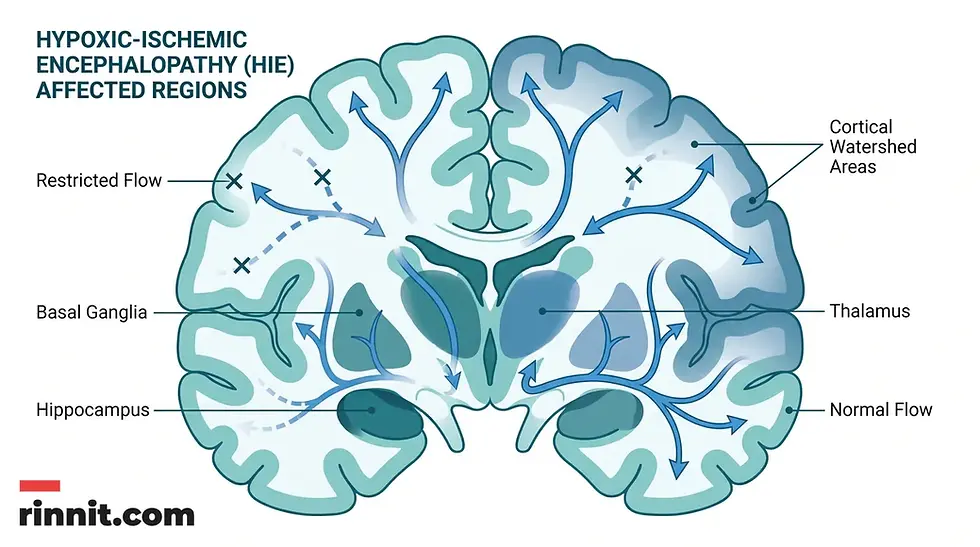
What are the signs and symptoms of HIE in newborns?
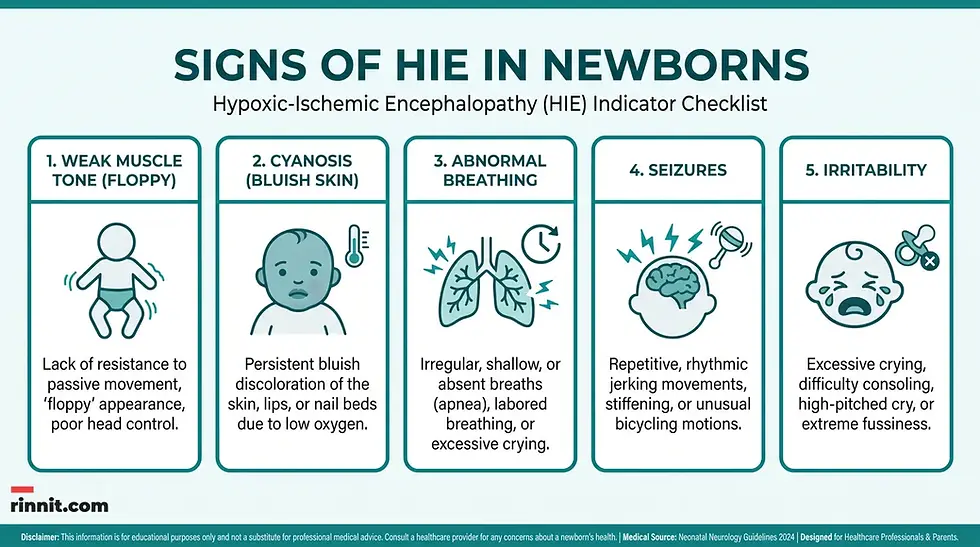
Recognizing HIE starts with watching a newborn's muscle tone, breathing, color and responsiveness right after birth. Any of these signs needs urgent medical attention, and even mild HIE is an emergency. [1]
Severity | Common signs | What to do |
Mild to moderate | Floppy, weak muscle tone (hypotonia) or tense muscles (hypertonia), difficulty feeding, fatigue, irritability, a weak cry, and a pale, blue or gray tone to the skin, fingers and lips (cyanosis). [1] | Call 911 or your local emergency number right away. Even mild HIE is an emergency. |
Severe | Little to no response to touch or sound, poor reflexes, abnormal breathing patterns, an irregular or slow heartbeat, seizures and loss of consciousness. [1] | Call 911 or your local emergency number immediately. |
What causes hypoxic-ischemic encephalopathy (HIE) and who is at risk?
HIE is caused by an interruption of blood and oxygen supply to the brain. This can happen before birth, during labor and delivery, or later in life. [1]
During pregnancy and birth
Causes during fetal development include abnormal development or function of the fetus's heart or lungs, infections such as toxoplasmosis or cytomegalovirus (CMV), and blood pressure that is too high or too low or low oxygen levels in the pregnant mother. [1]
Difficult pregnancies or deliveries can raise the risk. Examples include umbilical cord prolapse, umbilical cord compression or a stop in cord blood flow, placental abruption (the placenta separates from the uterus), uterine rupture and placenta previa. [1]
In older children and adults
HIE can also follow events that make breathing difficult or stop the heart from delivering oxygen, including arrhythmia, asphyxiation (such as drowning or strangulation), overdose, poisoning and shock. [1]
What complications can hypoxic-ischemic encephalopathy (HIE) cause?
HIE can be fatal, and permanent brain damage can lead to lasting problems. [1]
Developmental delays and problems with growth
Hearing or vision loss
Intellectual disability and difficulty paying attention
Epilepsy
Cerebral palsy
Infections
Many complications don't appear until around the time a child starts school. Contact the child's healthcare provider if they miss developmental milestones or struggle in the classroom. [1]
How is hypoxic-ischemic encephalopathy (HIE) diagnosed?
Because HIE is a medical emergency, the care team often prepares to treat it before a formal diagnosis is made. Diagnosis includes a complete physical exam and tests that may take place before and after birth. [1]
Fetal heart monitoring
Placenta blood test
Newborn wellness assessment (Apgar score)
Cord blood and gases test
Imaging tests such as an ultrasound or an MRI
An EEG (electroencephalogram) to record brain activity
Additional blood tests to see how HIE affected the newborn's organs
How is hypoxic-ischemic encephalopathy (HIE) treated and managed?
Treatment aims to protect the brain from further injury and support the baby's body while it recovers. [1]

Therapeutic hypothermia: the baby's body is cooled and then rewarmed to the expected temperature, which can help protect the brain from further injury. [1] A Cochrane review advises starting cooling before six hours of age in term and late preterm infants with moderate to severe HIE. [2]
EEG monitoring and antiseizure medicines: EEG monitoring detects seizures during the hospital stay, and antiseizure medicines are used to prevent them. [1]
Supportive care: treating the underlying cause to improve blood and oxygen flow to the brain, for example with supplemental oxygen through a mask or nasal cannula. [1]
Side effects depend on the treatment. Antiseizure medicines have side effects that vary by drug, and therapeutic hypothermia can cause low platelets. [1]
Long-term support
If complications appear as the child grows, they may need physical or occupational therapy, speech therapy, early intervention educational programs, and assistive devices such as glasses or hearing aids. [1]
What is the outlook for hypoxic-ischemic encephalopathy (HIE)?
The severity of HIE affects the outcome. Research estimates that HIE is fatal for 20% to 50% of infants, and an estimated 25% to 60% of infants have long-term neurological conditions such as cerebral palsy, epilepsy or learning disability. [1]
A full recovery is possible in some cases, and prompt treatment can prevent brain damage. Newborns with mild symptoms and no brain damage make a full recovery in about two weeks. Severe HIE can shorten life expectancy, while most infants with mild to moderate HIE have a normal life expectancy. [1]
Can HIE be prevented?
Not every case of hypoxic-ischemic encephalopathy (HIE) can be prevented, but regular pregnancy checkups and safety precautions can reduce the risk. Attending regular pregnancy checkups, getting advice on staying healthy during pregnancy and managing substance use disorder can reduce the risk, but HIE can still happen even when the mother is in good health. [1] Older children and adults can lower their risk by taking safety precautions, such as swimming only where a lifeguard is on duty. [1]
When should you get emergency help for hypoxic-ischemic encephalopathy (HIE)?
Call 911 or your local emergency number, or go to the emergency room, if a baby or loved one has difficulty breathing, a seizure, pale, blue or gray skin, or loss of consciousness. Contact your child's healthcare provider if they have trouble feeding or miss developmental milestones. [1]
Related reading
Frequently Asked Questions
Is HIE the same as cerebral palsy?
No. HIE is the brain injury, while cerebral palsy is one of the possible long-term complications of that injury.
How common is HIE?
HIE affects an estimated 1 to 6 infants out of every 1,000 births, which equals about 9,000 to 12,000 newborns each year in the United States.
Can a baby recover fully from HIE?
Yes, in some cases. Newborns with mild symptoms and no brain damage make a full recovery in about two weeks, and prompt treatment can prevent brain damage. Not all babies recover completely, and severe cases can cause lifelong complications.
What is therapeutic hypothermia?
Therapeutic hypothermia is a treatment in which the baby's body is cooled and then rewarmed to the expected temperature to help protect the brain from further injury. Guidelines advise starting it before six hours of age for term and late preterm infants with moderate to severe HIE.
Is cooling used for mild HIE?
The evidence is limited. A meta-analysis of babies with mild encephalopathy found insufficient evidence to recommend routine cooling, so the newborn care team decides based on the baby's condition.
When do HIE complications usually appear?
Some signs are immediate, but many complications don't appear until around the time a child starts school.
Can HIE be prevented?
Not every case can be prevented. Regular pregnancy checkups and managing health conditions can lower the risk, but HIE can still happen when the mother is healthy.
What is birth asphyxia?
Birth asphyxia is one of the terms providers may use for HIE, along with neonatal encephalopathy and perinatal hypoxia.
Does HIE always cause seizures?
No. Seizures are among the signs of severe HIE, and EEG monitoring is used during the hospital stay to detect them so antiseizure medicines can be given.
What is an Apgar score?
An Apgar score is a quick newborn wellness assessment, done at one and five minutes after birth, that scores heart rate, breathing, muscle tone, reflexes and skin color.
Are there side effects of HIE treatment?
Yes. Antiseizure medicines have side effects that vary by drug, and therapeutic hypothermia can cause low platelets. A Cochrane review also found more sinus bradycardia with cooling.
Can adults develop HIE?
Yes. In older children and adults it can follow events such as drowning, strangulation, overdose, poisoning, arrhythmia or shock.
What role does the umbilical cord play in HIE?
If the cord drops out of place (prolapse) or is compressed, or if blood flow in the cord stops, the fetus can lose its blood and oxygen supply, which can lead to HIE.
Can infections during pregnancy cause HIE?
Yes. Infections such as toxoplasmosis or cytomegalovirus (CMV) can contribute to HIE during fetal development.
Is HIE fatal?
HIE can be. Research estimates that HIE is fatal for 20% to 50% of infants.
What is the difference between hypotonia and hypertonia?
Hypotonia means floppy, weak muscle tone, while hypertonia means tense or stiff muscles.
References
Cleveland Clinic. Hypoxic-Ischemic Encephalopathy (HIE). Cleveland Clinic. Last updated September 8, 2023. https://my.clevelandclinic.org/health/diseases/hypoxic-ischemic-encephalopathy-hie
Jacobs SE, Berg M, Hunt R, et al. Cooling for newborns with hypoxic ischaemic encephalopathy. Cochrane Database Syst Rev. 2013;2013(1):CD003311. PMID 23440789. https://doi.org/10.1002/14651858.CD003311.pub3
Kariholu U, Montaldo P, Markati T, et al. Therapeutic hypothermia for mild neonatal encephalopathy: a systematic review and meta-analysis. Arch Dis Child Fetal Neonatal Ed. 2020;105(2):225-228. PMID 30567775. https://doi.org/10.1136/archdischild-2018-315711
Pressler RM, Abend NS, Auvin S, et al. Treatment of seizures in the neonate: Guidelines and consensus-based recommendations-Special report from the ILAE Task Force on Neonatal Seizures. Epilepsia. 2023;64(10):2550-2570. PMID 37655702. https://doi.org/10.1111/epi.17745
Medical disclaimer
This article is for general educational purposes only and is not a substitute for professional medical advice, diagnosis, or treatment. If you think you may have a medical emergency, call your doctor or 911 immediately.



Comments