Hypothalamic Obesity (HyOb): Causes, Symptoms, and Management

Updated: 2 days ago
Medically reviewed by Dr. Baraa Alnahhal, MD · Last reviewed: October 2026
Quick Answer
Hypothalamic obesity (HyOb) is obesity caused by damage to the hypothalamus, most often from tumors such as craniopharyngioma or from head trauma. It causes rapid weight gain, uncontrollable hunger and a lower metabolic rate. It is diagnosed with hormone blood tests and brain imaging. There is no cure, but setmelanotide, GLP-1 medicines, hormone replacement and nutrition support are used. [1] [2]
What the research says
A daily injection lowered BMI and hunger in a 52-week phase 3 trial. Among 120 people aged 4 to 66 with acquired HyOb (81 on setmelanotide, 39 on placebo), BMI changed by -16.5% with setmelanotide versus +3.3% with placebo. In participants 12 and older, the weekly average of the maximal daily hunger score (0 to 10) fell by 2.73 points versus 1.45. Serious adverse events occurred in 28% versus 8%; the most common side effects were skin hyperpigmentation, nausea, vomiting, and headache. (Miller et al., N Engl J Med, 2026)
Bariatric surgery brings meaningful but smaller weight loss. A meta-analysis of individual data from 36 patients found 16.5% total weight loss (95% CI, 11.6% to 21.4%) after a median of 31.5 months. In a case-control analysis, weight loss was 12.5 percentage points lower than in people with common obesity. (Fessler et al., Obes Rev, 2026)
Evidence for GLP-1 medicines is limited. A review of 10 small studies (54 patients, mostly case reports and case series) found a mean weight reduction of 7.4 kg, with 85.7% of patients losing weight. The main side effects were nausea and vomiting. (Ng et al., Clin Obes, 2024)
What Is Hypothalamic Obesity?
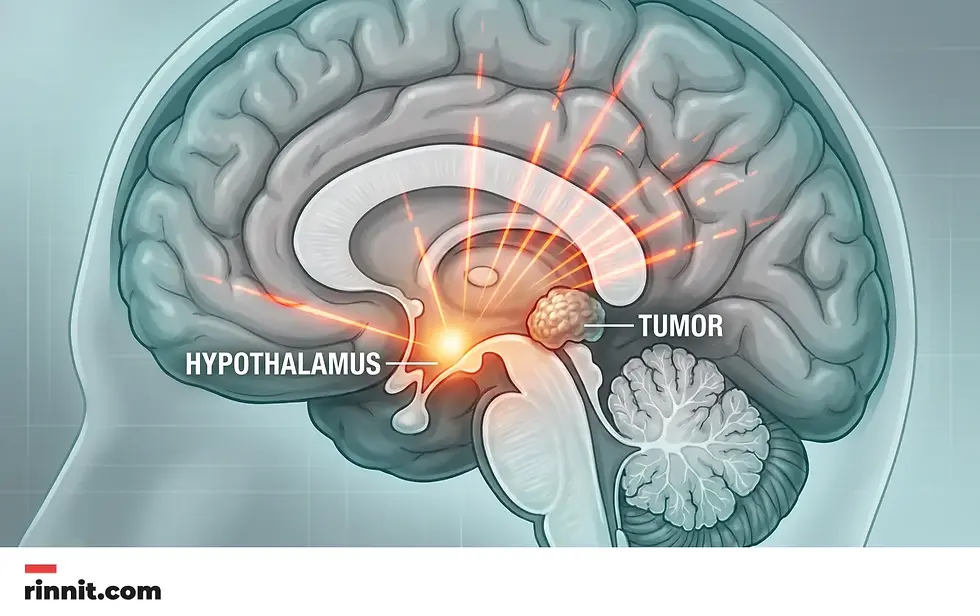
Hypothalamic obesity (HyOb) is a complex condition in which excess weight gain results from a hypothalamus that is not working as it should. Located at the base of the brain, the hypothalamus regulates hormones, controls appetite, and manages metabolism. When it is damaged or injured, these functions are disrupted and the body can no longer balance the energy it takes in and burns. [1]
Unlike common obesity, HyOb is tied directly to damage in the hypothalamus. The body burns fewer calories while the drive to eat increases, often leading to severe obesity that resists standard weight-loss approaches. [1]
The Root Causes: Tumors and Trauma
HyOb almost always follows a specific injury to the brain. The most common cause is a brain tumor, and craniopharyngioma accounts for over half of all cases. Gliomas, hamartomas, and pituitary adenomas can also be responsible. The damage can come from the tumor itself or from complications of removing it. [1] Doctors often call the form that follows an injury or tumor acquired hypothalamic obesity, and it can develop as early as about six months after the injury. [2]
Head injuries, such as those from car accidents or falls, can also harm the hypothalamus through bleeding, infection, or swelling. Less often, genetic conditions such as Prader-Willi syndrome, or being born with hypothalamic dysfunction, are the cause. Most people are diagnosed between ages 5 and 14 because tumors cause most cases, but HyOb can occur at any age. [1]
Identifying the Symptoms of HyOb
The symptoms of HyOb go well beyond simple weight gain. The condition changes the body's internal signaling and creates a range of physical and metabolic challenges. [1]

Symptom | Impact on the body |
Hyperphagia | An uncontrollable, constant sense of hunger that meals do not satisfy. |
Rapid weight gain | Significant weight gain even when calories are strictly limited. |
Low metabolic rate | The body burns fewer calories, which makes weight loss very difficult. |
Exercise intolerance | A limited ability to exercise because of low energy and fatigue. |
Sleep problems | Insomnia or a disrupted sleep-wake cycle. |
Potential Complications and Long-Term Risks
Damage to the hypothalamus can make it hard to regulate blood pressure and heart rate. Rapid weight gain also raises the risk of type 2 diabetes, fatty liver disease, and electrolyte imbalances. [1]
HyOb often affects the pituitary gland as well, leading to hypopituitarism, in which the body does not make enough of one or more essential hormones. The emotional toll matters too: living with a condition that resists traditional treatment can lead to poor body image and significant psychological distress. [1]
Managing Hypothalamic Obesity
There is no cure for HyOb, so management is individualized and aims to ease symptoms and improve overall well-being. Care teams usually combine several strategies to address the metabolic and physical challenges. [1]
Medical and surgical options
In March 2026, the US FDA approved setmelanotide (Imcivree), a once-daily injection, to reduce excess body weight and maintain the reduction long term in adults and children aged 4 and older with acquired HyOb. It is the first therapy approved for the condition. [2] [3] Because it carries important warnings, including monitoring of skin changes, mood, and, in some patients, adrenal function and sodium levels, it should be started and monitored by a specialist team. [2]
Other medications are also used. GLP-1 agonists may help regulate appetite, and hormone replacement therapy can address pituitary deficiencies. If a tumor is pressing on the hypothalamus, surgery may be needed to relieve the pressure, although the hypothalamus is often permanently damaged. Gastric bypass surgery is usually reserved as a last resort after other methods have not worked. [1]

Nutritional and psychological support
A specialized dietitian can build a meal plan that emphasizes vegetables, lean proteins, and whole grains and limits processed foods. Psychological support matters just as much: talking with a therapist or psychologist can help people cope with the frustration and emotional burden of a long-term, hard-to-treat condition. [1]
Learn more. For more evidence-based health guides, visit Rinnit.com.
Frequently Asked Questions
Can I prevent hypothalamic obesity?
Generally no, because it is caused by tumors, injuries, or genetic conditions. You can lower the risk of brain injury by wearing a helmet during sports or cycling, and routine medical care helps detect health conditions early. [1]
Why doesn't exercise help with weight loss in HyOb?
Damage to the hypothalamus lowers the body's metabolic rate and often causes exercise intolerance, so the body does not burn energy or respond to physical activity in the usual way. [1]
Is HyOb common in adults?
No, it is a rare condition. Most people are diagnosed between ages 5 and 14 because tumors cause most cases, but it can occur at any age after a head injury or a hypothalamic tumor. [1]
What is hyperphagia?
Hyperphagia is the medical term for extreme, persistent hunger. It is a hallmark symptom of hypothalamic damage.
Does surgery to remove a tumor fix the obesity?
Not usually. Removing a tumor can relieve pressure on the hypothalamus and prevent further damage, but the hypothalamus is typically permanently damaged, so the weight problem usually persists. [1]
Are there specific foods I should avoid?
There is no one-size-fits-all plan. Most people are advised to eat more vegetables, lean proteins, and whole grains and fewer processed and prepackaged foods, ideally with a dietitian's guidance. [1]
What tests confirm a diagnosis of HyOb?
Your provider reviews your symptoms, medical history, and any head injuries, then orders blood tests to check hormone levels and brain imaging, such as a CT scan, to look for damage or a tumor. [1]
Can HyOb lead to diabetes?
Yes. Rapid weight gain and the metabolic changes of HyOb raise the risk of type 2 diabetes and fatty liver disease. [1]
Is hypothalamic obesity genetic?
Most cases are acquired through a tumor or head injury, but HyOb can also be part of genetic conditions such as Prader-Willi syndrome. [1]
What are GLP-1 agonists?
GLP-1 receptor agonists are medications that help regulate appetite and blood sugar. In HyOb, the evidence so far comes mostly from small studies and case reports. [1] [5]
How does HyOb affect sleep?
The hypothalamus helps regulate the sleep-wake cycle, so damage can cause insomnia, fatigue, or a disrupted circadian rhythm. [1]
Can HyOb cause heart problems?
It can make it difficult for the body to regulate heart rate and blood pressure, so these are worth monitoring with your healthcare team. [1]
Is there a cure or an FDA-approved treatment?
There is no cure. In March 2026, the FDA approved setmelanotide (Imcivree) as the first therapy for acquired HyOb in people aged 4 and older, to reduce excess body weight and maintain the reduction long term. Research on other approaches is ongoing. [2]
Why do I feel hungry even after a large meal?
Damage to the hypothalamus can disrupt the signals that tell the brain you are full, which can leave you in a constant state of hunger. [1]
Who treats hypothalamic obesity?
Care usually involves a team that can include your healthcare provider, a dietitian, and a therapist or psychologist. [1]
References
Cleveland Clinic. Hypothalamic Obesity (HyOb): Causes, Symptoms & Treatment. Cleveland Clinic. Last updated September 24, 2024. https://my.clevelandclinic.org/health/diseases/hypothalamic-obesity
Rhythm Pharmaceuticals. Rhythm Pharmaceuticals Announces FDA Approval of IMCIVREE® (setmelanotide) for Patients with Acquired Hypothalamic Obesity. Rhythm Pharmaceuticals. March 19, 2026. https://ir.rhythmtx.com/news-releases/news-release-details/rhythm-pharmaceuticals-announces-fda-approval-imcivreer-1
Miller JL, van Santen HM, Phillips SA, et al. Setmelanotide for the Treatment of Acquired Hypothalamic Obesity. N Engl J Med. 2026;395(2):138-150. PMID 42418774. https://doi.org/10.1056/NEJMoa2512275
Fessler J, Faucher P, Poitou C, et al. Efficacy and Safety of Bariatric Surgery in Acquired Hypothalamic Obesity: A Systematic Review and Individual Patient Data Meta-Analysis. Obes Rev. 2026;27(9):e70182. PMID 42331400. https://doi.org/10.1111/obr.70182
Ng VWW, Gerard G, Koh JJK, et al. The role of glucagon-like peptide 1 receptor agonists for weight control in individuals with acquired hypothalamic obesity-A systematic review. Clin Obes. 2024;14(3):e12642. PMID 38273176. https://doi.org/10.1111/cob.12642
Medical disclaimer
This article is for general educational purposes only and is not a substitute for professional medical advice, diagnosis, or treatment. Always seek the advice of your physician or other qualified health provider with any questions you may have regarding a medical condition.



Comments