Hyposmia: Understanding a Decreased Sense of Smell

Updated: 2 days ago
Medically reviewed by Dr. Baraa Alnahhal, MD · Last reviewed: October 2026
Quick Answer
Hyposmia is a decreased ability to detect and identify odors. About 3% of Americans have it, and risk rises with age. Because much of taste depends on smell, flavor often changes too. Nasal inflammation is the most common cause. It can prevent you from detecting smoke, gas leaks or spoiled food, and treatment addresses the underlying cause. [1]
What the research says
Smell training can improve smell test scores. A systematic review of 10 studies including 639 patients with olfactory loss found that people who did olfactory training improved their Threshold-Discrimination-Identification (TDI) score by an average of 3.77 points more than controls (95% CI 2.28 to 5.26) in the three studies with enough data for meta-analysis. The gains were in discrimination and identification, not in detection thresholds. (Pekala et al., Int Forum Allergy Rhinol, 2016)
It also helps after viral infections. In a systematic review of 16 studies of olfactory training for smell loss after a viral infection, a meta-analysis of four studies found that people who trained had 2.77 times the odds (95% CI 1.67 to 4.58) of a clinically important improvement in TDI score compared with controls. The authors note that training protocols vary and could be optimized. (Kattar et al., Otolaryngol Head Neck Surg, 2021)
Smell loss can flag COVID-19, but it is not a reliable rule-out. In a Cochrane review of 42 prospective studies with 52,608 participants, anosmia alone had a summary sensitivity of 26.4% and a specificity of 94.2%, meaning that most people with COVID-19 did not report it, but when it was present it was a useful red flag. (Struyf et al., Cochrane Database Syst Rev, 2022)
What is hyposmia?

Hyposmia is a decreased sense of smell. People with the condition have difficulty detecting and identifying odors and scents. It is one of several smell disorders: [1]
Hyposmia: a decreased sense of smell.
Anosmia: a total loss of the sense of smell.
Parosmia: an abnormal or distorted sense of smell.
While over 12% of the U.S. population has some form of smell dysfunction, about 3% of Americans have hyposmia, and the risk of smell disorders increases with age. [1]
What are the symptoms of hyposmia?
Hyposmia symptoms can develop suddenly or gradually over time and may include: [1]
A diminished sense of smell overall
Trouble detecting certain odors
Difficulty distinguishing between certain smells
The link between smell and taste
Up to 80% of taste is due to the sense of smell. As a result, you may also notice changes to your sense of taste (dysgeusia), and food can seem bland. [1]
What causes hyposmia and who is at risk?
The most common cause of hyposmia is inflammation inside the nose. Neurological issues can also affect the part of the brain responsible for the sense of smell. [1]
Health conditions
Allergies
Bacterial infections, including rhinosinusitis, nasal vestibulitis and chronic sinus infections
Viral infections, including COVID-19, flu and the common cold
Nasal polyps
A deviated septum
Hormonal imbalances
Type 1 diabetes
Malnutrition
Dental issues such as extensive tooth decay or gum disease
Environmental factors
Smoking
Certain medications, including some antibiotics, antihistamines and antidepressants
Long-term exposure to certain chemicals, like lead and other heavy metals
Head and neck radiation therapy
Using cocaine
Neurological conditions
Parkinson's disease, Alzheimer's disease and multiple sclerosis (MS) are linked to hyposmia. [1]
Hyposmia and COVID-19
Hyposmia is a common symptom of COVID-19 and, in many cases, one of the first noticeable warning signs. Having hyposmia does not necessarily mean you have COVID-19, but if you develop a sudden decrease in your sense of smell, let a healthcare provider know. [1] [4]
What are the safety risks of hyposmia?

Hyposmia can have a significant negative effect on quality of life. Most notably, it can keep you from detecting odors that warn of danger: [1]
Fire or smoke
Gas leaks
Spoiled food
Poisonous chemicals
If your sense of smell is reduced, working smoke detectors and gas or carbon monoxide alarms, and checking the dates on food, can add a layer of protection.
How is hyposmia diagnosed?
Providers carry out a multidimensional assessment that rules out neurological causes and COVID-19. An ear, nose and throat (ENT) specialist examines the sinuses and the inside of the nose to check for infection, growths or polyps, and may recommend tests: [1]
Test | What it does |
Nasal endoscopy | A thin, lighted camera is used to look inside the nose and sinuses. |
Imaging (CT or MRI) | Scans that can show growths, polyps or neurological causes. |
Smell tests | Standardized tests of your ability to detect and identify specific odors. |
How is hyposmia treated and managed?
Hyposmia treatment involves identifying and addressing the underlying cause. Options include lifestyle changes, smell training, medication and surgery. Every case is unique, so for neurological causes and COVID-19-related smell loss, ask your provider which options are right for you. [1]
Lifestyle changes
If an environmental factor is the cause, removing the trigger may reverse the symptoms. For example, you may regain your sense of smell if you quit smoking. Occasionally, occupational exposure can cause irreversible smell loss, so avoiding it may help prevent a further decrease. [1]
Smell training
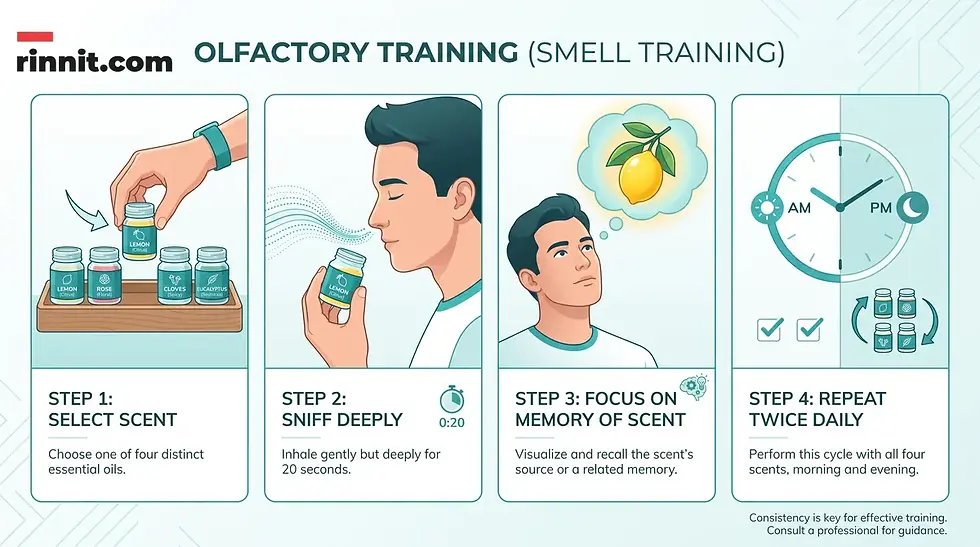
Smell training is a therapy in which you repeatedly sniff a set of distinct scents to stimulate the olfactory system. A common approach uses four scents, such as lemon, rose, cloves and eucalyptus, sniffed gently but deliberately in the morning and evening while you concentrate on the memory of each scent. Studies suggest it can improve smell test scores, but protocols vary and more research is needed to define the best approach. [2] [3]
Medication
Treating the underlying cause can also reduce symptoms. If allergies are responsible, a provider may recommend antihistamines or corticosteroids, and antibiotics may be prescribed for sinusitis-related hyposmia. [1]
Surgery
In severe cases, surgery may be needed, depending on the condition that caused it. A deviated septum may call for septoplasty, and nasal polyps may need to be removed. [1]
How long does hyposmia last?
How long hyposmia lasts depends on its cause, ranging from a few days to months or years, and in some cases it can be permanent. Some people notice a reduced sense of smell for only a few days, while others have lingering symptoms for months or years, and in some cases hyposmia can be permanent. Once a provider determines the cause, they can recommend appropriate treatment. [1]
Can hyposmia be prevented?
You cannot always prevent hyposmia because many underlying causes are unavoidable, but you can reduce your risk by: [1]
Wearing proper protective gear if you work around harmful chemicals
Keeping existing health conditions in check
Practicing good oral hygiene
Eating a well-balanced diet
Considering quitting if you smoke
Avoiding snorting cocaine, opioids or other substances
When should you see a healthcare provider about hyposmia?
A decreased sense of smell usually goes away on its own when it results from allergies, colds or infections. If symptoms linger for more than a couple of weeks, tell a healthcare provider. If you develop sudden and severe hyposmia for no apparent reason, seek medical care right away, because it could indicate a more serious health concern. [1]
Questions to ask your provider: why did my sense of smell change, what is the underlying cause, what tests do you recommend, and do I have another health condition causing this? [1]
Frequently Asked Questions
Is hyposmia the same as anosmia?
No. Hyposmia is a decreased sense of smell, anosmia is a total loss of the sense of smell, and parosmia is an abnormal or distorted sense of smell.
Can COVID-19 cause hyposmia, and can it be permanent?
Yes. Hyposmia is a common symptom of COVID-19 and is often one of the first noticeable warning signs. Some people notice a reduced sense of smell for only a few days, others for months or years, and in some cases it can be permanent.
How does smoking affect my sense of smell?
Smoking is among the environmental factors linked to hyposmia. If smoking is the cause, you may regain your sense of smell if you quit.
Can hyposmia be a sign of a neurological condition?
Parkinson's disease, Alzheimer's disease and multiple sclerosis are linked to hyposmia, which is why providers rule out neurological causes during the assessment. The most common cause, however, is inflammation inside the nose.
What is smell training?
Smell training is a therapy in which you repeatedly sniff a set of distinct scents, such as lemon, rose, cloves and eucalyptus, usually morning and evening. A meta-analysis of studies found it improved smell test scores compared with controls, although protocols vary between studies.
Does hyposmia affect how food tastes?
Yes. Up to 80% of taste is due to the sense of smell, so you may notice changes in your sense of taste (dysgeusia) as well.
Can allergies cause hyposmia?
Yes. Allergies are one of the health conditions that can contribute to hyposmia. Inflammation inside the nose is the most common cause, and antihistamines or corticosteroids may help when allergies are responsible.
Is there surgery for hyposmia?
In severe cases, yes. The type of surgery depends on the cause: a deviated septum may need septoplasty, and nasal polyps may need to be removed.
When should I see a healthcare provider?
A decreased sense of smell from allergies, colds or infections usually goes away on its own. Tell a provider if it lingers for more than a couple of weeks, and seek care right away if it is sudden and severe for no apparent reason.
What is a nasal endoscopy?
A nasal endoscopy lets a specialist look inside the nose and sinuses with a thin, lighted camera to check for infection, growths or polyps.
Which medications can cause hyposmia?
Some antibiotics, antihistamines and antidepressants have been linked to a decreased sense of smell. Ask your provider before stopping any medication.
Can poor nutrition or dental problems cause hyposmia?
Malnutrition and dental problems such as extensive tooth decay or gum disease are among the health conditions that may contribute to hyposmia.
Is hyposmia dangerous?
Hyposmia can be, because it may prevent you from detecting danger signals such as fire or smoke, gas leaks, spoiled food and poisonous chemicals.
References
Cleveland Clinic. Hyposmia. Cleveland Clinic. Last updated July 26, 2023. https://my.clevelandclinic.org/health/diseases/25166-hyposmia
Pekala K, et al. Efficacy of olfactory training in patients with olfactory loss: a systematic review and meta-analysis. Int Forum Allergy Rhinol. 2016;6(3):299-307. PMID 26624966. https://doi.org/10.1002/alr.21669
Kattar N, et al. Olfactory Training for Postviral Olfactory Dysfunction: Systematic Review and Meta-analysis. Otolaryngol Head Neck Surg. 2021;164(2):244-254. PMID 32660334. https://doi.org/10.1177/0194599820943550
Struyf T, et al. Signs and symptoms to determine if a patient presenting in primary care or hospital outpatient settings has COVID-19. Cochrane Database Syst Rev. 2022;5(5):CD013665. PMID 35593186. https://doi.org/10.1002/14651858.CD013665.pub3
Medical disclaimer
This article is for general educational purposes only and is not a substitute for professional medical advice, diagnosis, or treatment. If you notice a persistent change in your sense of smell or taste, consult a healthcare professional.



Comments