Understanding Hypophosphatasia: Causes, Symptoms, and Life-Long Management

Updated: 3 days ago
Medically reviewed by Dr. Baraa Alnahhal, MD · Last reviewed: October 2026
Quick Answer: What is hypophosphatasia?
Hypophosphatasia is a metabolic bone disease in which the body fails to produce enough tissue-nonspecific alkaline phosphatase (TNSALP), an enzyme essential for hardening bones and teeth. This causes soft bones, frequent fractures and early tooth loss. Treatment often involves asfotase alfa, an enzyme replacement therapy, along with a multidisciplinary approach to manage pain, breathing problems and joint inflammation. [1]
What the research says
Enzyme replacement is linked to much better survival in the most severe forms. In a study of 37 treated patients with perinatal or infantile HPP compared with 48 historical controls of similar age and disease features, survival was 95% vs 42% at age 1 year and 84% vs 27% at age 5 years (P < .0001). It was not a randomized trial: the comparison group came from earlier patient records (Whyte et al., The Journal of Clinical Endocrinology & Metabolism, 2016 [2]).
Severe HPP is very rare, but milder forms are far more common. A genetic estimate put severe HPP at about 1 in 300,000 in France (based on cases tested between 2000 and 2009) and the dominant milder forms at about 1 in 6,370 in the European population (Mornet et al., Annals of Human Genetics, 2011 [3]).
A low alkaline phosphatase result on routine blood work can be a missed clue. Among 6,918,126 adult lab measurements from one laboratory in northern Germany (2011–2016), 8.46% showed ALP below 30 U/L. Of the few who also had a PLP test, 6.09% had elevated PLP, and the authors estimated that about 1 in 194 adults (0.52%) showed laboratory signs of HPP, suggesting mild HPP may be underdiagnosed (Schmidt et al., Orphanet Journal of Rare Diseases, 2021 [4]).
Key Takeaways
Feature | Description |
|---|---|
Primary Cause | Genetic mutations in the ALPL gene affecting TNSALP enzyme production. |
Main Symptom | Softened bones (rickets-like changes in children, osteomalacia in adults) and premature loss of teeth. |
Enzyme Involved | Tissue-nonspecific alkaline phosphatase (TNSALP). |
Inheritance | Autosomal recessive (severe forms); milder forms can be recessive or dominant. |
Standard Treatment | Asfotase alfa (Strensiq®) enzyme replacement therapy. |

What is Hypophosphatasia?
Hypophosphatasia (HPP) is a rare, inherited metabolic disorder that fundamentally alters how the body builds and maintains its skeletal structure. At its core, HPP interferes with the process of mineralization—the chemical hardening of bones and teeth using minerals like calcium and phosphorus. Without proper mineralization, these structures remain soft, flexible, and prone to damage [1].
The condition is classified as a metabolic bone disease and is notable for its extreme variability. In its most severe perinatal form, it can be fatal before or shortly after birth due to a lack of skeletal development. Conversely, mild adult forms may only manifest as recurring stress fractures or early tooth loss in middle age [1].
How Common is HPP?
While severe forms of hypophosphatasia are exceptionally rare—affecting between 1 in 100,000 and 1 in 300,000 newborns—milder versions are more frequent, appearing in approximately 1 in 6,000 to 7,000 individuals. Certain populations, such as the Mennonite community in Manitoba, Canada, show significantly higher rates of the severe condition [1] [3].
The Seven Major Forms of HPP
Healthcare providers categorize HPP into seven distinct types based on the age of onset and the severity of the symptoms [1].
Type | Onset Period | Primary Characteristics |
|---|---|---|
Perinatal Severe | Before birth | Severe bone softening, underdeveloped ribs, life-threatening. |
Perinatal Benign | Before birth | Visible bone bowing on ultrasound that improves after birth. |
Infantile | Within the first 6 months | Failure to thrive, rickets-like bone changes, respiratory issues. |
Childhood | Childhood | Short stature, delayed walking, early loss of baby teeth. |
Adult | Adulthood | Osteomalacia, recurring stress fractures, chronic joint pain. |
Odontohypophosphatasia | Any age | Affects only the teeth; premature loss of baby or adult teeth. |
Pseudohypophosphatasia | Infancy | Normal enzyme levels on routine testing but symptoms identical to infantile HPP. |
Symptoms and Warning Signs
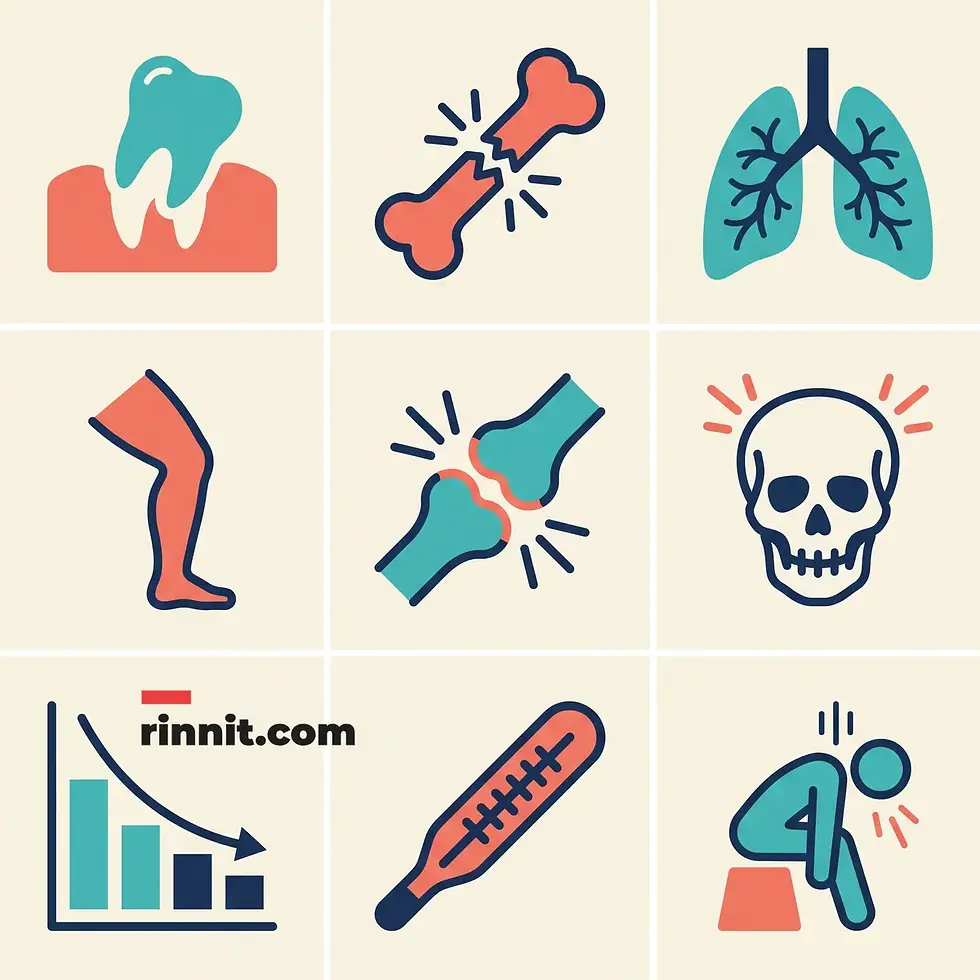
The symptoms of hypophosphatasia are diverse and depend heavily on the specific form of the disease. Because it affects the entire skeletal system, signs can appear in the lungs, brain, and joints as well as the bones.
Early Warning Signs in Infants
In the most severe cases, HPP is detectable via ultrasound during pregnancy, showing short, bowed limbs and underdeveloped ribs. Infants born with the condition may experience:
Respiratory Failure: Underdeveloped chests (flail chest) make breathing difficult or impossible.
Craniosynostosis: The skull bones fuse too early, leading to misshapen heads and increased brain pressure.
Hypercalcemia: High blood calcium levels causing vomiting, constipation, and fatigue. [1]
Symptoms in Children and Adults
For those who develop symptoms later in life, the signs are often related to long-term skeletal weakness:
Premature Tooth Loss: Losing baby teeth before age 5 is a hallmark sign of childhood HPP.
Bone and Joint Pain: Chronic pain caused by inflammation, pseudogout, or recurring fractures.
Mobility Issues: A waddling gait or a significant delay in taking first steps (often after 18 months).
Osteomalacia: The softening of adult bones, leading to metatarsal stress fractures in the feet or Looser zones in the femur. [1]
What Causes Hypophosphatasia?
The root cause of HPP is a mutation in the ALPL gene. This gene provides the blueprint for creating an enzyme called tissue-nonspecific alkaline phosphatase (TNSALP). This enzyme is the "worker" responsible for hardening the protein matrix of bones and teeth with calcium and phosphate crystals [1].
When the ALPL gene is mutated, the TNSALP enzyme is either absent or dysfunctional, which prevents the mineralization process from occurring correctly. The severity of the disease is determined by how much enzyme activity remains; variants that almost completely block the enzyme usually cause the severe forms, while variants that only reduce its activity often cause milder types [1].
Inheritance Patterns
Autosomal Recessive: Severe forms usually require both parents to pass on a mutated gene.
Autosomal Dominant: Milder forms can follow either pattern; in the dominant pattern, only one parent needs to pass on the altered gene. [1]
Diagnosis and Testing
Diagnosing a rare condition like HPP requires a combination of clinical observation, imaging, and specialized laboratory work.
Alkaline Phosphatase (ALP) Test: A standard blood test that usually shows abnormally low levels of ALP activity for the person's age. Other conditions can also cause low ALP, so this test alone cannot confirm the diagnosis. [1]
PLP Blood Test: Measures pyridoxal 5'-phosphate (a form of vitamin B6), which is typically high in people with HPP because the missing enzyme cannot process it. [1] [4]
Imaging: X-rays are used to identify bone malformations, rickets-like changes, or stress fractures. [1]
Genetic Testing: Detects variants in the ALPL gene that cause HPP, although not all laboratories offer this test. [1]
Management and Treatment Options
While there is currently no cure for the underlying genetic mutation, significant advancements in enzyme replacement therapy have transformed the outlook for many patients [1].
Enzyme Replacement Therapy
Asfotase alfa (Strensiq®) is the primary treatment for HPP. It is a subcutaneous injection that acts as a replacement for the missing TNSALP enzyme. Studies have shown it improves bone health, respiratory function, and survival rates, particularly in infantile and juvenile cases [1] [2].

Supportive and Symptomatic Care
A multidisciplinary team is often required to manage the various complications of HPP:
Respiratory Support: For infants with chest deformities.
Neurosurgery: To treat craniosynostosis and relieve intracranial pressure.
Orthopedic Care: Using casts, splints, or surgery (internal fixation) to repair fractures.
Pain Management: Utilizing NSAIDs for chronic bone and joint pain.
Physical & Occupational Therapy: To improve mobility, strength, and daily functioning. [1]
Outlook and Living With HPP
The prognosis for hypophosphatasia varies widely. While the perinatal form remains highly dangerous, some children who survive infancy see their bone health improve as they grow, though complications may return in middle age. Adult HPP is rarely life-threatening but requires consistent management of pain and fracture risk [1].
Living with HPP involves regular monitoring by specialists, including endocrinologists and orthopedists. Early dental care is also crucial to preserve as many teeth as possible. Support groups and genetic counseling can provide essential resources for families navigating the challenges of this rare condition.
Conclusion
Hypophosphatasia is a complex genetic challenge that requires lifelong vigilance. However, with early diagnosis and the implementation of modern enzyme replacement therapies, many individuals can lead active lives. Understanding the signs—from early tooth loss to recurring fractures—is the first step toward effective management and a better quality of life.
Frequently Asked Questions
What is the main cause of hypophosphatasia?
Hypophosphatasia is caused by mutations in the ALPL gene, leading to a deficiency in the TNSALP enzyme.
Is hypophosphatasia curable?
There is no cure for the genetic mutation, but treatments like enzyme replacement therapy can manage the condition.
What does the ALPL gene do?
The ALPL gene provides instructions for making an enzyme that hardens bones and teeth.
How is HPP inherited?
HPP can be inherited in an autosomal recessive or autosomal dominant pattern.
What is the most severe form of HPP?
Perinatal severe hypophosphatasia, which begins before birth.
Can HPP be detected before birth?
Yes, through prenatal ultrasound showing bone bowing or underdeveloped ribs.
What is the hallmark sign of HPP in children?
Losing baby teeth before the age of 5.
Does HPP only affect bones?
No, it can also affect teeth, lungs, the brain, and joints.
What is asfotase alfa?
An enzyme replacement therapy used to treat HPP.
What is hypercalcemia in HPP?
High levels of calcium in the blood, which can happen because calcium is not being taken up into bone properly. It can cause vomiting, constipation, fatigue, and poor feeding.
Can HPP cause seizures?
Yes, although it is uncommon. Seizures in severely affected infants are linked to vitamin B6 metabolism and may be treated with vitamin B6.
What is craniosynostosis?
The premature fusion of skull bones, which can occur in HPP.
Is adult HPP common?
Milder forms such as adult HPP are more common than severe forms, affecting around 1 in 6,000 to 1 in 7,000 people.
What are metatarsal stress fractures?
Fractures in the small bones of the feet, common in adult HPP.
What is odontohypophosphatasia?
A form of HPP that only affects the teeth.
How do doctors test for HPP?
Through blood tests for ALP and PLP, X-rays, and genetic testing.
Why is vitamin B6 high in HPP patients?
The blood test measures PLP, a form of vitamin B6. Because the missing enzyme normally helps break it down, PLP levels build up.
Can HPP cause chronic pain?
Yes, due to fractures, joint inflammation, and pseudogout.
What is pseudogout?
A type of sudden, severe arthritis caused by mineral crystals in the joints, seen in some adults with HPP.
Is there a special diet for HPP?
Diet is mainly adjusted to manage specific problems. For example, patients with high blood calcium may need to restrict calcium intake, under the guidance of their care team.
Do HPP patients need physical therapy?
Physical therapy is often part of care to help with strength and mobility.
What is "flail chest"?
A condition where the chest wall is too weak to support normal breathing.
Can HPP cause short stature?
Yes, childhood HPP can lead to growth delays and short stature.
Is HPP a type of rickets?
No. The bone changes in HPP can look like rickets, but HPP is caused by an enzyme deficiency from ALPL gene variants, not by a vitamin D problem.
What are Looser zones?
Weak areas in the bone (pseudofractures) that can appear on X-rays in adults with HPP.
Can HPP symptoms improve over time?
In some childhood cases, symptoms improve during young adulthood but may return in middle age.
What is TNSALP?
Tissue-nonspecific alkaline phosphatase, the enzyme that is deficient in HPP.
Is HPP a metabolic disease?
Yes, it is classified as a metabolic bone disease.
Can HPP be misdiagnosed?
Yes, because it is rare and its symptoms overlap with other bone conditions such as rickets or osteoporosis. This matters because bisphosphonates, common osteoporosis medicines, are generally avoided in HPP since they can worsen bone mineralization and fractures.
What is a waddling gait?
A walking pattern often seen in children with HPP due to muscle weakness.
Are Mennonites at higher risk for HPP?
Yes, the severe form is more common in the Mennonite population in Manitoba, Canada.
What is perinatal benign HPP?
A form where bowed limbs seen on ultrasound improve gradually after birth.
Can HPP cause bulging eyes?
Yes, increased pressure inside the skull from early skull bone fusion can cause bulging eyes (proptosis).
What is internal fixation?
A surgical procedure using metal hardware such as plates, rods, or screws to repair broken bones.
Does HPP affect adult teeth?
Yes, adult HPP can lead to early loss of permanent teeth.
Is genetic counseling recommended?
Yes, for families with a history of HPP or concerns about passing on the condition.
Can NSAIDs help HPP patients?
Yes, they are used to manage bone and joint pain, with monitoring by a healthcare provider for side effects.
What is the role of a periodontist in HPP?
To help manage early tooth loss and gum health.
Can HPP cause fatigue?
Yes, it can be linked to high blood calcium or chronic pain.
Is HPP life-threatening?
The perinatal and infantile forms can be life-threatening.
What is alkaline phosphatase?
An enzyme that plays a role in the hardening (mineralization) of bones and teeth.
Can HPP cause headaches?
Yes, due to increased pressure inside the skull.
What is hypotonia?
Decreased muscle tone, sometimes called "floppy infant syndrome," seen in infantile HPP.
Does HPP cause fever?
Some infants with HPP have episodes of fever along with bone pain.
What is mineralization?
The process of depositing minerals such as calcium and phosphate to make bones and teeth hard.
Can HPP cause constipation?
Yes, as a symptom of high blood calcium levels.
What is brachycephaly?
A misshapen head caused by early fusion of skull bones.
Is HPP inherited from both parents?
In recessive forms, yes, both parents pass on an altered gene. In dominant forms, only one parent is needed.
Can asfotase alfa be used by adults?
Yes, it can be used by children and adults whose HPP began in childhood.
Where can I find HPP support?
Rare disease organizations such as NORD and Soft Bones offer information and support groups for HPP families.
Helpful Resources
Related Reading
Alkaline Phosphatase (ALP) Test: Normal Range, High and Low Causes: The alkaline phosphatase (ALP) blood test is how low ALP levels, a hallmark of hypophosphatasia, are first detected.
References
Cleveland Clinic. Hypophosphatasia (HPP) Symptoms, Causes & Treatment. Cleveland Clinic. December 3, 2024. https://my.clevelandclinic.org/health/diseases/hypophosphatasia
Whyte MP, Rockman-Greenberg C, Ozono K, et al. Asfotase alfa treatment improves survival for perinatal and infantile hypophosphatasia. The Journal of Clinical Endocrinology & Metabolism. 2016;101(1):334-342. PMID 26529632. https://doi.org/10.1210/jc.2015-3462
Mornet E, Yvard A, Taillandier A, et al. A molecular-based estimation of the prevalence of hypophosphatasia in the European population. Annals of Human Genetics. 2011;75(3):439-445. PMID 21488855. https://doi.org/10.1111/j.1469-1809.2011.00642.x
Schmidt T, Schmidt C, Amling M, et al. Prevalence of low alkaline phosphatase activity in laboratory assessment: is hypophosphatasia an underdiagnosed disease? Orphanet Journal of Rare Diseases. 2021;16(1):452. PMID 34711245. https://doi.org/10.1186/s13023-021-02084-w
This article is for informational purposes only and is not a substitute for professional medical advice, diagnosis, or treatment. Always consult a qualified healthcare professional with any questions about a medical condition. The clinical information in this guide reflects source material last reviewed in December 2024.



Comments