Hunger Headache: Causes, Symptoms, and Prevention Strategies

Updated: 2 days ago
Medically reviewed by Dr. Baraa Alnahhal, MD · Last reviewed: October 2026
Quick Answer: What is a hunger headache?
A hunger headache is a headache caused mainly by low blood sugar and muscle tension, felt as dull, aching pain at the front or sides of the head. Skipping meals, dehydration and irregular caffeine intake are key triggers. It usually disappears within 30 minutes of eating, and the best treatment is a balanced meal with protein, fiber and complex carbohydrates. [1]
What the research says
Longer fasts raise the odds of a fasting headache. A review of the literature reports a lifetime prevalence of 4.1% for fasting headache in Denmark's general population. The headache usually appears after at least 16 hours of fasting, is typically diffuse or frontal and mild to moderate, and resolves within 72 hours of eating again. People who already get headaches are at higher risk. This was a narrative review, not a trial. (Torelli & Manzoni, Curr Pain Headache Rep, 2010)
Low blood sugar and caffeine withdrawal are the main suspects, but the mechanism is not settled. In a literature review, fasting headache most often looked like tension-type headache, and the chance of onset rose directly with the length of the fast. Hypoglycemia and caffeine withdrawal were the factors most often implicated, with much still unexplained. (Torelli et al., Headache, 2009)
What exactly is a hunger headache?
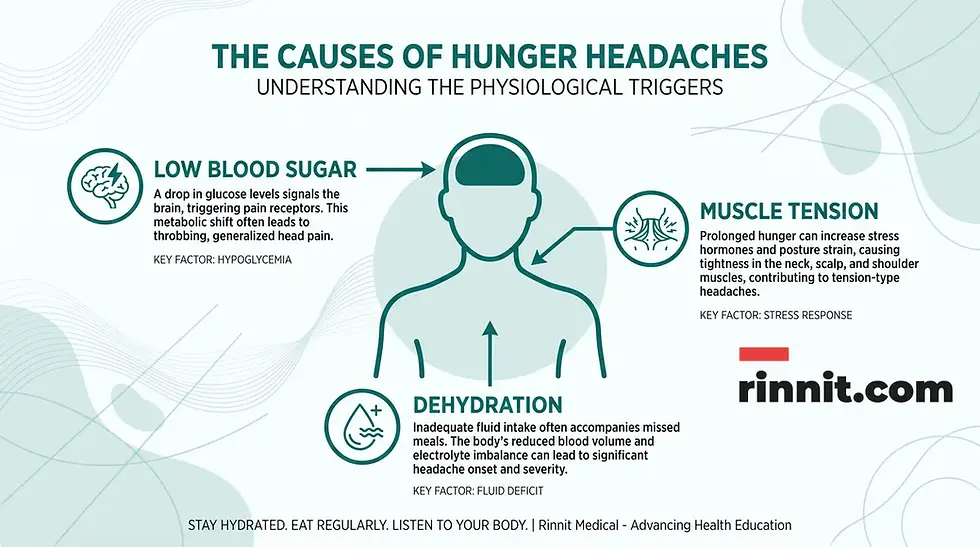
A hunger headache is a physiological response to a lack of energy or hydration. When you go for long periods without eating, your blood glucose levels drop, depriving the brain of its primary fuel source. This condition, known as hypoglycemia, triggers a cascade of reactions, including the release of stress hormones and the tightening of muscles, both of which contribute to head pain. [1]
Unlike migraines or cluster headaches, which can be intense and throbbing, hunger-related pain is generally described as a dull ache. It often serves as one of the body's final warning signals that it requires immediate caloric intake to maintain normal function.
How does hunger affect the body and brain?
The relationship between hunger and head pain involves several biological processes. When the body enters a fasted state, it attempts to preserve energy and signal the need for food through multiple pathways.
Hypoglycemia: The brain is highly sensitive to drops in blood sugar. When glucose levels fall, the brain lacks the energy needed to function efficiently, leading to dull pain.
Muscle tension: In response to hunger, the body may release histamine, a substance that can cause muscles in the neck and shoulders to tense up, contributing to tension-type headaches. [1]
Stress hormone release: Low blood sugar can trigger the release of hormones like adrenaline and cortisol. While these hormones help mobilize energy stores, they also frequently cause headaches as a side effect.
What causes headaches when you are hungry?
While the primary trigger is a lack of food, several lifestyle factors can increase the frequency or severity of these headaches. Understanding these causes is the first step toward effective management. [1]
Cause | Impact on head pain |
Dehydration | Lack of water reduces blood volume, making headaches more likely. |
Irregular eating | Skipping meals or inconsistent timing confuses the body's glucose regulation. |
Caffeine fluctuations | Sudden changes in coffee or soda intake can trigger withdrawal or sensitivity. |
Sleep deprivation | A lack of rest makes the body more sensitive to pain and hunger signals. |
Restrictive dieting | New regimens like intermittent fasting can cause initial "fasting headaches." |
Recognizing the symptoms of a hunger headache

Most people experience a hunger headache as a dull pressure at the front of the head, which may spread to both sides. However, if the headache is caused by significantly low blood sugar, additional systemic symptoms may occur. [1]
Common symptoms include mild nausea and noticeable tension in the neck or shoulder muscles. If your blood sugar has dropped significantly, you might also experience dizziness, fatigue, excessive sweating, or even abdominal pain. Recognizing these secondary signs is crucial for identifying the root cause of the discomfort.
Treatment: how to stop a hunger headache fast
The most effective treatment for a hunger headache is to eat. Once your body begins to digest food and glucose enters your bloodstream, the pain typically subsides within 30 minutes. [1]
For the best results, choose a balanced meal that includes vitamins, nutrients, and plenty of water. If a full meal isn't possible, a healthy snack containing protein and complex carbohydrates, such as nuts or whole-grain crackers, can provide temporary relief. If the pain persists after eating, an over-the-counter pain reliever may be used, though this should not replace the need for nutrition.
Prevention: how to avoid headaches between meals
Preventing hunger headaches requires a proactive approach to nutrition and hydration. By stabilizing your blood sugar throughout the day, you can avoid the "crashes" that lead to pain. [1]
Eat frequent, smaller meals: Instead of three large meals, consider five or six smaller portions to keep glucose levels steady.
Prioritize hydration: Drink water consistently throughout the day, as thirst is often mistaken for hunger.
Maintain a sleep schedule: Aim for 7-9 hours of quality sleep to help regulate hunger-related hormones.
Schedule snack breaks: If you have a busy day, set reminders to eat small, nutritious snacks every few hours.
The role of diet: foods that help and foods that hurt
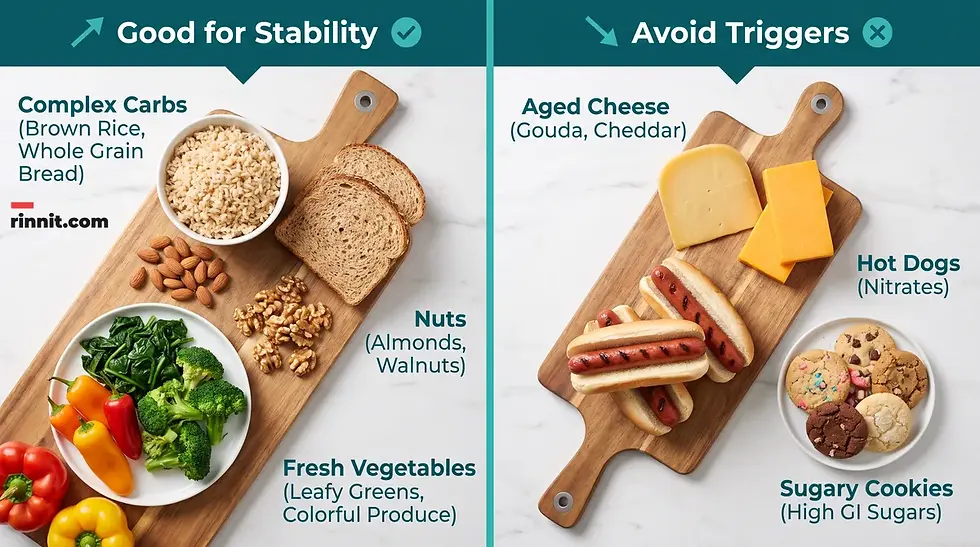
Sometimes the issue isn't when you eat, but what you eat. Certain foods can trigger headaches shortly after consumption, especially if they cause a rapid spike and subsequent crash in blood sugar. [1]
Foods to choose for stability
Complex carbohydrates: Brown rice, starchy vegetables (like potatoes), and whole-grain breads.
Fresh produce: Raw or lightly cooked fruits and vegetables.
Healthy proteins: Fresh meats, fish, nuts, and seeds that have not been cured or smoked.
Water: The foundation of all headache prevention.
Foods to limit or avoid
Aged cheeses: Feta, Parmesan, and Swiss are known triggers for some individuals.
Processed additives: Foods containing MSG, nitrates, or nitrites (like hot dogs and pepperoni).
High-sugar items: Packaged cookies, crackers, and sugary sodas that cause glucose spikes.
Cured products: Dried meats and fruits, which often contain concentrated additives.
Tips for managing fasting headaches
If you are fasting for religious or medical reasons, you can lower your risk of headaches by planning ahead. A few days before your fast, begin increasing your water intake and gradually reducing caffeine to avoid withdrawal symptoms. During your pre-fast meal, focus on complex carbohydrates and protein to provide sustained energy. Avoid overeating, as large portions can sometimes lead to digestive discomfort that complicates the fasting period. [1] [2]
When should you see a doctor?
While hunger headaches are generally harmless, they can sometimes be bothersome enough to interfere with daily life. You should consult a healthcare provider if your headaches do not respond to over-the-counter medication, require more than the recommended dose for relief, or interfere with your daily activities. [1]
Emergency warning: Sudden, severe headaches accompanied by confusion, dizziness, slurred speech, or vision loss may be signs of a stroke. Seek immediate emergency medical care if these symptoms occur.
Conclusion
Hunger headaches are a clear signal from your body that it needs fuel. By understanding the connection between blood sugar, hydration, and head pain, you can take simple steps to eliminate this discomfort. Focusing on balanced nutrition and consistent eating habits will not only stop the headaches but also improve your overall energy levels.
Stay informed. For more evidence-based health guides and nutrition tips, visit Rinnit.com.
Frequently Asked Questions
Why does my head hurt when I'm hungry?
A hunger headache is usually due to a drop in blood sugar (hypoglycemia), which deprives your brain of energy and triggers stress hormones and muscle tension.
How long does a hunger headache last after eating?
Most hunger headaches go away within 30 minutes once your body starts digesting food.
Can dehydration cause a hunger headache?
Yes, dehydration is a common cause of headaches and often occurs alongside hunger.
Where is a hunger headache usually felt?
The pain is typically felt at the front of the head and may extend to both sides.
Does caffeine help or hurt hunger headaches?
It depends. Consistent intake is fine, but sudden increases or decreases in caffeine can trigger headaches.
What is the best thing to eat for a hunger headache?
A balanced meal with protein, complex carbohydrates, and healthy fats is best.
Can intermittent fasting cause headaches?
Yes, "fasting headaches" are common when starting a new eating regimen as the body adjusts to lower glucose levels.
Are hunger headaches dangerous?
Generally, no. They are a signal to eat, but they don't typically affect long-term health.
Can MSG cause headaches?
Yes, for some people, the additive monosodium glutamate (MSG) can be a headache trigger.
Should I take ibuprofen for a hunger headache?
You can, but the best treatment is eating. If pain remains after eating, over-the-counter medicines can help.
Why do I get a headache after I eat?
A headache after eating might be due to specific food triggers like aged cheese, nitrates, or high-sugar foods that cause a "sugar crash."
Does sleep affect hunger headaches?
Yes, lack of sleep can make you more sensitive to hunger and pain signals.
Can I get a hunger headache if I'm not dieting?
Yes, simply having a busy day and skipping a meal can trigger one.
What are the low blood sugar symptoms?
In addition to a headache, you may feel dizzy, sweaty, fatigued, or have abdominal pain.
How can I prevent headaches during a religious fast?
Hydrate well in the days leading up to it and eat complex carbs and protein during the pre-fast meal.
References
Cleveland Clinic. Hunger Headache. Cleveland Clinic. Last updated March 18, 2022. https://my.clevelandclinic.org/health/diseases/22573-hunger-headache
National Headache Foundation. The Fasting Headache. National Headache Foundation. Published September 13, 2018. https://headaches.org/2018/09/13/fasting-headache/
National Headache Foundation. The Complete Headache Chart. National Headache Foundation. Accessed October 15, 2026. https://headaches.org/resources/the-complete-headache-chart/
The Migraine Trust. Migraine attack triggers. The Migraine Trust. Last reviewed September 2025. https://migrainetrust.org/live-with-migraine/self-management/common-triggers/
MedlinePlus. Low blood sugar. MedlinePlus. Review Date January 25, 2026. https://medlineplus.gov/ency/article/000386.htm
Torelli P, Manzoni GC. Fasting headache. Curr Pain Headache Rep. 2010;14(4):284-91. PMID 20490742. https://doi.org/10.1007/s11916-010-0119-5
Torelli P, Evangelista A, Bini A, et al. Fasting headache: a review of the literature and new hypotheses. Headache. 2009;49(5):744-52. PMID 19472450. https://doi.org/10.1111/j.1526-4610.2009.01390.x
This article is for general educational purposes only and is not a substitute for professional medical advice, diagnosis, or treatment. Always seek the advice of your physician or other qualified healthcare provider with any questions you may have about a medical condition.



Comments