Horsefly Bite: Symptoms, Treatment, and Prevention Guide

Updated: 2 days ago
Medically reviewed by Dr. Baraa Alnahhal, MD · Last reviewed: October 2026
Quick Answer
A horsefly bite is a painful bite from a female horsefly, which needs blood to produce eggs and tears the skin with its mouthparts. It causes immediate, sharp pain followed by a raised, red bump. Possible complications include cellulitis, allergic reactions and, very rarely, tularemia. Swelling of the lips, tongue or throat or trouble breathing needs emergency care. [1]
What the research says
Horseflies belong to a large family, and females need blood. The family Tabanidae (horseflies and deerflies) includes approximately 3,000 species worldwide. Females of most species need a blood meal to complete egg development, and many species are important in human and animal medicine. (Strother, Dermatol Online J, 1999)
Most bites need only symptom care, but two complications need systemic treatment. A 2026 review notes that minor skin reactions such as urticaria and localized papules can be treated symptomatically and with oral antihistamines, while anaphylaxis and tularemia need intramuscular epinephrine and intravenous gentamicin, respectively. Protective clothing, topical repellents and traps can reduce exposure. (Vora & Rohr, Cutis, 2026)
Tularemia can be treated with antibiotics, but there is no vaccine. Treatment relies on a few drug classes (fluoroquinolones, tetracyclines and aminoglycosides), and no effective and safe vaccine is currently available. (Boisset et al., Front Cell Infect Microbiol, 2014)
What Is a Horsefly Bite?
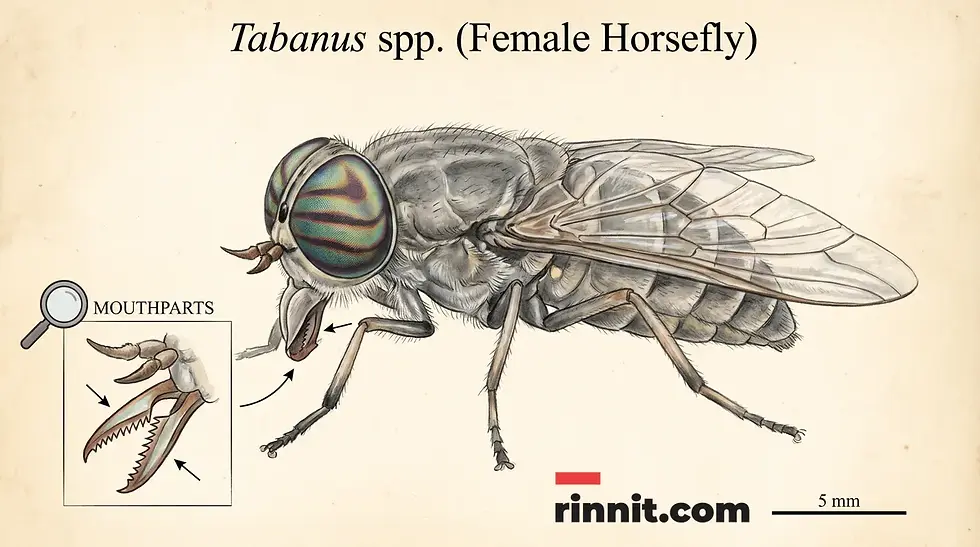
A horsefly bite is caused by the female horsefly (*Tabanus* spp.) as she feeds on the blood of mammals. These large flies are common near bodies of water, in warm, wet weather. Unlike mosquitoes, which pierce the skin and then suck blood, horseflies have well-developed mouthparts for tearing skin and a sponge-like tongue that soaks up the blood. [1]
This is why most people feel a horsefly bite as it happens. Adult horseflies are typically 10 to 30 millimeters long, with stout gray or blackish bodies and large eyes. They are fast fliers and most often attack moving, dark objects, which they see as potential food sources. [1]
Identifying the Symptoms
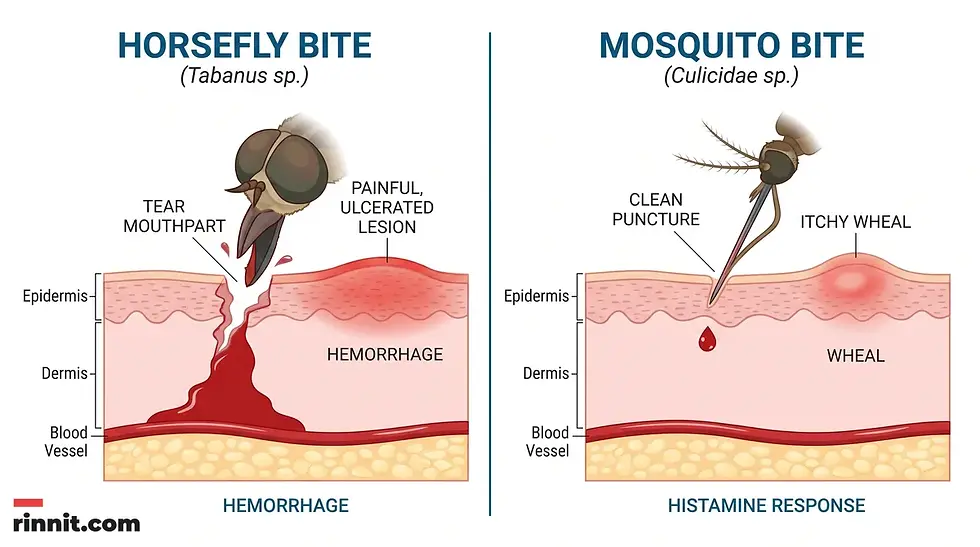
The first sign of a horsefly bite is pain. Because the bite tears the skin, you may notice a little blood. Afterward the area usually becomes a raised, red or discolored bump that is sensitive to touch. [1]
Localized reactions
In most cases horsefly bites heal and go away within a few days. In the meantime the site may be itchy or slightly swollen. Try not to scratch or pick at it, because breaking the skin raises the risk of introducing bacteria. [1]
Potential complications
Complications are rare, but they can include:
Allergic reactions: Horseflies release a protein that slows blood clotting, and some people react to it. Redness that spreads beyond the bite, itching, hives and swelling can result. [1] Case reports have linked anaphylaxis to horsefly salivary proteins. [4]
Infection (cellulitis): Signs include fever and chills, swelling or red streaking around the bite, warm skin, pus or drainage, and swollen lymph nodes. Infections need antibiotics. [1]
Tularemia: In very rare cases, horseflies can pass on this bacterial infection. Symptoms appear three to five days after exposure and can include fever, chills, headache, joint stiffness, muscle pain, and a bite mark that turns into an ulcer. [1]
Emergency alert: Call 911 or your local emergency number if you have signs of anaphylaxis, such as swelling of the lips, tongue or throat, trouble breathing or wheezing, dizziness or fainting, or stomach pain, vomiting or diarrhea. [1]
Treatment and Home Care
If you are bitten, wash the area with soap and water to lower the chance of infection. Most bites get better in a few days and can be managed at home. [1]
Relief strategies
To ease pain and swelling, place an ice pack wrapped in a cloth on the bite for at least 20 minutes and keep the area raised if you can. Over-the-counter NSAIDs can help with pain, and an antihistamine can help with itching. Follow the instructions on the label. [1]
Treatment step | Purpose |
Soap and water | Lowers the chance of bacterial infection |
Cold compress (wrapped in a cloth) | Reduces swelling and numbs pain |
Elevation | Helps limit swelling |
NSAIDs | Relieve pain |
Antihistamines | Relieve itching so you scratch less |
How to Prevent Horsefly Bites

Horseflies are most active in warm, wet weather and are common around marshlands and beaches or open areas next to woodlands, especially when it is not windy. [1]
Protective measures
Clothing: Wear light-colored long pants, long-sleeved shirts and a hat when you are outside in high-risk areas. [1]
Repellents: Apply a bug spray containing DEET, picaridin or lemon-eucalyptus to exposed skin. [1]
Location: Avoid marshlands and beaches or open areas next to woodlands, especially on still days. [1]
Pest control: If you notice more horseflies in your area, talk to a pest control specialist. [1]
Conclusion
Horsefly bites are painful but usually temporary. Keep the bite clean, avoid scratching and watch for signs of infection or a severe allergic reaction. If you notice spreading redness, fever or an ulcerated sore, see a healthcare provider. [1]
Protect yourself on your next outdoor adventure. Learn more about insect safety and skin health at Rinnit.com.
Frequently Asked Questions
Why are horsefly bites so much more painful than mosquito bites?
Horseflies have mouthparts built for tearing skin, which creates a pool of blood they soak up. Mosquitoes pierce the skin and then suck blood, which is why you can usually feel a horsefly bite as it happens but not a mosquito bite. [1]
How long does a horsefly bite last?
Most bites heal within a matter of days, as long as they do not become infected. [1]
Can horseflies bite through clothing?
Horseflies prefer exposed skin. Wearing light-colored long sleeves, long pants and a hat helps protect you. [1]
What is the scientific name of the fly that causes these bites?
Should I see a doctor for a horsefly bite?
See a healthcare provider if you develop signs of an infection (fever, pus, red streaking), a worsening allergic reaction, or symptoms of tularemia such as fever and a bite that becomes an ulcer. [1]
Are horseflies more active at certain times of the year?
Horseflies are most active in warm, wet weather, which usually means late spring and summer. [1]
What is the sponge-like tongue used for?
After the fly tears the skin, its sponge-like tongue soaks up the blood that pools at the surface. [1]
Do male horseflies bite humans?
No. Male horseflies feed mainly on pollen and plant nectar. Only females bite, because they need blood to stimulate egg production. [1]
Can a horsefly bite cause a fever?
A fever is not expected from the bite itself. It is more often a sign of a skin infection or of tularemia, and you should see a provider if it happens. [1]
Is it safe to put ice directly on the skin?
No. Wrap the ice pack in a cloth and apply it for at least 20 minutes to help with swelling without risking skin damage from the cold. [1]
What is cellulitis?
Cellulitis is a bacterial skin infection that can develop if a bite is scratched or not kept clean. It needs treatment with antibiotics. [1]
Why do horseflies chase people?
Horseflies are fast fliers that most often go after moving, dark objects, which they treat as potential food sources. [1]
Can I use vinegar on a horsefly bite?
Some people use home remedies, but the recommended care is washing with soap and water, a cold compress and, if needed, an NSAID or antihistamine. [1]
What does an infected bite look like?
Signs include fever and chills, swelling, discoloration or red streaking around the bite, warmer-than-usual skin, pus or drainage, and swollen lymph nodes near the bite. [1]
Are horsefly bites common in cities?
Horsefly bites are more common if you live near livestock, farms, woodlands or bodies of water, because horseflies live near water and mammals. [1]
References
Cleveland Clinic. Horsefly Bite. Cleveland Clinic. Last updated February 12, 2024. https://my.clevelandclinic.org/health/diseases/horsefly-bite
Strother S. Genus Tabanus. Tabanids (horseflies). What is this insect and how does it affect man? Dermatol Online J. 1999;5(2):6. PMID 10673459. https://pubmed.ncbi.nlm.nih.gov/10673459/
Vora PS, Rohr B. Horse Flies: Identification, Bite Reactions, and Clinical Management. Cutis. 2026;117(6):186-187. PMID 42594391. https://doi.org/10.12788/cutis.1398
Hemmer W, Focke M, Vieluf D, et al. Anaphylaxis induced by horsefly bites: identification of a 69 kd IgE-binding salivary gland protein from Chrysops spp. (Diptera, Tabanidae) by western blot analysis. J Allergy Clin Immunol. 1998;101(1 Pt 1):134-6. PMID 9449516. https://doi.org/10.1016/S0091-6749(98)70208-8
Boisset S, Caspar Y, Sutera V, et al. New therapeutic approaches for treatment of tularaemia: a review. Front Cell Infect Microbiol. 2014;4:40. PMID 24734221. https://doi.org/10.3389/fcimb.2014.00040
This article is for general educational purposes only and is not a substitute for professional medical advice, diagnosis, or treatment. Always seek the advice of your physician or other qualified healthcare provider with any questions you may have about a medical condition. Never disregard professional medical advice or delay seeking care because of something you have read here. If you think you may have a medical emergency, call your doctor or emergency services immediately.



Comments