Haphephobia (Fear of Being Touched)

Updated: 3 days ago
Medically reviewed by Dr. Baraa Alnahhal, MD · Last reviewed: October 2026
Quick Answer
What is haphephobia? Haphephobia is a specific anxiety disorder characterized by an overwhelming fear of physical contact [1]. While many people prefer personal space, individuals with haphephobia experience significant distress, panic attacks, and physical symptoms like hyperventilation or fainting when touched [1]. It is often related to other conditions such as PTSD or OCD [1] and requires specialized therapeutic intervention to manage.
What the research says
Exposure-based therapy works well across phobias. A meta-analysis of 30 randomized trials (1,057 participants) of virtual reality exposure therapy for anxiety-related disorders, 14 of them for specific phobias, found a large benefit versus waitlist (effect size g = 0.90) and no meaningful difference versus in-person exposure (g = −0.07) (Carl et al., Journal of Anxiety Disorders, 2019) [3].
Technology-assisted exposure holds up against the gold standard. A systematic review of 9 randomized trials (371 participants) comparing virtual reality with in-person exposure for specific phobia, social phobia, and agoraphobia found large effects for both, with a small, non-significant difference between them (g = −0.20 overall; −0.15 in specific phobia) (Wechsler et al., Frontiers in Psychology, 2019) [4].
A caveat on the evidence. These trials studied phobias in general, not fear of touch specifically, so they support exposure therapy as a treatment principle rather than quantifying results for haphephobia itself.

Key Takeaways
Feature | Description |
Medical Definition | An intense, irrational fear of being touched by anyone [1]. |
Also Known As | Aphephobia, Aphenphosmphobia, Chiraptophobia, or Thixophobia [1]. |
Common Symptoms | Panic attacks, racing heart, sweating, hyperventilation, and nausea [1]. |
Primary Treatments | Exposure therapy, CBT, EMDR, and hypnotherapy [1]. |
Success Rate | ~90% success rate with consistent exposure therapy [1]. |
Related Conditions | PTSD, OCD, agoraphobia, and mysophobia (fear of germs) [1]. |
What are the symptoms of haphephobia (fear of being touched)?
The distress caused by haphephobia is not merely a preference for personal space; it is a clinical condition that triggers significant physical and emotional reactions. These symptoms can occur even when the person knows the touch poses no actual threat [2].
Physical Reactions
When a person with haphephobia is touched or even thinks about being touched, their body may enter a "fight or flight" state, leading to:
Cardiovascular Issues: Increased heart rate and heart palpitations [1].
Respiratory Distress: Hyperventilating or feeling unable to catch one's breath [1].
Skin Changes: Flushed skin, excessive sweating, or the sudden appearance of hives [1].
Gastrointestinal Upset: Nausea or vomiting [1].
Neurological Impact: Tremors, uncontrollable shaking, or fainting (syncope) [1].
Impact on Children
Children may not be able to articulate their fear, instead showing distress through behavioral changes:

What causes haphephobia, and who is at risk?
Haphephobia rarely has a single, clear cause [1]. It often develops from a combination of genetic, environmental, and psychological factors.
Traumatic Experiences: Many cases stem from a history of negative experiences, such as sexual abuse, assault, or other physical trauma (often linked to PTSD) [1].
Family History: Individuals with a family history of anxiety disorders or specific phobias are at a higher risk [1].
Related Mental Health Issues: The fear may be a symptom of mysophobia (fear of germs), ochlophobia (fear of crowds), or OCD (fear of losing control) [1].
Neurodiversity: Research indicates that the brains of individuals with autism may respond to physical touch in a way similar to those with haphephobia [1].
How is haphephobia diagnosed?
Haphephobia is diagnosed by a healthcare provider or mental health professional who looks at triggers, how long the fear has lasted and how severe it is [1]. The evaluation typically focuses on:
Triggers: Identifying exactly when the fear arises (e.g., touch from strangers vs. family) [1].
Duration: Symptoms must typically last for six months or longer to be classified as a phobia [1].
Severity: Assessing how much the fear interferes with daily activities, work, and personal relationships [1].
Distinction: Ensuring the fear is not caused by allodynia (physical pain from touch) or other medical conditions [1].
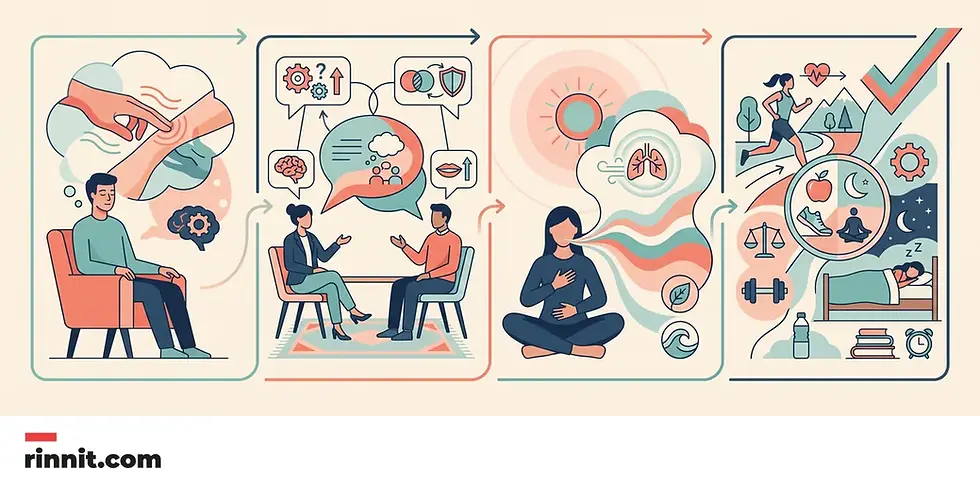
What are the treatment options for haphephobia?
The goal of treatment is to reduce the intensity of the fear so it no longer dictates the individual's life. A multi-faceted approach is often most effective.
Therapeutic Approaches
Exposure Therapy: This is the most common and successful treatment. It involves gradually introducing the concept of touch—starting with imagining a touch from a trusted person and slowly progressing to actual physical contact [1].
Cognitive Behavioral Therapy (CBT): Helps patients identify irrational thoughts about touch and replace them with more balanced, rational perspectives [1].
EMDR: Eye Movement Desensitization and Reprocessing is particularly effective for those whose haphephobia is rooted in past trauma [1].
Hypnotherapy: Used to help patients reach a state of intense focus where they are more open to processing their fears [1].
Lifestyle and Coping Strategies
While therapy is the primary treatment, healthy habits can help manage general anxiety levels:
Conclusion
Haphephobia is a significant challenge that can lead to social isolation and depression if left untreated [1]. However, it is a highly treatable condition. With the right professional support and a commitment to therapy, most people can reclaim their comfort with physical contact and build healthier, more fulfilling relationships.
Related Reading
Frequently Asked Questions
What is haphephobia?
Haphephobia is an intense, irrational fear of being touched.
Is haphephobia the same as being shy?
No, it is a clinical anxiety disorder involving extreme distress.
What are other names for it?
Aphephobia, Aphenphosmphobia, Chiraptophobia, and Thixophobia.
Does it only apply to strangers?
No, it can include fear of touch from friends and family.
Can it be specific to one gender?
Yes, some people only fear touch from one specific sex.
Is it a physical condition?
No, it is psychological, though it causes physical symptoms.
What is allodynia?
Allodynia is a condition where physical touch causes actual physical pain.
How is it different from autism?
While some people with autism dislike touch, they are distinct conditions.
Can trauma cause haphephobia?
Yes, it is often linked to past physical or sexual abuse.
Is it related to OCD?
Yes, the fear of losing control or contamination can trigger it.
What are the physical symptoms?
Racing heart, sweating, shaking, and hyperventilation.
Can it cause fainting?
Yes, extreme distress can lead to syncope (fainting).
Do people with haphephobia have panic attacks?
Yes, the thought of touch can trigger intense panic.
How do children show haphephobia?
Through crying, clinging, or freezing when approached.
Is it a common phobia?
Phobias affect millions, though specific numbers for haphephobia vary.
How is it diagnosed?
By a mental health professional through interviews and symptom assessment.
What is the primary treatment?
Exposure therapy is considered the most effective.
How successful is exposure therapy?
Exposure therapy has about a 90% success rate.
What does CBT do for haphephobia?
CBT helps replace irrational thoughts with rational ones.
What is EMDR?
A therapy used to process traumatic memories that may cause the phobia.
Can medication help?
Yes, anxiety medications like Xanax or Valium can manage symptoms temporarily. These benzodiazepines carry an FDA boxed warning for misuse, addiction, dependence and dangerous withdrawal, and are especially risky with opioids or alcohol, so use them only short term as prescribed.
Are there natural ways to manage it?
Mindfulness, meditation, and exercise can help.
Does it ever go away on its own?
Haphephobia rarely resolves without some form of intervention or therapy.
Can it lead to depression?
Yes, untreated phobias can cause social isolation and depression.
Is it related to a fear of germs?
Yes, mysophobia is a common related condition.
Can it affect work life?
Yes, especially in jobs requiring close physical proximity to others.
How long does a diagnosis take?
Symptoms must usually persist for at least six months.
Can hypnotherapy work?
Yes, it is often used alongside other therapies.
Is it hereditary?
A family history of anxiety increases the risk.
Can I still have a relationship?
Yes, with treatment, many people manage their fear in relationships.
What is ochlophobia?
The fear of crowds, which often involves a fear of being touched.
Does caffeine make it worse?
Stimulants can increase the physical symptoms of anxiety.
Should I force myself to be touched?
No, exposure should be gradual and guided by a professional.
Can I use breathing techniques?
Yes, deep breathing can help manage immediate panic symptoms.
Is it related to agoraphobia?
Yes, the fear of panic in public can lead to both.
Do men get haphephobia?
Yes, though situational phobias are twice as common in women.
Can it cause hives?
Yes, intense stress can trigger physical skin reactions like hives.
What should I tell my friends?
It helps to explain that it is a medical condition, not a personal dislike.
Can it affect my sleep?
Anxiety related to the phobia can interfere with sleep quality.
Is it the same as a fear of intimacy?
Haphephobia and fear of intimacy are related but distinct; haphephobia is specifically about physical touch.
Can I use weighted blankets?
Some find them helpful for anxiety, but others may find the pressure triggering.
Does it affect all parts of the body?
Usually, though some may fear touch in specific areas more.
Can it be caused by a lack of touch in childhood?
Early developmental factors can play a role.
Is there a support group?
Many online and in-person groups exist for anxiety and phobias.
What is the first step to recovery?
Acknowledging the fear and seeking professional help.
Can I take a self-test?
While online tests exist, only a professional can provide a diagnosis.
Does it get worse with age?
Without treatment, symptoms can become more ingrained.
Can I travel with haphephobia?
Crowded planes or buses can be very challenging without management strategies.
Is it a disability?
If severe enough to prevent work, it may be considered a disability in some regions.
Where can I find a therapist?
Look for specialists in anxiety disorders or exposure therapy.
Disclaimer: The information provided in this article is for educational purposes only and should not be considered medical advice. Always consult with a qualified healthcare professional before beginning any new treatment or exercise program.
References
Cleveland Clinic. Haphephobia (Fear of Being Touched). Cleveland Clinic. Last updated October 22, 2021. https://my.clevelandclinic.org/health/diseases/21964-haphephobia-fear-of-being-touched
National Institute of Mental Health. Specific Phobia. NIMH. Accessed October 30, 2026. https://www.nimh.nih.gov/health/statistics/specific-phobia
Carl E, Stein AT, Levihn-Coon A, et al. Virtual reality exposure therapy for anxiety and related disorders: a meta-analysis of randomized controlled trials. Journal of Anxiety Disorders. 2019;61:27-36. PMID 30287083. https://doi.org/10.1016/j.janxdis.2018.08.003
Wechsler TF, Kümpers F, Mühlberger A. Inferiority or even superiority of virtual reality exposure therapy in phobias? A systematic review and quantitative meta-analysis on randomized controlled trials specifically comparing the efficacy of virtual reality exposure to gold standard in vivo exposure in agoraphobia, specific phobia, and social phobia. Frontiers in Psychology. 2019;10:1758. PMID 31551840. https://doi.org/10.3389/fpsyg.2019.01758



Comments