Generalized Pustular Psoriasis (GPP): Symptoms, Causes, Diagnosis, Treatment, and Outlook — What You Need to Know

Updated: 2 days ago
Medically reviewed by Dr. Baraa Alnahhal, MD · Last reviewed: September 2026
TL;DR
Generalized Pustular Psoriasis (GPP), also known as von Zumbusch psoriasis, is a rare and potentially life-threatening autoinflammatory disease. Unlike common plaque psoriasis, GPP is characterized by the sudden appearance of pus-filled bumps (pustules) on inflamed, painful skin. These pustules can merge into large "lakes" of pus, often accompanied by systemic symptoms like fever, chills, and extreme fatigue. GPP is driven by abnormal immune system activity, frequently linked to variations in the IL36RN gene. Because it can lead to severe complications such as sepsis and organ failure, a GPP flare is considered a medical emergency requiring immediate hospital treatment. While there is no cure, advanced therapies like IL-36R inhibitors can manage symptoms and reduce the frequency of flares.
LIFE-THREATENING MEDICAL EMERGENCY Generalized Pustular Psoriasis (GPP) can lead to fatal complications within hours or days. Seek emergency medical care immediately if you have a sudden skin rash accompanied by any of the following: • Fever and chills • Shortness of breath or chest pain • Rapid heart rate (palpitations) • Severe abdominal pain, nausea, or vomiting • Confusion or mental changes • Decreased urination or jaundice (yellow skin/eyes)
Quick Answer: What is GPP?
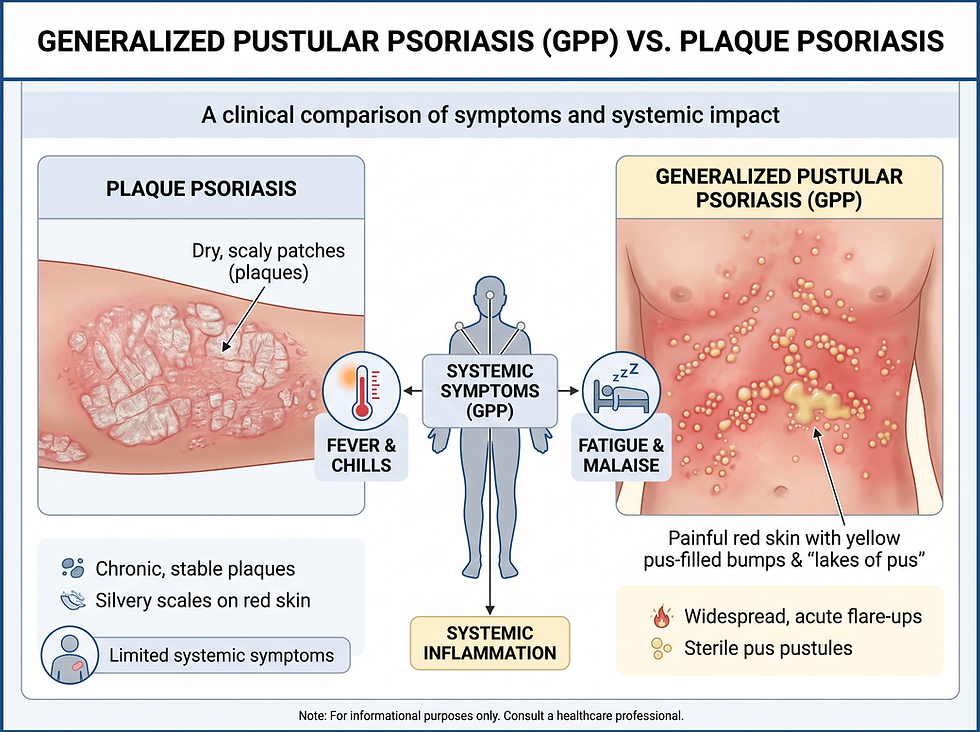
Generalized Pustular Psoriasis (GPP) is a rare, serious autoinflammatory condition that causes scaly, bright red plaques and pus-filled bumps (pustules) to develop across large areas of the body. While it shares the "psoriasis" name, research suggests it is a unique disease driven by different genetic pathways, specifically the IL36RN gene. GPP symptoms often appear suddenly and can cause significant internal inflammation, leading to muscle aches, high fever, and exhaustion. In the U.S., it affects approximately 1 in 10,000 people. Due to the risk of systemic complications like blood infections (sepsis) and heart, liver, or kidney failure, patients experiencing a flare often require intensive hospital monitoring. Treatment focuses on calming the immune system through biologics, oral medications, and supportive care.
What Is Generalized Pustular Psoriasis?
GPP is a systemic autoinflammatory disease that affects both the skin and internal organs. It is distinguished by the rapid development of sterile pustules on a background of inflamed skin.
Feature | Description |
Alternate Name | Von Zumbusch Psoriasis |
Disease Type | Autoinflammatory (Immune-mediated) |
U.S. Prevalence | ~1 in 10,000 people |
Primary Target | Adults aged 40 to 60 (slightly more common in females) |
Key Skin Sign | "Lakes of pus" (merging pustules) |
Severity | Medical Emergency |
Symptoms of GPP
GPP symptoms can be unpredictable, appearing suddenly and sometimes disappearing just as quickly, only to return weeks later. The disease often follows a cycle of flares and remission.
Skin and Systemic Symptoms
Burning Sensation: The affected skin often feels tender, hot, and painful.
Pustules: Small pus-filled bumps that may appear on existing plaques or new skin.
Pus "Lakes": Pustules that join together to form large, fluid-filled areas.
Systemic Inflammation: High fever, chills, and muscle weakness.
Extreme Fatigue: A level of exhaustion that goes beyond normal tiredness.
Joint Pain: Inflammation can also affect the joints, causing discomfort and stiffness.
Causes and Triggers
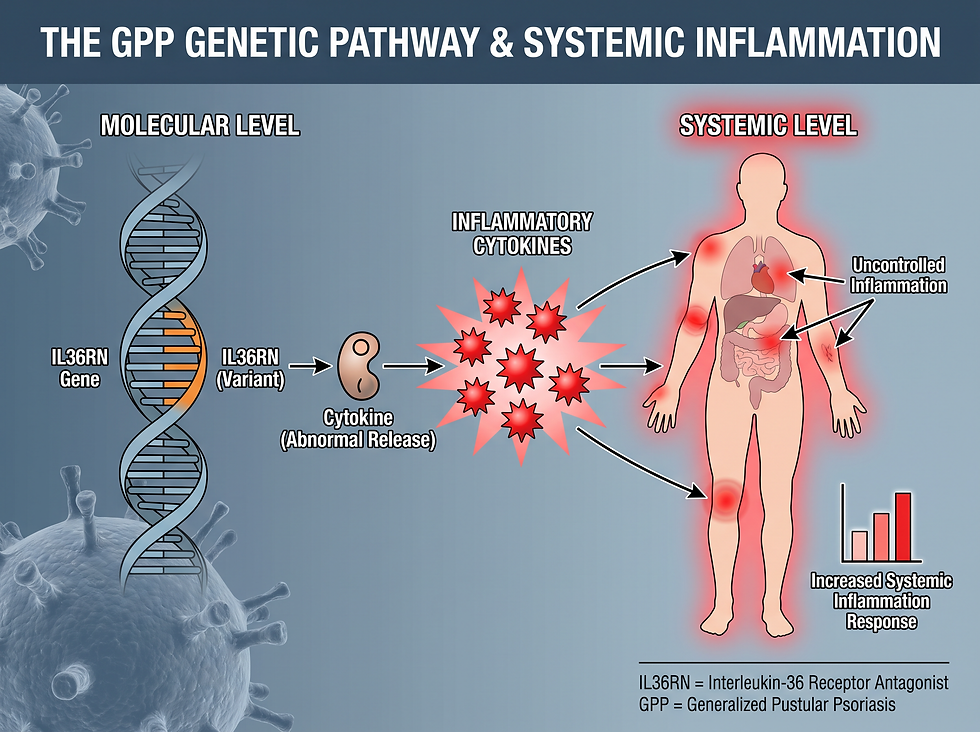
GPP occurs when the immune system malfunctions, leading to excessive inflammation. This is often rooted in genetic variations that disrupt the body's ability to manage inflammatory proteins.
The Genetic Link
The most common cause is a variation in the IL36RN gene. This gene provides instructions for cytokines, which are proteins that regulate inflammation. A mutation here leads to uncontrolled inflammatory signals, triggering the GPP response.
Common GPP Triggers
Trigger Category | Examples |
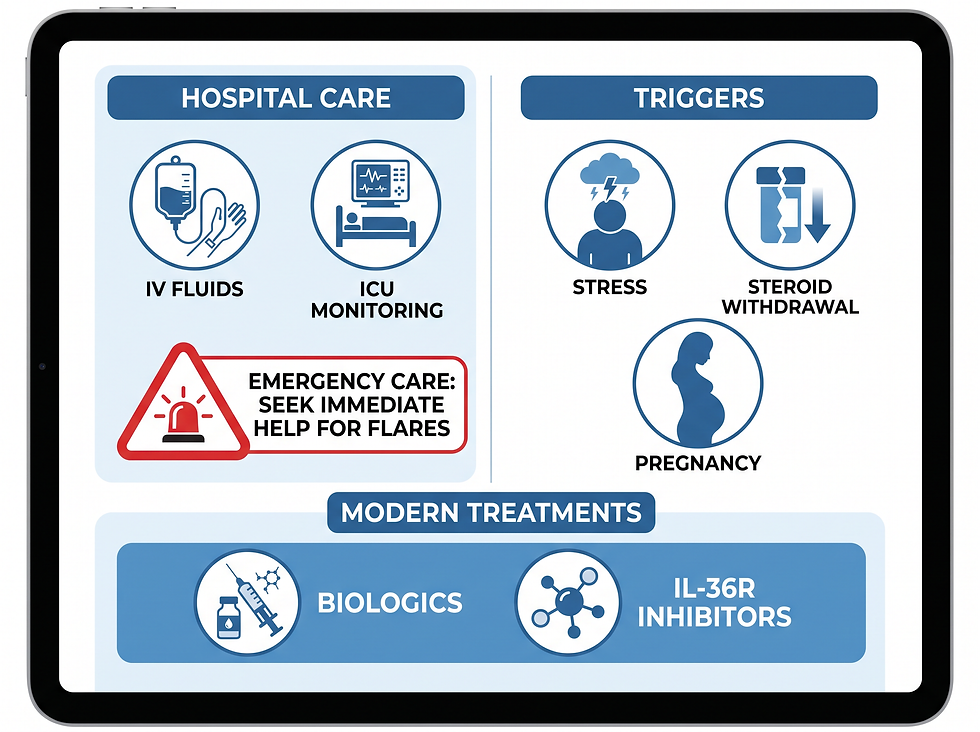
Medications | Sudden withdrawal of corticosteroids (e.g., prednisone). |
Infections | Bacterial or viral illnesses can spark a flare. |
Hormonal Changes | Pregnancy and menstruation are known triggers. |
Environmental | Excessive sun exposure, sunburns, or smoking. |
Biological Stress | High stress levels or low calcium levels (hypocalcemia). |
Potential Complications
If GPP is not treated promptly in a hospital setting, it can lead to catastrophic systemic failures.
Septicemia: A life-threatening blood infection (sepsis).
Hypotension: A sudden, dangerous drop in blood pressure.
Hypovolemia: Low fluid volume in the body, leading to shock.
Organ Failure: Acute failure of the liver, kidneys, or heart.
Pregnancy Risks: Preterm birth, placental insufficiency, and neonatal death.
Diagnosis of GPP
Healthcare providers use a combination of physical examination, history, and laboratory tests to confirm GPP and rule out other conditions.
Physical Exam: Checking vital signs and the characteristic "lake of pus" patterns.
Health History: Reviewing family history of psoriasis and recent medication changes (especially steroids).
Skin Biopsy: Removing a small tissue sample to confirm the presence of GPP and exclude infections.
Blood Tests: Monitoring for electrolyte imbalances, elevated white blood cell counts, and abnormal liver enzymes.
Treatment and Management
GPP requires a two-stage treatment approach: stabilizing the patient's vital signs and then targeting the underlying immune response.
Emergency Stabilization
Patients often require hospitalization, sometimes in the ICU, for:
IV Fluids: To correct dehydration and electrolyte imbalances.
Fever Management: Medications to control high body temperature and pain.
Antibiotics: Used if a secondary bacterial infection is suspected.
Long-Term GPP Therapy
Therapy Type | Specific Treatments |
Biologics | IL-36R inhibitors (specifically designed for GPP), TNF inhibitors. |
Oral Medications | Acitretin, cyclosporine, and methotrexate. |
Topical Agents | Corticosteroid creams, Vitamin D analogues, tacrolimus. |
Outlook and Prognosis
There is currently no cure for GPP, and the disease is typically chronic. Flares can last from weeks to months, followed by periods of remission that may last for years. However, the development of targeted biologics has significantly improved the outlook, allowing many patients to manage their symptoms and reduce the risk of fatal complications.
When to See a Healthcare Provider
If you have been diagnosed with GPP or have a history of plaque psoriasis, you must be vigilant for new skin changes.
Contact a Provider If: | Seek Emergency Care (911) If: |
You notice new, scaly red patches | You have a sudden rash with high fever |
Your existing psoriasis is changing | You experience shortness of breath |
You identify a potential new trigger | You feel confused or peeing less than usual |
You are planning a pregnancy | You have chest pain or heart palpitations |
A Note from the Care Team
"Generalized pustular psoriasis is a rare but serious autoinflammatory disease. It causes pustules on inflamed skin patches that can go away and come back. Without treatment, it can cause severe and potentially fatal complications. If you have GPP, you need treatment at a hospital. You may even need round-the-clock monitoring in an intensive care unit (ICU). GPP can be overwhelming, but providers will do everything they can to protect your overall health, treat inflammation and reduce how often it comes back." [1]
FAQ: Frequently Asked Questions
Is GPP contagious?
No. GPP is an autoinflammatory disease caused by the immune system and genetics; it cannot be spread from person to person. [1]
What is the difference between GPP and plaque psoriasis?
Plaque psoriasis causes dry, silver-scaled patches. GPP causes painful, inflamed skin with pus-filled bumps and systemic symptoms like fever. [1]
Why is steroid withdrawal a trigger?
Stopping oral steroids like prednisone too quickly can cause the immune system to "rebound," triggering a severe GPP flare. [1]
Can children get GPP?
While it most commonly affects adults aged 40-60, GPP can affect individuals of any age, including children. [1]
What are "lakes of pus"?
This refers to the way individual pustules merge together to cover large areas of the skin with a layer of pus. [1]
Is GPP the same as an infection?
No. The pustules in GPP are "sterile," meaning they do not contain bacteria or viruses, though a flare can lead to a secondary blood infection. [1]
What is the IL-36 pathway?
It is a specific inflammatory signaling route in the body. In GPP, this pathway is overactive, leading to the characteristic skin and organ inflammation. [1]
Can GPP be cured?
There is no cure, but modern treatments can put the disease into long-term remission. [1]
What should I do if I'm pregnant and have GPP?
You must be monitored closely by both a dermatologist and an obstetrician, as GPP poses significant risks to both the parent and the baby. [1]
Does GPP cause permanent scarring?
While the inflammation is severe, the skin can often heal without permanent scarring if the flare is managed properly and infections are avoided. [1]
What is von Zumbusch psoriasis?
It is another name for Generalized Pustular Psoriasis, named after the dermatologist who first described the condition. [1]
How common is GPP worldwide?
It is estimated to affect between 1 and 7 out of every 1 million people globally. [1]
Why do I need to be in the ICU for a flare?
The ICU provides the constant monitoring needed to catch early signs of heart failure, sepsis, or a dangerous drop in blood pressure. [1]
Can sun exposure help GPP?
No. Unlike some other forms of psoriasis, sun exposure and sunburns are known triggers that can worsen a GPP flare. [1]
What are biologics?
Biologics are advanced medications made from living cells that target specific parts of the immune system responsible for GPP inflammation. [1]
Related Reading on Rinnit
References
Medical Disclaimer: The information provided in this article is for educational purposes only and should not be considered medical advice. Always seek the advice of a qualified healthcare provider with any questions you may have regarding a medical condition. If you are experiencing a medical emergency, call 911 or your local emergency services immediately.
Comments