Fungal Infections (Mycosis): Symptoms, Causes, Diagnosis, Treatment and Outlook — What You Need to Know

Updated: 2 days ago
Medically reviewed by Dr. Baraa Alnahhal, MD · Last reviewed: September 2026
TL;DR
Fungal infections, medically termed mycosis, are conditions caused by various types of fungi, including yeasts and molds. These infections can range from superficial issues affecting the skin and nails to life-threatening invasive diseases that impact internal organs like the lungs and brain. While common infections like ringworm or athlete's foot are typically mild, individuals with weakened immune systems face a significantly higher risk of severe complications. Treatment primarily involves antifungal medications delivered through various forms, including topicals, oral pills, or IV therapy. Early diagnosis and consistent treatment are essential for preventing serious health outcomes. [1]
Quick Answer: What are Fungal Infections (Mycosis)?
Fungal infections occur when harmful fungi, such as yeast or mold, invade and multiply in or on the body. They are broadly categorized into three types: superficial (affecting skin, nails, and mucous membranes), subcutaneous (under the skin), and deep or invasive (affecting internal organs). Common symptoms include itching, redness, discolored nails, or respiratory issues like coughing and shortness of breath. While many fungi live naturally on the body without issue, they can overgrow due to environmental factors, antibiotic use, or immune suppression. Diagnosis often involves clinical exams and laboratory testing of tissue or fluid samples. Treatment centers on antifungal medications tailored to the infection's location and severity. [1]
Medical Emergency Warning: Invasive fungal infections can lead to life-threatening complications. Seek immediate medical attention if you experience signs of sepsis, acute respiratory distress syndrome (ARDS), respiratory failure, or seizures. Early intervention is critical for survival in deep fungal diseases. [1]
What Are Fungal Infections?
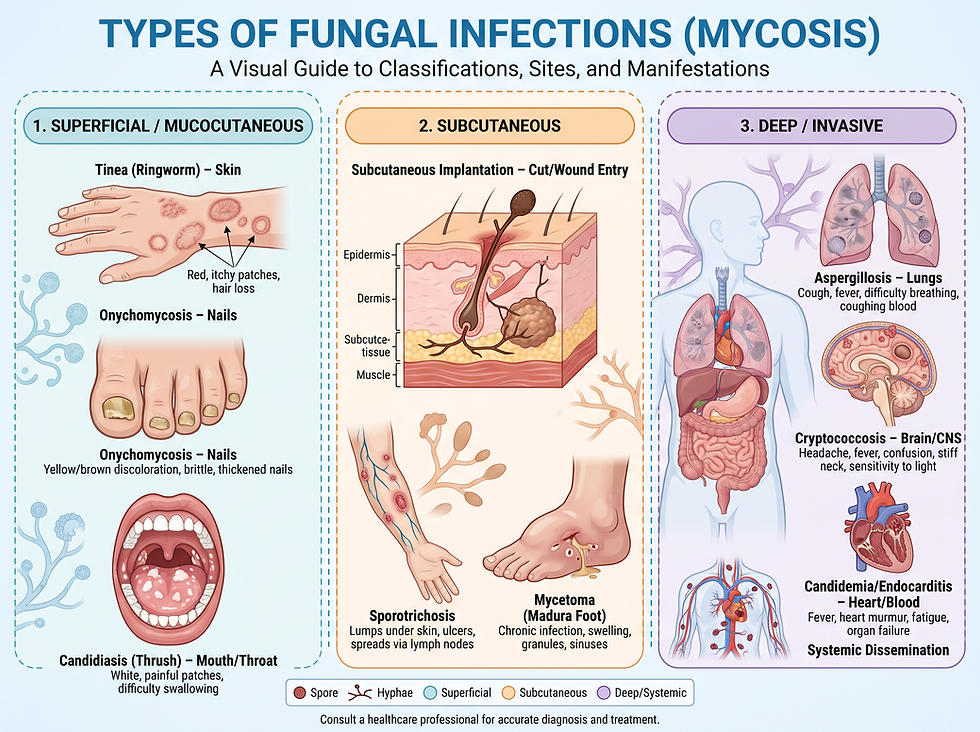
Fungal infections, also known as mycosis, encompass any disease or condition resulting from a fungus. These organisms operate differently from plants or animals, spreading through growth or by releasing microscopic spores into the air. While millions of fungi exist globally, only a small fraction are known to cause illness in humans. Many fungi reside naturally in the human microbiome, particularly on the skin and within the gastrointestinal tract, but can become problematic when they overgrow or enter the body through injuries. [1]
Infection Type | Description | Common Targets |
Superficial / Mucocutaneous | Affects the surface of the body. | Skin, nails, mouth, throat, vagina. |
Subcutaneous | Located underneath the skin surface. | Dermis and deeper tissues (often via injury). |
Deep / Invasive | Located inside internal organs. | Lungs, brain, heart, urinary tract. |
Types of Fungal Infections
The classification of a fungal infection is determined by its location and the depth of tissue involvement.
Superficial Fungal Infections
These are the most common types of mycosis, typically affecting the skin, nails, and mucous membranes. While they cause significant discomfort, they are rarely life-threatening. Examples include:
Candidiasis: Yeast infections affecting the mouth, throat, or vagina.
Onychomycosis: Fungal infections that cause thickened or discolored fingernails and toenails.
Ringworm: A common skin infection that often appears as a circular, red rash.
[Tinea Versicolor](https://www.rinnit.com/post/tinea-versicolor-complete-guide): A condition causing small, discolored patches on the skin. [1]
Subcutaneous Fungal Infections
These infections develop when fungi enter the body through a cut or wound, often related to gardening or agricultural work. They are more prevalent in tropical and subtropical regions. Common examples include sporotrichosis, which is often contracted from thorns or soil. [1]
Deep (Invasive) Fungal Infections
Deep infections are the most serious form of mycosis, affecting organs such as the lungs, brain, or heart. These are most common in individuals with compromised immune systems.
Aspergillosis: An infection caused by Aspergillus mold, often affecting the lungs.
[Valley Fever](https://www.rinnit.com/post/valley-fever-symptoms-causes-treatment-guide) (Coccidioidomycosis): A respiratory infection found in specific geographic regions.
Histoplasmosis: A lung infection often linked to bird or bat droppings in the soil.
Mucormycosis: A rare but extremely serious and invasive fungal infection. [1]

Symptoms of Fungal Infections
The symptoms of a fungal infection vary widely depending on the type of fungus and the part of the body affected.
Skin and Mucous Membrane Symptoms
Superficial and subcutaneous infections often present with visible changes to the skin or nails:
Itching and Redness: Persistent soreness, redness, or a bumpy rash.
Nail Changes: Discolored (yellow, brown, or white), thick, or cracked nails.
Mouth and Throat: White patches, pain while eating, or a loss of taste.
Skin Lumps: Painless lumps forming under the skin surface. [1]
Respiratory and Systemic Symptoms
Invasive infections, particularly those in the lungs, can cause symptoms similar to other serious illnesses:
Cough: Persistent coughing, sometimes involving blood.
Breathing Issues: Shortness of breath and general tiredness.
Systemic Signs: Fever, night sweats, muscle aches, and joint pain. [1]
Organ-Specific Symptoms
If the infection spreads to other areas, symptoms become more localized to those systems:
Brain: Headache, neck pain, confusion, and sensitivity to light.
Eyes: Redness, pain, blurred vision, and discharge.
Intestinal Tract: Nausea, vomiting, and abdominal pain.
Sinuses: Nasal congestion, facial swelling, and face pain. [1]
Causes and Risk Factors
Yeast, molds, and other environmental fungi are the primary causes of mycosis. Most of these organisms do not cause illness, but specific types are known human pathogens.
Common Fungal Pathogens
Dermatophytes: Fungi that live off keratin in the hair, nails, and outer skin layer.
Candida: A yeast that lives naturally on the body but can cause opportunistic infections if it overgrows.
Environmental Fungi: Organisms found in soil or water, such as Histoplasma and Aspergillus. [1]
How Fungal Infections Spread
Infections can be acquired through several pathways:
Environmental Exposure: Breathing in spores from soil or dust.
Direct Contact: Touching infected people, animals, or contaminated surfaces (like locker room floors).
Skin Injury: Fungi entering through cuts, scrapes, or thorn pricks.
Microbiome Disruption: Taking antibiotics that kill beneficial bacteria, allowing yeast to overgrow. [1]
Risk Factors for Severe Infection
While anyone can get a fungal infection, certain factors increase the risk of invasive disease:
Weakened Immune System: Due to HIV/AIDS, cancer treatment, or organ transplants.
Chronic Conditions: Diabetes and poor circulation.
Environment: Living in or traveling to areas where specific environmental fungi are common. [1]
Diagnosis of Fungal Infections
Healthcare providers use various methods to diagnose mycosis, depending on the suspected location of the infection.
Diagnostic Method | Description |
Clinical Exam | Visual inspection of skin, nails, or mucous membranes. |
Tissue Samples | Collecting skin scrapings, nail clippings, or biopsies. |
Fluid Cultures | Testing blood, urine, sputum, or cerebrospinal fluid (CNS). |
Imaging | Using X-rays, CT scans, or MRIs to look for internal infections. |

Treatment and Management of Fungal Infections
Most fungal infections are curable with antifungal medications designed to kill the fungus or stop its growth. The specific treatment depends on the infection's severity and location.
Forms of Antifungal Medication
Topical: Creams, lotions, powders, and shampoos for skin and nail infections.
Oral: Pills or liquid medications for systemic or persistent infections.
IV Therapy: Intravenous medication delivered in a hospital setting for life-threatening invasive diseases.
Specialized: Eye drops, mouthwashes, or lozenges for localized internal infections. [1]
Complications and Outlook
Superficial infections generally have an excellent prognosis with consistent treatment. However, invasive fungal infections carry a high risk of serious complications, including hearing or vision loss, movement issues, and permanent organ damage. Adhering to the full course of prescribed medication is essential to prevent recurrence. When a fungal infection spreads into the bloodstream, it can trigger sepsis, a life-threatening emergency. [1]
Prevention Strategies
Reducing your risk of fungal infections involves maintaining good hygiene and protecting yourself from environmental exposures.
Keep Skin Dry: Dry yourself thoroughly after showering, especially in skin folds.
Protective Clothing: Wear shoes in public showers and locker rooms; wear gloves when handling soil or plants.
Manage Health: Keep chronic conditions like diabetes under control to support immune function.
Hygiene Habits: Avoid sharing personal items like towels, razors, or hairbrushes. [1]
Living With Fungal Infections
If you are currently treating a fungal infection, follow these steps to support recovery:
Complete Treatment: Never stop taking antifungal medication early, even if symptoms improve.
Monitor Symptoms: Watch for signs of worsening infection or spreading.
Follow-Up: Attend all scheduled appointments to ensure the infection is fully cleared. [1]
A Note from the Care Team
"Fungal infections can range from a minor annoyance to a serious health threat. While many are easily treated with over-the-counter or prescription topicals, invasive infections require intensive medical care. If you have a weakened immune system or persistent symptoms, early consultation with a healthcare provider is vital to ensure the correct antifungal approach." [1]
FAQ: Frequently Asked Questions
Are all fungal infections contagious?
No. While some skin infections like ringworm can spread through direct contact, many deep or invasive infections are acquired by breathing in spores from the environment and are not contagious between people. [1]
Can antibiotics cause fungal infections?
Yes. Antibiotics are designed to kill bacteria. In doing so, they can also kill the "good" bacteria that normally keep yeast populations in check, leading to an opportunistic fungal overgrowth. [1]
How do I know if my nail infection is fungal?
Fungal nail infections (onychomycosis) typically cause the nails to become thick, brittle, and discolored, often turning yellow, brown, or white. A healthcare provider can confirm this with a simple test. [1]
Is Valley Fever a type of fungal infection?
Yes. Valley Fever (coccidioidomycosis) is a respiratory infection caused by breathing in fungal spores found in the soil of certain geographic regions, particularly the southwestern United States. [1]
Can fungal infections affect the brain?
Yes. Invasive fungal infections can spread to the brain and spinal cord, causing serious conditions like fungal meningitis. This is most common in individuals with severely weakened immune systems. [1]
Are over-the-counter (OTC) antifungal creams effective?
Many superficial skin infections respond well to OTC treatments. However, you should consult a healthcare provider to ensure you are treating the correct condition and to determine if a stronger prescription is needed. [1]
What is the difference between yeast and mold?
Both are types of fungi. Yeast is typically single-celled and can live naturally on the body, while mold is multicellular and often found in the environment. Both can cause infections in humans. [1]
Can pets spread fungal infections to humans?
Yes. Certain fungal infections, most notably ringworm, can be transmitted from infected animals to humans through direct contact. [1]
Why are fungal infections more dangerous for people with diabetes?
Diabetes can affect circulation and immune response, making it easier for fungi to thrive and harder for the body to fight off the infection, especially in the feet and skin. [1]
How long does treatment for invasive fungal infections last?
The duration varies significantly depending on the type of fungus and the organ affected. Some invasive treatments may last for weeks or even months of intensive therapy. [1]
Related Reading on Rinnit
Sepsis: Complete Guide to Symptoms, Causes, Risks, and Treatment: understanding the life-threatening response to infection.
Valley Fever Explained: Symptoms, Causes, Treatment, and Who Is at Risk: regional risks and respiratory symptoms.
Tinea Versicolor: Complete Guide to Symptoms, Causes, and Treatment: a common superficial fungal skin condition.
Further Reading
Cleveland Clinic: Fungal Infections (Mycosis) Overview
Mayo Clinic: Ringworm (Body) Symptoms and Causes
References
Cleveland Clinic. (2026). Fungal Infections (Mycosis). Retrieved from https://my.clevelandclinic.org/health/diseases/24401-fungal-infections-mycosis
Medical Disclaimer: The information provided in this article is for educational purposes only and is not intended as medical advice. Always seek the advice of a qualified healthcare provider with any questions you may have regarding a medical condition. Never disregard professional medical advice or delay in seeking it because of something you have read in this article.
Comments