Fluorosis: Symptoms, Causes, Diagnosis, Treatment and Outlook — What You Need to Know

Updated: 2 days ago
Medically reviewed by Dr. Baraa Alnahhal, MD · Last reviewed: September 2026
TL;DR
Fluorosis is a medical condition caused by the chronic overexposure to fluoride, a mineral that is beneficial in small amounts but harmful in excess. The condition primarily manifests in two forms: dental fluorosis, which causes permanent tooth discoloration and pitting in children under eight, and skeletal fluorosis, which leads to debilitating bone and joint deformities in adults. While dental fluorosis is largely a cosmetic concern affecting approximately 23% of the U.S. population, skeletal fluorosis is a severe systemic disease endemic to regions with high natural fluoride levels in groundwater. Treatment focuses on identifying and removing the source of excess fluoride, combined with cosmetic dentistry for tooth restoration and symptom management for bone-related complications.
Quick Answer: What is Fluorosis?
Fluorosis is a health condition that occurs when a person ingests too much fluoride over an extended period. Fluoride is a naturally occurring mineral that helps prevent tooth decay at optimal levels (recommended at 0.7 mg/L in drinking water), but it becomes toxic at higher concentrations. Dental fluorosis occurs only during the first eight years of life while permanent teeth are forming, resulting in white flecks, brown spots, or enamel pitting. Skeletal fluorosis, caused by years of overexposure, leads to abnormal bone hardening (osteosclerosis), chronic joint pain, and spinal deformities. While rare in the United States, skeletal fluorosis is a major public health issue in parts of Asia and Africa.
What Is Fluorosis?
Fluorosis is a systemic condition resulting from the long-term ingestion of excessive fluoride. Fluoride is widely recognized for its ability to strengthen tooth enamel and reduce the risk of cavities, but its safety depends entirely on the dosage. When the balance is tipped toward overexposure, the mineral begins to interfere with the normal mineralization processes of the teeth and bones.
The condition is categorized based on the biological systems it affects. Dental fluorosis is a developmental issue restricted to childhood, whereas skeletal fluorosis is a progressive disease that can affect individuals of any age who are exposed to toxic levels of fluoride over many years.
Feature | Dental Fluorosis | Skeletal Fluorosis |
Primary Target | Permanent tooth enamel. | Bones and joints. |
Critical Period | Birth to age 8. | Any age (chronic exposure). |
Main Symptom | White/brown spots, pitting. | Joint pain, stiffness, deformities. |
Health Impact | Primarily cosmetic. | Can lead to disability (arthritis). |
U.S. Prevalence | Common (~23% of population). | Extremely rare. |

Types and Severity of Fluorosis
The impact of fluorosis depends on the concentration of fluoride ingested and the duration of the exposure. Medical professionals use specific scales to categorize the severity of the condition.
Dental Fluorosis Severity
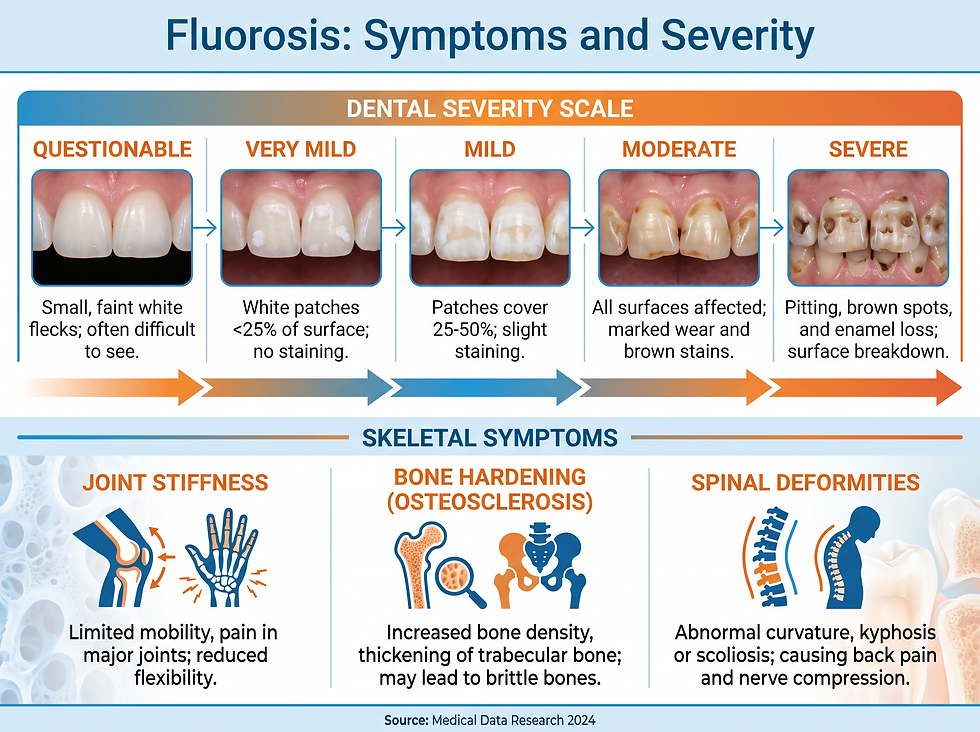
Dentists categorize dental fluorosis based on the percentage of the tooth surface affected by discoloration:
Questionable: Occasional white flecks or spots.
Very Mild to Mild: White opaque areas covering less than 25% to 50% of the tooth surface.
Moderate: Brown or white discoloration covering more than 50% of the surface.
Severe: All tooth surfaces are affected, often accompanied by physical pitting (depressions) in the enamel.
Skeletal and Non-Skeletal Fluorosis
Skeletal fluorosis is a progressive condition that often begins with non-skeletal symptoms affecting the digestive system.
Non-Skeletal (Early Stage): Abdominal pain, bloating, constipation, or diarrhea.
Skeletal (Advanced Stage): Abnormal bone hardening (osteosclerosis), joint stiffness, and spinal cord compression.
Stage | Symptoms | Biological Impact |
Early | Nausea, vomiting, muscle wasting. | Gastrointestinal distress. |
Intermediate | Chronic joint and lower back pain. | Early joint hardening. |
Advanced | Bone fractures, spinal deformities. | Severe skeletal disability. |
Symptoms of Fluorosis
The symptoms of fluorosis vary widely depending on the type and stage of the condition. While dental fluorosis is painless, skeletal fluorosis can be extremely debilitating.
Dental Symptoms
The primary sign of dental fluorosis is tooth discoloration. This can appear as:
White flecks or lacy white lines.
Large white opaque spots.
Light to dark brown staining.
Physical pitting or rough patches on the enamel.
Skeletal and Systemic Symptoms
Skeletal fluorosis symptoms often mimic other conditions like arthritis:
Joint and Bone Pain: Persistent pain and stiffness in the joints and lower back.
Bone Deformities: Visible changes in the shape of the bones or spine.
Neurological Issues: Pain from spinal cord compression (myelopathy) or pinched nerves (radiculopathy).
Systemic Signs: Skin rashes, sleep disorders, and in some cases, mild cognitive impairment.
Causes and Risk Factors
Fluorosis is caused exclusively by the ingestion of excess fluoride over a long period. The specific source of the fluoride often depends on the individual's environment and habits.
Risk Factor | Details |
High Fluoride Water | Drinking water with concentrations above 0.7 mg/L. |
Toothpaste Habits | Children regularly swallowing large amounts of fluoride toothpaste. |
Infant Formula | Mixing fluoridated formula with fluoridated water for long periods. |
Endemic Regions | Living in parts of India or China with high natural groundwater fluoride. |
Inhalant Abuse | Huffing fluorocarbons (sealants, air dusters). |
IMPORTANT SAFETY WARNING: Huffing fluorocarbons (inhalant abuse) is a significant risk factor for skeletal fluorosis and can lead to sudden death, arrhythmias, or seizures. If you or someone you know needs help with inhalant abuse, call SAMHSA’S National Helpline at 1-800-662-HELP (4357) for resources and support.
Diagnosis of Fluorosis
Diagnosing fluorosis requires a combination of clinical observation and specialized testing, especially for the skeletal form of the disease.
Dental Exam: A dentist can typically diagnose dental fluorosis during a routine checkup, sometimes using X-rays to rule out other enamel issues.
Imaging Tests: Skeletal fluorosis is diagnosed using X-rays, CT scans, and bone density tests (DXA) to look for osteosclerosis or deformities.
Laboratory Tests: Blood serum tests and urinalysis are used to measure the actual concentration of fluoride in the body.
Treatment and Management
Treatment for fluorosis focuses on two goals: correcting the aesthetic appearance of the teeth and stopping the progression of bone damage.
Dental Fluorosis Treatment
Cosmetic dentistry offers several ways to restore the appearance and function of affected teeth:
Teeth Whitening: Effective for mild cases to blend discoloration.
Dental Bonding: Applying a tooth-colored resin to cover spots or fill pits.
Veneers or Crowns: Custom shells or caps used for moderate to severe cases.
Microabrasion: Removing a tiny layer of enamel to eliminate superficial stains.
Skeletal Fluorosis Management
There is no specific cure to reverse bone damage already caused by skeletal fluorosis. Management involves:
Source Removal: Immediately switching to a low-fluoride water source.
Pain Management: Using medications and physical therapy to address joint and bone pain.
Nutritional Support: Ensuring adequate intake of calcium and Vitamin D.
Prevention Strategies
Preventing fluorosis is far more effective than treating it, especially during the critical years of childhood tooth development.
Monitor Water Levels: Ensure your drinking water is near the recommended 0.7 mg/L.
Supervise Toothbrushing: Use only a pea-sized amount of toothpaste for children and ensure they spit it out.
Formula Safety: If using fluoridated infant formula, mix it with non-fluoridated water to avoid cumulative overexposure.
Professional Guidance: Talk to your dentist about whether your child actually needs fluoride supplements.

Outlook and Prognosis
The outlook for dental fluorosis is excellent, as the condition is not painful and does not affect the health of the teeth; cosmetic treatments are highly successful. The prognosis for skeletal fluorosis depends on how early the condition is detected. While bone deformities may be permanent, stopping fluoride exposure can prevent further progression and help manage chronic pain.
Frequently Asked Questions
Can adults develop dental fluorosis?
No. Dental fluorosis only occurs while permanent teeth are still forming under the gums, which happens before the age of eight. Once the teeth have erupted, they are no longer susceptible to dental fluorosis.
Is fluoride in drinking water dangerous?
At the recommended level of 0.7 mg/L, fluoride is safe and effective at preventing cavities. It only becomes a health risk (fluorosis) when ingested in excessive amounts over long periods.
What are the first signs of skeletal fluorosis?
Early signs often include gastrointestinal issues like abdominal pain and bloating, followed by persistent joint pain and stiffness that may be mistaken for arthritis.
Does dental fluorosis make teeth weaker?
Generally, no. Mild to moderate fluorosis does not affect the strength or function of the teeth. However, severe fluorosis with significant pitting can make the enamel more vulnerable to wear.
How can I check the fluoride level in my water?
You can contact your local water utility for a water quality report or have your private well water tested by a certified laboratory.
Is skeletal fluorosis common in the United States?
No, skeletal fluorosis is extremely rare in the U.S. due to strictly regulated water fluoridation levels. It is much more common in regions like India and China.
Can toothpaste alone cause fluorosis?
Yes, if a child regularly swallows large amounts of fluoride toothpaste over a long period, it can contribute to the development of dental fluorosis.
What is the "Questionable" stage of fluorosis?
This is the mildest form where a dentist might see a few tiny white flecks, but the discoloration is so slight it is not definitively diagnosed as fluorosis.
Can skeletal fluorosis be reversed?
Bone deformities caused by skeletal fluorosis are generally permanent, but stopping the fluoride exposure can halt the progression of the disease.
What is the recommended fluoride level for drinking water?
The U.S. Department of Health and Human Services recommends a level of 0.7 milligrams per liter (mg/L).
Is skeletal fluorosis painful?
Yes, advanced skeletal fluorosis can cause chronic, severe pain in the joints and spine due to bone hardening and nerve compression.
Can infant formula cause fluorosis?
Formula itself is not the cause, but mixing fluoridated powder with fluoridated water can lead to a child ingesting too much fluoride during their critical development years.
What is osteosclerosis?
Osteosclerosis is the abnormal hardening and increased density of bone, which is a hallmark sign of skeletal fluorosis.
Does fluorosis affect the brain?
Some research suggests that severe fluoride overexposure may be linked to mild cognitive impairment, though more study is needed.
How does cosmetic bonding treat fluorosis?
A dentist applies a tooth-colored resin to the surface of the tooth, which is then hardened with a special light to hide discoloration and fill in pits.
Related Reading
References
U.S. Department of Health and Human Services. Fluoride Standards.
SAMHSA’s National Helpline for Inhalant Abuse.
WHO Reports on Endemic Fluorosis Regions.
Medical Disclaimer: The information provided in this article is for educational purposes only and should not be considered medical advice. If you have concerns about fluoride exposure or tooth discoloration, consult a qualified dentist or healthcare provider for diagnosis and treatment.
Comments