Flat Feet: When You Need Treatment — and When You Don't

Updated: 3 days ago
Medically reviewed by Dr. Baraa Alnahhal, MD · Last reviewed: October 2026
Quick Answer
Flat feet are a common condition in which the arches on the inside of the feet flatten under weight, also called progressive collapsing foot deformity. They are usually painless and need no treatment. When they hurt, arch or inner ankle pain may worsen with activity; arch supports, supportive shoes and physical therapy help, with surgery for persistent, limiting pain. [4] [5]
What the research says
Insoles reduced pain in children with flexible flatfoot, but the certainty is low. A network meta-analysis of 11 randomized trials (761 children) found that traditional insoles lowered pain scores by about 2.9 points compared with flat insoles (95% CI -3.73 to -2.11; very low-certainty evidence). Talus control insoles improved X-ray alignment, and a program of electrical stimulation plus corrective exercises improved the footprint measure of arch height (Lin et al., Physical Therapy, 2026).
Exercise can improve arch shape and function in adults with flexible flatfoot. A network meta-analysis of 11 randomized trials found that several exercise programs improved arch measures compared with controls, with the largest effects from programs combining posterior tibial muscle strengthening, hip muscle work, and overall lower-limb training (Jia et al., Scientific Reports, 2024).
The evidence for arch supports in flexible flatfoot is still thin. A systematic review of 8 studies (382 participants) could not pool results because each outcome rested on a single small study, and rated the certainty as very low for every outcome. The most consistent finding was mechanical: load shifted from the heel and lesser metatarsals to the inner midfoot, which is what an arch support is designed to do (Choi et al., Journal of Foot and Ankle Research, 2026).
What Are Flat Feet?
Flat feet is a common condition in which the arches on the inside of the feet flatten when weight is put on them. It is also known as progressive collapsing foot deformity. When people with flat feet stand up, their feet tend to point outward, and the arch falls, sometimes all the way to the floor.
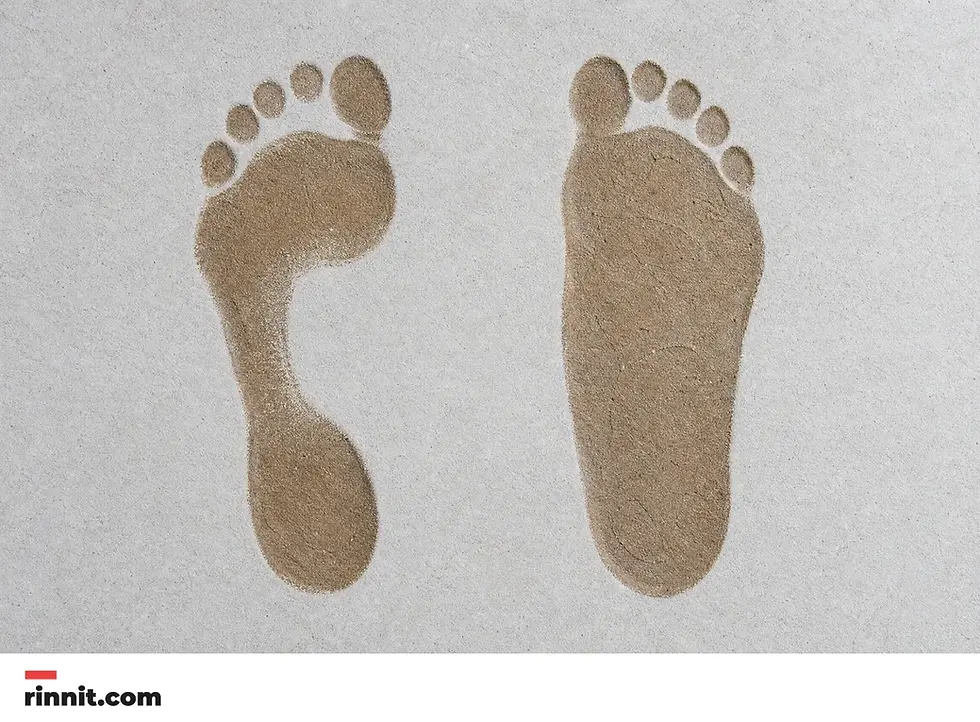
A useful way to spot it is the footprint test. In typical feet, the arch leaves a footprint with a missing band along the inner edge. In flat feet, the print shows almost the entire sole, because the arch leaves little or no gap.
Flat feet can occur when the arches never develop during childhood, or it can develop later in life after an injury or from the wear-and-tear of aging.
Here is the reassuring part: flat feet are usually painless. If you do not have pain, no treatment is necessary. If flat feet cause pain and limit your activities, an evaluation by a specialist may be warranted.
Symptoms: What Flat Feet Feel Like
Most people have no symptoms. Some people have foot pain, particularly in the arch area or along the inside of the foot and ankle, and swelling may occur along the inside of the ankle. The pain tends to follow a pattern:
Symptom pattern | What it looks like |
Activity-related pain | Pain worsens with activity |
Weak push-off | The foot feels weak when pushing off or standing on the toes |
Footwear-triggered pain | Pain is worse in shoes with little support, such as sandals, or when walking barefoot |
Inner ankle swelling | Swelling along the inside of the ankle |
When to see a doctor
Talk to your healthcare professional if you or your child has foot pain, particularly if it limits what you want to do.
What Causes Flat Feet?
Flat feet are not unusual in infants and toddlers, because the foot's arch has not yet developed. Most people's arches develop throughout childhood, but some people never develop arches. People without arches may or may not have symptoms.
Some children have flexible flat feet (flexible flatfoot). In this form, the arch is visible when the child is sitting or standing on tiptoes but disappears when the child stands flat. Most children outgrow flexible flat feet.
People who had arches in childhood can still develop flat feet later in life. Arches can collapse abruptly after an injury or gradually over years of wear and tear. The ligaments, the tough bands of tissue that connect bones, can loosen over time. Loose ligaments put more stress on the tendons, which connect muscle to bone. One tendon that runs along the inside of the ankle, the posterior tibialis tendon, helps support the arch and can weaken or tear over time.
Risk factors
Risk factor | How it contributes |
Obesity | Extra body weight increases stress on the feet |
Foot or ankle injury | Injury can collapse the arch, sometimes abruptly |
Rheumatoid arthritis | An inflammatory joint condition that can affect the feet |
Aging | Wear and tear gradually loosens ligaments and tendons |
Diabetes | Can affect the tissues of the feet |
Family history | Flat feet can run in families |
Genetic conditions | Certain genetic conditions raise the risk |
Diagnosis: How Doctors Assess Flat Feet
To see how your feet move, a healthcare professional looks at your feet from the front and back and asks you to stand on your toes. You may do movement tests, such as a heel rise or moving your foot side to side, to check the strength and flexibility of the ankles and foot. Even the wear pattern on your shoes can reveal useful information about how your feet work.
Imaging tests
Test | What it shows |
X-ray | Uses a small amount of radiation to produce images of the bones and joints, and is especially useful for evaluating alignment and detecting arthritis |
CT scan | X-rays taken from different angles provide much more detail than a standard X-ray |
Ultrasound | Sound waves produce detailed images of soft tissues, such as tendons |
MRI | Radio waves and a strong magnet give excellent detail of both bone and soft tissues |
Treatment: What Actually Helps
No treatment is necessary for flat feet if they do not cause pain. When treatment is warranted, nonsurgical options can reduce symptoms, give the foot support, and relieve pain. Surgery may be an option if nonsurgical treatment does not succeed.
Therapies for painful flat feet
Arch supports. Nonprescription arch supports are orthotic devices that can help relieve the pain caused by flat feet. Sometimes custom-designed supports, molded to the contours of your feet, are recommended. Arch supports will not cure flat feet, but they often reduce symptoms and improve foot and ankle alignment.
Shoe changes. Appropriate shoes can help make sure the foot is well supported.

Stretching exercises. Some people with flat feet have a shortened Achilles tendon. Exercises that stretch this tendon may help.

Physical therapy. Flat feet may contribute to overuse injuries. A physical therapist can provide exercises to strengthen the muscles and tendons in the feet, and can also help improve your gait.
Surgery
Surgery may be an option for people who still have pain that limits their activities after trying nonsurgical treatments. If the pain does not improve after several months of treatment, surgery that addresses the bone, ligament, and tendon problems causing symptoms may help. Options include:
Surgical option | What it involves |
Ligament repair | Repairing loose or torn ligaments |
Tendon repair or transfer | Usually of the posterior tibial tendon |
Achilles tendon lengthening | Lengthening a shortened Achilles tendon |
Osteotomy | Cutting and shifting bone |
Arthrodesis | Joint fusion |
Home Remedies: Relief for Minor Pain
If flat feet cause minor pain, you might try these steps at home:
Rest. Avoid activities that aggravate the condition. Choose low-impact activities such as walking, biking, or swimming rather than jumping and running.
Arch supports. Over-the-counter arch supports might increase your comfort.
Bracing. Ankle braces can better support weakened or damaged tendons and ligaments.
Medicines. Over-the-counter pain relievers such as ibuprofen (Advil, Motrin IB) and naproxen sodium (Aleve) might help.
Weight loss. Losing weight can reduce stress on the feet.
Preparing for Your Appointment
If your feet cause significant pain, your healthcare professional may refer you to a doctor who specializes in foot disorders, such as an orthopedic surgeon or a podiatrist.
What you can do
Wear your everyday shoes to the appointment so your healthcare team can look at the wear patterns on the soles, and bring any inserts, orthotics, and bracing you have worn or tried. It also helps to write down answers to these questions beforehand:
When did you first notice problems with your feet?
What other medical conditions do you have?
Do your parents or siblings have flat feet?
Have you ever injured your foot or ankle?
What medications and supplements do you take regularly?
Have you noticed any changes in your arch height over the years?
What to expect from your doctor
Your doctor may ask where exactly it hurts, how you would describe the pain (dull, sharp, burning), whether you have other symptoms such as swelling, numbness, or skin color changes, what makes the pain better or worse, whether your shoe type affects it, whether you have tried arch supports, and how foot pain affects your life.
Conclusion: Support Yourself, but Only if It Hurts
The most important thing to know about flat feet is that they are normal for many people. Most never feel pain and never need treatment, whether arch supports or surgery. The condition only becomes a medical issue when pain arrives and starts limiting the things you want to do.
If that happens, the path is straightforward: get evaluated, start with supportive shoes and arch supports, add stretching and physical therapy, and rest the foot from high-impact activity. Surgery is a last resort for pain that persists after several months of nonsurgical care.
If you have walked on flat feet pain-free your whole life, keep walking. And if pain has started to follow your feet, book that appointment and let a specialist map out your options.
Want more practical, evidence-based guides like this one? Explore our collection of foot and joint health explainers, and tell us what to cover next in the comments.
Further Reading
Frequently Asked Questions
What are flat feet?
Flat feet are a common condition in which the arches on the inside of the feet flatten when weight is put on them. The condition is also called progressive collapsing foot deformity. The feet tend to point outward when standing, and the arch may fall to the floor.
Are flat feet always a problem?
No. Flat feet are usually painless, and most people have no symptoms at all. If you have no pain, no treatment is necessary.
Why do babies and toddlers have flat feet?
Having flat feet is normal, because the foot's arch has not yet developed. Most people's arches develop throughout childhood, though some never develop arches and may or may not ever have symptoms.
What is flexible flatfoot?
A form seen in some children in which the arch is visible when sitting or standing on tiptoes but disappears when standing flat. Most children outgrow flexible flat feet.
Why do arches collapse in adults?
Arches can collapse abruptly after an injury or gradually over years of wear and tear. Ligaments loosen over time, which stresses the tendons, especially the posterior tibialis tendon along the inside of the ankle that supports the arch and can weaken or tear.
What raises the risk of flat feet?
Obesity, foot or ankle injury, rheumatoid arthritis, aging, diabetes, a family history of flat feet, and certain genetic conditions.
Do arch supports cure flat feet?
No. Arch supports will not cure flat feet, but they often reduce symptoms and improve foot and ankle alignment. Custom-molded supports are available when over-the-counter versions are not enough.
How do doctors diagnose flat feet?
By looking at your feet from the front and back, watching you stand on your toes, and testing ankle strength and flexibility with a heel rise and side-to-side movements. Shoe wear patterns, X-rays, CT scans, ultrasound, and MRI may also be used.
When is surgery needed?
Surgery is an option for pain that still limits activities after several months of nonsurgical treatment. Options include ligament repair, tendon repair or transfer, Achilles tendon lengthening, osteotomy (bone cutting and shifting), and arthrodesis (joint fusion).
Related Reading
Orthotics: Types, Uses and How Custom Shoe Inserts Work explains how orthotics support the feet and ankles.
References
Lin LY, Lin AC, Lai PC, et al. Effects of non-surgical interventions on standing posture and pain in children with flexible flatfoot: a network meta-analysis of randomized controlled trials. Physical Therapy. 2026;106(5). PMID 41921007. https://doi.org/10.1093/ptj/pzag033
Jia Y, Sai X, Zhang E. Comparing the efficacy of exercise therapy on adult flexible flatfoot individuals through a network meta-analysis of randomized controlled trials. Scientific Reports. 2024;14(1):21186. PMID 39261538. https://doi.org/10.1038/s41598-024-72149-w
Choi T, Lee S, Choi W, et al. Effects of orthotic interventions on pain, balance, and plantar pressure in flexible flatfoot: a systematic review. Journal of Foot and Ankle Research. 2026;19(4):e70218. PMID 42816924. https://doi.org/10.1002/jfa2.70218
Mayo Clinic Staff. Flatfeet: symptoms and causes. Mayo Clinic. May 2, 2026. https://www.mayoclinic.org/diseases-conditions/flatfeet/symptoms-causes/syc-20372604
Mayo Clinic Staff. Flatfeet: diagnosis and treatment. Mayo Clinic. May 2, 2026. https://www.mayoclinic.org/diseases-conditions/flatfeet/diagnosis-treatment/drc-20372609
Medical disclaimer
This article was prepared for general information only and is not a substitute for professional medical advice.



Comments