Fecal Impaction: Symptoms, Causes, Diagnosis, Treatment and Outlook — What You Need to Know

Updated: 1 hour ago
Medically reviewed by Dr. Baraa Alnahhal, MD · Last reviewed: September 2026
Quick Answer: Fecal impaction is a serious medical condition resulting from chronic, untreated constipation where hardened stool becomes stuck in the rectum or colon. Unlike standard constipation, where passing stool is difficult, impaction occurs when waste builds up to the point that the body can no longer pass it naturally. This condition is most common in the elderly, children, and individuals with mobility or neurological disorders like Alzheimer’s or Parkinson’s disease. Symptoms include severe abdominal pain, bloating, and a paradoxical "overflow" diarrhea. If left untreated, it can lead to life-threatening complications such as bowel perforation or hemorrhage. Treatment typically involves a three-step process: removing the blockage (disimpaction), cleansing the colon, and establishing a regular bowel regimen.
TL;DR: Severe Constipation and Blockage at a Glance
Fecal impaction is more than just a digestive inconvenience; it is a physical blockage of the large intestine that creates intense gastrointestinal pressure. It often stems from colonic hypomotility—where the colon operates too slowly—or as a side effect of specific medications.
Because untreated impaction can be fatal, recognizing the transition from chronic constipation to a full blockage is critical. Addressing the condition early through lifestyle changes and medical intervention is the primary strategy for preventing dangerous complications.
Category | Key Statistics and Facts |
High-Risk Prevalence | Nearly 50% of elderly people in nursing homes |
Primary Mechanism | Buildup of hardened stool in the rectum or colon |
Common Triggers | Opiates, low fiber, dehydration, neurological disorders |
Potential Outcome | Fatal if untreated (perforation, obstruction, ulcers) |
Limitation statement: The clinical source for this article provides detailed information on the causes, symptoms, and medical management of fecal impaction. While it identifies nursing home residents as a high-risk group with a specific prevalence rate, it does not provide comprehensive global incidence data or annual mortality rates. No statistics are invented in this article.

What Is the Difference Between Fecal Impaction and Constipation?
While the two conditions are related, they represent different stages of digestive dysfunction. Constipation is the difficulty of passing stool, whereas impaction is the result of that difficulty becoming a physical obstruction.
Feature | Constipation | Fecal Impaction |
Definition | Difficulty or infrequency in pooping | Physical blockage of stuck poop |
Severity | Generally manageable with lifestyle | Serious medical concern |
Bowel Movement | Possible but difficult or painful | Impossible naturally; requires intervention |
Progression | Can lead to impaction if untreated | The result of chronic, untreated constipation |
What Causes Fecal Impaction?
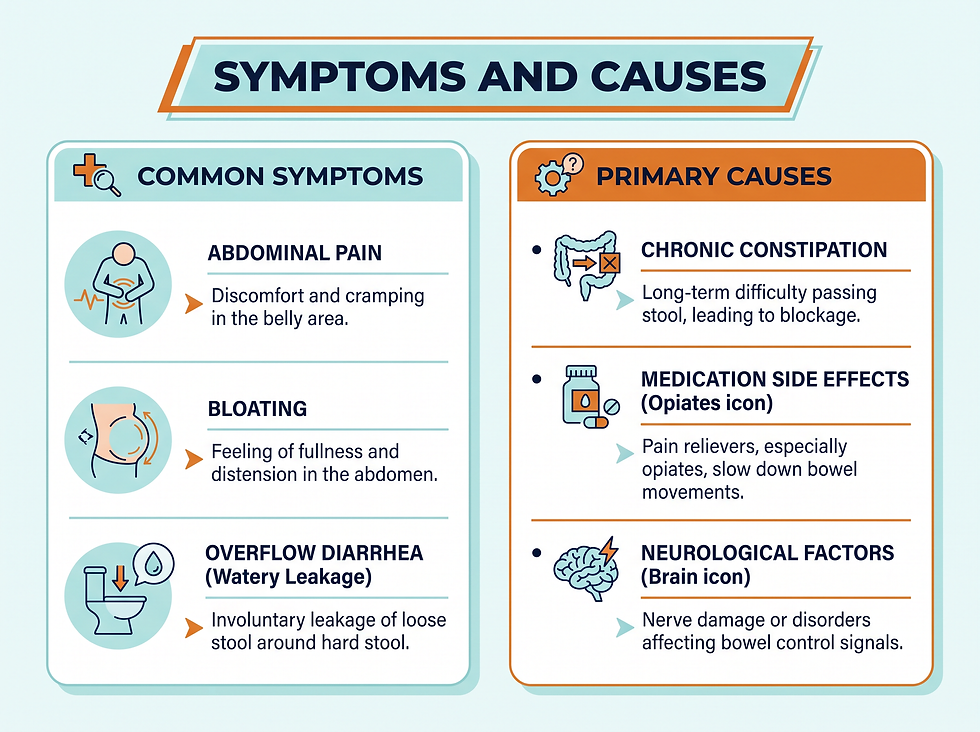
Several lifestyle, medical, and physiological factors contribute to the development of a fecal blockage. Identifying these causes is essential for both treatment and long-term prevention.
Cause Category | Specific Factors and Triggers |
Dietary Habits | Lack of adequate fiber and water intake (dehydration). |
Medication Side Effects | Opiates, antipsychotics, and calcium channel blockers. |
Neurological Disorders | Alzheimer’s, Parkinson’s disease, and dementia. |
Physical Injuries | Spinal cord injuries or chronic colonic hypomotility. |
What Are the Symptoms of Fecal Impaction?
The symptoms of impaction often begin as standard gastrointestinal discomfort but escalate as the pressure from waste buildup increases.
Common Symptoms of Blockage
Symptom | Description of Sensation |
Abdominal Pain | Intense discomfort in the stomach or lower back. |
Bloating | A feeling that the abdomen is swollen or full. |
Tenesmus | A persistent need to poop without the ability to do so. |
Lethargy | Feeling unusually tired or lacking energy. |
Severe and Warning Signs
If the following severe symptoms occur, you should contact a healthcare provider immediately to prevent life-threatening complications.
Severe Sign | Clinical Significance |
Overflow Diarrhea | Watery stool passing around the hardened blockage. |
Nausea/Vomiting | Indication of severe gastrointestinal distress. |
Confusion | Worsening psychosis or mental status changes. |
Rectal Bleeding | Possible indication of a tear or ulceration. |
How Is Fecal Impaction Diagnosed and Treated?
Healthcare providers typically diagnose the condition through physical examinations, including a digital rectal exam (DRE). If the blockage is suspected to be higher in the colon, an abdominal X-ray is used for confirmation.
The Three-Step Treatment Process
Medical professionals follow a structured approach to resolve the impaction and restore normal bowel function.
Step | Action and Objective |
1. Disimpaction | Manual or medical removal of the hardened stool. |
2. Colon Evacuation | Using fluids to clear remaining waste from the colon. |
3. Bowel Regimen | Establishing a regular schedule for bathroom visits. |
Common Treatment Methods
Method | Description |
Enema | Injecting fluid into the rectum to loosen the stool. |
Digital Disimpaction | Manual removal by a professional using a gloved finger. |
Laxatives | Drinking PEG solutions or using OTC cleansing agents. |
Surgery | Required for severe cases involving bleeding or tears. |
What Are the Complications of Untreated Impaction?
Failing to address a fecal blockage can lead to permanent damage or death. The pressure exerted by the impacted stool on the intestinal walls is the primary driver of these risks.
Complication | Resulting Impact |
Bowel Perforation | A hole in the colon that can be fatal. |
Hemorrhage | Significant internal bleeding. |
Fecal Incontinence | Loss of control over bowel movements. |
Stercoral Colitis | Inflammation and ulcers caused by stool pressure. |

Take these three steps:
Increase Fiber and Fluids — prioritize a fiber-friendly diet and stay hydrated to keep stool moving regularly.
Review Your Medications — discuss with your provider if any current prescriptions (like opiates) are causing chronic constipation.
Seek Immediate Care for Severe Signs — if you experience nausea, confusion, or bleeding alongside constipation, contact a doctor right away.
This article provides general information and is not a substitute for professional medical advice. Always consult a qualified healthcare provider for diagnosis and treatment.
Frequently Asked Questions
What is fecal impaction?
It is a severe form of constipation where hardened stool becomes physically stuck in the rectum or colon and cannot be passed naturally.
Is fecal impaction dangerous?
Yes, if left untreated, it can cause life-threatening complications like a hole in the colon (perforation) or internal bleeding.
Who is most at risk for fecal impaction?
The elderly, children, and people with mobility issues or neurological conditions like Parkinson’s and Alzheimer’s are at the highest risk.
Can you have diarrhea with fecal impaction?
Yes, this is called overflow diarrhea. Watery stool can leak around the hardened blockage, which may be mistaken for standard diarrhea.
What are the main causes of impaction?
Chronic constipation, lack of fiber and water, certain medications (like opiates), and neurological illnesses are the primary causes.
How do doctors diagnose fecal impaction?
Diagnosis usually involves a physical exam, a digital rectal exam, and sometimes an abdominal X-ray to locate the blockage.
What is digital disimpaction?
It is a medical procedure where a professional uses a gloved, lubricated finger to manually remove hardened stool from the rectum.
Can an enema treat fecal impaction?
Yes, enemas inject fluid into the rectum to help loosen and soften the impacted stool so it can be passed.
When should I see a doctor for constipation?
You should see a provider if you have a persistent inability to poop, severe abdominal pain, nausea, or confusion.
How can I prevent fecal impaction?
Prevention involves eating a high-fiber diet, staying hydrated, remaining physically active, and managing chronic constipation.
What medications cause fecal impaction?
Opiates (painkillers), antipsychotics, and certain blood pressure medications (calcium channel blockers) are common culprits.
Does fecal impaction cause back pain?
Yes, the pressure from waste buildup in the lower intestine can cause significant pain in the lower back and abdomen.
Is surgery necessary for fecal impaction?
Surgery is usually a last resort, reserved for severe cases where the bowel has torn (perforated) or is bleeding significantly.
What is colonic hypomotility?
It is a condition where the colon moves waste too slowly, which is a major contributing factor to fecal impaction.
Can children get fecal impaction?
Yes, children are one of the groups frequently affected by this condition, often due to chronic constipation issues.
What is a bowel regimen?
It is a structured schedule for using the bathroom, often recommended by doctors to prevent future impactions.
Does fecal impaction cause frequent urination?
Yes, a large blockage in the rectum can press against the bladder, leading to a frequent need to urinate.
What are the signs of a bowel perforation?
Severe pain, fever, and rectal bleeding are signs that a hole may have formed in the colon, which is a medical emergency.
Can laxatives fix an impaction?
Laxatives can help cleanse the colon, but they may not be enough to remove a severely hardened blockage without other interventions.
Why is fiber important for preventing impaction?
Fiber adds bulk to the stool and helps it move more easily through the digestive tract, reducing the risk of it getting stuck.
How long does it take to recover from treatment?
Most people feel immediate relief once the blockage is removed, though a long-term bowel regimen is needed to prevent recurrence.
What is stercoral colitis?
It is inflammation of the colon caused by the pressure of impacted stool, which can lead to ulcers and infection.
Can spinal cord injuries cause impaction?
Yes, injuries to the spinal cord can disrupt the nerves that control bowel movements, leading to chronic constipation and impaction.
Is fecal impaction common in nursing homes?
Yes, nearly half of all elderly people in nursing home settings are estimated to have fecal impaction.
What is the "classic triad" of impaction symptoms?
While not always present, the most common signs are abdominal pain, bloating, and the inability to pass stool despite the urge.
Does dehydration cause fecal impaction?
Yes, lack of water makes stool harder and more difficult for the colon to move, significantly increasing the risk of a blockage.
Can antipsychotic medications affect bowel movements?
Yes, these medications can slow down the digestive system, which may lead to severe constipation and eventual impaction.
What should I ask my doctor about impaction?
Ask about the severity of your condition, if your medications are a cause, and what specific lifestyle changes you should make.
Can fecal impaction be fatal?
Yes, if it causes a complete bowel obstruction or a perforation, it can lead to life-threatening infections and death.
How does exercise help prevent impaction?
Physical activity, even light walking, helps stimulate the muscles in the intestines to keep waste moving through the system.
Related Reading on Rinnit
Additional Resources
For further reading, these authoritative external references support the information above:
Content reviewed and produced following the Rinnit editorial framework. Last updated: September 28, 2026.
Comments