Febrile Seizures: What Every Parent Needs to Know About Fever-Triggered Seizures in Young Children

Updated: 3 days ago
Medically reviewed by Dr. Baraa Alnahhal, MD · Last reviewed: October 17, 2026
Quick Answer: What is a febrile seizure?
A febrile seizure is a convulsion in a child caused by a fever, typically between 6 months and 5 years old. It usually lasts a few minutes, resolves on its own, causes no brain damage and does not mean epilepsy. Place your child on their side, time the seizure and call for emergency care if it lasts over five minutes.
What the research says
About one in five children with a febrile seizure has another. A systematic review and meta-analysis of studies from Iran reported an overall pooled recurrence rate of 20.9% (95% CI 12.3–29.5%), and a positive family history in 28.8% of children (95% CI 19.3–38.4%) (Veisani et al., Iran J Pediatr, 2013 [3]).
Later epilepsy risk is concentrated in complex cases. In a meta-analysis of 23 studies (714 cases of secondary epilepsy and 5,269 controls), the odds of epilepsy after a febrile seizure were higher with complex febrile seizures (OR 4.08), seizures lasting over 15 minutes (OR 6.21), developmental delay (OR 10.04), and a family history of epilepsy (OR 2.74) (Zhang et al., Epilepsy Behav, 2024 [4]).
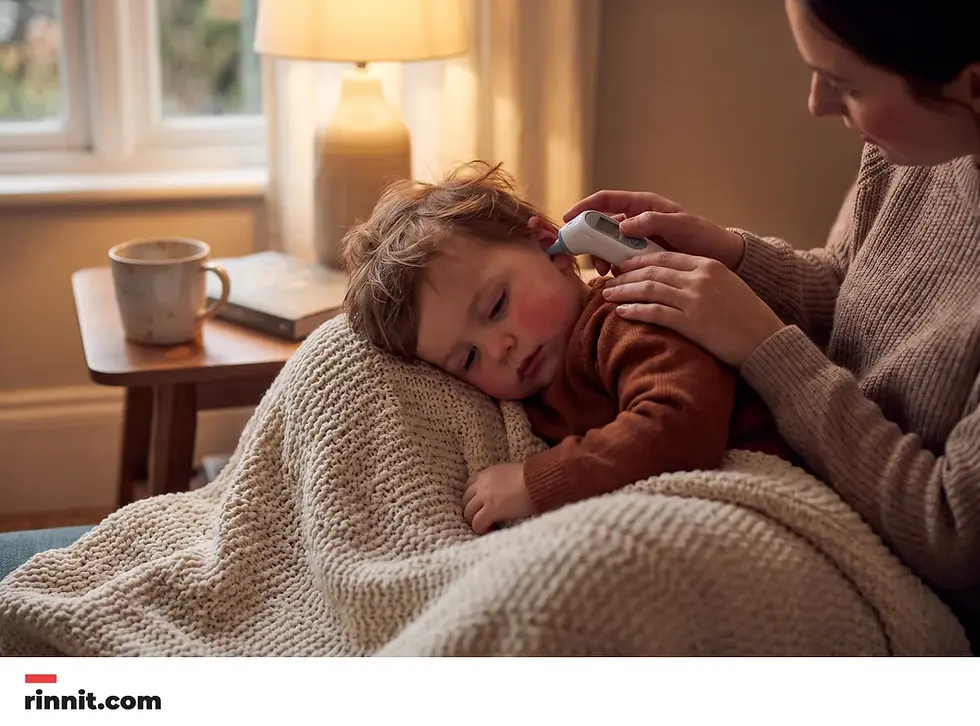
What Is a Febrile Seizure?
A febrile seizure is a convulsion in a child that’s caused by a fever. The fever is often from an infection. Febrile seizures occur in young, healthy children who have normal development and haven’t had any neurological symptoms before [1].
It can be frightening when your child has a febrile seizure. Fortunately, febrile seizures are usually harmless, only last a few minutes, and typically don’t indicate a serious health problem [1].
You can help by keeping your child safe during a febrile seizure and by offering comfort afterward. Call your doctor to have your child evaluated as soon as possible after a febrile seizure [1].
What Does a Febrile Seizure Look Like?
Usually, a child having a febrile seizure shakes all over and loses consciousness. Sometimes, the child may get very stiff or twitch in just one area of the body [1].
A child having a febrile seizure may [1]:
Sign | Detail |
Fever | Higher than 100.4 F (38.0 C) |
Loss of consciousness | The child is unaware and unresponsive during the seizure |
Shaking or jerking | Arms and legs shake or jerk |
Febrile seizures most often occur within 24 hours of the onset of a fever and can be the first sign that a child is ill [1].
Simple vs. Complex Febrile Seizures
Febrile seizures are classified as simple or complex [1]:
Type | Duration | Key Features |
Simple (most common) | A few seconds to 15 minutes | Doesn’t recur within 24 hours; affects the whole body, not one part |
Complex | Longer than 15 minutes | Occurs more than once within 24 hours, or is confined to one side of the child’s body |
When to Seek Emergency Care
See your child’s doctor as soon as possible after your child’s first febrile seizure, even if it lasts only a few seconds [1].
Call an ambulance to take your child to the emergency room if the seizure lasts longer than five minutes or is accompanied by [1]:
Emergency Sign | Why It Matters |
Seizure longer than 5 minutes | Prolonged seizures need medical stopping |
Vomiting | Can signal a more serious illness |
A stiff neck | Can indicate meningitis |
Breathing problems | Needs immediate emergency support |
Extreme sleepiness | May point to a serious underlying cause |
What Causes Febrile Seizures?
Usually, a higher than normal body temperature causes febrile seizures. Even a low-grade fever can trigger one [1].
Infection
The fevers that trigger febrile seizures are usually caused by a viral infection, and less commonly by a bacterial infection [1]. The flu (influenza) virus and the virus that causes roseola — which are often accompanied by high fevers — appear to be most frequently associated with febrile seizures [1].
After Vaccinations
The risk of febrile seizures may increase after some childhood vaccinations, including the diphtheria-tetanus-pertussis vaccine and the measles-mumps-rubella vaccine [1]. A child can develop a low-grade fever after a vaccination. The fever, not the vaccine, causes the seizure [1].
Who Is at Risk?
Risk Factor | Detail |
Young age | Most febrile seizures occur between 6 months and 5 years, with the greatest risk between 12 and 18 months |
Family history | Some children inherit a family tendency to have seizures with a fever; researchers have linked several genes to susceptibility |
Are Febrile Seizures Dangerous?
Most febrile seizures produce no lasting effects. Simple febrile seizures don’t cause brain damage, intellectual disability, or learning disabilities, and they don’t mean your child has a more serious underlying disorder [1].
Febrile seizures are provoked seizures and don’t indicate epilepsy [1]. Epilepsy is a condition characterized by recurrent unprovoked seizures caused by abnormal electrical signals in the brain.
The Chance of Another One
The most common complication is the possibility of more febrile seizures. The risk of recurrence is higher if [1]:
Factor | Why It Raises Risk |
First seizure came from a low-grade fever | Seizures can occur without a very high fever |
The seizure was the first sign of illness | Sudden onset suggests sensitivity to rising temperature |
An immediate family member has a history of febrile seizures | The tendency can be inherited |
The child was younger than 18 months at the first seizure | Younger children sit closer to peak-risk age |
How Febrile Seizures Are Diagnosed
Febrile seizures occur in children with normal development. Your doctor will carefully review your child’s medical history and developmental history to exclude other risk factors for epilepsy. In normally developing children, identifying the cause of your child’s fever is the first step after a febrile seizure [2].
After a Simple Febrile Seizure
Children who are current with their vaccinations who have a first simple febrile seizure don’t need testing — the doctor can diagnose the febrile seizure based on history [2].
In children with a delayed vaccination schedule or a compromised immune system, the doctor may recommend tests to look for severe infections [2]:
Test | What It Checks |
Blood test | Signs of infection |
Urine test | Urinary or systemic infection |
Spinal tap (lumbar puncture) | Central nervous system infections such as meningitis |
After a Complex Febrile Seizure
To diagnose the cause of a complex febrile seizure, the doctor may recommend an electroencephalogram (EEG), a test that measures brain activity [2].
The doctor may also recommend an MRI to check your child’s brain if your child has [2]:
MRI Trigger | Description |
An unusually large head | Head size outside the normal range |
An abnormal neurological evaluation | Findings that don’t fit a simple febrile seizure |
Signs of increased pressure in the skull | Pressure-related signs and symptoms |
An unusually long seizure | A febrile seizure that lasted far longer than typical |
What to Do During a Febrile Seizure

Most febrile seizures stop on their own within a couple of minutes [2]. If your child has a febrile seizure, stay calm and follow these steps:
Step | What to Do |
1. Position safely | Place your child on his or her side on a soft, flat surface where he or she won’t fall |
2. Start timing | Time the seizure from the moment it begins |
3. Stay close | Watch and comfort your child throughout |
4. Clear the area | Remove hard or sharp objects near your child |
5. Loosen clothing | Remove tight or restrictive clothing |
6. Don’t restrain | Never restrain your child or interfere with movements |
7. Nothing in the mouth | Don’t put anything in your child’s mouth |
Call for emergency medical attention if [2]:
Situation | Action |
Seizure lasts more than five minutes | Call for emergency help immediately |
Repeated seizures | Call for emergency help |
Seizure lasted under five minutes but the child isn’t improving quickly | Call for emergency help |
More-Serious Episodes
A doctor may order medication to stop a seizure that lasts longer than five minutes [2].
Your child’s doctor may hospitalize the child for observation if the seizure is prolonged, the child is younger than 6 months, the seizure is accompanied by a serious infection, or the source of the infection can’t be found [2]. A hospital stay isn’t usually necessary for simple febrile seizures [2].
If It Happens Again
If your child has another febrile seizure [2]:
Guidance | Detail |
Don’t restrain | But place your child on a safe surface, such as the floor |
Position on the side | Keep the face to the side and the lower arm extended under the head to prevent inhaling vomit if vomiting occurs |
Clear the mouth before, not during | If your child had something in the mouth when the seizure began, remove it to prevent choking; don’t put anything in the mouth during a seizure |
Five-minute rule | Seek emergency care for a seizure that lasts longer than five minutes |
Can Febrile Seizures Be Prevented?
Most febrile seizures occur in the first few hours of a fever, during the initial rise in body temperature [1].
Fever-Reducing Medications
Giving your child infants’ or children’s acetaminophen or ibuprofen at the beginning of a fever may make your child more comfortable, but it won’t prevent a seizure [1].
Aspirin caution: use caution when giving aspirin to children or teenagers. Though aspirin is approved for children older than age 3, children and teenagers recovering from chickenpox or flu-like symptoms should never take aspirin. Aspirin has been linked to Reye’s syndrome, a rare but potentially life-threatening condition, in such children [1].
Prescription Medications
Rarely, prescription anticonvulsant medications are used to try to prevent febrile seizures. However, these medications can have serious side effects that may outweigh any possible benefit [1].
Rectal diazepam or nasal midazolam might be prescribed as needed for children who are prone to long febrile seizures. These are typically used to treat seizures that last longer than five minutes or if the child has more than one seizure within 24 hours — not typically to prevent febrile seizures [1].
Preparing for Your Appointment

You’re likely to start by seeing your child’s family doctor or pediatrician. You may then be referred to a doctor who specializes in disorders of the brain and nervous system — a neurologist [2].
What you can do:
Preparation Step | Details |
Write down everything you remember | About the seizure, including signs or symptoms that occurred before it, such as a fever |
List medications | Including vitamins and supplements your child takes |
Write down questions | Prioritize what matters most |
Questions you might ask:
Question | Category |
What’s the most likely cause of my child’s seizure? | Diagnosis |
What tests does my child need? Do they require special preparation? | Testing |
Is this likely to happen again? | Prognosis |
Does my child need treatment? | Treatment |
Will fever-reducing medications during an illness help prevent febrile seizures? | Prevention |
What should I do the next time my child has a fever? | Action plan |
What can I do to help my child during a febrile seizure? | First aid |
My child has another health condition — how can we manage them together? | Co-management |
Are there brochures, printed material, or recommended websites? | Resources |
What to expect from your doctor: Your doctor is likely to ask whether your child had a fever or illness before the seizure; to describe the seizure — its signs and symptoms and how long it lasted; whether this has happened before; whether anyone in your family has a history of febrile seizures or seizure disorders; whether your child has been exposed to illnesses; and whether your child has a history of head trauma or a neurological disease [2].
Conclusion: Frightening in the Moment, Harmless in Most Cases
Watching your child shake and lose consciousness is one of the most terrifying experiences a parent can face — and it’s exactly why accurate information matters. Febrile seizures are usually harmless, brief, and self-resolving. They don’t cause brain damage, learning disabilities, or epilepsy, and most children outgrow the risk entirely as they pass the age of five.
The takeaway for parents is practical: know the seven safety steps, remember the five-minute emergency rule, and have your child evaluated after any first seizure. If your child has had one, the follow-up conversation with your pediatrician is usually short and reassuring — and it may be worth asking whether family members should know the risk runs in families too.
Want more practical, evidence-based parenting health guides like this one? Explore our collection of childhood illness explainers — and tell us what to cover next in the comments.
This article provides general information and is not a substitute for professional medical advice. If your child has a seizure, follow the emergency guidance above and consult a qualified healthcare provider.
Frequently Asked Questions
What is a febrile seizure?
A febrile seizure is a convulsion in a child caused by a fever, usually from an infection. It typically occurs in children between 6 months and 5 years old and most often happens within 24 hours of a fever starting.
Are febrile seizures dangerous?
In most cases, no. Febrile seizures are usually harmless, last only a few minutes, and typically don’t indicate a serious health problem. Simple febrile seizures don’t cause brain damage, intellectual disability, or learning disabilities.
How long do febrile seizures last?
Simple febrile seizures — the most common type — last from a few seconds to 15 minutes. Most stop on their own within a couple of minutes. Complex febrile seizures last longer than 15 minutes, recur within 24 hours, or are confined to one side of the body.
What age are febrile seizures most common?
Most occur in children between 6 months and 5 years of age, with the greatest risk between 12 and 18 months.
Can a low fever cause a febrile seizure?
Yes. Even a low-grade fever can trigger a febrile seizure. The seizures most often happen in the first few hours of a fever, during the initial rise in body temperature.
Does a febrile seizure mean my child has epilepsy?
No. Febrile seizures are provoked seizures — triggered by fever — and don’t indicate epilepsy. Epilepsy is characterized by recurrent unprovoked seizures caused by abnormal electrical signals in the brain.
Can fever-reducing medicine prevent febrile seizures?
No. Acetaminophen or ibuprofen at the beginning of a fever may make your child more comfortable, but it won’t prevent a seizure. Rarely, prescription anticonvulsants are considered, but their side effects may outweigh any benefit.
What should I do during a febrile seizure?
Stay calm. Place your child on their side on a soft, flat surface, start timing the seizure, stay close to watch and comfort them, remove hard or sharp objects, loosen tight clothing, don’t restrain them, and never put anything in their mouth.
When should I call for emergency help?
Call an ambulance if the seizure lasts more than five minutes, your child has repeated seizures, or the seizure lasted less than five minutes but your child isn’t improving quickly. Also seek emergency care if the seizure is accompanied by vomiting, a stiff neck, breathing problems, or extreme sleepiness.
Will my child have another febrile seizure?
The most common complication is recurrence. Risk is higher if the first seizure came from a low-grade fever, was the first sign of illness, an immediate family member has a history of febrile seizures, or the child was under 18 months at the first seizure.
Additional Resources
For further reading, these authoritative external references support the information above:
National Institute of Neurological Disorders and Stroke. Febrile Seizures. NINDS. Last reviewed March 13, 2026. https://www.ninds.nih.gov/health-information/disorders/febrile-seizures
Subcommittee on Febrile Seizures, American Academy of Pediatrics. Neurodiagnostic evaluation of the child with a simple febrile seizure. Pediatrics. 2011;127(2):389-394. PMID 21285335. https://doi.org/10.1542/peds.2010-3318
Cleveland Clinic. Febrile Seizure. Cleveland Clinic Health Library. Medically reviewed; last updated October 8, 2024. https://my.clevelandclinic.org/health/diseases/febrile-seizure
Content reviewed and produced following the Rinnit editorial framework. Last updated: October 8, 2026.
References
Mayo Clinic Staff. Febrile seizure: Symptoms and causes. Mayo Clinic. March 3, 2023. https://www.mayoclinic.org/diseases-conditions/febrile-seizure/symptoms-causes/syc-20372522
Mayo Clinic Staff. Febrile seizure: Diagnosis and treatment. Mayo Clinic. March 3, 2023. https://www.mayoclinic.org/diseases-conditions/febrile-seizure/diagnosis-treatment/drc-20372527
Veisani Y, Delpisheh A, Sayehmiri K. Familial history and recurrence of febrile seizures; a systematic review and meta-analysis. Iran J Pediatr. 2013;23(4):389-395. PMID 24427491. PubMed
Zhang J, Jing Q, Li S, et al. Risk factors for secondary epilepsy following febrile seizures in children: a meta-analysis. Epilepsy Behav. 2024;161:110051. PMID 39306980. doi:10.1016/j.yebeh.2024.110051



Comments