Eosinophilic Pneumonia: Symptoms, Causes, Types, Diagnosis, Treatment and When to Seek Emergency Care — What You Need to Know

Updated: 2 days ago
Medically reviewed by Dr. Baraa Alnahhal, MD · Last reviewed: September 2026
Quick Answer
Eosinophilic pneumonia is a type of lung inflammation caused by a buildup of eosinophils — white blood cells that normally fight certain infections but can damage lung tissue in excess. It comes in two forms: acute (AEP), which develops over days to two weeks and can worsen rapidly, and chronic (CEP), which progresses slowly over weeks to months. Symptoms include cough, fever, shortness of breath, tiredness, night sweats and wheezing; chest pain and muscle aches point to AEP, while unexplained weight loss suggests CEP. Triggers include smoking, vaping, inhaled toxins, certain medications and infections. Corticosteroids are very effective for both types, and many people make a complete recovery with prompt treatment. Because pneumonia can become life-threatening quickly, severe shortness of breath or chest pain requires emergency care.
TL;DR: Eosinophilic Pneumonia at a Glance
Eosinophilic pneumonia is lung inflammation driven by too many eosinophils. It is a form of interstitial lung disease, meaning it affects the tissue between the air sacs of the lungs rather than the airways alone. The two types behave very differently: acute eosinophilic pneumonia (AEP) can become an emergency within days, while chronic eosinophilic pneumonia (CEP) smolders over months and can cause permanent scarring if left untreated.
Limitation statement: This article reports only figures published by the source. The source does not provide prevalence numbers, incidence rates, or population counts for eosinophilic pneumonia, so no statistics are given here. Any numbers you find elsewhere on the internet are not supported by this source and have not been included.
Fact | What the source says |
What it is | Lung inflammation caused by a buildup of eosinophils (a white blood cell) |
Type | A form of interstitial lung disease |
Two forms | Acute (AEP, fast) and chronic (CEP, slow) |
How fast AEP develops | Over a few days to two weeks |
How fast CEP develops | Over weeks to months; can last months if untreated |
Main treatment | Corticosteroids — very effective for both types |
Emergency care | Go to the ER for severe shortness of breath or chest pain — pneumonia can become life-threatening quickly |
What Is Eosinophilic Pneumonia?
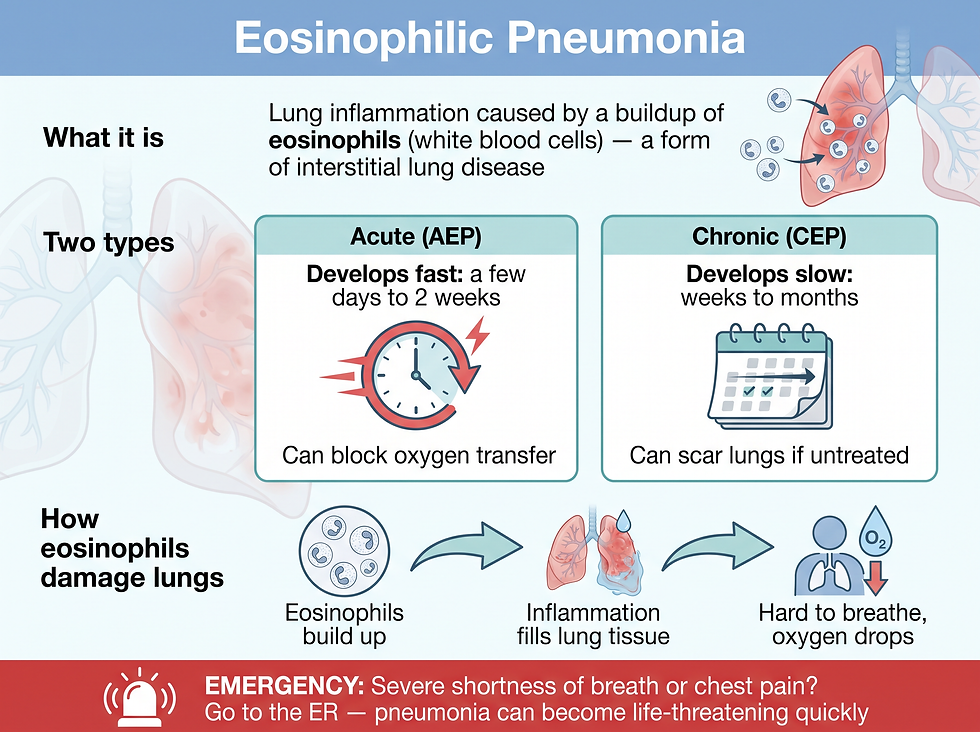
Eosinophilic pneumonia (EP) is inflammation in your lungs caused by the buildup of eosinophils. Eosinophils are a type of white blood cell. They help your body fight certain types of infections. But too many can start to cause damage. This can make it hard to breathe and cause other respiratory symptoms.
Eosinophilic pneumonia is a form of interstitial lung disease. There are two main types, and they behave quite differently.
Type | Abbreviation | How it develops |
Acute eosinophilic pneumonia | AEP | Develops quickly, over a few days to two weeks; can worsen quickly if you can't get oxygen from your lungs to your blood |
Chronic eosinophilic pneumonia | CEP | Worsens slowly, over weeks to months; if untreated, it can last months and eventually lead to chronic symptoms, which may be severe |
🚨 EMERGENCY GUIDANCE: Go to the emergency room if you have symptoms like severe shortness of breath or chest pain. Pneumonia can become life-threatening quickly.
The key practical takeaway is speed. AEP is the form that can turn into an emergency — the same inflammation that fills your lungs with eosinophils can block oxygen from reaching your blood. That is why the source flags severe breathing trouble and chest pain as immediate ER warning signs for either type.
What Are the Symptoms of Eosinophilic Pneumonia?
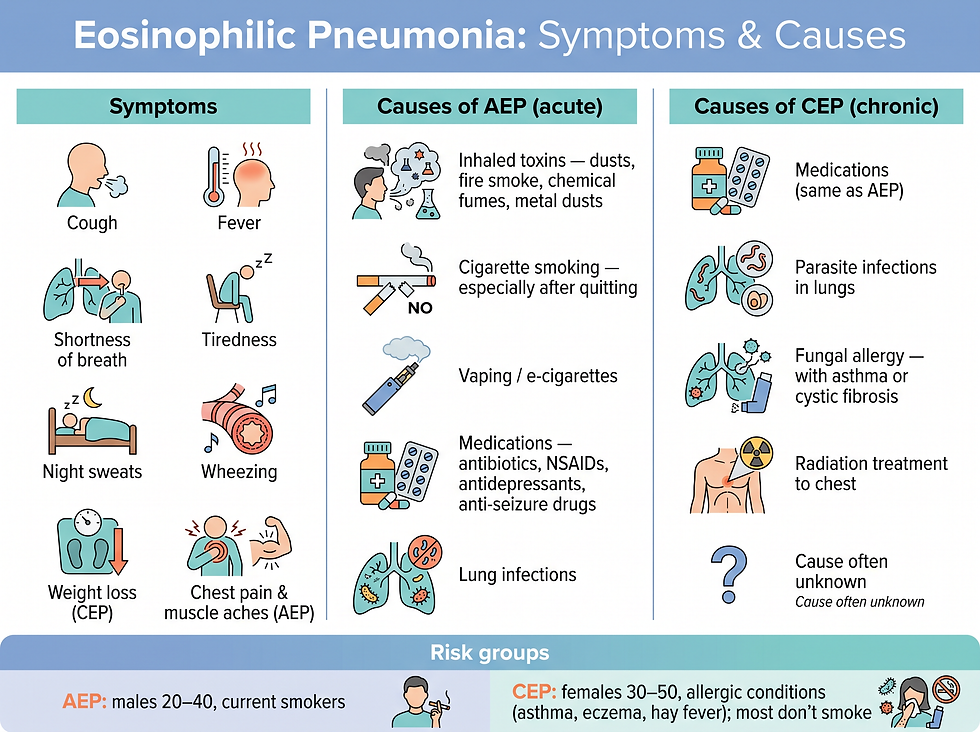
Symptoms can vary depending on the type. The two types share a common core, but each also carries distinctive signs that can help your provider tell them apart.
What symptoms should you watch for?
Symptom | Appears in |
Cough | AEP and CEP |
Fever | AEP and CEP |
Shortness of breath | AEP and CEP |
Tiredness | AEP and CEP |
Night sweats | AEP and CEP |
Wheezing | AEP and CEP |
Unexplained weight loss | CEP |
Chest pain and muscle aches | AEP |
How fast do symptoms develop?
The pace of your symptoms matters. Symptoms of chronic eosinophilic pneumonia come on slowly and worsen over weeks or months. Acute eosinophilic pneumonia can worsen quickly.
🚨 Call 911 (or your local emergency service number) or go to the ER if you have symptoms of pneumonia, especially if they're getting worse.
What Causes Eosinophilic Pneumonia?
Causes of eosinophilic pneumonia depend on the type. For some people, especially those with the chronic form, a clear cause is never found.
What causes acute eosinophilic pneumonia (AEP)?
Cause | Details |
Inhaled toxins | Including dusts, smoke from fires, chemical fumes or metal dusts |
Cigarette smoking | Especially if you go back to smoking after previously quitting, or smoking more often |
Vaping / electronic cigarette use | E-cigarette use is a recognized cause |
Medications | Including certain antibiotics, nonsteroidal anti-inflammatory medications (NSAIDs) and some antidepressants and anti-seizure medications |
Certain infections | Infections in your lungs |
What causes chronic eosinophilic pneumonia (CEP)?
Providers often don't know the cause of CEP. But causes can include:
Cause | Details |
Medications | The same medications that can cause AEP can also cause CEP |
Parasite infections | Parasite infections in your lungs |
Fungal allergy | If you have asthma or cystic fibrosis |
Radiation treatment | Radiation treatment to your chest |
Who is at risk of developing eosinophilic pneumonia?
Your risk of developing eosinophilic pneumonia depends on the type. The two forms affect distinctly different groups:
Risk factor | AEP | CEP |
Age and sex | Males between ages 20 and 40 | Females between ages 30 and 50 |
Smoking | People who currently smoke | Most people with CEP don't smoke |
Allergic conditions | Not listed | Asthma, eczema (atopic dermatitis) and allergic rhinitis (hay fever) |
This contrast is worth noting: the "typical" AEP patient is a young male smoker, while the typical CEP patient is a middle-aged woman with allergic conditions who does not smoke.
What complications can eosinophilic pneumonia cause?
If left untreated, AEP can lead to respiratory failure, when your body can't properly bring in oxygen or get rid of carbon dioxide. CEP doesn't usually cause respiratory failure. But over time, it can cause permanent lung scarring.
How Is Eosinophilic Pneumonia Diagnosed?
It can take a number of tests to diagnose eosinophilic pneumonia. Depending on your symptoms, your healthcare provider may start with common tests and imaging.
What tests diagnose eosinophilic pneumonia?
Test | Purpose |
Chest X-ray | Imaging to look at the lungs |
CT scan | Detailed imaging of lung tissue |
Blood tests | To look for signs of disease and its causes |
Lung function tests | To measure how well your lungs work |
Bronchoalveolar lavage (BAL) | A provider uses a flexible tube (bronchoscope) to collect fluid from your lungs; the fluid is sent to a lab to look for signs of disease and its causes |
Additional tests | You may need additional tests depending on the cause |
How Is Eosinophilic Pneumonia Treated?

Corticosteroids are very effective in treating both acute and chronic eosinophilic pneumonia. If you're very sick and being treated in the hospital, you may also need supplemental oxygen or other treatments.
What medications treat eosinophilic pneumonia?
Treatment | Used for | Key notes |
Corticosteroids | Both AEP and CEP | Very effective for both types |
Supplemental oxygen | Very sick patients in the hospital | May be combined with other treatments |
Biologic medications | Primarily CEP, ongoing | Providers might recommend these instead of steroids; options include mepolizumab (Nucala®), benralizumab (Fasenra®), omalizumab (Xolair®) or dupilumab (Dupixent®) |
How do you treat the underlying cause?
You may also need to address anything that caused the condition. This could include stopping smoking or vaping, stopping or changing medications, protecting yourself from things you inhale that could be harmful, and managing underlying health conditions.
How long does recovery take?
Recovery from eosinophilic pneumonia depends on the type and severity. Many people with acute eosinophilic pneumonia recover quickly, sometimes within 48 hours after steroid treatment. Most people take one to two weeks to fully heal. If you have chronic eosinophilic pneumonia, you'll likely need to take medications for many months or longer.
What is the outlook (prognosis)?
With quick treatment, you're most likely to make a complete recovery from eosinophilic pneumonia. If you have chronic EP, your healthcare provider will work with you to manage it and ease your symptoms. Many people with CEP recover with corticosteroids, but experience relapses that need to further treatment.
Can eosinophilic pneumonia be prevented?
Some steps you can take to reduce your risk of eosinophilic pneumonia include:
Prevention step | Details |
Don't smoke or vape | A key protective measure for both types |
Avoid infections | Take precautions like washing your hands and getting recommended vaccines |
Avoid harmful substances | Such as asbestos, metal dusts or chemicals; wear a respirator (a mask that filters particles from the air) if you must be around them |
Manage health conditions | Work with your provider to manage conditions that affect your lungs or cause inflammation |
When Should You See Your Provider?
🚨 Go to the ER if you have severe shortness of breath or chest pain, especially if you have a fever or your symptoms get worse quickly. These can be signs of many serious conditions.
Beyond emergencies, the source advises seeing a healthcare provider if you have symptoms like cough and shortness of breath that get worse over time, unexplained weight loss or other symptoms of CEP.
What to Remember
Eosinophilic pneumonia is lung inflammation caused by a buildup of eosinophils, and it can take two very different forms. The acute type strikes fast — over days to two weeks — and can become a life-threatening emergency if oxygen cannot reach your blood. The chronic type develops slowly over weeks or months and can cause permanent lung scarring if left untreated. Corticosteroids are very effective for both types, and with quick treatment, you're most likely to make a complete recovery. Talk to your provider about which symptoms to look out for if you have a health condition that could lead to eosinophilic pneumonia.
Clinical care-team note (verbatim from the source): "Eosinophilic pneumonia can get worse quickly. You should always get help right away for symptoms like shortness of breath and chest pain. If you have a health condition that could lead to eosinophilic pneumonia, talk to your provider. They can let you know which symptoms to look out for and help you manage any conditions to reduce your risk."
Conclusion: Treat Lung Symptoms Quickly
Eosinophilic pneumonia can develop fast or creep in slowly, but in both cases the message is the same: do not wait out pneumonia symptoms. The acute form can become life-threatening within days, while the chronic form can scar your lungs permanently if ignored. The good news is that corticosteroids are very effective for both types, and most people who get treated quickly make a complete recovery.
Take these three steps:
Seek emergency care immediately if you have severe shortness of breath or chest pain — especially with a fever or rapidly worsening symptoms.
See a provider promptly for a cough or shortness of breath that worsens over time, or any unexplained weight loss with respiratory symptoms.
Lower your risk by not smoking or vaping, getting recommended vaccines, avoiding inhaled toxins like asbestos and metal dusts, and managing lung or inflammatory conditions with your provider.
This article provides general information and is not a substitute for professional medical advice. Always consult a qualified healthcare provider for diagnosis and treatment.
Frequently Asked Questions
What is eosinophilic pneumonia?
Eosinophilic pneumonia is inflammation in your lungs caused by a buildup of eosinophils — a type of white blood cell that helps fight certain infections. In excess, eosinophils damage lung tissue, making it hard to breathe and causing respiratory symptoms.
Is eosinophilic pneumonia a form of interstitial lung disease?
Yes. Eosinophilic pneumonia is a form of interstitial lung disease, meaning it affects the lung tissue itself rather than just the airways.
What are the two types of eosinophilic pneumonia?
The two types are acute eosinophilic pneumonia (AEP), which develops quickly over a few days to two weeks, and chronic eosinophilic pneumonia (CEP), which worsens slowly over weeks to months.
What is acute eosinophilic pneumonia (AEP)?
AEP develops quickly, over a few days to two weeks. It can worsen quickly if you can't get oxygen from your lungs to your blood.
What is chronic eosinophilic pneumonia (CEP)?
CEP worsens slowly over weeks to months. If untreated, it can last months and eventually lead to chronic symptoms that may be severe, and it can cause permanent lung scarring over time.
What are the symptoms of eosinophilic pneumonia?
Common symptoms include cough, fever, shortness of breath, tiredness, night sweats and wheezing. Chest pain and muscle aches occur in AEP, while unexplained weight loss occurs in CEP.
Does eosinophilic pneumonia cause fever?
Yes. Fever is one of the symptoms listed for both acute and chronic eosinophilic pneumonia.
Does eosinophilic pneumonia cause night sweats?
Yes. Night sweats are listed among the symptoms of eosinophilic pneumonia.
What symptoms are specific to acute eosinophilic pneumonia?
Chest pain and muscle aches are the symptoms the source identifies specifically with AEP.
What symptoms are specific to chronic eosinophilic pneumonia?
Unexplained weight loss is the symptom the source identifies specifically with CEP.
Is eosinophilic pneumonia contagious?
The source does not describe eosinophilic pneumonia as contagious. It is caused by an inflammatory buildup of eosinophils, not by spreading from person to person, though certain lung infections can trigger the acute type.
What causes acute eosinophilic pneumonia?
Causes of AEP can include inhaled toxins (dusts, smoke from fires, chemical fumes, metal dusts), cigarette smoking, vaping or electronic cigarette use, certain medications, and certain infections in the lungs.
What causes chronic eosinophilic pneumonia?
Providers often don't know the cause of CEP. Known causes can include medications, parasite infections in the lungs, fungal allergy (in people with asthma or cystic fibrosis), and radiation treatment to the chest.
Can smoking cause eosinophilic pneumonia?
Yes. Cigarette smoking is a cause of AEP — especially if you go back to smoking after previously quitting, or smoke more often. However, most people with CEP don't smoke.
Can vaping cause eosinophilic pneumonia?
Yes. Vaping and electronic cigarette use are listed as causes of acute eosinophilic pneumonia.
Can medications cause eosinophilic pneumonia?
Yes. Certain antibiotics, nonsteroidal anti-inflammatory medications, and some antidepressants and anti-seizure medications can cause AEP, and the same medications can also cause CEP.
Can eosinophilic pneumonia be caused by inhaled toxins?
Yes. Inhaled toxins — including dusts, smoke from fires, chemical fumes or metal dusts — can cause AEP.
Who is most at risk for acute eosinophilic pneumonia?
AEP is more common in males between ages 20 and 40 and in people who currently smoke.
Who is most at risk for chronic eosinophilic pneumonia?
CEP is more common in females between ages 30 and 50 and in people who have allergic conditions, including asthma, eczema (atopic dermatitis) and allergic rhinitis (hay fever).
Is chronic eosinophilic pneumonia linked to asthma?
Yes. A fungal allergy — a cause of CEP — can occur if you have asthma or cystic fibrosis, and CEP is more common in people with allergic conditions such as asthma.
How is eosinophilic pneumonia diagnosed?
It can take a number of tests. Providers may start with a chest X-ray, CT scan, blood tests and lung function tests, and may recommend bronchoalveolar lavage (BAL) to collect lung fluid for lab analysis.
What is bronchoalveolar lavage (BAL)?
In BAL, a provider uses a flexible tube called a bronchoscope to collect fluid from your lungs. The fluid is sent to a lab to look for signs of disease and its causes.
What is a bronchoscopy?
A bronchoscopy is the procedure in which a provider uses a bronchoscope — a flexible tube — to look inside and collect fluid from your lungs, as part of diagnosing conditions like eosinophilic pneumonia.
Is eosinophilic pneumonia treatable?
Yes. Corticosteroids are very effective in treating both acute and chronic eosinophilic pneumonia. Hospitalized patients may also need supplemental oxygen or other treatments.
Do you need a hospital stay for eosinophilic pneumonia?
If you're very sick and being treated in the hospital, you may need supplemental oxygen or other treatments in addition to corticosteroids.
What are biologic medications for eosinophilic pneumonia?
For CEP, your provider might recommend ongoing treatment with biologic medications instead of steroids. Options include mepolizumab (Nucala®), benralizumab (Fasenra®), omalizumab (Xolair®) or dupilumab (Dupixent®).
How long does it take to recover from acute eosinophilic pneumonia?
Many people with AEP recover quickly, sometimes within 48 hours after steroid treatment. Most people take one to two weeks to fully heal.
How long does treatment for chronic eosinophilic pneumonia last?
If you have CEP, you'll likely need to take medications for many months or longer.
Can eosinophilic pneumonia cause respiratory failure?
If left untreated, AEP can lead to respiratory failure, when your body can't properly bring in oxygen or get rid of carbon dioxide. CEP doesn't usually cause respiratory failure.
Can eosinophilic pneumonia cause permanent lung damage?
Yes. Over time, untreated CEP can cause permanent lung scarring.
Does eosinophilic pneumonia come back?
Many people with CEP recover with corticosteroids, but experience relapses that need to further treatment.
What is the prognosis for eosinophilic pneumonia?
With quick treatment, you're most likely to make a complete recovery. Providers work with CEP patients to manage the condition and ease symptoms over time.
When should I go to the ER for eosinophilic pneumonia?
Go to the ER if you have severe shortness of breath or chest pain, especially if you have a fever or your symptoms get worse quickly. Call 911 or go to the ER for pneumonia symptoms that are getting worse — pneumonia can become life-threatening quickly.
When should I see a doctor for eosinophilic pneumonia?
See a healthcare provider if you have symptoms like cough and shortness of breath that get worse over time, unexplained weight loss or other symptoms of CEP.
Can eosinophilic pneumonia be prevented?
Yes, to some extent. Reduce your risk by not smoking or vaping, avoiding infections through handwashing and vaccines, avoiding harmful inhaled substances like asbestos and metal dusts (and wearing a respirator when needed), and working with your provider to manage lung or inflammatory conditions.
How common is eosinophilic pneumonia?
The source does not provide prevalence or incidence figures, so no statistics can be given here. What is known is that AEP is more common in males ages 20–40 who smoke, while CEP is more common in females ages 30–50 with allergic conditions.
Additional Resources
For further reading, these authoritative external references support the information above:
Comments