Enterocolitis: Symptoms, Causes, Six Specific Types, Diagnosis, Treatment, Complications and When to See Your Provider — What You Need to Know

Updated: 2 days ago
Medically reviewed by Dr. Baraa Alnahhal, MD · Last reviewed: September 2026
TL;DR — Key Facts at a Glance
Enterocolitis is inflammation that affects both intestines at once — the small intestine (enteritis) and the large intestine (colitis) together. Because both bowel segments are inflamed, it tends to be more severe than inflammation in just one, and it most often affects people with weaker-than-normal immune systems, especially infants.
What it is: inflammation throughout both intestines — small (enteritis) and large (colitis) — at the same time.
Who it affects most: people with vulnerable immune systems, especially infants and children, and people with chronic illnesses such as HIV.
Most common cause: infections — viral (stomach flu), parasitic (giardiasis), and bacterial (food poisoning).
How long it lasts: infections are usually temporary; autoimmune causes can be long-lasting and chronic.
Six named types: necrotizing, pseudomembranous (antibiotic-associated), hemorrhagic, FPIES, Hirschsprung-associated, and neutropenic enterocolitis.
Main treatments: infection-fighting drugs, IV fluids and electrolytes, corticosteroids, and pain relief; surgery for severe cases.
Outlook: with timely diagnosis and treatment, most infants recover — though infant forms can be life-threatening.
Quick Answer: What Is Enterocolitis?
Enterocolitis is inflammation that occurs throughout both of your intestines at once — the small intestine and the large intestine together. The word combines "enteritis" (inflammation of the small intestine) with "colitis" (inflammation of the large intestine). While inflammation in either intestine alone is common, when it occurs in both at the same time it tends to be more severe and usually affects people with more vulnerable immune systems, especially infants.
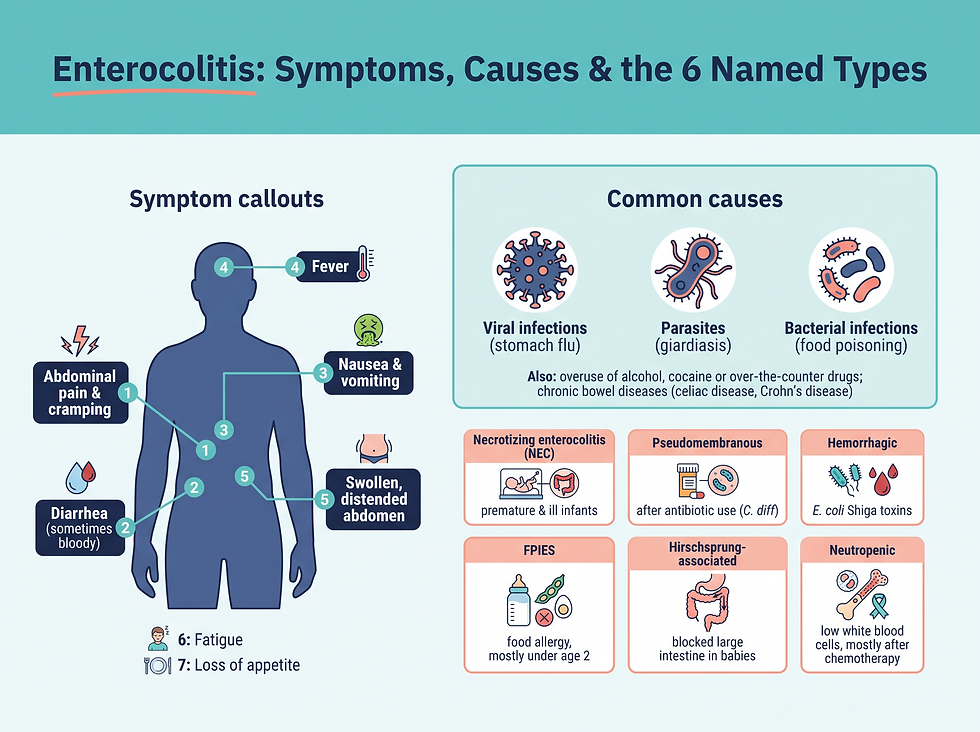
Typical symptoms include abdominal pain and cramping, diarrhea (sometimes bloody), loss of appetite, nausea and vomiting, fever, fatigue, and a swollen or distended abdomen. In most cases an infection is the cause, and infections are usually temporary. Treatment targets the cause and can range from medications to surgery. Contact your healthcare provider if you suspect enterocolitis — sepsis from untreated severe enterocolitis is a medical emergency.

What Is Enterocolitis?
Enterocolitis is an inflammation that occurs throughout your intestines. It combines enteritis — inflammation of the small intestine — with colitis — inflammation of the large intestine.
Inflammation in either of your intestines is common, but when it occurs in both, it tends to be more severe. It also tends to affect those with more vulnerable immune systems, especially infants.
How Does Enterocolitis Affect Your Body?
Inflammation in your intestines typically affects the inner lining, called the mucosa. It causes swelling, tenderness, and changes to the way your intestines secrete and absorb. This affects your digestion and your poop.
Inflammation is a response from your immune system when something is infecting or injuring your body. Your immune system may also cause general symptoms of illness along with the local inflammation.
What Are the Symptoms of Enterocolitis?
Enterocolitis feels like a stomach bug that extends throughout your intestines. Typical symptoms include:
Abdominal pain and cramping — a core feature of intestinal inflammation.
Diarrhea — sometimes bloody, which is a warning sign.
Loss of appetite — common across intestinal infections.
Nausea and vomiting — contributes to dehydration risk.
Fever — signals an immune response to infection.
Fatigue — a general symptom of illness.
Swollen, distended abdomen — reflects inflammation and gas buildup.
How Long Does Enterocolitis Last?
It depends on the cause. Infections — the most common causes — are usually temporary. Your immune system can often defeat them on its own, though sometimes you might need medication.
Some of the less common causes, such as autoimmune diseases, can be long-lasting. Chronic diseases aren't curable, but healthcare providers can treat the inflammation separately with medication.
What Causes Enterocolitis?
In theory, any of the normal causes of enteritis or colitis could also cause enterocolitis in both intestines. But this would indicate an unusually severe reaction and possibly a more vulnerable immune system.
Common causes include viral infections, such as the stomach flu (gastroenteritis); parasite infections, like giardiasis; and bacterial infections, such as food poisoning.
Overuse of certain substances — such as alcohol, cocaine, and over-the-counter drugs — can cause bowel inflammation. Other causes include chronic bowel diseases such as celiac disease and Crohn's disease.
Who Is Most at Risk?
You're more likely to get enterocolitis in both intestines if your immune system is not at full strength. Infants and children are more commonly affected, as well as those with chronic illnesses such as HIV.
What Are the Six Specific Types of Enterocolitis?
Healthcare providers have given names to certain types of enterocolitis that come from certain causes. These causes represent trickier infections and diseases that are more likely to affect both intestines.
Necrotizing enterocolitis (NEC): a severe reaction to normal feeding bacteria in premature, immunocompromised infants, where blood supply to the intestinal lining is cut off and tissue dies.
Pseudomembranous enterocolitis: C. diff bacteria taking over after antibiotics kill the protective gut bacteria; affects people recently treated with antibiotics and is common in hospitals and nursing homes.
Hemorrhagic enterocolitis: caused by Shiga toxins from enterohemorrhagic E. coli (EHEC/STEC); affects the very young and old.
Food protein-induced enterocolitis syndrome (FPIES): a non-IgE mediated food allergy reaction in the intestinal lining, mostly in children under two.
Hirschsprung-associated enterocolitis: bacterial overgrowth behind a stool blockage in babies born with Hirschsprung disease.
Neutropenic enterocolitis: serious infections enabled by low neutrophil white blood cell counts, mostly after chemotherapy for blood cancers.
What Is Necrotizing Enterocolitis?
Necrotizing enterocolitis (NEC) affects ill and premature infants, who are already immunocompromised. These babies' intestines react severely when exposed to normal bacteria through feeding. Inflammation and swelling are so severe that the blood supply to their intestinal lining is cut off, causing tissue death — which is what "necrotizing" means.
Doctors aren't sure what the original cause of inflammation is in NEC. It might be due to the diminished blood supply to these babies' intestines, or it might be due to bacterial infections that find it easier to take hold when the blood supply is low. Both factors seem to contribute.
What Is Pseudomembranous Enterocolitis?
Pseudomembranous enterocolitis is also known as antibiotic-associated enterocolitis. It's caused by a bacterial infection, but also, ironically, by antibiotics. The bacterium involved — Clostridium difficile (C. diff) — tends to infect people who've recently taken antibiotics to treat a different infection.
Many common antibiotics don't kill C. diff, but they do kill the other bacteria in your gut that would kill C. diff. This allows C. diff to easily grow out of control. As it grows, the bacterium releases toxins into your intestinal lining. Some people have a particularly severe reaction to those toxins, which can lead to enterocolitis. This infection is common in hospitals and nursing homes, due to the combination of compromised immune systems, antibiotic use, and C. diff's ability to live for a long time on surfaces.
What Is Hemorrhagic Enterocolitis?
E. coli infections can cause hemorrhagic enterocolitis. E. coli is a bacterium that commonly and harmlessly lives in our intestines. The danger comes from a particular strain known as enterohemorrhagic E. coli (EHEC), also known as Shiga toxin-producing E. coli (STEC). This strain produces toxins (called Shiga toxins) that adhere to your intestinal lining, causing inflammation and bleeding (hemorrhage).
"Enterohemorrhagic" means bleeding in your small intestine. Those who react more severely to Shiga toxins may have enterocolitis and bleeding in both intestines. This will cause bloody diarrhea (dysentery). Hemorrhagic enterocolitis most commonly affects the very young and old.
What Is Food Protein-Induced Enterocolitis (FPIES)?
Food protein-induced enterocolitis syndrome (FPIES) is a food allergy reaction that mostly affects children under two. It causes an inflammatory immune response in their intestinal lining. FPIES is a non-IgE mediated allergy, which makes it different from other allergies you may be familiar with.
Most allergies cause your immune system to produce specific antibodies to the allergen, called IgE antibodies. These antibodies cause an immediate reaction that you may experience as symptoms in your nose, throat, lungs, or skin. Non-IgE mediated allergies don't produce IgE antibodies. Instead, they cause a delayed reaction in your intestines alone, leading to symptoms of enterocolitis.
What Is Hirschsprung-Associated Enterocolitis?
Hirschsprung-associated enterocolitis is a common and dangerous complication of Hirschsprung disease, a birth defect that affects the large intestine. Babies with Hirschsprung disease are missing certain cells in the lining of their large intestines, usually in one segment. These cells are involved in the muscle contractions that move poop through the large intestine (peristalsis).
In the segment where the cells are missing, poop doesn't continue to move through and builds up, causing a blockage. This blockage creates a breeding ground for bacteria to overgrow. Bacterial overgrowth can spread to both intestines and eventually degrades the intestinal lining, allowing the bacteria to infiltrate the lining. All of these factors may contribute to causing enterocolitis.
What Is Neutropenic Enterocolitis?
Neutropenic enterocolitis affects people experiencing neutropenia — lower-than-normal levels of white blood cells called neutrophils. These are the cells that would normally help protect you from infections. People who have neutropenia are prone to more serious infections that may lead to enterocolitis.
Most people with neutropenic enterocolitis have undergone chemotherapy for blood cancers such as leukemia and lymphoma. These conditions cause neutropenia, and chemotherapy itself contributes to weakening the intestinal mucosa. But it can also occur in people with neutropenia due to other conditions, such as HIV/AIDS and autoimmune diseases.
How Is Enterocolitis Diagnosed?
The signs and symptoms of enteritis, colitis, and enterocolitis are similar. A healthcare provider might not know right away which parts of your intestines are affected, but they will suspect inflammation based on your physical signs and symptoms. After that, their job will be to identify the cause. This will allow them to diagnose the specific type of enterocolitis.
Which Tests Are Used?
Healthcare providers use blood tests, poop tests, and imaging tests to look for information about what's causing your condition.
Blood tests and poop tests: help identify specific infections or diseases that may be involved.
Abdominal ultrasound and CT scan: show evidence of inflammation and possible complications in your bowels.
How Is Enterocolitis Treated?
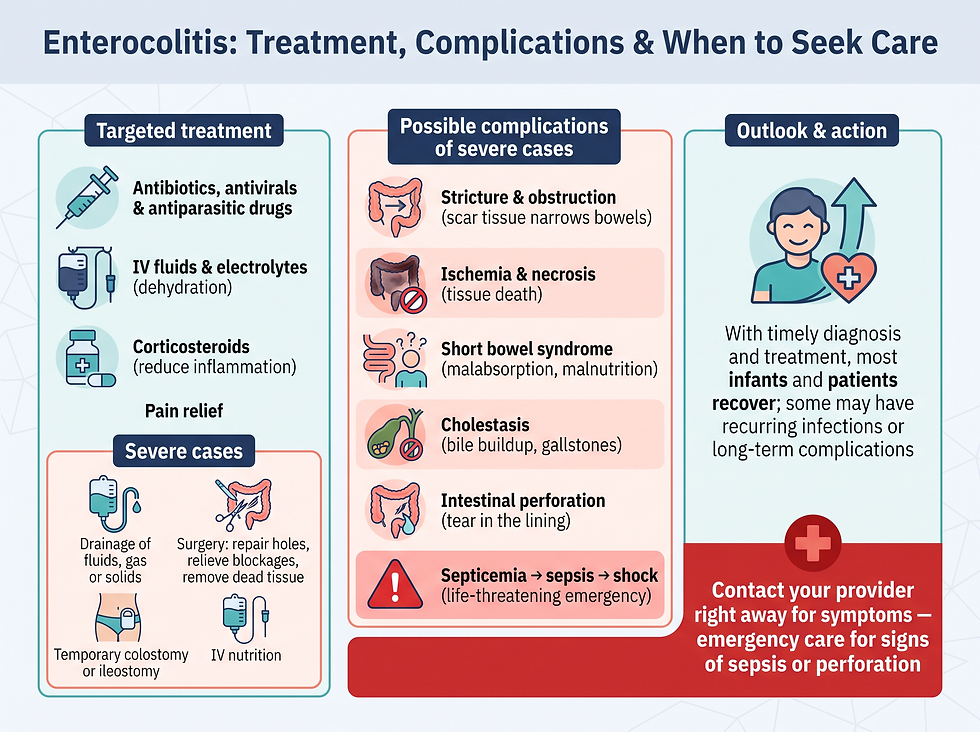
Treatment will be targeted to the cause. Acute treatments might include:
Antibiotics, antivirals, or antiparasitic drugs to target infections.
IV fluids and electrolytes to treat dehydration from diarrhea and vomiting.
Corticosteroids to reduce inflammation.
Pain relief.
In severe cases, some people need:
Drainage of fluids, gas, or solids from your intestines or peritoneal cavity.
Surgical interventions to repair a hole, relieve a blockage, or remove dead tissue.
A temporary colostomy or ileostomy to redirect food from the bowels while they heal.
IV nutrition.
What Is Gut Rehabilitation?
Gut rehabilitation aids those with intestinal failure. It uses IV nutrition, oral rehydration, and therapies to restore gut function.
Will My Baby Recover From Enterocolitis?
Enterocolitis that affects infants — including necrotizing enterocolitis and Hirschsprung-associated enterocolitis — can be life-threatening. However, with timely diagnosis and treatment, most infants recover. Some may continue to have recurring infections or other long-term complications.
What Are the Possible Complications of Severe Enterocolitis?
Severe enterocolitis can cause six main complications:
Stricture and obstruction: chronic inflammation and wounding scar the tissues; scar tissue narrows the intestines and obstructs the passage of solids.
Ischemia and necrosis: loss of blood supply to the intestinal lining causes tissue death; dead tissue must be removed to preserve the rest.
[Short bowel syndrome](https://www.rinnit.com/post/short-bowel-syndrome): children who need part of their intestines removed may have trouble absorbing nutrients (malabsorption), leading to malnutrition, failure to thrive, and growth and development delays.
Cholestasis: children unable to feed normally may develop bile buildup in the bile ducts, leading to sedimentation and gallstones; bile can back up in the gallbladder and liver, causing inflammation.
Intestinal perforation: necrosis, severe ulceration, or bacterial infiltration degrades the lining until it breaks or tears, allowing intestinal bacteria to escape.
Septicemia, sepsis, and shock: infection escapes into the peritoneal cavity (peritonitis), then the bloodstream (septicemia), leading to whole-body inflammation and clotting (sepsis — an emergency), and in the most severe cases septic shock with multiple organ failure and a high fatality rate.
When Should You Contact Your Healthcare Provider?
Contact your healthcare provider right away if you develop symptoms of enterocolitis — abdominal pain and cramping, diarrhea (especially bloody), loss of appetite, nausea and vomiting, fever, fatigue, or a swollen, distended abdomen — particularly if you are an infant, an older adult, or anyone with a weakened immune system.
Enterocolitis more often affects people with weaker-than-normal immune systems. Seek urgent medical attention for signs of sepsis or intestinal perforation — such as a rapid heart rate, confusion, extreme weakness, or a rigid, severely painful abdomen — because sepsis is an emergency that requires immediate hospital care.
What Questions Should You Ask Your Healthcare Provider?
Preparing questions ahead of time helps you get the most out of your appointment. Consider asking:
Which parts of my intestines are inflamed — and is this enterocolitis rather than enteritis or colitis alone?
What is causing my enterocolitis — an infection, a medication, or a chronic disease?
Which specific type of enterocolitis do I (or my baby) have?
What treatment do you recommend, and what is it targeting?
Do I need IV fluids, corticosteroids, or surgery?
What complications should I watch for, and when should I go to the emergency room?
If my baby has NEC or Hirschsprung-associated enterocolitis, what is the outlook for recovery?
What signs of short bowel syndrome or malnutrition should I monitor after surgery?
Conclusion: Double-Intestine Inflammation Deserves Quick, Cause-Targeted Care
Enterocolitis is more than an ordinary stomach bug — it is inflammation that strikes both intestines at once, and it tends to be more serious than inflammation in either bowel alone. It most often affects people with weaker-than-normal immune systems, especially infants, which can make it scarier than normal for those affected and their loved ones. But with careful attention and quick response, healthcare providers can treat it before complications arise.
"Inflammation in the intestines is common, especially as a response to infection. But when it affects both your small and large intestines, it tends to be more serious. Enterocolitis more often affects people with weaker-than-normal immune systems. This can make it scarier than normal for those affected and their loved ones. But with careful attention and quick response, healthcare providers can treat it before complications arise. If you or a loved one is immunocompromised, stay alert to the risk of enterocolitis."
Your next steps:
Contact your healthcare provider right away if you develop symptoms of enterocolitis — especially abdominal pain, bloody diarrhea, fever, or a swollen abdomen — and seek emergency care for any signs of sepsis or intestinal perforation.
Help your provider find the cause by completing blood tests, poop tests, and imaging so the specific type of enterocolitis can be diagnosed and treatment can target the underlying cause.
Stay alert if you're immunocompromised — infants, older adults, chemotherapy patients, and people with chronic illnesses should treat any intestinal infection promptly, because timely care is what makes recovery the most likely outcome.
This article provides general health information for educational purposes and is not a substitute for professional medical advice, diagnosis, or treatment. Always consult a qualified healthcare provider about any health condition.
Frequently Asked Questions (FAQ)
What is enterocolitis?
Enterocolitis is inflammation that occurs throughout both of your intestines at once — the small intestine (enteritis) and the large intestine (colitis) together.
How is enterocolitis different from enteritis or colitis?
Enteritis affects only the small intestine and colitis affects only the large intestine. Enterocolitis combines both, and when inflammation occurs in both intestines it tends to be more severe.
Is enterocolitis contagious?
The most common causes are infections — viral, parasitic, and bacterial — which can be transmitted between people (for example, the stomach flu or C. diff in hospitals and nursing homes). The condition itself is an inflammatory response, not something you "catch."
What are the symptoms of enterocolitis?
Typical symptoms include abdominal pain and cramping, diarrhea (sometimes bloody), loss of appetite, nausea and vomiting, fever, fatigue, and a swollen, distended abdomen.
How long does enterocolitis last?
It depends on the cause. Infections — the most common causes — are usually temporary, and your immune system can often defeat them on its own, though sometimes medication is needed. Less common causes, such as autoimmune diseases, can be long-lasting.
What causes enterocolitis?
Any of the normal causes of enteritis or colitis can cause enterocolitis in both intestines, indicating an unusually severe reaction and possibly a more vulnerable immune system. Common causes include viral infections (stomach flu), parasite infections (giardiasis), bacterial infections (food poisoning), overuse of alcohol, cocaine, or over-the-counter drugs, and chronic bowel diseases such as celiac disease and Crohn's disease.
Who is most likely to get enterocolitis?
People with weaker-than-normal immune systems. Infants and children are more commonly affected, as well as people with chronic illnesses such as HIV.
What is necrotizing enterocolitis (NEC)?
NEC affects ill and premature infants whose intestines react severely to normal bacteria encountered through feeding. The inflammation and swelling cut off the blood supply to the intestinal lining, causing tissue death (necrosis). The original trigger is uncertain — diminished blood supply, bacterial infection, or both seem to contribute.
What is pseudomembranous enterocolitis?
Also called antibiotic-associated enterocolitis, it is caused by C. diff (Clostridium difficile) bacteria. Common antibiotics kill the protective gut bacteria that would normally keep C. diff in check, allowing it to grow out of control and release toxins into the intestinal lining. It is common in hospitals and nursing homes.
What is hemorrhagic enterocolitis?
It is caused by enterohemorrhagic E. coli (EHEC), also called Shiga toxin-producing E. coli (STEC). Shiga toxins adhere to the intestinal lining, causing inflammation and bleeding in both intestines and bloody diarrhea (dysentery). It most commonly affects the very young and old.
What is food protein-induced enterocolitis syndrome (FPIES)?
FPIES is a non-IgE mediated food allergy reaction that mostly affects children under two. Unlike typical allergies that cause immediate nose, throat, lung, or skin reactions via IgE antibodies, FPIES causes a delayed reaction in the intestines alone, leading to symptoms of enterocolitis.
What is Hirschsprung-associated enterocolitis?
It is a common and dangerous complication of Hirschsprung disease, a birth defect of the large intestine. Missing cells prevent normal poop movement, causing a blockage where bacteria overgrow, spread to both intestines, and degrade the intestinal lining.
What is neutropenic enterocolitis?
It affects people with neutropenia — low levels of neutrophil white blood cells that normally protect against infection. Most cases occur after chemotherapy for blood cancers such as leukemia and lymphoma; chemotherapy also weakens the intestinal mucosa. It can also occur with neutropenia from HIV/AIDS or autoimmune diseases.
How is enterocolitis diagnosed?
A provider suspects inflammation based on your physical signs and symptoms, then works to identify the cause using blood tests, poop tests, and imaging such as an abdominal ultrasound or CT scan, which can show inflammation and possible complications.
How is enterocolitis treated?
Treatment is targeted to the cause. Acute treatments include antibiotics, antivirals, or antiparasitic drugs; IV fluids and electrolytes for dehydration; corticosteroids to reduce inflammation; and pain relief.
What treatment is needed for severe enterocolitis?
Some people need drainage of fluids, gas, or solids from the intestines or peritoneal cavity; surgery to repair a hole, relieve a blockage, or remove dead tissue; a temporary colostomy or ileostomy to redirect food while the bowels heal; or IV nutrition.
What is gut rehabilitation?
Gut rehabilitation aids people with intestinal failure. It uses IV nutrition, oral rehydration, and therapies to restore gut function.
Can chronic causes of enterocolitis be cured?
Chronic diseases that cause enterocolitis aren't curable, but healthcare providers can treat the inflammation separately with medication.
Can my baby recover from enterocolitis?
Infant enterocolitis — including NEC and Hirschsprung-associated enterocolitis — can be life-threatening. However, with timely diagnosis and treatment, most infants recover. Some may continue to have recurring infections or long-term complications.
What is short bowel syndrome?
Children who need part of their intestines removed due to enterocolitis complications may have trouble absorbing enough nutrients (malabsorption), leading to malnutrition, failure to thrive, and growth and development delays.
What is cholestasis?
Children unable to feed normally during enterocolitis may develop a buildup of bile in their bile ducts. Static bile can lead to sedimentation and gallstones, and bile backing up in the gallbladder and liver can cause inflammation.
What is intestinal perforation?
Necrosis, severe ulceration, or bacterial infiltration can degrade the intestinal lining until it breaks or tears, allowing intestinal bacteria to escape into the peritoneal cavity (peritonitis).
Can enterocolitis cause sepsis?
Yes. Infection that escapes the intestines into the peritoneal cavity (peritonitis) can spread to the bloodstream (septicemia), leading to whole-body inflammation and blood clotting (sepsis). Sepsis is an emergency. In the most severe cases it can lead to septic shock, involving multiple organ failure and a high fatality rate.
What is stricture and obstruction?
Chronic inflammation and wounding of the intestinal lining can cause scarring. Scar tissue can narrow the intestines (stricture), which can obstruct the passage of solids.
What is ischemia and necrosis in enterocolitis?
Loss of blood supply to the tissues lining the intestines can cause tissue death. Dead tissue must be removed surgically to preserve the rest.
When should I contact my healthcare provider about enterocolitis?
Contact your provider right away for symptoms of enterocolitis — especially abdominal pain, bloody diarrhea, fever, or a swollen abdomen — particularly if you or your child has a weakened immune system. Seek emergency care for signs of sepsis or intestinal perforation.
How can I lower my risk of enterocolitis?
Stay alert if you're immunocompromised. Anyone with a weaker-than-normal immune system should watch for the risk of enterocolitis and respond quickly, since careful attention and quick response let providers treat it before complications arise.
What should I ask my healthcare provider about enterocolitis?
Ask which parts of your intestines are inflamed, what the cause is, which specific type you have, what treatment targets that cause, whether surgery is needed, and what complication warning signs to watch for.
References
American College of Allergy, Asthma & Immunology. Food Protein-Induced Enterocolitis Syndrome (FPIES) (accessed 1/19/2023)
Eunice Kennedy Shriver National Institute of Child Health and Human Development (NICHD). Necrotizing Enterocolitis (NEC) (accessed 1/19/2023)
Frykman PK, Short SS. Hirschsprung-associated enterocolitis: prevention and therapy. Semin Pediatr Surg (2012 Nov;21(4):328-335)
Qasim A, Nahas J. Neutropenic Enterocolitis (Typhlitis). StatPearls (updated 2022 Aug 8)
Hurley BW, Nguyen CC. The spectrum of pseudomembranous enterocolitis and antibiotic-associated diarrhea. Arch Intern Med (2002 Oct 28;162(19):2177-2184)
Merck Manual Professional Version. Infection by Escherichia coli O157:H7 and other Enterohemorrhagic E. coli (EHEC) (accessed 1/19/2023)
Comments