Food Allergy: Symptoms, the 8 Most Common Allergens, and How to Stay Safe from Anaphylaxis

Updated: 2 days ago
Medically reviewed by Dr. Baraa Alnahhal, MD · Last reviewed: September 2026
What Is a Food Allergy?
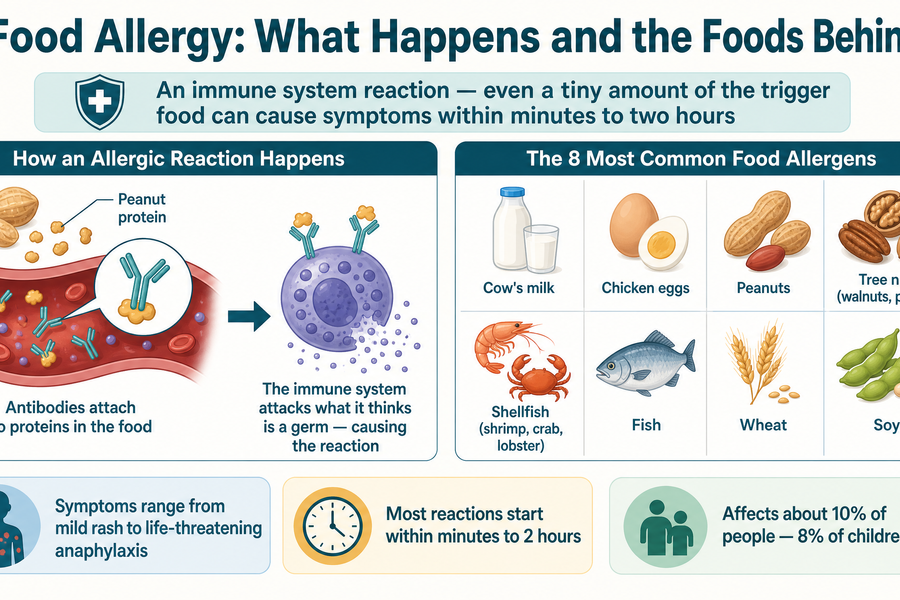
A food allergy is an immune system reaction to certain foods. Even a tiny amount of an allergy-causing food can trigger symptoms such as itching, rashes, upset stomach, and wheezing. In some people, a food allergy can cause a life-threatening reaction known as anaphylaxis — a severe whole-body allergic reaction that requires emergency treatment.
Food allergy affects an estimated 10% of the general population and about 8% of children. The food that causes an allergic reaction is called an allergen — the word your health care team will use when talking about your triggers.
What Do Food Allergy Symptoms Look Like?
Food allergy symptoms usually start within a few minutes to two hours after eating the allergy-causing food. The seriousness of symptoms can vary widely, ranging from mild to life-threatening.
Skin: A rash, itchiness, raised patches on the skin, or swollen skin.
Mouth and face: Itching or swelling of the lips, face, tongue, and throat.
Eyes: Watery, itchy, or swollen eyes.
Digestive system: Belly pain, upset stomach, diarrhea, or vomiting.
Nose: Stuffy or runny nose.
Lungs: Wheezing, coughing, or trouble breathing.
Whole body: Dizziness, lightheadedness, or fainting.
Anaphylaxis: The Food Allergy Emergency
A food allergy can trigger a severe allergic reaction called anaphylaxis, and it should never be taken lightly. Untreated, anaphylaxis can be fatal.

Tightening of the airways: Trouble breathing.
Swollen throat or lump sensation: A feeling of a lump in your throat that makes it hard to breathe.
Drop in blood pressure: Dizziness, lightheadedness, or loss of consciousness.
Rapid pulse: Heart beating unusually fast.
Mental status changes: Confusion or other changes in mental status.
Emergency treatment is critical for anaphylaxis. If you or someone nearby has signs of this reaction after eating, get emergency care immediately — and use epinephrine right away if one has been prescribed.
When Should You See a Doctor?
See a health care professional or allergist if you have food allergy symptoms shortly after eating. If possible, see a health professional while the allergic reaction is occurring — this can help with a diagnosis. Get emergency care if you have signs or symptoms of anaphylaxis.
What Causes a Food Allergy?
A food allergy happens when the immune system reacts to food as if it were reacting to a germ or parasite. The immune system creates antibodies to a certain protein in a food item — such as a peanut.
Those antibodies in the blood find and attach themselves to the food proteins, sending a signal for the immune system to mount an attack. The signs and symptoms of a food allergy are the result of the immune system fighting what it thinks is a foreign substance.
The 8 Most Common Food Allergens
Most food allergy reactions trace back to a short list of foods.
Cow's milk: Milk and many dairy products.
Chicken eggs: Eggs in many baked and prepared foods.
Peanuts: Whole peanuts, peanut butter, peanut oil products.
Tree nuts: Walnuts and pecans.
Shellfish: Shrimp, lobster, scallops, and crab.
Fish: Most fin fish.
Wheat: Breads, pastas, and many processed foods.
Soy: Soybeans and many soy-derived ingredients.
Pollen-Food Allergy Syndrome
People who are allergic to certain pollens may be allergic to certain raw plant foods — but usually have no reaction if the food is cooked or processed. This condition is called pollen-food allergy syndrome, or oral allergy syndrome.
Birch pollen: Fruits such as apple, apricot, cherry, peach, pear, and plum; nuts and legumes such as almond, hazelnut, peanut, and soybean; herbs and seeds such as aniseed, caraway seed, coriander, fennel, and parsley; vegetables such as carrot and celery.
Ragweed pollen: Banana, cantaloupe, cucumber, honeydew, watermelon, zucchini.
Grass pollens: Fruits such as cantaloupe, honeydew, kiwi, orange, tomato, and watermelon; the legume peanut; vegetables such as Swiss chard and white potato.
Mugwort pollen: Fruits such as bell pepper, grape, peach, lychee, and mango; herbs and seeds such as aniseed, black pepper, caraway seed, coriander, fennel, paprika, mustard, parsley, and sunflower seeds; vegetables such as broccoli, cabbage, carrot, cauliflower, celery, garlic, and onion.
Exercise-Induced Food Anaphylaxis
Some people experience an anaphylactic allergic reaction if they do moderate or strenuous exercise a few hours after eating certain foods — most commonly wheat or shellfish. If these people don't exercise after eating the allergen, they don't have an allergic reaction.
Food Allergy vs. Food Intolerance: Know the Difference
A food allergy is different from food intolerance, though both conditions may have similar digestive symptoms. A food intolerance is not an immune system reaction — it happens when the body can't digest certain foods or use certain nutrients.
Food allergy: Immune system reacts to a food protein, causing skin, digestive, and breathing symptoms; can cause anaphylaxis.
Food intolerance: Body can't digest certain foods or nutrients, causing excessive gas, bloating, cramping or stomach pain, and diarrhea.
Food poisoning: Caused by germs or other substances in food or drink; symptoms start within hours or days of eating.
Additive sensitivity: A reaction to additives rather than a true allergy — for example, sulfites in dried fruit, canned goods, and wine can trigger asthma attacks in people with severe asthma.
Celiac disease: An immune reaction to gluten, but unique and different from a typical food allergy; it damages the small intestine, causing an inability to absorb certain nutrients, and does not cause anaphylaxis.
Two common intolerances are worth knowing by name. Lactose intolerance is the result of the body not being able to break down lactose, the main sugar in milk. Gluten sensitivity is the result of the body not being able to break down gluten, a protein in wheat, barley, and rye.
Who Is at Higher Risk?
Family history: Having a family member with any allergy is a key risk factor for food allergies.
Other allergies: An allergy to one food increases the risk of becoming allergic to another; hay fever also increases risk.
Age: Allergies commonly begin in childhood, especially the infant and toddler years.
Atopic dermatitis (eczema): A skin condition causing dry, itchy skin and rashes; having it in early childhood increases food allergy risk.
Asthma: Asthma and food allergy commonly occur together, and when both are present, both sets of symptoms are more likely to be severe.
Age matters in both directions. Children typically outgrow allergies to milk, soy, wheat, and eggs, while severe food allergies and allergies to peanuts, tree nuts, and shellfish are more likely to be lifelong.
Can Food Allergies Be Prevented?
Introducing peanut products and eggs early in childhood may lower the risk of allergy to peanuts and eggs. Studies have shown that introducing these foods in the diet of children 4 to 11 months of age lessens the likelihood of having peanut and egg allergies later. Studies of early introduction of other common food allergens have not shown that this lowers risk.
Before introducing common allergy-related foods, talk with your child's health care team about the best time to offer them. Children with pets or who grow up around livestock on a farm may have a lower risk of food allergies.
How Is a Food Allergy Diagnosed?
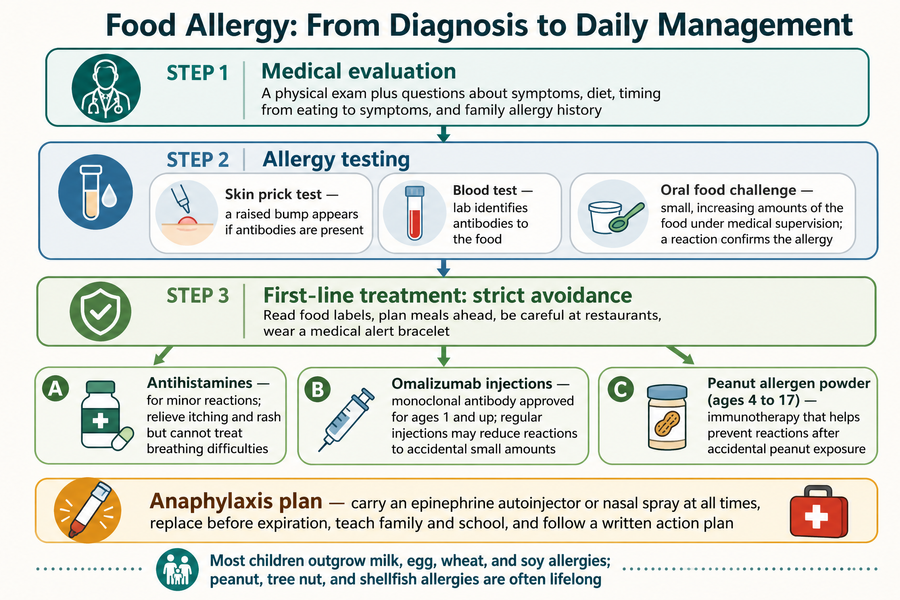
Your health care professional does a complete physical exam and asks a number of questions about your symptoms, diet, foods that seem related to symptoms, the timing from eating a food to having symptoms, and family history of allergies.
Allergy tests can help your health care team find foods that may cause an allergic reaction. A negative result means that you may not be allergic to a particular food; a positive result means that you may be allergic. Importantly, test results show whether your body has antibodies to a food allergen, but they don't necessarily show that you will actually have an allergic reaction to the food. They help the team figure out how likely you are to be allergic and how to move forward with more tests or treatments.
Skin prick test: A small amount of the suspected food is placed on the skin of your forearm or back, then the skin is pricked to allow a tiny amount beneath the surface. A raised bump appears if your body has antibodies to that food allergen.
Blood test: A laboratory test of a blood sample identifies the presence of antibodies to a particular food allergen.
Oral food challenge: You are given small but increasing amounts of the suspect food under supervision by a team experienced in treating reactions. A reaction confirms the allergy; no reaction may mean the food can return to your diet.
The oral food challenge carries a risk of anaphylaxis, which must be treated immediately. Preparation typically includes not eating the suspect food for two weeks beforehand, fasting for two hours before the test, and sometimes pausing certain medicines.
How Is a Food Allergy Treated?
The primary approach to food allergy is to strictly avoid the food that causes the allergic reaction. But you may need treatment if you come in contact with the food allergen or accidentally eat it.
Medicines for Reactions
Antihistamines: Prescribed or over-the-counter; for minor reactions, they may help relieve itching or rash — but they cannot treat more severe symptoms, such as breathing difficulties.
Omalizumab: A monoclonal antibody given by regular injections; may reduce food allergy reactions if small amounts of an allergen are eaten by mistake; approved for children age 1 and older and for adults.
Peanut allergen powder: An immunotherapy prescribed for children with peanut allergy ages 4 to 17; helps prevent allergic reactions after accidental exposure to peanuts; it doesn't allow you to eat peanut products; it can be taken as a maintenance medicine in adulthood.
Epinephrine: The Life-Saving Treatment
Many people with food allergies are prescribed an epinephrine autoinjector — a combined syringe and concealed needle that injects a single dose of medicine when pressed against your thigh. Epinephrine is also available as a nasal spray.
If you've been prescribed epinephrine, four habits matter most.
Know how to use it: Make sure the people closest to you also know how to give the medicine — in an anaphylactic emergency, they may need to give you a dose.
Carry it at all times: It may be hard to predict when an accidental exposure may trigger an anaphylactic reaction.
Replace it before expiration: Expired epinephrine may not work properly.
Work with your child's school: Nurses, teachers, and staff should understand your child's need for epinephrine; create an anaphylaxis action plan.
How to Live Safely with a Food Allergy
One of the keys to preventing an allergic reaction is to completely avoid the food that causes your symptoms.
Reading food labels is the daily habit that matters most. Food labels must clearly list whether products contain common food allergens, and you should also check whether the food was made in a setting where the allergen is also prepared. Planning meals and snacks before leaving home helps — take a cooler packed with allergen-free foods when traveling or attending events, and bring an approved special treat to parties so no one feels left out of the celebration.
A medical alert bracelet or necklace lets others know that you have a food allergy if you have a reaction and cannot communicate. At restaurants, make certain your server or chef knows you absolutely cannot eat your allergen, and confirm that food isn't prepared on surfaces or in pans that contained it. When in doubt, say no thanks — people may not understand that a food allergy is serious or that a tiny amount can cause a severe reaction.
If your child has a food allergy, a fuller routine of safety steps applies.
Explain symptoms to caregivers: Teach adults around your child to recognize allergic reaction signs; emphasize that a reaction can be life-threatening and requires immediate action.
Educate your child: Make sure they know what foods to avoid, to ask for help right away, and — for older children — how to take epinephrine.
Write an action plan: Describe the steps for a reaction, how and when to use an epinephrine autoinjector or nasal spray, and when to get emergency care; give copies to the school nurse, teachers, and coaches.
Medical alert bracelet or necklace: Lists your child's allergy symptoms and explains how others can provide first aid.
Classroom practices: Discuss hand-washing and surface-cleaning routines with caregivers and teachers to reduce exposure.
Coping and Support
A food allergy can be a source of ongoing concern that affects life at home, school, and work. Daily activities that are easy for most families — grocery shopping and meal preparation — can become stressful for families and caregivers living with food allergies.
Connecting with others helps: many internet sites and nonprofit organizations offer information and forums, and support-group directories can connect you with people who share your concerns. Addressing bullying matters too — children are sometimes bullied at school because of their food allergies, and discussing your child's allergy with school personnel greatly reduces the risk of being a bullying target.
How to Prepare for Your Appointment
Because appointments can be brief, come prepared. Write down any symptoms you've had — including ones that may seem unrelated — key personal information including major stresses or recent life changes, a list of all medicines, vitamins, and supplements with doses and reasons, and your questions ranked from most to least important. Take a family member or friend along if possible, since someone accompanying you may recall information you missed.
Useful questions to ask your health care team include: Are my symptoms likely caused by a food allergy or another condition? What kinds of tests do I need? Is my condition likely temporary or long-lasting? What types of treatment are available? How can I manage this alongside my other health conditions? Should I see a specialist, and will insurance cover it? Is there a generic alternative to the prescribed medicine? Is there printed material I can take home, and what websites do you recommend?
If your child is being seen, you can also ask: Is my child likely to outgrow this allergy? Are there alternatives to the trigger foods? How can I keep my child safe at school?
Your health care professional is likely to ask you a number of questions as well. Being ready to answer them saves time for the points that matter most to you.
What were your symptoms? Establishes the reaction picture.
How long did symptoms last? Helps classify severity.
What did you eat before the reaction? Points toward the trigger.
How long did it take symptoms to appear after eating? Allergy reactions typically start within minutes to two hours.
How much food did you eat before the reaction? Confirms even tiny amounts can trigger symptoms.
Was the suspect food cooked or raw? Raw foods trigger some reactions that cooked versions don't.
Do you know how the food was prepared? Cross-contamination may be the real trigger.
Have you eaten the suspect food in the past without a reaction? Helps distinguish allergy from one-time causes.
Did you take any over-the-counter allergy medicines such as antihistamines? Medicines can mask or alter symptoms.
Do you or someone in the family have allergies or asthma? Establishes family history risk.
In the meantime, if you suspect a food allergy, avoid the food altogether until your appointment. If you do eat it and have a mild reaction, over-the-counter antihistamines may help relieve symptoms. If you have a more severe reaction with any symptoms of anaphylaxis, seek emergency help.
Conclusion
Food allergy is one of the clearest examples in everyday medicine of how dramatically a tiny amount of something can matter. A fraction of a peanut, a trace of shrimp in a sauce, a shared pan at a restaurant — any of it can set off an immune response that runs from a simple itch to a medical emergency. Understanding that distinction is the foundation of living safely with the condition.
The management path is straightforward: identify the specific triggers through careful history-taking and allergy testing, avoid those foods strictly, and keep the right medicines at the right readiness levels. Antihistamines ease minor reactions; omalizumab and peanut allergen powder offer additional protection against accidental exposure for some people; and epinephrine — carried everywhere, used without hesitation, and replaced before it expires — stands between a scary moment and a fatal one. Children have real reason for optimism, since milk, egg, wheat, and soy allergies are often outgrown, even though peanut, tree nut, and shellfish allergies tend to be lifelong.
Your next steps: If you or your child has symptoms soon after eating certain foods, see a health care professional — ideally while a reaction is occurring, since that helps diagnosis. If anaphylaxis is a risk, carry epinephrine at all times and make sure the people around you know how to use it. At home, read labels closely, plan meals ahead, wear a medical alert bracelet, and build a written action plan for your family and your child's school.
Frequently Asked Questions
What are the symptoms of a food allergy?
Food allergy symptoms usually start within a few minutes to two hours after eating the trigger food and range from mild to life-threatening. The most common symptoms include rash, itchiness, raised or swollen skin patches, itching or swelling of the lips, face, tongue, and throat, watery or swollen eyes, belly pain or upset stomach, diarrhea, vomiting, stuffy or runny nose, wheezing or trouble breathing, and dizziness or fainting. In severe cases, the reaction can progress to anaphylaxis.
What are the most common food allergens?
Eight foods account for most food allergy reactions: cow's milk, chicken eggs, peanuts, tree nuts such as walnuts and pecans, shellfish such as shrimp, lobster, scallops, and crab, fish, wheat, and soy.
What is anaphylaxis, and what should I do if it happens?
Anaphylaxis is a severe allergic reaction that can be fatal without emergency treatment. Warning signs include tightening of the airways, a swollen throat or the sensation of a lump in the throat that makes it hard to breathe, a drop in blood pressure, rapid pulse, confusion or other mental status changes, and dizziness or loss of consciousness. If it happens, get emergency care immediately and use an epinephrine autoinjector or nasal spray right away if one has been prescribed. Never wait to see if symptoms pass.
How is a food allergy different from food intolerance?
A food allergy is an immune system reaction to a food protein, and it can cause skin, digestive, and breathing symptoms — even anaphylaxis. Food intolerance is not an immune reaction; it happens when the body can't digest certain foods or use certain nutrients, causing digestive symptoms such as excessive gas, bloating, cramping, and diarrhea. Both can have similar digestive symptoms, which is why testing helps tell them apart.
How is a food allergy diagnosed?
Diagnosis starts with a complete physical exam and questions about symptoms, diet, timing between eating and symptoms, and family allergy history. Tests may include a skin prick test (a raised bump appears if your body has antibodies to the food), blood tests (which identify antibodies to a particular food allergen), and an oral food challenge (small but increasing amounts of the suspect food are given under medical supervision — a reaction confirms the allergy).
Can food allergies be treated or outgrown?
The primary approach is strict avoidance of the trigger food. Antihistamines can relieve minor reactions, while omalizumab (approved for ages 1 and up) and peanut allergen powder (ages 4 to 17) can reduce reactions to accidental exposure. Children typically outgrow allergies to milk, soy, wheat, and eggs, but allergies to peanuts, tree nuts, and shellfish are more likely to be lifelong. Introducing peanut products and eggs in children's diets between 4 and 11 months of age may lower the risk of those allergies later.
References
Health information, not medical advice. This article is for general education and is not a substitute for professional diagnosis or treatment. Always consult a qualified healthcare provider about your own health, and seek emergency care for urgent symptoms.
Comments