Ear Eczema: Symptoms, Types, Causes, Home Care, Treatment and When to See Your Provider — What You Need to Know

Updated: 2 days ago
Medically reviewed by Dr. Baraa Alnahhal, MD · Last reviewed: September 2026
Quick answer: What is ear eczema and how is it treated?
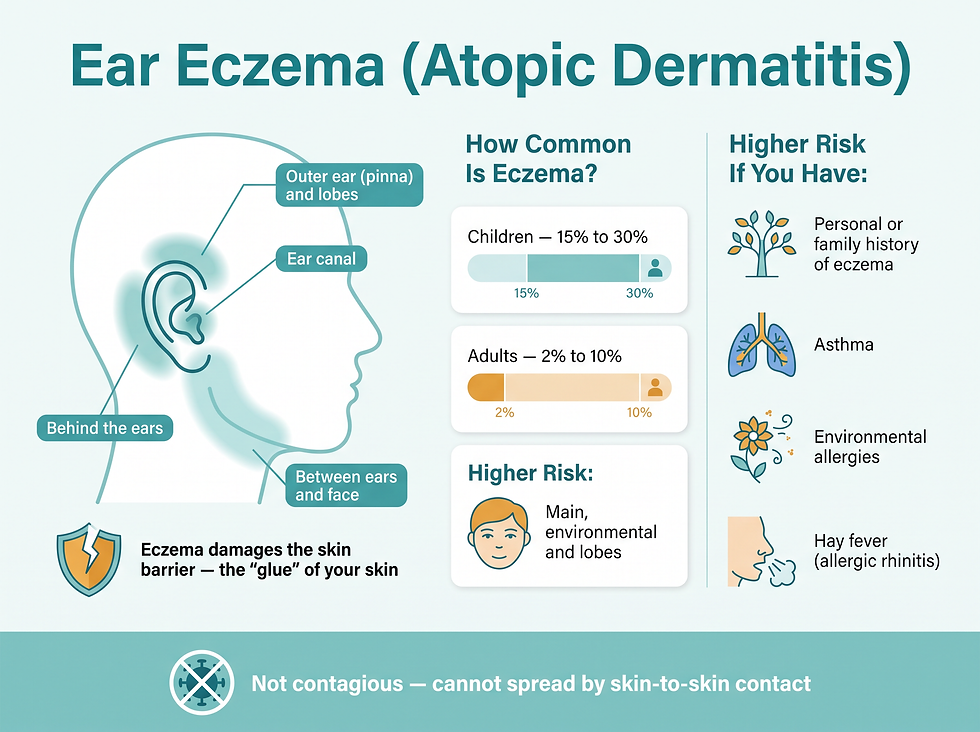
Ear eczema (atopic dermatitis) is a common, non-contagious skin condition that causes dry, discolored, itchy and bumpy skin on, in and around the ears. It strikes the outer ears, ear canals, the skin behind the ears and the area between the ears and face. The three main forms are allergic (contact dermatitis), asteatotic and seborrheic eczema. Most flare-ups clear with one to three weeks of proper home care — moisturizing, avoiding triggers, mild soaps and hydrocortisone — plus prescription options like steroid creams, topical immunomodulators and phototherapy for stubborn cases.
TL;DR
Ear eczema (atopic dermatitis) is a common skin condition that causes discoloration, dry skin and itchiness in, on and around your ears. It is not contagious, but you have a higher risk of developing it if you have a family history of eczema, asthma or allergies.
Eczema damages the skin barrier function — the “glue” of your skin. As a result, skin becomes more sensitive and more prone to infection and dryness. The condition can appear on the outer ear, inside the ear canal, behind the ears and on the skin between the ears and face.
Limitation statement: Eczema prevalence figures in this article come from the source page; it does not break out a separate figure for ear eczema specifically, and no additional statistics are included.
Key fact | What the evidence shows |
Prevalence of eczema | Approximately 15% to 30% of children have eczema; 2% to 10% of adults have it |
Contagion | Not contagious — cannot spread through skin-to-skin contact |
Affected areas | Outer ears (pinna) and lobes, ear canals, behind the ears, skin between ears and face |
Higher risk | Personal or family history of eczema, asthma, environmental allergies, hay fever |
Recovery time | With proper treatment, ear eczema usually clears in one to three weeks |
Cure status | Chronic condition with no cure; treatments effectively reduce symptoms |

What is ear eczema?
Ear eczema (atopic dermatitis) is a condition that causes skin to become dry, discolored, itchy and bumpy. It may appear on the outside of the ear or inside the ear canal.
Eczema damages the skin barrier function — the “glue” of your skin. As a result, skin becomes more sensitive and more prone to infection and dryness.
How does ear eczema affect the ears?
Affected area | Description |
Outer ears (pinna) | Including the ear lobes |
Inner ears | Including the ear canals |
Behind the ears | The crease and fold area |
Between ears and face | The adjoining facial skin |
The skin may itch, change color, develop bumps, dry out or thicken. In severe cases of ear eczema, the skin may crack or leak (weep) a thick, yellow or white fluid (pus). You may also experience a ringing noise (tinnitus) or hearing loss if you have a severe case of ear eczema in the ear canals.
How common is ear eczema?
Eczema is very common, and any part of the skin can develop it, including the ears. Approximately 15% to 30% of children have eczema, and 2% to 10% of adults have it.
Who does ear eczema affect?
Ear eczema can affect anyone with ears. However, it is more common in people with a personal or family history of eczema, asthma, environmental allergies and hay fever (allergic rhinitis).
What are the symptoms of ear eczema?
What does ear eczema look like?
Symptom | Description |
Itchy skin | The hallmark symptom |
Dry skin | Flaky, parched skin |
Discolored rashes | Patches of skin that change color |
Bumps | Small raised lesions on the skin |
Leathery patches | Thickened skin areas |
Crusty skin | Scaly, crusted surfaces |
Swelling | Localized inflammation |
Ear eczema does not hurt. However, if you scratch it, you may break the skin, leading to an infection that can cause pain.
How is ear eczema different from psoriasis?
Psoriasis and ear eczema are two different skin conditions. They differ in where the disease appears, how much it itches and how it looks.
Psoriasis is a chronic skin disorder that does not go away. People with psoriasis have thick, discolored patches of skin (plaques) covered with white or silvery scales. Ear eczema affects the skin in, on and around the ears, and it causes more intense itching than psoriasis. Many people, especially children, can get both conditions.
What causes ear eczema?
Eczema can develop anywhere on the skin, including the ears. Three types of eczema commonly develop in the ears:
Type | What it is | Common triggers |
Allergic eczema (contact dermatitis) | The immune system overreacts to minor irritants or allergens, inflaming the skin | Earrings, hair and skin care products, food, pollen, cell phones or headphones |
Asteatotic eczema | Commonly affects people 65 and older; changes in weather or temperature cause it; flares in winter | Low humidity (dry air), harsh soaps, wool, hair and skin care products |
Seborrheic dermatitis | Commonly affects oily areas — ears, scalp, nose and chest; exact cause unknown, possibly a surplus of a type of yeast on the skin | Linked to oily skin regions rather than a clear external trigger |
Is ear eczema contagious?
Ear eczema is not contagious. You cannot spread it to another person through skin-to-skin contact.
How is ear eczema diagnosed?
The physical exam
A healthcare provider will examine the ears and look for common signs of eczema, including discoloration and dryness. They may use a lighted instrument (otoscope) to look inside the ear and will ask about symptoms.
When are additional tests needed?
A provider can typically diagnose ear eczema after a physical exam. However, if there is any doubt, they may perform:
Test | Purpose |
Allergy skin test | Identifies specific allergen triggers |
Blood tests | Check for causes of a rash that might be unrelated to ear eczema |
Skin biopsy | Distinguishes one type of dermatitis from another |
How do you get rid of eczema in your ears?
The core strategy: find and avoid triggers
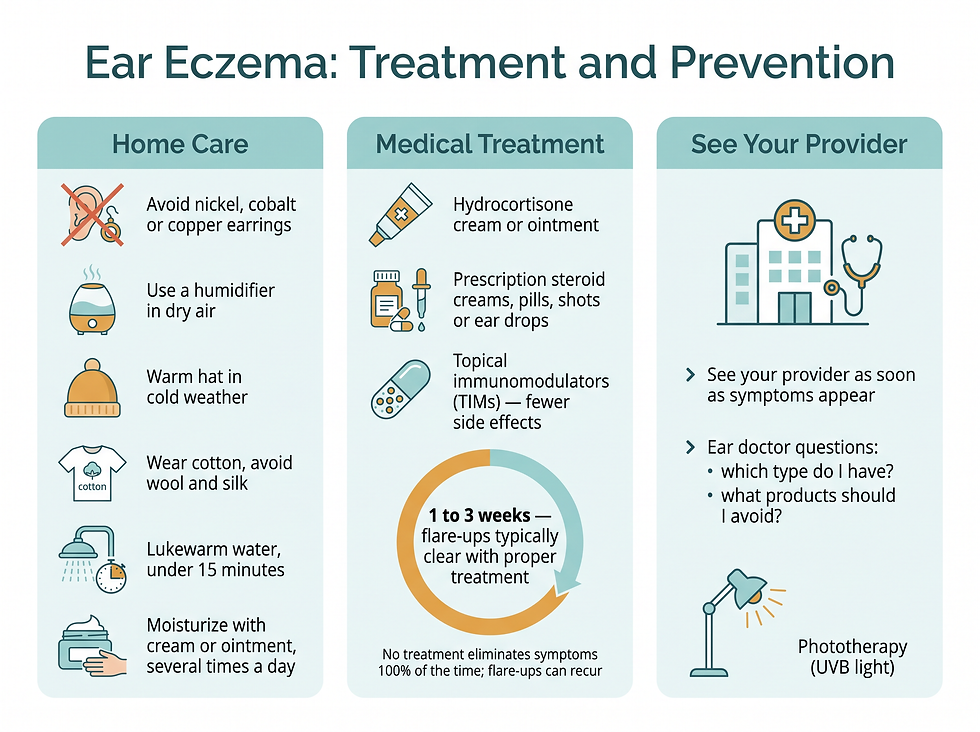
To get rid of ear eczema, it is important to determine what is causing it. Try to determine what triggers or worsens your ear eczema, and then avoid it. The goal is to reduce itching and discomfort and prevent infection and additional flare-ups.
Home remedies that help
The following home remedies may relieve ear eczema:
Home care step | Details |
Avoid allergens | Including earrings made of nickel, cobalt or copper |
Use a humidifier | If dry air makes your skin dry |
Cover ears in cold weather | Wear a warm hat that covers the ears |
Avoid rubbing or scratching | Prevents skin damage and infection |
Apply hydrocortisone | A corticosteroid combined with an anesthetic pain reliever; relieves itching and discoloration |
Moisturize regularly | Use a cream or ointment (lotions usually do not work as well); several times a day, including after bathing |
Lukewarm bathing | Not hot water; gently wash ears; limit water time to under 15 minutes |
Mild, fragrance-free products | Soaps and products free of perfumes, dyes and alcohol; look for “fragrance-free,” “hypoallergenic” or “for sensitive skin” labels |
Mild laundry soap | Thoroughly rinse clothes |
Ceramide products | Replace some of the “glue” (barrier) missing from the skin |
Cotton clothing | Wool, silk and other fabrics can dry the skin |
OTC antihistamines | For severe itching |
Will petroleum jelly help ear eczema?
Petroleum jelly or skin care ointments can help treat ear eczema. These products moisturize and protect affected skin. They are hypoallergenic and have antibacterial and antifungal characteristics that help heal the skin.
Gently wash the ears with warm running water and mild soap. Then, use a cotton swab to apply a small amount of petroleum jelly or skin care ointment over the ears. Try to avoid touching the ears to prevent dirt or bacteria from entering the area.
When are prescription treatments needed?
A provider may prescribe steroid creams, pills, shots or ear drops. Long-term risks include side effects like high blood pressure, weight gain and thinning of the skin. There are newer medications, called topical immunomodulators (TIMs), that show progress in treating patients who do not respond to other treatments. They change the body's immune response to allergens and have fewer side effects. Phototherapy — ultraviolet light, usually ultraviolet B (UVB), from special lamps — can also help, since the ultraviolet light waves found in sunlight can help certain skin disorders, including eczema.
How soon after treatment will I feel better?
With proper treatment, ear eczema should go away after one to three weeks. However, no treatment can claim to eliminate symptoms 100% of the time. You may encounter flare-ups on or in your ears for the rest of your life. Once you determine the cause of your flare-ups, you may prevent them from happening as often.
What is the outlook for ear eczema?
Can it be cured?
Ear eczema is a chronic condition, which means there is no cure. However, treatments are very effective in reducing the symptoms of dry, itchy skin.
Living with remission periods
If you have ear eczema, it can generally be well-managed with good skin care and treatment. However, symptom flare-ups can occur throughout life. There may be times when ear eczema disappears — these are “remission” periods. The goal of a good skin care routine and treatment is to prevent flare-ups. Be sure to avoid anything that triggers your ear eczema, moisturize, take your medicine and follow your healthcare provider's recommendations.
How can you reduce your risk of flare-ups?
Several steps may prevent ear eczema outbreaks:
Prevention step | Details |
Establish a skin care routine | Follow your healthcare professional's recommendations for healthy skin |
Avoid wool and silk | These fabrics dry out the skin |
Mild soap + moisturize after drying | Pat skin dry instead of rubbing; apply a moisturizing cream or ointment immediately after drying; reapply two to three times a day |
Lukewarm water | Not hot water for baths or showers |
Drink eight glasses of water daily | Water helps keep skin moist |
Avoid temperature/humidity swings | Sudden changes trigger flares |
Limit irritant and allergen exposure | Know and avoid your personal triggers |
Avoid scratching or rubbing | Keeps the skin barrier intact |
When should you see your healthcare provider?
See your healthcare provider as soon as you notice symptoms. Get treatment right away.
What questions should I ask my doctor?
How can you tell that I have ear eczema?
What kind of ear eczema do I have?
If I don't have ear eczema, what other skin condition might I have?
Is there a specific brand of moisturizer or skin care ointment that you recommend?
Is there a prescription cream or ointment that you can prescribe?
Should I see a dermatologist or another specialist?
What soaps, lotions, hair care products and other skin care products should I avoid?
What medications do you recommend?
What at-home treatments do you recommend?
Why ear eczema deserves attention, not just patience
Ear eczema is easy to dismiss as ordinary dry skin, but it is a form of atopic dermatitis that damages the skin's barrier function and can escalate to weeping, cracking skin, and — in severe ear canal cases — tinnitus and hearing loss. The condition is neither contagious nor self-resolving: it is chronic, with no cure, and flare-ups may recur throughout life. The good news is that management is well established. Most flare-ups clear within one to three weeks through trigger avoidance, moisturizing, lukewarm bathing and hydrocortisone, with prescription steroids, topical immunomodulators and phototherapy available for refractory cases. The single most effective step is also the earliest: seeing your healthcare provider as soon as symptoms appear, so treatment starts before scratching breaks the skin and invites infection.
Ear eczema is annoying and embarrassing, and it can be alarming if it impacts your hearing. It can affect your quality of life or make you feel self-conscious. However, it's common and very normal. With a proper skin care routine and treatment, you can reduce its impact. See your healthcare provider as soon as you notice signs of ear eczema. — Clinical note from the source's care team
Take the next step. If your ears are dry, itchy, discolored or bumpy — whether on the outer ear, in the canal, behind the ear or on the adjoining facial skin — start a gentle skin care routine today and see your healthcare provider promptly for an accurate diagnosis.
Frequently asked questions (FAQ)
What is ear eczema? Ear eczema (atopic dermatitis) is a condition that causes skin to become dry, discolored, itchy and bumpy. It may appear on the outside of the ear or inside the ear canal.
Is ear eczema contagious? No. It is not contagious, and you cannot spread it to another person through skin-to-skin contact.
Where does ear eczema appear? It affects the outer ears (pinna) and lobes, the ear canals, the area behind the ears, and the skin between the ears and face.
Does ear eczema hurt? Ear eczema does not hurt. But if you scratch it, you may break the skin, leading to an infection that can cause pain.
Can ear eczema affect hearing? Yes. In severe cases in the ear canals, you may experience a ringing noise (tinnitus) or hearing loss.
What does severe ear eczema look like? In severe cases, the skin may crack or leak (weep) a thick, yellow or white fluid (pus).
How common is eczema? Approximately 15% to 30% of children have eczema, and 2% to 10% of adults have it. Any part of the skin, including the ears, can develop it.
Who is at higher risk? People with a personal or family history of eczema, asthma, environmental allergies or hay fever (allergic rhinitis).
What are the symptoms? Itchy skin, dry skin, discolored rashes, bumps, leathery patches, crusty skin and swelling.
How is ear eczema different from psoriasis? They differ in location, appearance and itch intensity. Psoriasis forms thick, discolored plaques covered with white or silvery scales and is less itchy. Ear eczema affects the skin in, on and around the ears and causes more intense itching.
What causes ear eczema? Three types commonly develop in the ears: allergic eczema (contact dermatitis), asteatotic eczema and seborrheic dermatitis.
What is allergic ear eczema? Also called contact dermatitis, it happens when the immune system overreacts to minor irritants or allergens such as earrings, hair and skin care products, food, pollen, cell phones or headphones.
What is asteatotic eczema? It commonly affects people 65 and older, is triggered by weather or temperature changes, flares in winter, and can be worsened by low humidity, harsh soaps, wool and skin care products.
What causes seborrheic dermatitis in the ears? No one knows exactly, but a surplus of a type of yeast on the skin surface may be the cause. It affects oily areas, including the ears, scalp, nose and chest.
Is there a test for ear eczema? A physical exam usually suffices, but providers may use an allergy skin test, blood tests to rule out unrelated rash causes, or a skin biopsy to distinguish dermatitis types.
What is the first-line treatment? Determining and avoiding triggers, plus home care: moisturizing with creams or ointments, hydrocortisone cream or ointment, lukewarm bathing and mild fragrance-free products.
Do lotions work for ear eczema? Lotions usually do not work as well as creams or ointments, which trap moisture in the skin.
Does petroleum jelly help? Yes. Petroleum jelly or skin care ointments moisturize and protect affected skin, are hypoallergenic, and have antibacterial and antifungal characteristics.
How long until ear eczema clears? With proper treatment, it should go away after one to three weeks.
Can ear eczema be cured? No — it is a chronic condition with no cure, but treatments are very effective at reducing symptoms.
What are topical immunomodulators (TIMs)? Newer medications that change the body's immune response to allergens, with fewer side effects, showing progress in patients who do not respond to other treatments.
What is phototherapy for ear eczema? Ultraviolet light, usually ultraviolet B (UVB), from special lamps, can help certain skin disorders including eczema.
Can prescription steroids have side effects? Yes. Long-term risks include high blood pressure, weight gain and thinning of the skin.
How do I prevent ear eczema flare-ups? Establish a skin care routine, avoid wool and silk, use mild soap, pat skin dry and moisturize immediately, take lukewarm showers, drink eight glasses of water daily, avoid sudden temperature and humidity changes, limit irritant exposure and avoid scratching.
What clothing fabrics should I avoid? Wool, silk and other fabrics that can dry the skin; wear cotton instead.
Should I use a humidifier? Yes — if dry air makes your skin dry, a humidifier may help.
When should I see my healthcare provider? As soon as you notice symptoms — get treatment right away.
What questions should I ask my doctor? Ask how the diagnosis was made, which type of ear eczema you have, whether another skin condition might be responsible, which moisturizers or prescription creams are recommended, whether to see a dermatologist, and which products and medications to avoid or use.
References
Cleveland Clinic — Ear Eczema (primary source, last updated October 6, 2021)
Shinkai K, Fox LP. Seborrheic Dermatitis. Current Medical Diagnosis & Treatment 2022, 2022
Disclaimer: This article is educational only and is not a substitute for professional medical advice, diagnosis or treatment. Always consult a qualified healthcare provider about your individual condition.
Comments