Dry Skin: Causes, Symptoms, and the Habits That Heal It

Updated: 3 days ago
Medically reviewed by Dr. Baraa Alnahhal, MD · Last reviewed: November 2026
Quick Answer
Dry skin, medically called xerosis, is skin that looks and feels rough, itchy, flaky or scaly because its outer layer loses water [1], often due to low humidity, hot water, harsh soaps or aging. The fastest fix is moisturizing several times daily with a fragrance-free product, especially right after bathing [2], and limiting showers to 5–10 minutes in warm water [2].
What the research says
A ceramide moisturizer improved hydration and barrier function more than a basic cream. In a split-site, double-blind randomized trial of 24 adults with mild to moderate xerosis (mean age about 55), twice-daily application for 28 days gave greater improvement in skin hydration, transepidermal water loss, and skin pH than a hydrophilic cream, and a single application improved hydration and barrier measures for up to 24 hours (PubMed: Lueangarun et al., Dermatol Ther, 2019 [3]).
In older adults, a hyaluronic acid lotion raised skin hydration compared with a plain vehicle. In a double-blind randomized trial of 36 nursing-home residents aged 60–80 with dry skin, the leg area treated with low molecular weight hyaluronic acid had higher skin capacitance after four weeks than the vehicle area (56.37 vs 49.01 arbitrary units, p < 0.001); transepidermal water loss and symptom scores did not differ between groups, and no side effects were found (PubMed: Muhammad et al., Arch Dermatol Res, 2024 [4]).
A cheaper moisturizer worked about as well as a urea cream. In a 28-day randomized trial of 41 adults with simple foot xerosis (34 completed it), both 25% urea cream and sorbolene significantly improved xerosis scores (mean improvement 3.50 vs 2.90 points), and the difference between them was not significant, so the authors could not recommend one over the other on effectiveness alone (PubMed: Parker et al., J Am Podiatr Med Assoc, 2018 [5]).
What Is Dry Skin?
Dry skin makes the skin look and feel rough, itchy, flaky, or scaly. The medical term for it is xerosis [1]. It is a common condition that affects people of all ages, and it usually develops gradually rather than overnight.
Dry skin has many causes, including cold or dry weather, sun damage, harsh soaps, and too much bathing. The good news is that most of the work can be done at home through self-care.
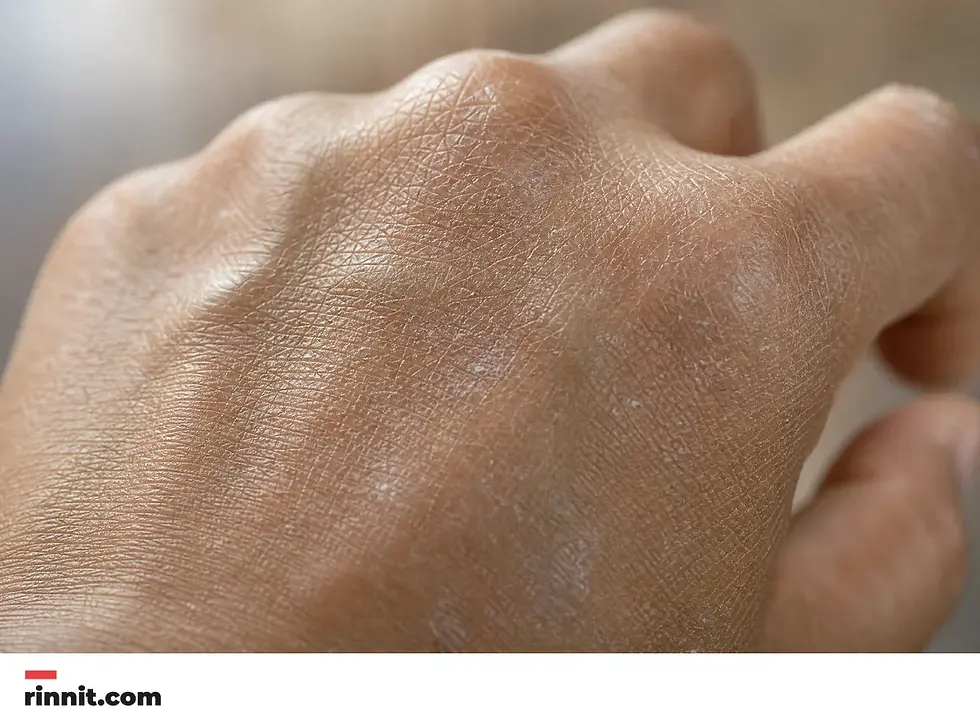
Symptoms of Dry Skin
Dry skin doesn't always look the same on everyone. On white skin, it ranges from reddish; on brown and Black skin, it can appear grayish and flaky [1].
Symptom | What it feels or looks like |
Tightness | A pulled, stretched feeling in the skin |
Roughness | Skin that feels and looks coarse to the touch |
Itchiness | Persistent itch that worsens with dry air |
Flaking | Slight to severe flaking; on brown and Black skin this can cause an ashy appearance |
Scaling or peeling | Patches of skin shedding in flakes |
Fine lines | More visible creases, especially in winter |
Cracks | Skin cracks, including deep ones that may bleed |
Pain, stinging, or burning | A raw, irritated sensation on the skin's surface |
When to See a Doctor
Most cases of dry skin respond well to lifestyle changes and self-care. But you should make an appointment with a healthcare professional if:
Dry skin lasts despite self-care steps [1].
Skin becomes inflamed or painful [1].
Dryness is so uncomfortable that you lose sleep or can't focus on daily routines [1].
Open sores or infections develop from cracked skin [1].
Large areas of scaly or peeling skin form [1].
Dry, thick skin develops as a side effect of cancer treatment [1].
What Causes Dry Skin?
Dry skin happens because of water loss from the outer layer of skin [1]. That water loss can be driven by surprisingly ordinary things:
Cause | How it dries out your skin |
Heat | Central heating, wood-burning stoves, space heaters, and fireplaces all lower indoor air humidity |
Dry environment | Living in a low-humidity climate raises the risk |
Too much bathing or scrubbing | Long, hot showers or baths strip moisture; bathing more than once a day removes the skin's natural oils |
Harsh soaps and detergents | Many soaps, detergents, and shampoos are designed to remove oil — and take your skin's moisture with it |
Other skin conditions | People with eczema (atopic dermatitis) or psoriasis are more likely to have dry skin |
Medical treatments | Cancer treatment, dialysis, or certain medicines can cause dry, thick skin |
Aging | As people age, skin thins and produces less of the oils needed to hold water |
Who Is Most at Risk?
Anyone can develop dry skin, but certain groups are more likely to. You're at higher risk if you are older than 40, live in a low-humidity climate, or have a job that requires frequent hand-washing, water exposure, or harsh soaps — nursing, hairstyling, and dishwashing are common examples [1]. Working with cement, clay, or soil also raises the risk [1].
Certain medical conditions increase susceptibility as well, including hypothyroidism, ichthyosis, diabetes, and malnutrition [1].
Can Dry Skin Cause Real Problems?
Dry skin is usually harmless. Left untreated, however, it can lead to two complications worth taking seriously.
Complication | What can happen |
Eczema (atopic dermatitis) | If you're prone to it, very dry skin may trigger a rash and cracking |
Infections | Very dry skin can crack deeply, and those cracks may open and bleed — creating a path for bacteria to enter the body |

How Is Dry Skin Diagnosed?
To diagnose dry skin, a healthcare professional will look at your skin and ask about your medical history — when the dryness started, what makes it better or worse, your bathing habits, and how you care for your skin [2].
Sometimes tests are done to check whether the dryness is a symptom of another condition, such as eczema or psoriasis [2]. Treatment is usually straightforward: self-care like moisturizers and avoiding long hot showers works well. For very dry skin, the doctor will suggest a moisturizing product matched to your needs. If a serious skin disease is involved, a prescription cream or lotion may be added [2].
If dry skin becomes itchy, a prescription cream with hydrocortisone may be suggested [2]. Important: talk with your healthcare professional before trying over-the-counter anti-itch creams or lotions — some contain ingredients that make dry skin worse [2].
How to Fix Dry Skin: The Daily Routine That Works
The following measures, drawn from clinical guidance, can keep skin moist and healthy.
1. Moisturize — and Time It Right
Put moisturizer on your skin several times a day, and always add more whenever your skin feels dry [2]. The single most effective moment to apply it is right after bathing or hand-washing, while your skin is still damp [2]. Moisturizer seals in water and keeps the skin's protective barrier healthy [1]. Look for products that contain these healing ingredients:
Ingredient | Where it's found |
Ceramides | Common in barrier-repair creams |
Cocoa butter | Rich body butters |
Fatty acids | Repairing cleansers and lotions |
Glycerol (glycerin) | Hydrating lotions and gels |
Shea butter | Cleansers and creams containing stearic acid |
Urea | Thick moisturizers and foot creams |
2. Shorten Your Showers
Limit bathing to no more than once a day and no longer than 5–10 minutes [2]. Use warm water, not hot — long hot showers remove the skin's natural oils [2]. Rinse thoroughly and pat dry rather than rubbing.
3. Switch to Gentle Cleansers
Use a cleansing cream or shower gel instead of soap in the shower, and use soap only where it's needed, such as the armpits and groin [2]. Skip loofahs and pumice stones entirely [2]. For hands, choose a moisturizing soap labeled hypoallergenic, then apply moisturizer while hands are still damp.
Avoid products containing sodium lauryl sulfate — it irritates skin and can make dryness worse [2]. Note that “unscented” does not necessarily mean fragrance-free; unscented products often contain more chemicals to mask scent.
4. Choose Labels That Protect You
Label | What it means |
Hypoallergenic | Less likely than other products to cause an allergic reaction |
Noncomedogenic / oil-free | Less likely to clog pores or cause breakouts — ideal if you're acne-prone |
Fragrance-free | Contains no added fragrance (safer than “unscented”) |
5. Go Heavier on Very Dry Areas
For body skin that is very dry, try a thicker moisturizer or an oil such as baby oil. Oil stays on the skin longer than lotion [2] and helps keep water within the skin's surface. Petrolatum-based products (petroleum jelly) are another strong choice — petroleum jelly sits on top of the skin like a greenhouse roof, insulating it against heat and moisture loss.
For mature skin, products containing antioxidants or alpha hydroxy acid can help prevent scaly, flaky skin [2].
6. Wash Your Face Gently
Wash your face with a gentle cleanser twice a day — and after sweating [2]. Choose a cleanser that doesn't foam and doesn't contain alcohol [2]. Cleansers with stearic acid (found in shea butter) or linoleic acid (found in argan and safflower oil) can help repair the skin [2]. If your skin is sensitive, cleanse in the evening and just rinse with water at other times. After washing, apply any prescribed medicine while skin is damp, wait a few minutes, then moisturize.
7. Add Moisture to the Air
Dry indoor air makes itching and flaking worse. Running a humidifier at home adds moisture back into the air [2].
8. Dress and Do Laundry with Skin in Mind
Natural fibers like cotton let skin breathe; wool, although natural, can irritate even healthy skin [2]. For laundry, use detergents without dyes or perfumes — these usually carry the word “free” in the name [2].
9. Ease the Itch Safely
If dry skin itches, place a clean, cool, damp cloth on the skin [2]. If the itching continues or worsens, a healthcare professional may suggest a prescription hydrocortisone cream. Again — check with your doctor before buying an over-the-counter anti-itch product.
Prevention: 7 Habits That Keep Dry Skin Away
Moisturize throughout the day, especially on hands. Before going outdoors, use a moisturizer with sunblock or a broad-spectrum sunscreen of SPF 30 or higher, even on cloudy days [1]. Apply generously and reapply every two hours — more often if swimming or sweating [1].
Cover up in cold or windy weather. Harsh weather is especially drying. Scarves, hats, and gloves protect skin outdoors, and gloves are a must when gardening or handling harsh cleansers [1].
Shave with care. Shaving can dry the skin. Use a lubricating agent before you start, a sharp blade, rinse with warm water after each stroke, and moisturize when you're done [1].
Drink when you're thirsty. Water and other noncaffeinated beverages keep all of your body's tissues, including skin, hydrated [1].
Protect skin from the sun daily. Sun damage contributes to dryness, and sunscreen is a simple daily defense.
Wear gloves for wet work. Protect your hands whenever your routine involves water, harsh cleansers, or activities that dry the skin.
Skip over-washing. Limit bathing to once daily, keep it under 10 minutes, and use warm — never hot — water.

Key Takeaways
Dry skin is one of the most common skin complaints there is, but it is also one of the most fixable. The formula is simple: shorter warm showers, gentle fragrance-free products, moisturizer applied while skin is damp, and everyday sun protection. Stick with these habits for a couple of weeks and most people will notice a real difference.
Take the Next Step
If your dry skin doesn't improve with self-care — or if it cracks, bleeds, spreads, or keeps you up at night — that's your sign to talk with a healthcare professional. A prescription cream may be all it takes to get back to comfortable skin.
Frequently Asked Questions
1. Is dry skin the same as eczema?
No. Dry skin (xerosis) is a condition on its own, but very dry skin can trigger eczema (atopic dermatitis) in people who are prone to it.
2. Why does my skin get drier in winter?
Indoor heating, wood stoves, and fireplaces lower air humidity, which pulls water out of the outer layer of skin. Cold, windy outdoor air makes it worse.
3. Does drinking water cure dry skin?
Drinking water and noncaffeinated beverages helps keep skin and other tissues hydrated, but topical care — moisturizing and gentle cleansing — plays the bigger role.
4. Why is moisturizer best applied right after a shower?
Applying moisturizer while skin is still damp seals water into the skin, which is far more effective than applying it to fully dry skin.
5. Is petroleum jelly good for dry skin?
Yes. Petrolatum is considered the most inert, hypoallergenic moisturizing ingredient, and it acts like a greenhouse roof over the skin to prevent moisture loss. It is useful for chapped lips, dry cuticles, hands, and feet.
6. Should I stop using soap completely?
Not entirely — use a moisturizing hypoallergenic soap on hands, and a cleansing cream or shower gel on the body. Reserve soap for areas that need it, like the armpits and groin.
7. When should I worry about dry skin?
When it persists despite self-care, becomes inflamed or painful, cracks open and bleeds, covers large scaly areas, or disrupts your sleep. These are signs to see a healthcare professional.
8. Why does dry skin look ashy on brown and Black skin?
Flaking on brown and Black skin can produce a characteristic ashy appearance, and dryness often appears grayish rather than reddish. The underlying care principles are the same for all skin tones.
References
Mayo Clinic Staff. Dry skin: symptoms and causes. Mayo Clinic. July 2, 2026. https://www.mayoclinic.org/diseases-conditions/dry-skin/symptoms-causes/syc-20353885
Mayo Clinic Staff. Dry skin: diagnosis and treatment. Mayo Clinic. July 2, 2026. https://www.mayoclinic.org/diseases-conditions/dry-skin/diagnosis-treatment/drc-20353891
Lueangarun S, Tragulplaingam P, Sugkraroek S, Tempark T. The 24-hr, 28-day, and 7-day post-moisturizing efficacy of ceramides 1, 3, 6-II containing moisturizing cream compared with hydrophilic cream on skin dryness and barrier disruption in senile xerosis treatment. Dermatol Ther. 2019;32(6):e13090. doi:10.1111/dth.13090. PMID: 31585489.
Muhammad P, Novianto E, Setyorini M, et al. Effectiveness of topical hyaluronic acid of different molecular weights in xerosis cutis treatment in elderly: a double-blind, randomized controlled trial. Arch Dermatol Res. 2024;316(6):329. doi:10.1007/s00403-024-03003-2. PMID: 38829483.
Parker JC, Scharfbillig RW, Jones S. Effectiveness of two moisturizers in the treatment of foot xerosis. J Am Podiatr Med Assoc. 2018;108(6):458-465. doi:10.7547/16-119. PMID: 30742522.
Medical Disclaimer
This article is for informational purposes only and does not constitute medical advice. Always seek the advice of your physician or other qualified health provider with any questions you may have regarding a medical condition. Never disregard professional medical advice or delay in seeking it because of something you have read here.



Comments