Dry Mouth Explained: Symptoms, Causes, and Home Remedies That Work

Updated: 2 days ago
Medically reviewed by Dr. Baraa Alnahhal, MD · Last reviewed: September 2026
Dry mouth, medically called xerostomia, happens when the salivary glands do not make enough saliva to keep the mouth wet. It is most often caused by medicines (including hundreds of over-the-counter drugs), aging, and cancer treatments such as radiation to the head and neck. Symptoms include dryness or stickiness, thick saliva, bad breath, trouble chewing and swallowing, and a higher risk of tooth decay and gum disease. Treatment depends on the underlying cause: doctors may adjust your medicines, recommend xylitol mouth rinses and saliva substitutes, or prescribe drugs like pilocarpine that stimulate saliva. Daily habits such as sipping water, chewing sugar-free gum, and protecting your teeth with fluoride make a significant difference.
Quick Answer
What is dry mouth? When the salivary glands do not produce enough saliva to keep the mouth wet, a condition medically called xerostomia.
What does it feel like? Dryness or stickiness, thick stringy saliva, bad breath, trouble chewing and swallowing, a dry sore throat, hoarseness, and a changed sense of taste.
What causes it most often? Hundreds of medicines (including depression, blood pressure, and anxiety drugs), aging, and cancer therapy such as head-and-neck radiation.
Why does it matter? Saliva protects teeth; without enough of it, plaque, tooth decay, gum disease, mouth sores, and thrush become more likely.
What helps? Identifying and treating the cause, xylitol mouth rinses and saliva substitutes, prescription saliva stimulants in severe cases, and daily habits like sipping water and chewing sugar-free gum.

What is dry mouth?
Dry mouth, also called xerostomia (zeer-o-STOE-me-uh), is when the salivary glands in the mouth do not make enough saliva to keep the mouth wet.
Your mouth has three pairs of major salivary glands: the parotid, sublingual, and submandibular glands. Each gland has its own tube, called a duct, leading from the gland to the mouth.
Dry mouth is often due to aging, the side effects of certain medicines, or radiation therapy for cancer. Less often, a condition directly affecting the salivary glands is the cause. You can also experience dry mouth temporarily if you are thirsty or feel anxious.
For some people, dry mouth is only annoying. For others, it can greatly affect general health and the health of teeth and gums, and it can change how much people eat and how much they enjoy their food. The good news is that treatment depends on the cause, and there is usually something that can help.
Dry mouth symptoms
If you are not producing enough saliva, you may notice these symptoms all or most of the time: dryness or a feeling of stickiness in your mouth, saliva that seems thick and stringy, bad breath, difficulty chewing, speaking, and swallowing, a dry or sore throat with hoarseness, a dry or grooved tongue, a changed sense of taste, problems wearing dentures, and lipstick sticking to your teeth.
Saliva plays a protective role: it prevents tooth decay by washing away sugar and food particles and making bacteria neutral and less harmful. Without enough saliva, you may find it harder to taste, chew, and swallow, and you may also have difficulty digesting food.
What causes dry mouth?
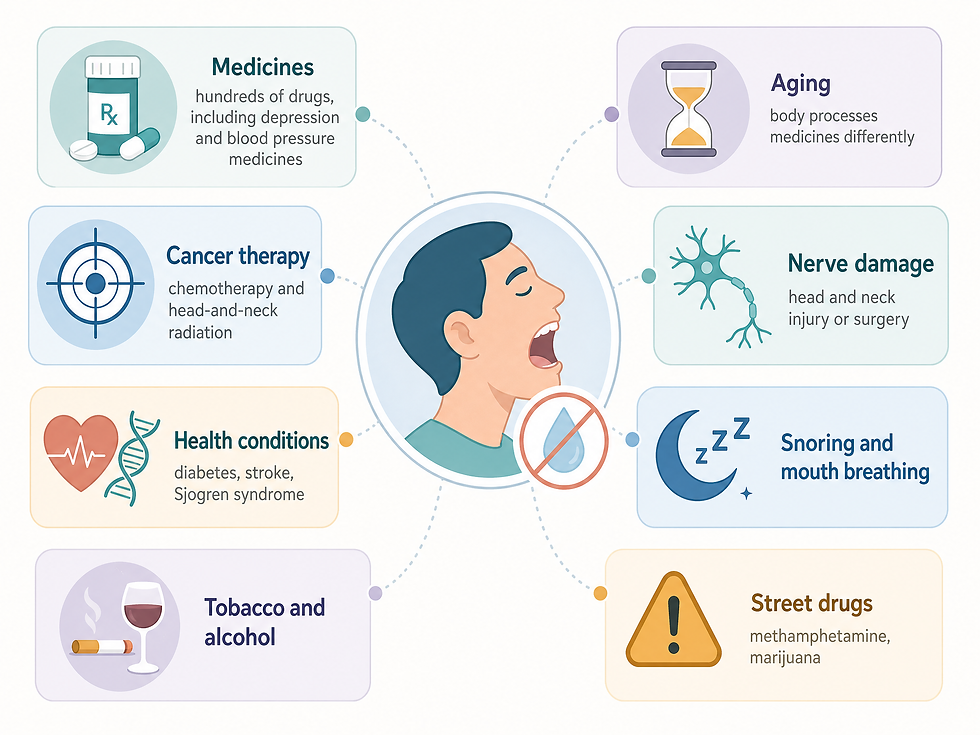
When the salivary glands do not make enough saliva, it is usually because something is interfering with how they work. The most common culprits are summarized below.
Medicines: hundreds of medicines, including many available without a prescription; most likely are drugs for depression, high blood pressure, and anxiety, plus some antihistamines, decongestants, muscle relaxants, and pain relievers
Aging: the body processes medicine differently with age; poor nutrition and long-term health problems also contribute
Cancer therapy: chemotherapy can change the nature and amount of saliva; radiation to the head and neck can damage salivary glands, sometimes lasting after treatment
Nerve damage: injury or surgery to the head and neck area
Other health conditions: diabetes, stroke, a yeast infection in the mouth, Alzheimer's disease, or autoimmune diseases such as Sjogren syndrome or HIV/AIDS
Snoring and mouth breathing: breathing through an open mouth dries it out overnight
Tobacco and alcohol: smoking, chewing tobacco, and drinking alcohol dry and irritate the mouth
Street drugs: methamphetamine use can cause serious dry mouth and damage teeth; marijuana use can also cause dry mouth
Who is at risk?
The risk of dry mouth is higher in people who take medicines with dry mouth listed as a possible side effect, are being treated for cancer, have nerve damage in the head and neck area, or live with conditions such as diabetes, stroke, Alzheimer's disease, Sjogren syndrome, or HIV/AIDS. Using tobacco products, drinking alcohol, using street drugs, and frequently eating sugary or acidic foods and candies also raise the risk.
Why dry mouth matters: possible complications
Not having enough saliva is not just uncomfortable. It can lead to increased plaque, tooth decay, and gum disease, mouth sores, a yeast infection in the mouth called thrush, sores or split skin at the corners of the mouth and cracked lips, and poor nutrition from problems with chewing and swallowing.
When to see a doctor
If you have dry mouth symptoms that do not go away, make an appointment with your healthcare professional. Because dry mouth can signal an underlying condition or medicine side effect, persistent symptoms deserve a proper look.
How dry mouth is diagnosed
To determine the cause, your healthcare professional reviews your medical history and the medicines you take, including over-the-counter medicines, and looks in your mouth.
Sometimes you may need blood tests, imaging scans of your salivary glands, or tests to measure how much saliva you produce. If Sjogren syndrome is suspected, a small sample of cells may be taken from salivary glands in your lip for testing, a procedure called a biopsy.
Treatment options
Treatment depends on the cause of your dry mouth.
If your doctor thinks a medicine is the cause, your dose may be changed, or you may switch to a medicine that does not cause dry mouth.
Doctors can also recommend products that moisturize the mouth, such as prescription medicines or over-the-counter mouth rinses, artificial saliva, or moisturizers that lubricate the mouth. Mouthwashes designed for dry mouth, especially ones with xylitol, can be effective.
If your mouth is extremely dry due to Sjogren syndrome or radiation treatment for head and neck cancer, a doctor may prescribe pilocarpine to help you make more saliva, or cevimeline if the cause is Sjogren syndrome.
Home remedies and daily habits
Alongside your doctor's advice, several simple habits can ease dry mouth symptoms.
Sip water or sugar-free drinks, or suck on ice chips, throughout the day, and drink water during meals to make chewing and swallowing easier. Chewing sugar-free gum or sucking on sugar-free hard candies helps too; products containing xylitol may also help prevent cavities. Note that xylitol, often found in sugar-free gum and candies, may cause gas or diarrhea in some people if consumed in large amounts.
Saliva substitutes available without a prescription are another option, including those containing xylitol and those containing carboxymethylcellulose or hydroxyethyl cellulose in gel and spray forms.
Other helpful habits include breathing through your nose rather than your mouth (you may need treatment for snoring if it causes mouth breathing at night), adding moisture to the air at night with a room humidifier, and moisturizing your lips to soothe dry or cracked areas.
Equally important is avoiding what makes symptoms worse: caffeine and alcohol, mouthwash containing alcohol, tobacco in any form, over-the-counter antihistamines and decongestants, and sugary, acidic, spicy, or salty foods and candies that irritate the mouth or raise the risk of tooth decay.
Protecting your teeth
Because saliva is essential to tooth and mouth health, dry mouth makes dental care non-negotiable. Brush with a fluoride toothpaste and floss regularly, and ask your dentist whether prescription fluoride toothpaste, a toothpaste containing betaine, or an acid-neutralizing tooth gel would help you.
Your dentist might fit you for fluoride trays filled with fluoride and worn over your teeth at night, recommend brushing on fluoride gel before bedtime, or suggest a chlorhexidine rinse weekly. Finally, see your dentist at least twice yearly for an exam and plaque removal to help prevent tooth decay.

Preparing for your appointment
Before your visit, make a list of your symptoms, including any that do not seem related to the reason for the appointment. Note key personal information such as major stresses or recent life changes, and list all prescribed medicines, vitamins, herbs, supplements, and over-the-counter medicines you take, including the doses.
Questions worth asking your healthcare professional include what is likely causing your dry mouth, whether the condition is temporary or long-term, whether it could be related to your other health conditions, and whether a generic alternative exists to any prescribed medicine.
Expect your doctor to ask when your symptoms started, whether they occur all the time or only sometimes, whether you have started any new medicines recently, whether you smoke or drink alcohol, and what makes your symptoms better or worse.
Bottom line
Dry mouth is a common symptom, not a disease itself, and its roots usually lie in medicines, aging, or medical treatments rather than something wrong with your mouth. But it deserves attention, because saliva is your teeth's natural defense system.
Left untreated, dry mouth raises the risk of tooth decay, gum disease, mouth sores, and thrush. The good news is that the cause can usually be identified through a straightforward review of your medicines and health history, and relief is available at every step, from simple rinses and sugar-free gum to prescription saliva stimulants.
Your next step: If your mouth has felt dry most of the time for weeks, write down your full medicine and supplement list (including over-the-counter products) and book an appointment with your healthcare professional. In the meantime, sip water regularly, chew sugar-free xylitol gum, switch to an alcohol-free mouthwash, and keep your dental checkups current. Ask your doctor whether any of your medicines could be adjusted, and ask your dentist about fluoride protection tailored to dry mouth.
FAQ
Is dry mouth the same as being thirsty?
No. Being thirsty is temporary and relieved by drinking, while dry mouth (xerostomia) is a persistent lack of saliva production by the salivary glands. Thirst and anxiety can cause temporary dry mouth, but ongoing dry mouth usually has another cause, such as medicines or a health condition.
Which medicines are most likely to cause dry mouth?
Hundreds of medicines can cause dry mouth, including many available without a prescription. The most common culprits are medicines for depression, high blood pressure, and anxiety, along with some antihistamines, decongestants, muscle relaxants, and pain relievers.
Can dry mouth damage my teeth?
Yes. Saliva normally prevents tooth decay by washing away sugar and food particles and neutralizing bacteria. Without enough saliva, plaque builds up and the risk of tooth decay, gum disease, mouth sores, and thrush all increase, which is why fluoride protection and twice-yearly dental visits matter even more.
What home remedies help dry mouth?
Sip water or sugar-free drinks throughout the day, chew sugar-free gum or suck on sugar-free candies (xylitol products may also help prevent cavities), use a room humidifier at night, breathe through your nose, and moisturize your lips. Avoid caffeine, alcohol, tobacco, alcohol-based mouthwash, and sugary, acidic, spicy, or salty foods.
Are there medicines that make the mouth produce more saliva?
Yes. If dry mouth is severe, especially due to Sjogren syndrome or radiation treatment for head and neck cancer, a doctor may prescribe pilocarpine, and if the cause is Sjogren syndrome, cevimeline, both of which help the mouth make more saliva.
References
This article is for general informational purposes and is not a substitute for professional medical advice, diagnosis, or treatment. Always consult a qualified healthcare professional about any medical condition.
Comments