Drug Allergy Explained: Symptoms, Causes, and How It's Diagnosed and Treated

Updated: 2 days ago
Medically reviewed by Dr. Baraa Alnahhal, MD · Last reviewed: September 2026
A drug allergy is an immune system reaction to a medicine, and any medicine, over-the-counter, prescription, or herbal, can trigger one. The most common symptoms are hives, rash, and fever, but a drug allergy can also cause anaphylaxis, a rare, life-threatening reaction that needs immediate emergency care. It is not the same as a side effect or an overdose. Diagnosis combines a detailed history with skin or blood tests, often performed by an allergist, and research suggests drug allergies are frequently overdiagnosed. Treatment starts with stopping the medicine, plus antihistamines or corticosteroids, while graded challenges and desensitization can allow necessary medicines to be used safely under medical supervision.
Quick Answer
What is a drug allergy? A reaction of the immune system to a medicine, where the body mistakenly flags the medicine as a harmful substance and attacks it.
What are the main symptoms? Hives, rash, itching, fever, and swelling are most common; serious symptoms can include wheezing, shortness of breath, and airway tightening.
When is it an emergency? Call 911 for suspected anaphylaxis: airway tightening, vomiting, a weak fast pulse, a blood pressure drop, dizziness, seizure, or loss of consciousness.
How is it diagnosed? A physical exam and detailed symptom history come first, often followed by a skin test administered by an allergist and sometimes blood tests to rule out other conditions.
Can I take the medicine again? If the medicine is medically necessary, doctors can use a graded challenge or drug desensitization under careful supervision.
What is a drug allergy?
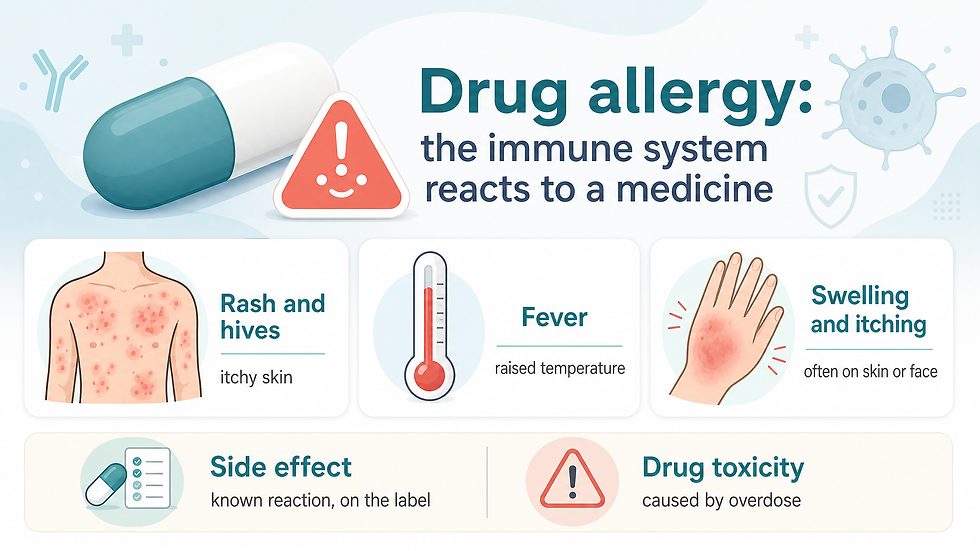
A drug allergy is the reaction of the immune system to a medicine. Any medicine, whether over-the-counter, prescription, or herbal, can trigger a drug allergy, although it is more likely with certain medicines.
The most common symptoms are hives, rash, and fever. But a drug allergy can also cause serious reactions, including a severe, life-threatening condition known as anaphylaxis.
It is important to know that a drug allergy is not the same as a medicine side effect. A side effect is a known possible reaction to a medicine, listed on its label. A drug allergy is also different from drug toxicity, which is caused by an overdose of medicine.
Drug allergy symptoms
Symptoms of a serious drug allergy often happen within an hour after taking a medicine. Other reactions, particularly rashes, can happen hours, days, or even weeks later.
Common symptoms include skin rash, hives, itching, fever, swelling, shortness of breath, wheezing, runny nose, and itchy, watery eyes.
Anaphylaxis: a medical emergency
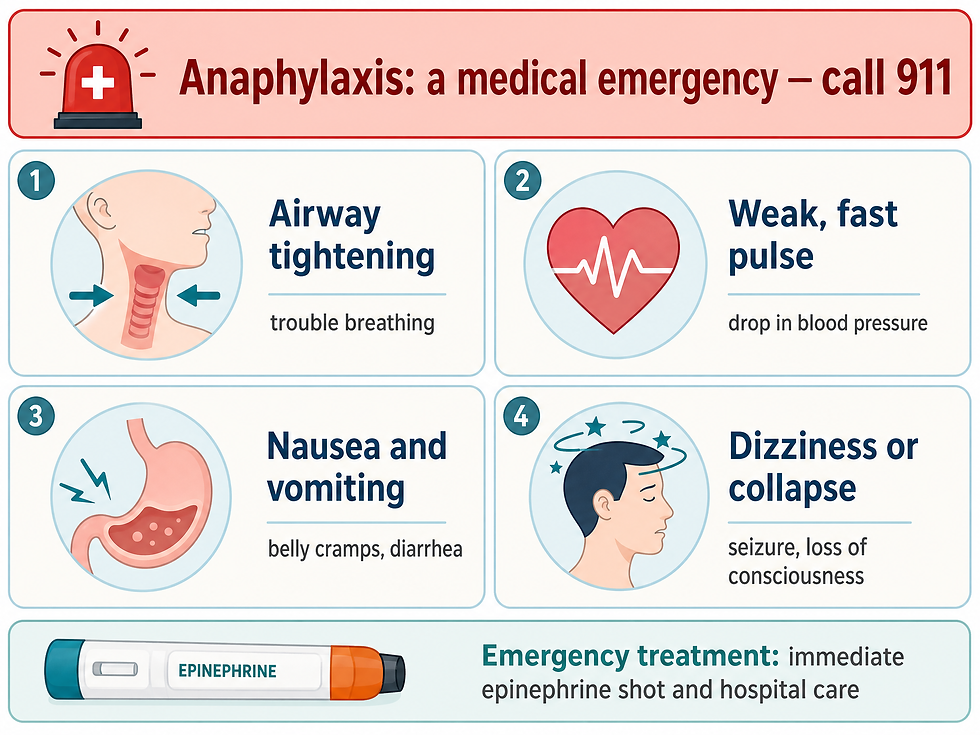
Anaphylaxis is a rare, life-threatening drug allergy reaction that causes widespread changes in the way body systems function. Symptoms include tightening of the airways and throat causing trouble breathing, nausea or belly cramps, vomiting or diarrhea, dizziness or lightheadedness, a weak fast pulse, a drop in blood pressure, seizure, and loss of consciousness.
Less common delayed reactions
Less common drug allergy reactions happen days or weeks after exposure to a medicine and may last for some time after you stop taking it. These conditions are summarized below.
Serum sickness: fever, joint pain, rash, swelling, and nausea
Drug-induced anemia: reduction in red blood cells, causing fatigue, irregular heartbeats, and shortness of breath
DRESS (drug rash with eosinophilia and systemic symptoms): rash, high white blood cell count, general swelling, swollen lymph nodes, and hepatitis that returns after being dormant
Nephritis (kidney inflammation): fever, blood in the urine, general swelling, and confusion
When to see a doctor
Call 911 or emergency medical help if you experience signs of a severe reaction or suspected anaphylaxis after taking a medicine.
If your symptoms are milder, see a healthcare professional as soon as possible.
What causes a drug allergy?
A drug allergy happens when the immune system mistakenly identifies a medicine as a harmful substance, such as a virus or bacterium. Once the immune system detects the medicine as harmful, it develops an antibody specific to that medicine.
This can happen the first time you take a medicine, but sometimes an allergy does not develop until there have been repeated exposures. The next time you take the medicine, the specific antibodies flag it and direct immune system attacks on the substance. The chemicals released by this activity cause the allergic symptoms.
You may not even be aware of your first exposure. Some evidence suggests that trace amounts of a medicine in the food supply, such as an antibiotic, may be enough for the immune system to create an antibody to it.
Researchers also believe some medicines can bind directly to a type of immune system white blood cell called a T cell, causing the release of chemicals that can result in an allergic reaction the very first time you take the medicine.
Medicines most commonly linked to allergies
Although any medicine can cause an allergic reaction, certain groups are associated with allergies more often.
Antibiotics: penicillin and related drugs
Pain relievers: aspirin, ibuprofen, naproxen sodium
Chemotherapy drugs: medicines used to treat cancer
Autoimmune disease medicines: medicines for conditions such as rheumatoid arthritis
Allergy-like reactions that are not true allergies
Sometimes a reaction to a medicine produces symptoms that are virtually identical to a drug allergy, but the immune system is not the trigger. This condition is called a nonallergic hypersensitivity reaction or pseudoallergic drug reaction.
Medicines more commonly associated with pseudoallergic reactions include aspirin, the dyes used in imaging tests (radiocontrast media), opiates for treating pain, and local anesthetics.
Risk factors
Anyone can have an allergic reaction to a drug, but certain factors increase the risk. A history of other allergies, such as a food allergy or hay fever, raises the likelihood. So do a personal or family history of drug allergy and increased exposure to a medicine through high doses, repeated use, or prolonged use.
Some infections commonly associated with allergic drug reactions also increase risk, such as HIV infection or Epstein-Barr virus infection.
Preventing future reactions
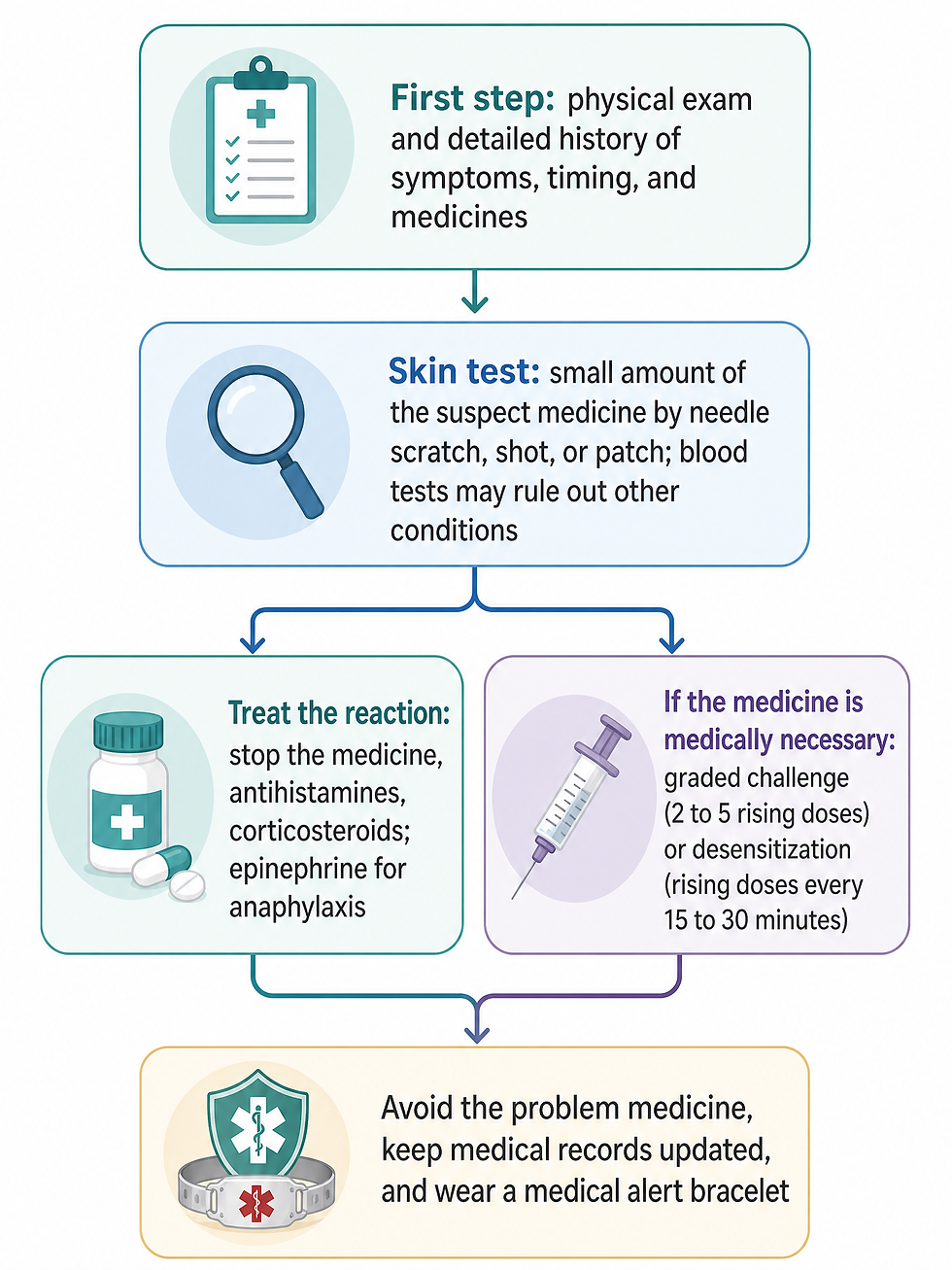
If you have a drug allergy, the best prevention is to avoid the problem medicine. Two practical steps protect you.
First, make sure your drug allergy is clearly identified in your medical records and inform every healthcare professional you see, including your dentist and any medical specialists. Second, wear a medical alert bracelet that identifies your drug allergy, which helps ensure proper treatment in an emergency.
How a drug allergy is diagnosed
An accurate diagnosis is essential. Research has suggested that drug allergies may be overdiagnosed, with patients reporting allergies that have never been confirmed. Misdiagnosed drug allergies may result in the use of less appropriate or more expensive medicines.
Diagnosis typically starts with a physical exam and questions. Details about when symptoms started, when the medicine was taken, and how symptoms improved or worsened are important clues.
Your healthcare professional may order more tests or refer you to an allergy specialist, called an allergist, for testing.
Skin test: a small amount of the suspect medicine is applied to the skin with a tiny needle scratch, a shot, or a patch. A red, itchy, raised bump suggests a possible drug allergy; a negative result is not always clear-cut and depends on the medicine
Blood tests: samples are tested to rule out other conditions, and occasionally to detect reactions to specific medicines. Used less often due to limited research on accuracy; helpful when a serious skin test reaction is a concern
After reviewing your symptoms and test results, a healthcare professional can usually conclude that you have a drug allergy, that you do not, or that you may have one with varying degrees of certainty. These conclusions shape future treatment decisions.
Treatment options
Treatment for a drug allergy follows two general strategies: managing the symptoms you have now, and, when truly necessary, enabling you to take the allergy-causing medicine under close supervision.
Treating current symptoms
Stopping the medicine is the first step once a drug allergy is determined or likely. For many people, this may be the only intervention necessary.
Antihistamines block the immune system chemicals triggered during an allergic reaction. Your healthcare professional may prescribe one or recommend a nonprescription option such as diphenhydramine.
Corticosteroids, given as a shot or taken by mouth, may be used for more serious reaction symptoms.
Anaphylaxis requires an immediate epinephrine shot, along with hospital care to maintain blood pressure and support breathing.
Taking the medicine if it is necessary
If you have a confirmed drug allergy, a doctor usually will not prescribe the problem medicine unless it is necessary. When the diagnosis is uncertain or no alternative exists, two supervised strategies may be used, both with careful monitoring and supportive care available.
Graded challenge: used when diagnosis is uncertain and the allergy is judged unlikely. You receive 2 to 5 doses, starting small and rising to the full therapeutic dose; no reaction means the medicine can be taken as prescribed
Drug desensitization: used when the medicine is necessary despite a reaction history. You receive a very small dose, then increasingly larger doses every 15 to 30 minutes over several hours or days; reaching the desired dose without a reaction allows treatment to continue
These treatments are generally not used if a medicine has previously caused a serious, life-threatening reaction.
Preparing for your appointment
See a healthcare professional if you have symptoms that may be related to a medicine you recently started or take regularly. Your answers to specific questions are essential to finding the cause.
Be ready to describe exactly what symptoms you experienced, when they started, and how long they lasted. Note any new medicine you took, when you took it, and whether you have stopped it. List all your other medicines, herbal products, vitamins, and supplements, along with when you take them and any recent dosage changes.
Bring your allergy history too: whether you have hay fever or food allergies, whether anyone in your family has had a drug allergy, and whether you have reacted to a medicine in the past.
One practical tip: take pictures of any rash or swelling to show your healthcare team. Symptoms may have eased by the time of your appointment, and photos preserve the evidence.
Bottom line
A drug allergy is your immune system reacting to a medicine as if it were an invader. It is distinct from a side effect and from an overdose, and it can show up within an hour or weeks after you start a medicine.
Most drug allergies are not dangerous and settle once the medicine is stopped. The exception is anaphylaxis, which is a true emergency requiring an immediate epinephrine shot and hospital care.
Accurate diagnosis matters more than many people realize, because unconfirmed drug allergies can push treatment toward less suitable or costlier medicines. Allergists can confirm or rule out an allergy with skin tests, and they offer graded challenges and desensitization when a medicine is truly needed.
Your next step: If you develop a rash, hives, or other symptoms after starting a new medicine, stop the medicine and contact a healthcare professional. Photograph the reaction, note the timing, and bring your complete medicine and supplement list to the visit. Once a drug allergy is confirmed, keep it in your medical records, tell every provider, and consider a medical alert bracelet. For any breathing trouble, throat tightness, or collapse after a medicine, call 911 immediately.
FAQ
What is the difference between a drug allergy and a side effect?
A drug allergy is an immune system reaction to a medicine, while a side effect is a known possible reaction listed on the medicine's label. A drug allergy is also different from drug toxicity, which is caused by taking too much of a medicine.
Which medicines most commonly cause allergies?
Antibiotics such as penicillin, pain relievers such as aspirin, ibuprofen, and naproxen sodium, chemotherapy drugs, and medicines for autoimmune diseases such as rheumatoid arthritis are most commonly linked to allergies, though any medicine, including over-the-counter and herbal products, can trigger one.
When is a drug allergy an emergency?
Call 911 for suspected anaphylaxis, a rare life-threatening reaction. Warning signs include airway and throat tightening, vomiting or diarrhea, dizziness, a weak fast pulse, falling blood pressure, seizure, and loss of consciousness. Anaphylaxis requires an immediate epinephrine shot and hospital care.
How do doctors confirm a drug allergy?
Diagnosis starts with a physical exam and a detailed history of symptoms, timing, and medicines. An allergist may perform a skin test using a needle scratch, shot, or patch; blood tests may help rule out other conditions. Research suggests drug allergies are sometimes overdiagnosed, so confirmation matters before avoiding a medicine long-term.
Can I take a medicine I'm allergic to if I need it?
Sometimes. Under careful medical supervision, doctors can use a graded challenge, giving 2 to 5 rising doses when the allergy is judged unlikely, or drug desensitization, giving increasingly larger doses every 15 to 30 minutes. Neither is used if the medicine previously caused a serious, life-threatening reaction.
References
This article is for general informational purposes and is not a substitute for professional medical advice, diagnosis, or treatment. Always consult a qualified healthcare professional about any medical condition. For suspected anaphylaxis, call 911 immediately.
Comments