Depression in Children: Symptoms, the 5 Types, Causes, Diagnosis, Treatment and Outlook — What You Need to Know

Updated: 2 days ago
Medically reviewed by Dr. Baraa Alnahhal, MD · Last reviewed: September 2026

Quick Answer
Childhood depression is a mood disorder in which sadness, irritability, or hopelessness hangs on for more than two weeks and starts interfering with a child's sleep, appetite, relationships, and enjoyment of activities they once loved. About 3% of U.S. children and teens ages 3 to 17 have depression, and roughly 1 in 5 teens have received an official diagnosis. It is treated mainly with cognitive behavioral therapy (talk therapy) and antidepressant medication (SSRIs) — each can work alone, but the two together seem to work better. Depression is serious, but it is usually treatable, and with treatment many children regain their interests, friendships, and school progress. If your child talks about suicide, get help right away: call or text the 988 Suicide and Crisis Lifeline (free, confidential, 24/7), or call 911 in an emergency.
TL;DR
Every child has emotional ups and downs — after a bad grade or a fight with a friend, most bounce back within days. Depression is different: the low mood lasts two weeks or more, comes with irritability or hopelessness, and starts eating into sleep, appetite, friendships, and once-loved activities. It takes five recognized forms in children (major depressive disorder, premenstrual dysphoric disorder, seasonal affective disorder, disruptive mood dysregulation disorder, and dysthymia), is most likely caused by a mix of genetics and stressful life experiences, and is diagnosed by a provider who first rules out physical illnesses like thyroid problems, anemia, and vitamin D deficiency. Treatment pairs cognitive behavioral therapy with SSRI medication such as fluoxetine, paroxetine, or sertraline — antidepressants typically need four to six weeks to start working, and stopping them suddenly can be dangerous. Depression in children is serious but usually treatable, and treatment gives many children their activities, friendships, and school life back.
Limitation statement: Prevalence figures (3% of children and teens ages 3–17; about 1 in 5 teens with an official diagnosis) come from the referenced clinical source and U.S. surveillance data it cites; exact current rates vary by study and age group, and these figures should not be read as precise population counts.
What is depression in children?
Depression in children is a mood disorder that causes persistent sadness, irritability, or hopelessness — feelings intense enough to interfere with a child's relationships, school, and activities.
Every child has emotional ups and downs. They may feel sad or irritable for a stretch, like after getting a bad grade or a falling out with friends. But after a while, they tend to feel better again.
Depression is different. If a child has depression, the sadness hangs on for more than two weeks. Irritability or hopelessness lingers. Sleep, appetite, and relationships may suffer, and the child may stop enjoying school, sports, or hobbies they once loved. In severe cases, depression can lead to thoughts of suicide.
The two-week mark is the key threshold parents should watch: if symptoms of depression last two weeks or more, it's time to talk to the child's healthcare provider. Although depression is a serious medical condition, it's usually treatable.
Is childhood depression common?
About 3% of children and teens between the ages of 3 and 17 have depression. It is more common in teens than in children.
Roughly 1 in 5 teens have been diagnosed with major depression — and that figure counts only those with an official diagnosis. The actual number is likely much higher.
Children and teens with certain chronic illnesses — diabetes, epilepsy, chronic pain, and asthma — may have even higher rates of depression.
What are the 5 types of depression in children?
Depression in children comes in five recognized forms, and they don't all look the same. Some appear as persistent sadness; others surface as anger, outbursts, or seasonal patterns.
Type | What it looks like in a child |
Major depressive disorder (clinical depression) | The most well-known type. Sad or hopeless mood, anger coming easily, trouble sleeping or sleeping too much, loss of interest in once-enjoyed activities, feeling disengaged from family and friends. |
Premenstrual dysphoric disorder (PMDD) | Happens after a child gets their first period. Depression and/or anxiety symptoms start about a week before each period: anger or crying more easily, trouble concentrating, struggling with simple everyday problems. Physical symptoms can include menstrual cramps, body aches, sore breasts, and fatigue. |
[Seasonal affective disorder (SAD)](https://www.rinnit.com/post/seasonal-affective-disorder-guide-symptoms-causes-diagnosis-and-treatment) | Symptoms like major depressive disorder, but they come and go with the seasons. Most common during the dark, cold winter months, but it can happen in any season. |
Disruptive mood dysregulation disorder (DMDD) | Frequent angry outbursts or temper tantrums that don't seem appropriate for the child's age; may be physically or verbally aggressive. Healthcare providers only diagnose this condition in children 6 or older. |
[Dysthymia](https://www.rinnit.com/post/persistent-depressive-disorder-dysthymia-signs-causes-and-treatment-explained) | Milder than major depressive disorder but longer-lasting. Symptoms may come and go for years and can start to feel like part of the child's personality. Treatment can help. |
A child with DMDD might not look sad during an angry outburst — but behavior that doesn't match a child's age is always worth reporting to their pediatrician.
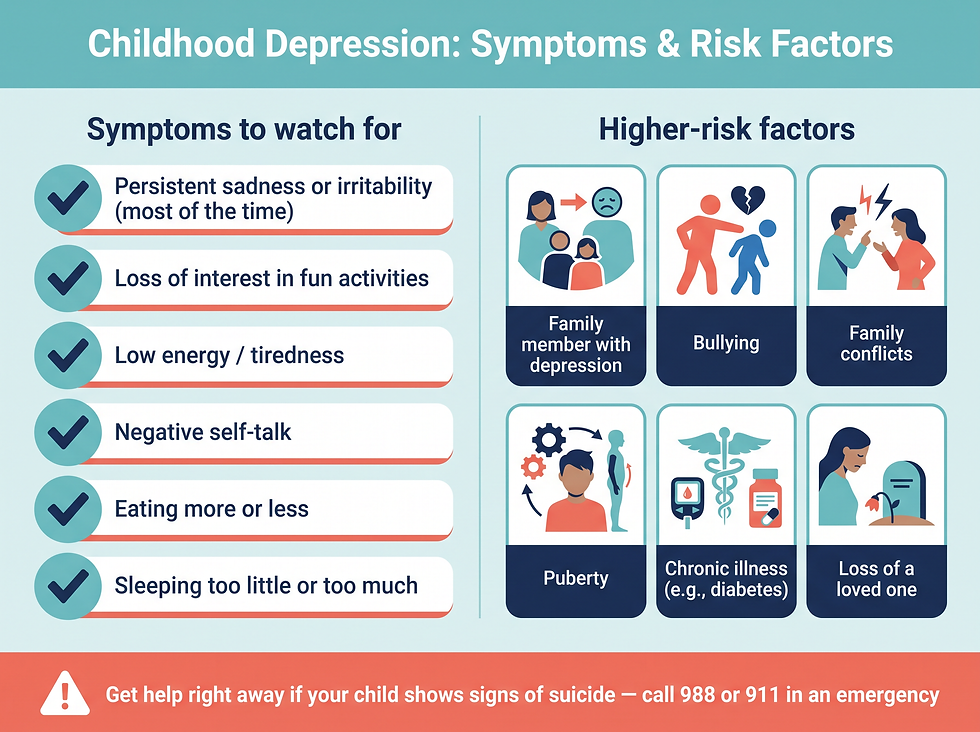
What are the symptoms of depression in a child?
Depression in children might look different than it does in adults — and different for each child. Because childhood depression sometimes shows up as irritability rather than sadness, parents can be forgiven for confusing it with “just a phase” or acting out.
Symptom | What to watch for |
Mood changes | Sadder or more irritable than usual, and feeling this way most of the time. |
Lack of interest in fun activities | Withdrawal from games, sports, hobbies, and things that used to excite them. |
Low energy or tiredness | General tiredness and low energy levels. |
Negative self-talk / low self-esteem | Saying negative things about themselves; feeling worthless. |
Appetite changes | Eating more or less than usual. |
Sleep changes | Trouble sleeping or sleeping too much. |
The pattern that matters is persistence: these signs, hanging on most of the time for two weeks or more, are the signal to act.
What causes depression in children?
Experts don't know exactly what causes depression in children and adolescents. They think genetics and environmental factors both play a role.
Childhood depression is most likely the result of one or more of the following:
Possible contributor | Example |
Genetics and family history | Other close biological relatives have depression. |
Physical illness or injury | A health condition or injury affecting mood. |
Stressful life events | Separation, divorce, moving, or the death of someone close. |
Substance use | Exposure to or use of substances. |
Bullying or trauma | Bullying or exposure to other traumatic experiences. |
Who is at higher risk for childhood depression?
Beyond the direct causes above, a cluster of risk factors raises the odds. Several are things parents can watch for and talk to a provider about early.
Risk factor | Notes |
Close family member with depression | Strongest single family-history signal. |
Personal history of depression, anxiety disorders, ADHD, or conduct issues | Prior mental-health conditions raise risk. For more on childhood anxiety, see our parent's guide. |
Adverse childhood experiences (ACEs) | Traumatic or chronically stressful early experiences. |
Being female | Higher observed risk in girls, particularly after puberty. |
Bullying | At school or online. |
Family conflicts | Ongoing tension in the home. |
Loss of a loved one or romantic relationship | Grief can tip into depression. |
Medical history | Low birth weight, brain injury, or chronic illness (like diabetes). |
Problems with friends | Social struggles and isolation. |
Puberty | Hormonal and developmental changes. |
Substance use | Use or exposure to substances. |
What are the complications of childhood depression?
Untreated, depression in children carries real risks. Children with depression are at increased risk for anxiety and substance use disorders, and they may struggle in school. They're also at higher risk for suicide.
Although these complications are scary, it's important to remember that treatments are available. Following up with the child's healthcare provider as often as recommended — and seeking immediate medical attention if the child might hurt themselves — is how families keep those risks manageable.
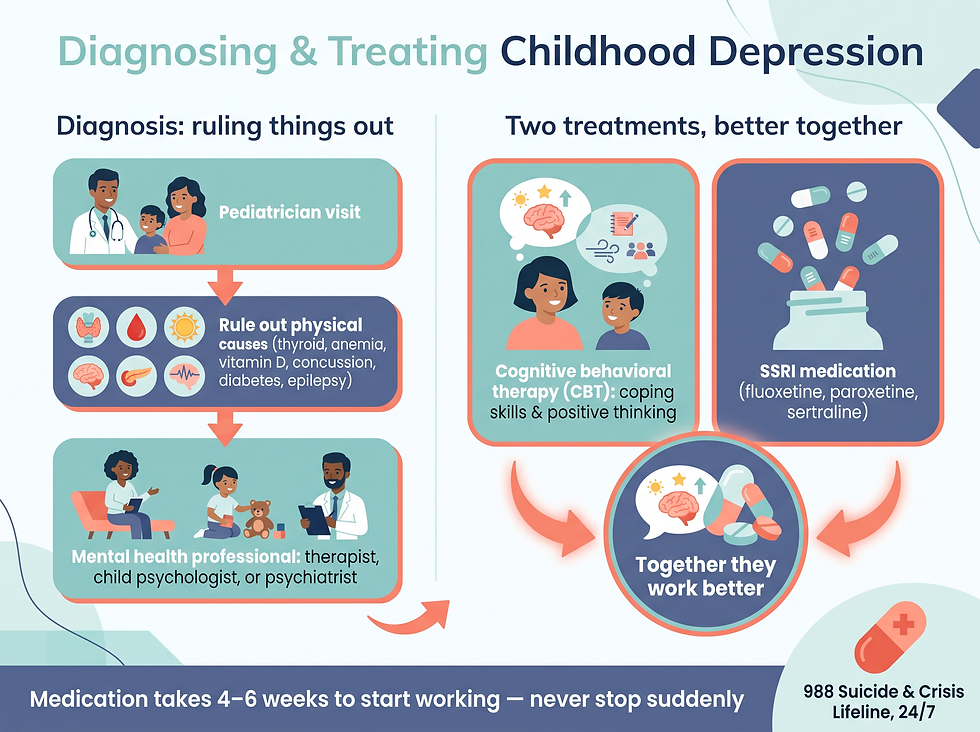
How is depression diagnosed in children?
Diagnosis is a process of elimination followed by conversation. There is no blood test or scan for childhood depression.
Step 1 — Start with the pediatrician. If a child is showing signs of depression, parents should talk to a healthcare provider, beginning with the child's pediatrician, who may refer the family to a mental health professional for a more detailed evaluation.
Step 2 — Rule out physical causes. The provider will likely first rule out conditions known to cause symptoms that mimic depression:
Anemia
Chronic pain
Diabetes
Hypothyroidism or hyperthyroidism (see our guides to hypothyroidism and hyperthyroidism)
Mononucleosis
Vitamin D deficiency
Epilepsy
Step 3 — Mental health evaluation. If mood changes can't be linked to a physical issue, the pediatrician may refer the family to a therapist, child psychologist, or psychiatrist.
Step 4 — Talk with both parent and child. To diagnose depression, the provider talks with both the parent and the child. They ask the parent about the child's behavior and mood, ask the child about symptoms and when they notice them, may have the parent complete surveys, and may speak with the child's teacher or other caregivers for additional information.
How is depression treated in children?
There are two main ways to treat depression in children: talk therapy and medication. Both may work on their own, but they seem to work better together.
Cognitive behavioral therapy (CBT)
Cognitive behavioral therapy helps children learn to think more positively about themselves, their past, and their future. It can help them manage anxiety and negative behaviors by teaching coping skills and relaxation techniques.
Medication
The most common antidepressant medications for children are selective serotonin reuptake inhibitors (SSRIs). These medications increase the level of serotonin in the child's brain — a chemical that can help increase feelings of happiness and well-being. Common SSRIs prescribed for childhood depression include:
Medication (generic) | Brand name(s) |
Fluoxetine | Prozac |
Paroxetine | Paxil, Pexeva |
Sertraline | Zoloft |
What are the side effects of antidepressants in children?
As with many medications, SSRIs have side effects. Parents should watch for two tiers of side effects — a serious tier that requires calling the provider, and a milder tier that usually passes.
Call the healthcare provider if the child develops any of these serious side effects:
Allergic reaction
Bloody stool
Fast or irregular heartbeat
Fainting, dizziness, chest pain, or shortness of breath
High fever
Sudden vision changes or eye pain
Thoughts of suicide or worsening mood
These side effects don't normally require medical attention. They should go away after a few weeks but may come back if the dose changes:
Appetite changes
Difficulty sleeping or drowsiness
Dry mouth
Headache
Shaking (tremors)
Upset stomach, nausea, or diarrhea
Two rules matter most with antidepressants. Pay close attention when a child starts a medication or the dose changes — some kids don't feel better even with medication, and some may even feel more depressed. And never allow a child to stop taking antidepressants suddenly — doing so can cause serious side effects or make depression worse. (Learn more about antidepressant discontinuation syndrome.)
How soon after treatment will my child feel better?
Antidepressants take about four to six weeks to start working, and not every medication works the same way in every person.
If a first medication doesn't help after a fair trial (usually at least several weeks to a few months), the provider may try a different dose or a different medication. For a first episode of depression, psychiatrists recommend staying on the medication for at least nine months.
Counseling can bring some more immediate benefits, but it takes time for a child to start trusting their therapist — and even after trust is established, changing patterns in thinking and behavior takes time. This is one reason many providers prefer to combine medication with therapy: the therapist helps the child learn about their triggers and develop coping skills while the medication takes effect.
Can I prevent my child from developing depression?
You can't prevent depression in your child. It can develop because of certain life situations or a biological cause. Parents can't always manage the stressors in a child's life, and family history is out of anyone's control.
What parents can do is support mental health through daily habits:
Mental health-supporting habit | Description |
Daily exercise | Regular physical activity. |
Safe, supportive environment | At home and at school. |
Plenty of sleep | Consistent, adequate rest. |
Well-balanced meals | Good nutrition. |
How can I help my child with depression?
The most important thing parents and caregivers can do for a child with depression — or any mood disorder — is to listen to them and support them. When you notice changes in mood, ask questions: how are they feeling physically? How do they feel about themselves? What they don't say may be important too. If symptoms seem worse after a conversation, try a different approach next time.
Parents can also help by tracking day-to-day details and keeping them in a journal to bring to appointments:
What to track | Why it helps |
Sleep and eating patterns | Reveals trends between visits. |
Energy level and activities | Shows progress or setbacks. |
Medication side effects | Catches problems early. |
Interactions with you | Monitors relationships. |
Participation in hobbies and activities | Gauges recovery of enjoyment. |
Interaction with peers | Tracks social re-engagement. |
A journal helps both parent and provider identify trends and notice meaningful changes.
When should I call my child's doctor?
Call the healthcare provider if the child shows signs of depression that don't go away, struggles to fall asleep for more than three days, or doesn't go to school for more than five days.
If your child shows signs of suicide, get help right away. Call the Suicide and Crisis Lifeline at 988 (in the United States) — free, confidential emotional support, 24 hours a day, seven days a week, connecting you to a national network of local crisis centers. In an emergency, call 911.
What can I expect if my child has depression? (Outlook)
A child with a depressive disorder may lose interest in activities they once enjoyed, pull away from friends and loved ones, and become irritable. As a parent, it can be hard to tell whether the child is “just acting out” or has a medical condition — expecting to feel confused and worried is normal.
The good news from the clinical source: although treatment for childhood depression can take time to work, it generally reduces symptoms. With treatment, many children with depression participate in activities that interest them, form solid friendships, and finish school.
There may be periods when depression starts to overwhelm the child again. When this happens, they may need medication adjustments or more frequent therapy sessions until they can better manage their symptoms.
What experts say: “Maybe you're wondering if your child's behavior is typical for their developmental stage. Or maybe you're worried about their mood, and nothing you do seems to help. Maybe you're afraid to make it worse. Or you might feel helpless or guilty, like you've done something wrong as a parent. But depression in childhood is common. And it's nobody's fault. Be sure to let your child's healthcare provider know about changes in mood or other symptoms of depression that last for more than a few weeks. Your child may only need treatment for a while, or they might need ongoing mental healthcare. But there's hope. Treatment for childhood depression can help.” — Note from the clinical source, Nov 2023
Conclusion: Depression in Children Is Serious, but Usually Treatable
Childhood depression isn't a phase, a personality trait, or a parenting failure — it's a treatable mood disorder. The two-week rule gives parents a clear action threshold: sadness, irritability, or hopelessness that hangs on for more than two weeks and disrupts sleep, appetite, friendships, and once-loved activities deserves a conversation with the child's healthcare provider.
Treatment works. Cognitive behavioral therapy teaches coping skills and more positive thinking patterns, SSRI medication supports the brain chemistry of well-being, and the combination of both generally works better than either alone. With patience through the four-to-six-week startup window and honest tracking along the way, many children recover their interests, friendships, and school life.
Take the next step: If your child has been showing persistent changes in mood for two weeks or more, schedule an appointment with their pediatrician. If they ever talk about suicide, call or text 988 or call 911 — help is available around the clock.
External References
Sources
Medical disclaimer: This article is for informational purposes only and is not a substitute for professional medical advice, diagnosis, or treatment. Always seek the advice of a qualified healthcare provider with any questions about a child's mental health. If a child is in crisis or talks about suicide, call or text 988 or call 911 immediately.
Frequently Asked Questions (FAQ)
What is depression in children?
Childhood depression is a mood disorder in which a child feels sad, irritable, or hopeless for more than two weeks, with symptoms that interfere with their sleep, appetite, relationships, and enjoyment of activities they once loved. Unlike normal mood swings after setbacks like a bad grade, the low mood in depression doesn't lift after a few days.
How do I know if my child is depressed or just going through a phase?
Normal ups and downs fade within days. Depression persists: if sadness, irritability, or hopelessness hangs on for two weeks or more, affects sleep or appetite, and pulls your child away from friends and activities they used to enjoy, it's worth talking to their pediatrician.
What are the main symptoms of depression in a child?
The core symptoms are persistent mood changes (sadness or irritability most of the time), loss of interest in fun activities, low energy or tiredness, negative self-talk or low self-esteem, eating more or less than usual, and sleeping too little or too much. In children, depression can show up as irritability rather than sadness, which is one reason it gets mistaken for acting out.
How common is depression in children and teens?
About 3% of U.S. children and teens ages 3 to 17 have depression. It's more common in teens than in younger children, and about 1 in 5 teens have an official diagnosis of major depression — a figure that counts only diagnosed cases, so the true number is likely higher. Rates may be even higher in children and teens with chronic illnesses such as diabetes, epilepsy, chronic pain, or asthma.
What are the types of depression in children?
There are five recognized types: major depressive disorder (clinical depression), premenstrual dysphoric disorder (PMDD), seasonal affective disorder (SAD), disruptive mood dysregulation disorder (DMDD), and dysthymia. DMDD is diagnosed only in children aged 6 or older and appears as frequent, age-inappropriate angry outbursts.
What causes depression in children?
The exact cause is unknown. Experts believe genetics and environmental factors both play a role, most likely in combination: family history of depression, physical illness or injury, stressful life events (separation, divorce, moving, death of a loved one), substance use, and bullying or other traumatic experiences.
Can depression run in families?
Yes. Having a close biological relative with depression is one of the main suspected contributors, alongside other risk factors such as a child's own history of depression, anxiety, ADHD, or conduct issues, adverse childhood experiences, family conflicts, bullying, chronic illness, and problems with friends.
Is depression in children more common in girls?
Being female is listed among the risk factors, along with puberty. Depression is more common in teens than in younger children, and the female sex is a recognized risk factor in the clinical literature.
Can chronic illness cause depression in children?
Children and teens with chronic illnesses such as diabetes, epilepsy, chronic pain, and asthma have higher rates of depression. Several physical conditions can also mimic depressive symptoms, including anemia, thyroid disorders, mononucleosis, concussion, epilepsy, and vitamin D deficiency — which is why a pediatric evaluation starts by ruling these out.
How is depression diagnosed in children?
Start with the child's pediatrician. The provider first rules out physical conditions that cause mood symptoms (anemia, thyroid disorders, diabetes, epilepsy, concussion, mononucleosis, chronic pain, vitamin D deficiency). If no physical cause is found, they may refer the family to a therapist, child psychologist, or psychiatrist. Diagnosis involves talking with both the parent and the child, parent-completed surveys, and sometimes input from teachers or other caregivers.
Is there a test for childhood depression?
There is no lab test or scan for depression. Diagnosis comes from clinical evaluation: interviews with the parent and child, symptom surveys, and ruling out physical illnesses that can mimic depression.
What age can a child be diagnosed with depression?
Depression can occur in children as young as 3 years old (prevalence data covers ages 3–17). One specific diagnosis, disruptive mood dysregulation disorder (DMDD), is only made in children who are 6 or older.
What is the best treatment for childhood depression?
The two main treatments are talk therapy (especially cognitive behavioral therapy) and medication (usually SSRIs such as fluoxetine, paroxetine, or sertraline). Both can work on their own, but they work better together — therapy builds coping skills while medication takes effect.
How long do antidepressants take to work in children?
Antidepressants typically take about four to six weeks to start working. If a first medication doesn't help after several weeks to a few months, the provider may try a different dose or a different medication.
How long should a child stay on antidepressants?
For a first episode of depression, psychiatrists recommend staying on the medication for at least nine months.
Can a child stop antidepressants suddenly?
No. Never allow a child to stop taking antidepressants suddenly — doing so can cause serious side effects or make depression worse. Any changes should be guided by the prescribing provider.
What are the side effects of SSRIs in children?
Common temporary side effects include appetite changes, sleep difficulties or drowsiness, dry mouth, headache, tremors, and upset stomach, nausea, or diarrhea — these usually fade within a few weeks. Serious side effects requiring a call to the provider include allergic reactions, bloody stool, fast or irregular heartbeat, fainting, chest pain, high fever, sudden vision changes, and any suicidal thoughts or worsening mood.
Can talk therapy alone treat childhood depression?
Yes. Cognitive behavioral therapy helps children think more positively about themselves, their past, and their future, and teaches coping skills and relaxation techniques for anxiety and negative behaviors. Therapy can work alone, though it tends to work better combined with medication.
Can my child grow out of childhood depression?
Depression doesn't simply resolve on its own, but it responds well to treatment. With treatment, many children participate in activities that interest them, form solid friendships, and finish school. Some children only need treatment for a while; others may need ongoing mental healthcare.
What happens if childhood depression goes untreated?
Untreated depression raises the risk of anxiety disorders, substance use disorders, school struggles, and — most seriously — suicide. That's why symptoms lasting two weeks or more warrant a provider visit.
Can I prevent depression in my child?
You can't prevent depression outright — it stems from life situations and biology that parents can't fully control. But supporting daily exercise, plenty of sleep, well-balanced meals, and a safe, supportive home and school environment can help protect a child's mental health.
When should I call my child's doctor about depression?
Call the healthcare provider if depression symptoms don't go away, if your child can't fall asleep for more than three days, or if they don't go to school for more than five days.
What should I do if my child talks about suicide?
Get help right away. In the United States, call or text the Suicide and Crisis Lifeline at 988 — free, confidential support available 24/7. In an emergency, call 911.
How can parents help a child with depression day to day?
Listen and support without pressure; ask about both physical feelings and self-perception; notice what the child doesn't say; and track sleep, eating, energy, activities, medication side effects, and social interactions in a journal to bring to appointments. This helps the provider spot trends and meaningful changes.
Is childhood depression the same as adult depression?
Similar, but not identical. Childhood depression often shows up as irritability rather than sadness and can look different for each child. It may also appear as frequent angry outbursts (in DMDD) or follow seasonal patterns (in SAD).
Comments