Antidepressant Discontinuation Syndrome: Symptoms, Causes, and How to Stop Safely

Updated: 2 days ago
Medically reviewed by Dr. Baraa Alnahhal, MD · Last reviewed: September 2026
TL;DR
Antidepressant discontinuation syndrome (ADS) can happen when you stop an antidepressant you've taken for at least six weeks — especially if you stop suddenly instead of tapering. Studies show 27% to 86% of people who attempt to stop antidepressants experience it. Symptoms like nausea, insomnia, flu-like aches, and mood swings typically start within two to four days and last less than two months for most people. The best prevention: never stop cold turkey — always work with your healthcare provider on a slow taper.
Quick Answer
What it is: Antidepressant discontinuation syndrome (ADS) can happen if you stop taking your antidepressant after taking it for at least six weeks, and it's more likely if you stop suddenly instead of tapering slowly under medical guidance.
How common: Studies show 27% to 86% of people who attempt to stop antidepressants — whether on their own or under supervision — experience ADS.
Symptoms: Typically begin within two to four days of stopping and usually last less than two months; most cases are mild.
Treatment: The most effective treatment is resuming the antidepressant at the previously prescribed dose, which usually makes symptoms go away within 24 hours.
What Is Antidepressant Discontinuation Syndrome?
Antidepressant discontinuation syndrome (ADS) can happen if you stop taking your antidepressant after taking it for at least six weeks. It is more likely to happen if you suddenly stop the medication instead of slowly tapering off under the guidance of your healthcare provider.
ADS causes several symptoms, including insomnia, nausea, and flu-like symptoms. They typically last less than two months. Some people refer to ADS as "antidepressant withdrawal."
The syndrome usually isn't physically harmful, but it can be very unpleasant. In addition, stopping an antidepressant can make the condition it was treating — like depression or anxiety — come back.

How Common Is Antidepressant Discontinuation Syndrome?
ADS is strikingly common. Studies show that 27% to 86% of people who attempt to stop antidepressants — whether on their own or under the supervision of a healthcare provider — experience ADS.
Statistic | Figure |
People who experience ADS when stopping antidepressants | 27% to 86% |
Typical symptom onset after stopping | Within 2 to 4 days |
Typical symptom duration | Less than two months |
It's important to talk to your healthcare provider if you're considering stopping an antidepressant, to try to prevent ADS.
What Are the Symptoms of Antidepressant Discontinuation Syndrome?
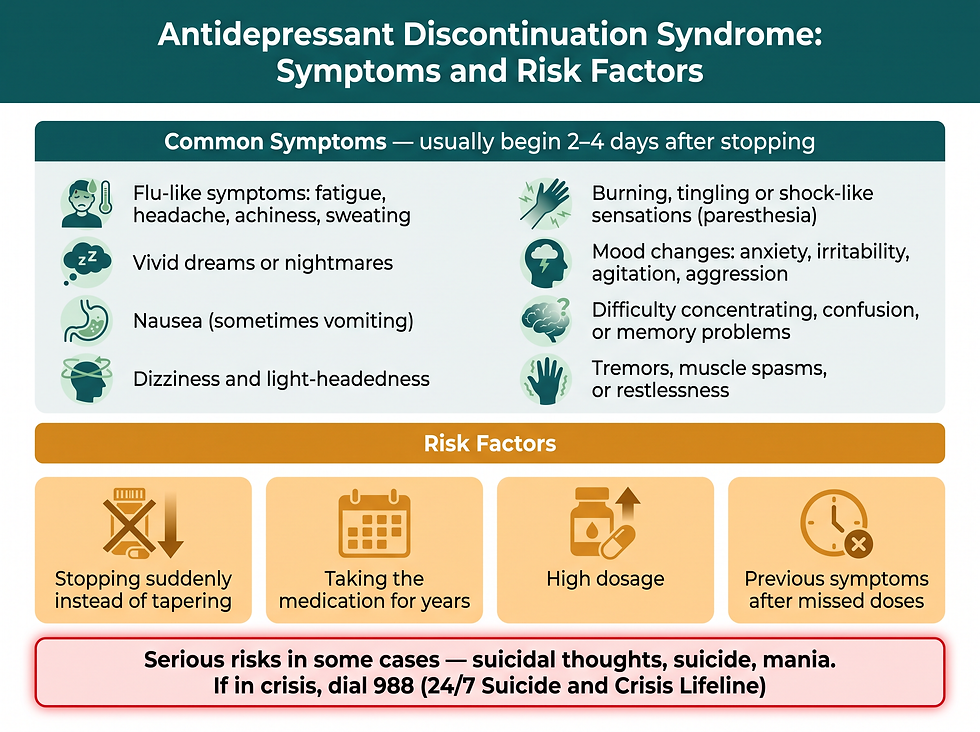
Symptoms of ADS typically begin within two to four days of stopping an antidepressant.
The syndrome includes flu-like symptoms as well as neurological and mood changes. People may experience:
Symptom | Description |
Flu-like symptoms | Fatigue, headache, achiness, and sweating |
Vivid dreams or nightmares | Intensely vivid or disturbing dreams |
Nausea | Sometimes vomiting |
Dizziness | Dizziness and light-headedness |
Paresthesia | Burning, tingling, or shock-like sensations |
Mood changes | Anxiety, irritability, agitation, and aggression |
See your healthcare provider if you're experiencing these symptoms.
The symptoms can range in severity but are usually mild. One study of people experiencing discontinuation symptoms found:
Time point | Share with ongoing symptoms |
Two months | 7% |
One year | 6% |
Beyond three years | 2% |
What Causes Antidepressant Discontinuation Syndrome?
Researchers don't know the exact cause of discontinuation syndrome. But they think it's related to a sudden decrease in serotonin levels if you stop taking an SSRI (selective serotonin reuptake inhibitor) or SNRI (serotonin and norepinephrine reuptake inhibitor). Your body responds with physical and mood-related symptoms due to this sudden lack of serotonin.
What Are the Risk Factors for ADS?
You're more likely to develop ADS if you stop taking an antidepressant and you:
Risk factor | Why it raises risk |
Suddenly stop taking it | Abrupt stops (as opposed to slowly tapering) trigger the serotonin drop |
Took it for a long time | Taking the antidepressant for years increases risk |
Take a high dosage | Higher doses raise risk (varies based on the type) |
Prior symptoms after missed doses | Having discontinuation symptoms when you missed a dose (but resumed) signals sensitivity |
Which Antidepressants Carry the Highest Risk?
The type of antidepressant you take can increase or lower your risk of ADS. This mainly has to do with how long the medication lasts in your body — antidepressants your body breaks down (metabolizes) quickly are more likely to cause ADS if you stop them than those that last longer in your system.
Drug class | High risk | Moderate risk | Low risk |
SSRIs | Paroxetine (Paxil, Pexeva), fluvoxamine | Citalopram (Celexa), escitalopram (Lexapro), sertraline (Zoloft) | Fluoxetine (Prozac) |
SNRIs | Venlafaxine (Effexor), desvenlafaxine (Khedezla, Pristiq) | Duloxetine (Cymbalta, Drizalma, Irenka) | Milnacipran (Savella), levomilnacipran (Fetzima) |
MAOIs (monoamine oxidase inhibitors), tricyclic antidepressants, and tetracyclic antidepressants also typically carry a relatively high risk for ADS.
What Are the Complications of ADS?
In some cases, discontinuation of antidepressants can carry significant risks, including:
Serious risk | What it involves |
Suicidal ideation | Thoughts of ending your life |
Suicide | Completed suicide |
Mania | Elevated, agitated mood episodes |
If you or your child have suicidal thoughts or behavior, dial 988 on your phone to reach the Suicide and Crisis Lifeline. Someone is available to help you 24/7.

How Is Antidepressant Discontinuation Syndrome Diagnosed?
There aren't any medical tests that can diagnose ADS. Instead, your healthcare provider will ask questions about your symptoms and medical history. They'll ask when you stopped taking your antidepressant.
The symptoms of ADS can look like the symptoms of other conditions, including depression and anxiety. So it helps to provide as much detail as possible about your symptoms and how they started.
Diagnostic step | Purpose |
Symptom history | Identify the pattern of physical and mood symptoms |
Medication timeline | Confirm when you stopped your antidepressant |
Detailed symptom description | Distinguish ADS from depression or anxiety relapse |
How Is Antidepressant Discontinuation Syndrome Treated?
The most effective treatment for ADS is to resume taking the antidepressant at the previously prescribed dose. This usually makes your symptoms go away within 24 hours. If you still want to go off the antidepressant, your healthcare provider will give you specific instructions on how to slowly taper off it.
Depending on the severity of your symptoms and how long they last, your provider may recommend medications to manage them. Examples include:
Medication | Used for |
Pain relievers (ibuprofen, acetaminophen) | Headaches |
Antiemetic (ondansetron/Zofran) | Nausea |
Hydroxyzine or benzodiazepines | Anxiety and insomnia |
What Is the Outlook for ADS?
The outlook for ADS varies from person to person. Most cases are mild and last no more than eight weeks. But some cases can be severe, and symptoms can last for a year or more.
Can Antidepressant Discontinuation Syndrome Be Prevented?
Unfortunately, ADS isn't always preventable. But the main action you can take to try to prevent it is to talk to your healthcare provider before stopping your antidepressant. Going off antidepressants safely can be a long process — you have to slowly reduce the dose over time.
Each type of antidepressant is different, so your provider will be the best guide to help you go off the medication.
Prevention step | Details |
Talk to your provider first | Never stop an antidepressant without guidance |
Taper slowly | Gradually reduce the dose over time, not abruptly |
Follow a drug-specific plan | Each antidepressant type requires different tapering |
Conclusion
Antidepressant discontinuation syndrome is far more common than most people realize — affecting anywhere from 27% to 86% of people who attempt to stop their antidepressants. It usually strikes within days of stopping: flu-like aches, nausea, insomnia, vivid nightmares, tingling sensations, and mood swings that feel all too real. The good news is that for most people, the syndrome is mild and resolves within two months, and the most effective fix — resuming the previous dose — works within 24 hours.
The single most important lesson is simple: never stop cold turkey. Because fast-metabolizing antidepressants like paroxetine and venlafaxine carry the highest risk, and because abrupt stops can trigger serious complications including suicidal thoughts, every exit from antidepressant therapy should be planned and supervised by a healthcare provider.
If you're thinking about stopping your antidepressant, schedule a conversation with your provider before making any changes. Ask for a slow, structured tapering plan tailored to your specific medication and dosage. And if you ever experience suicidal thoughts or behavior — yours or your child's — dial 988 to reach the Suicide and Crisis Lifeline, where someone is available to help you 24/7.
FAQ
What is antidepressant discontinuation syndrome?
Antidepressant discontinuation syndrome (ADS) can happen if you stop taking your antidepressant after taking it for at least six weeks. It's more likely if you stop suddenly instead of slowly tapering off under the guidance of a healthcare provider. It causes symptoms like insomnia, nausea, and flu-like symptoms, and some people refer to it as "antidepressant withdrawal."
How common is antidepressant discontinuation syndrome?
Studies show that 27% to 86% of people who attempt to stop antidepressants, whether on their own or under the supervision of a healthcare provider, experience ADS.
How long does antidepressant discontinuation syndrome last?
Symptoms typically begin within two to four days of stopping an antidepressant and usually last less than two months. Most cases are mild and last no more than eight weeks, but some cases can be severe, with symptoms lasting a year or more. In one study, 7% of people still had symptoms at two months, 6% at one year, and 2% beyond three years.
Why does antidepressant discontinuation syndrome happen?
Researchers don't know the exact cause, but they think it's related to a sudden decrease in serotonin levels after stopping an SSRI or SNRI. Your body responds with physical and mood-related symptoms due to this sudden lack of serotonin.
Which antidepressants are most likely to cause discontinuation syndrome?
Antidepressants that your body metabolizes quickly carry the highest risk. High-risk SSRIs include paroxetine (Paxil) and fluvoxamine; high-risk SNRIs include venlafaxine (Effexor) and desvenlafaxine (Pristiq). Fluoxetine (Prozac) carries the lowest SSRI risk because it lasts longest in the body.
How is antidepressant discontinuation syndrome treated?
The most effective treatment is resuming the antidepressant at the previously prescribed dose, which usually makes symptoms go away within 24 hours. Providers may also recommend pain relievers for headaches, ondansetron (Zofran) for nausea, or hydroxyzine or benzodiazepines for anxiety and insomnia.
Can you stop antidepressants cold turkey?
Stopping suddenly greatly increases the risk of ADS and can also make the original condition (depression or anxiety) come back. In some cases, abrupt discontinuation carries serious risks including suicidal ideation, suicide, and mania. Always talk to your provider before stopping.
What should I do if I have suicidal thoughts after stopping an antidepressant?
If you or your child have suicidal thoughts or behavior, dial 988 to reach the Suicide and Crisis Lifeline — someone is available to help you 24/7. Also contact your prescribing healthcare provider as soon as possible.
References
Gabriel M, Sharma V. Antidepressant Discontinuation Syndrome. CMAJ. 2017;189(21):E747. ncbi.nlm.nih.gov/pmc/articles/PMC5449237
Fornaro M, Cattaneo CI, De Berardis D, et al. Antidepressant Discontinuation Syndrome: A State-of-the-art Clinical Review. Eur Neuropsychopharmacol. 2023;66:1-10. pubmed.ncbi.nlm.nih.gov/36345093
Zwiebel SJ, Viguera AC. Discontinuing Antidepressants: Pearls and Pitfalls. Cleve Clin J Med. 2022;89(1):18-26. pubmed.ncbi.nlm.nih.gov/34983798
Medical Disclaimer: This article is for general informational purposes only and is not a substitute for professional medical advice, diagnosis, or treatment. Never start, stop, or change the dosage of a prescription medication without the guidance of a qualified healthcare provider. If you or someone you know is in crisis or having suicidal thoughts, dial 988 to reach the Suicide and Crisis Lifeline (available 24/7) or contact emergency services.
Comments