COVID Pneumonia: Symptoms, Causes, Treatment, and Recovery Timeline

Updated: 3 days ago
Medically reviewed by Dr. Baraa Alnahhal, MD · Last reviewed: October 2026
Quick Answer: What Is COVID Pneumonia?
COVID pneumonia is a lung infection caused by SARS-CoV-2 in which the immune response makes the air sacs swell and fill with fluid. Worsening difficulty breathing is the most common symptom, and it usually requires hospital care. Treatment includes antivirals, oxygen, corticosteroids and, in severe cases, ventilation or ECMO. Vaccination and antivirals within five days of symptoms reduce severe illness.
What the research says
Dexamethasone lowers deaths in patients who need oxygen or ventilation. In the RECOVERY trial of hospitalized patients (2,104 given dexamethasone, 4,321 given usual care), 28-day mortality was 22.9% vs 25.7%. Deaths were lower among patients on invasive ventilation (29.3% vs 41.4%) and on oxygen alone (23.3% vs 26.2%), but not among those needing no respiratory support (17.8% vs 14.0%) ( (RECOVERY Collaborative Group (Horby et al.), New England Journal of Medicine, 2021) [2].
Early antivirals sharply cut the risk of hospitalization. In a trial of 2,246 high-risk, unvaccinated, nonhospitalized adults, nirmatrelvir plus ritonavir started within 3 days of symptoms lowered COVID-19 hospitalization or death by day 28 to 0.77% vs 7.01% with placebo (an 89% relative reduction) ( (Hammond et al., New England Journal of Medicine, 2022) [3].
Severe illness and no vaccination predict lingering problems. A 2026 meta-analysis of studies of previously hospitalized patients found higher odds of post-COVID outcomes after more severe acute illness or advanced respiratory support (odds ratio 2.55), ICU admission (1.88), and no or incomplete vaccination (1.90) ( (Kassymbek et al., Frontiers in Public Health, 2026) [4].
What Is COVID Pneumonia?
COVID pneumonia is a complication of a COVID-19 infection. It happens when the SARS-CoV-2 virus infects your lungs, causing them to become inflamed and fill with fluid. This makes it hard to breathe.
Newer variants of the virus seem less likely to damage the lungs, but COVID-19 can still cause life-threatening illness, including pneumonia. Compared with other types of pneumonia, COVID pneumonia can last longer and cause damage in more places in the lungs.
Key Fact | What the Evidence Shows |
What it is | A lung infection with SARS-CoV-2 causing inflammation and fluid in the lungs |
How it forms | COVID-19 complication: the virus reaches the lungs during infection |
Main symptom | Difficulty breathing that gets worse |
Urgency level | High: it can get worse quickly, so ER care matters |
Typical hospital stay | A week or longer |
Highest risk group | People over 65 and those with certain health conditions |

COVID pneumonia overview: how the virus inflames the lungs and fills them with fluid.
How can you tell a normal COVID case from COVID pneumonia?
The symptoms of COVID pneumonia can be similar to the ones you get with a typical COVID-19 infection. The difference is in the pattern: symptoms that are new or getting worse may signal that the infection is progressing to pneumonia.
If any symptom below is new or worsening, seek medical attention or go to the nearest emergency room. These may be signs of progression to pneumonia.
Symptom | What to Watch For |
Shortness of breath | Trouble breathing that is new or getting worse, the most common sign |
Confusion | New mental confusion, a warning sign of low oxygen |
Extreme fatigue | Unusual tiredness beyond typical COVID fatigue |
Cough | Persistent or worsening cough |
Fever | Fever that persists or returns |
Chest pain or tightness | Pressure or pain in the chest |
Bluish lips, skin or nails | Known as cyanosis, a sign of dangerously low oxygen |
The single most common symptom is difficulty breathing that is getting worse. Do not wait it out: COVID pneumonia can escalate quickly, and early treatment makes a meaningful difference.
When should you seek emergency care for COVID pneumonia?
Go to the emergency room or call 911 immediately for COVID pneumonia emergency symptoms, and contact your healthcare provider instead if you are at risk for severe COVID-19.
Emergency Sign | Why It Matters |
Difficulty breathing | The lungs cannot move enough air on their own |
Confusion | The brain may not be getting enough oxygen |
Difficulty waking up or staying awake | A sign of severe oxygen deprivation |
Skin, lips or nails that appear blue | Cyanosis: blood oxygen is critically low |
Contact your healthcare provider (rather than the emergency room) if you are at risk for severe COVID-19 or have questions about managing your symptoms. Providers may prescribe antiviral medications to take within the first five days of symptoms.
How does a COVID infection turn into COVID pneumonia?
An infection with the SARS-CoV-2 virus in your lungs causes COVID pneumonia. When your immune system attacks the infection, it can make the small sacs in your lungs, the alveoli, swell and leak fluid. This fluid buildup is pneumonia, and it is what causes trouble breathing.
Research on the original variants suggested that COVID pneumonia uses your own immune system to spread through your lungs. That pattern means it might cause more damage, make you sicker, and last longer than other forms of pneumonia.
Research on Omicron, the most recent major variant, suggests that circulatory or kidney issues may also contribute to developing COVID pneumonia.
Factor | What Happens |
Viral infection | SARS-CoV-2 enters and infects the lung tissue |
Immune response | The immune system attacks the infection in the lungs |
Alveoli damage | The small air sacs swell and leak fluid |
Pneumonia forms | Fluid and inflammation fill the lungs, blocking breathing |
Variant effect | Original variants used the immune system to spread; Omicron may involve circulatory or kidney factors |

How COVID pneumonia develops: virus, immune response, and fluid-filled air sacs.
Who Is at Risk?
People over 65 are at the highest risk of developing pneumonia from a COVID infection. Beyond age, a long list of health conditions raises the risk of progressing to COVID pneumonia.
Risk Category | Specific Conditions Listed |
Age | Over 65, the highest risk group |
Blood and cancer | Blood disorders; cancer |
Organ conditions | Conditions affecting the lungs, heart, kidneys, or liver |
Pregnancy | Current pregnancy |
Brain and nerves | Stroke or other conditions affecting brain blood vessels; dementia, Alzheimer's disease, or other neurological conditions; cerebral palsy, Down syndrome, or other conditions present at birth |
Metabolic | Diabetes (Type 1 or Type 2); obesity |
Immune system | HIV or a weakened (compromised) immune system; organ or blood stem cell transplant |
Behavioral | Smoking (current or past); substance use disorders |
Mental health | Mental health conditions |
This list is long, but it points to one practical takeaway: if you fall into any of these categories, close monitoring of your symptoms, and early contact with a healthcare provider, matters even more.
What complications can COVID pneumonia lead to?
COVID pneumonia is not a static condition. Without proper treatment, it can lead to serious complications that affect the lungs and the whole body.
Complication | What It Means |
Acute respiratory distress syndrome (ARDS) | Severe lung failure where the lungs cannot supply enough oxygen to the body |
Blood clot in the lungs | Pulmonary embolism: a clot blocking blood flow in the lungs |
Lung scarring | Pulmonary fibrosis: permanent scarring that reduces lung function |
These complications explain why COVID pneumonia is treated as a hospital-level illness rather than something managed at home.
How do doctors diagnose COVID pneumonia?
To diagnose COVID pneumonia, a healthcare provider starts by asking about your symptoms and examining you. They will test you for infections, get images of your lungs to look for pneumonia, and may test how well your lungs are working.
Test | How It Works | What It Shows |
Nasal swab | A thin stick with a soft tip swabs the inside of your nose or throat | Detects COVID-19 and other viruses |
Pulse oximetry | A sensor slips over your finger | Measures the amount of oxygen in your blood |
Chest X-ray or CT scan | Imaging of the lungs | Looks for signs of pneumonia |
Blood tests | Blood sample | Helps find the cause of pneumonia |
Sputum test | You cough and spit into a container | Lab looks for infection signs and identifies the cause |
Pleural fluid culture | A thin needle takes fluid from between the ribs and lungs | Helps diagnose the cause of pneumonia |
Arterial blood gas (ABG) | Blood sample from wrist, arm, or groin | Measures oxygen and carbon dioxide levels |
Bronchoscopy | A thin, lighted tube looks inside the lungs | Directly views lung tissue; collects samples for testing |
No single test gives the full picture. Providers combine symptom history, imaging, and lab work to confirm that pneumonia, not just a routine COVID infection, has developed.
What should you expect in the hospital during COVID pneumonia treatment?
If you are diagnosed with COVID pneumonia, you will likely be admitted to the hospital. Treatment depends on how sick you are, and it spans medications, oxygen support, and life-support measures in severe cases.
Treatment | What It Does |
Antiviral medications | Remdesivir or Paxlovid attack the virus directly |
Antibiotics | Used only if a bacterial infection is diagnosed or you are at risk for one |
Supplemental oxygen | Extra oxygen through a tube in your nose or a mask on your face |
IV fluids | Prevents dehydration while you are hospitalized |
Draining of fluids | A catheter or surgery removes fluid from the lungs |
Corticosteroids | Medications like dexamethasone reduce inflammation in the lungs |
Anticoagulants | Blood-thinning medications reduce the risk of blood clots |
Monoclonal antibodies | Treatments like tocilizumab help reduce or prevent inflammation |
Mechanical ventilation | A breathing tube through the mouth and throat into the windpipe if you cannot breathe properly on your own |
ECMO | Extracorporeal membrane oxygenation: life support that takes over the work of your heart and lungs |
Antibiotics do not treat the virus itself. They are reserved for cases where a bacterial infection is confirmed or strongly suspected.
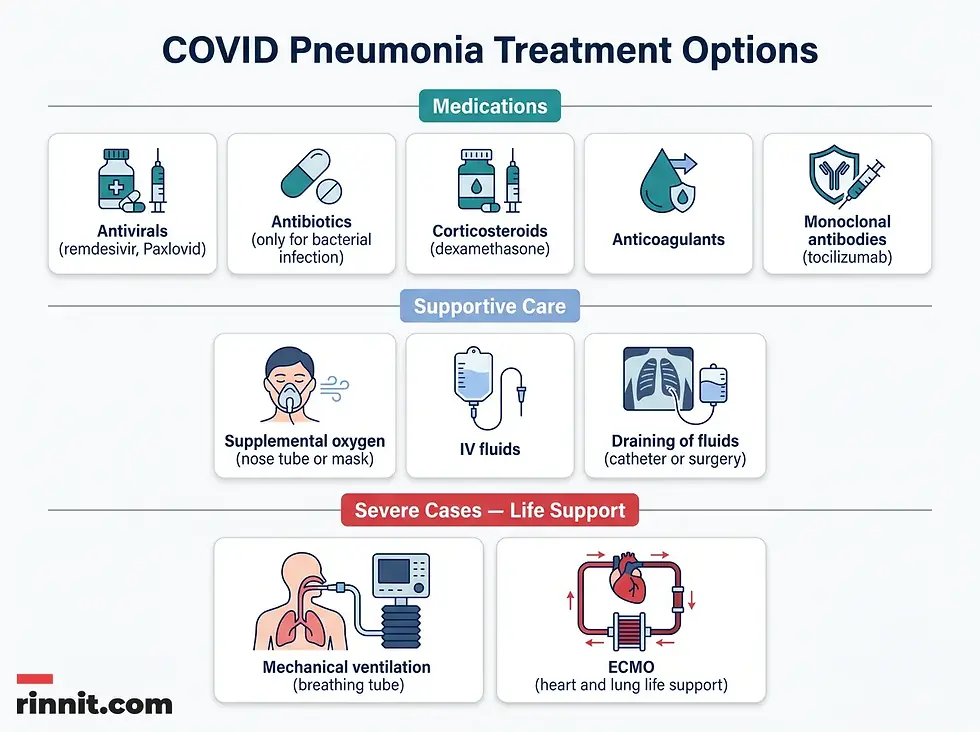
COVID pneumonia treatment options, from antivirals and oxygen to mechanical ventilation and ECMO.
What should you ask your healthcare provider about COVID pneumonia?
Question | Why It Helps |
Am I at risk for severe COVID-19? | Determines whether you should contact a provider early |
Should I take antiviral medications now? | Antivirals work best within the first five days of symptoms |
What symptoms mean I should go to the ER? | Keeps you from waiting too long when breathing worsens |
How will my recovery be monitored? | Sets expectations for follow-up after hospital discharge |
Outlook and Recovery: How Long Does It Take to Get Better?
Recovery from COVID pneumonia usually means a hospital stay of a week or longer, and you might feel more tired than usual for weeks or months afterward. How soon you feel better depends on three main factors:
Recovery Factor | Effect |
Age | If you are older than 65, it may take longer to resolve |
Severity and lung involvement | The worse the pneumonia and the more lung involved, the longer recovery takes |
Other health conditions | Additional conditions or complications slow recovery |
You might still feel more tired than usual or have other symptoms for weeks or months after you go home from the hospital. Follow up with your healthcare provider if you have ongoing health concerns after being treated for COVID pneumonia. Some healthcare systems now have special clinics for long-term health issues after a COVID infection.
Survival Rates
Age is usually the biggest factor in surviving COVID pneumonia. As you get older, your risk of getting seriously ill or dying goes up. Mortality also depends on how sick you are.
Care Setting | COVID Pneumonia Mortality Rate |
In the hospital (not in intensive care) | 3% to 5% |
In the ICU | 30% to 40% |
On a respirator | 50% to 80% |
These numbers underscore the same message throughout this article: getting care early, before you need intensive support, dramatically changes the odds.
How can you reduce your risk of COVID pneumonia?
You can take steps to reduce your risk of COVID pneumonia by lowering your chance of getting COVID-19 and other conditions that can damage your lungs.
Prevention Step | How It Helps |
Get vaccinated against COVID-19 and the flu | Reduces the chance of infection and severe illness |
Get vaccinated against pneumococcal disease | Protects against bacterial pneumonia |
Quit smoking and avoid secondhand smoke | Protects lung tissue from damage |
Wash hands frequently | Reduces viral exposure |
Avoid close contact and sharing items when someone has COVID | Cuts transmission routes |
Wear a mask when COVID is spreading | Lowers exposure risk |
Treat other health conditions | Managing your conditions lowers your risk of severe COVID |
Conclusion: Watch Your Breathing, Act Fast
COVID pneumonia is a serious but treatable complication of a COVID-19 infection. The virus inflames your lungs and fills the air sacs with fluid, turning an ordinary infection into a condition that can escalate within days. The single most important warning sign is difficulty breathing that gets worse. When that happens, do not wait.
People over 65 and those with underlying health conditions face the highest risk, but everyone benefits from vaccination, hand hygiene, and early contact with a healthcare provider. If you are at risk, antiviral medications taken within the first five days of symptoms can significantly reduce the chance of progression.
Related reading: Pneumonia: complete guide to symptoms, causes, and treatment.
Frequently Asked Questions
What is COVID pneumonia?
COVID pneumonia is a lung infection caused by SARS-CoV-2, the virus that causes COVID-19. The virus infects the lungs, causing inflammation and fluid buildup that makes breathing difficult. It is a complication of a COVID-19 infection and usually requires hospital care.
What is the most common symptom of COVID pneumonia?
Difficulty breathing that is getting worse is the most common symptom. Other symptoms include cough, fever, chest pain or tightness, extreme fatigue, confusion, and bluish lips, skin, or nails.
When should I go to the ER for COVID pneumonia?
Go to the emergency room or call 911 (or your local emergency number) if you have difficulty breathing, confusion, difficulty waking up or staying awake, or skin, lips, or nails that appear blue. COVID pneumonia can get worse quickly, so do not wait.
Can COVID pneumonia go away on its own?
No. COVID pneumonia usually requires hospital admission and medical treatment. It typically involves antivirals, supplemental oxygen, and sometimes corticosteroids or life support. It can get worse quickly without proper care.
Who is at highest risk for COVID pneumonia?
People over 65 are at the highest risk. Risk also increases with blood disorders, cancer, lung, heart, kidney or liver conditions, pregnancy, diabetes, obesity, weakened immune systems, organ transplants, smoking, and certain neurological or developmental conditions.
How is COVID pneumonia diagnosed?
Doctors use symptom history and a physical exam, a nasal swab for the virus, pulse oximetry to measure blood oxygen, chest X-ray or CT imaging, blood tests, sputum tests, pleural fluid culture, arterial blood gas tests, and sometimes bronchoscopy to look inside the lungs.
How is COVID pneumonia treated?
Treatment usually involves hospital admission with antiviral medications (remdesivir or Paxlovid), supplemental oxygen, IV fluids, corticosteroids like dexamethasone, and possibly anticoagulants or monoclonal antibodies. Severe cases may need mechanical ventilation or ECMO life support. Antibiotics are used only for bacterial infections.
How long does it take to recover from COVID pneumonia?
Recovery usually requires a hospital stay of a week or longer. Recovery speed depends on age (slower over 65), pneumonia severity, and other health conditions. Fatigue and other symptoms can persist for weeks or months after going home.
What is the survival rate for COVID pneumonia?
Mortality ranges from 3% to 5% for patients hospitalized outside the ICU, 30% to 40% for ICU patients, and 50% to 80% for those on a respirator. Age is the biggest factor: older patients face a higher risk of serious illness or death.
Can you prevent COVID pneumonia?
You cannot prevent it entirely, but you can reduce risk: get vaccinated against COVID-19, flu, and pneumococcal disease; quit smoking; wash hands frequently; avoid close contact and shared items when someone has COVID; wear a mask when COVID is spreading; and treat underlying health conditions.
Does COVID pneumonia leave permanent lung damage?
COVID pneumonia can. COVID pneumonia can cause complications including lung scarring (pulmonary fibrosis), which may reduce lung function long term. It can also lead to acute respiratory distress syndrome and blood clots in the lungs, which require ongoing medical care.
References
Cleveland Clinic. COVID Pneumonia. Cleveland Clinic. Medically reviewed; last updated March 31, 2026. https://my.clevelandclinic.org/health/diseases/24002-covid-pneumonia
RECOVERY Collaborative Group, Horby P, Lim WS, et al. Dexamethasone in hospitalized patients with Covid-19. New England Journal of Medicine. 2021;384(8):693-704. PMID 32678530. https://doi.org/10.1056/NEJMoa2021436
Hammond J, Leister-Tebbe H, Gardner A, et al. Oral nirmatrelvir for high-risk, nonhospitalized adults with Covid-19. New England Journal of Medicine. 2022;386(15):1397-1408. PMID 35172054. https://doi.org/10.1056/NEJMoa2118542
Kassymbek S, Abduldayeva A, Safonov N, Doszhanova G. Risk factors for post-COVID-19 condition among previously hospitalized COVID-19 patients: a systematic review and meta-analysis. Frontiers in Public Health. 2026;14:1911482. PMID 42666214. https://doi.org/10.3389/fpubh.2026.1911482
Medical disclaimer
This article is for general educational purposes only and is not a substitute for professional medical advice, diagnosis or treatment. Always seek the guidance of your healthcare professional with any questions about your or your child's health. In a medical emergency, call 911 or your local emergency number.



Comments